- Best for
- Sculptural objects and a plant on a wall shelf
- Cost
- Under $300
- Difficulty
- Beginner-friendly
- Renter-safe
- Yes — everything packs up, nothing drilled or painted
The black-ceramic-and-walnut shelf nook I keep rebuilding
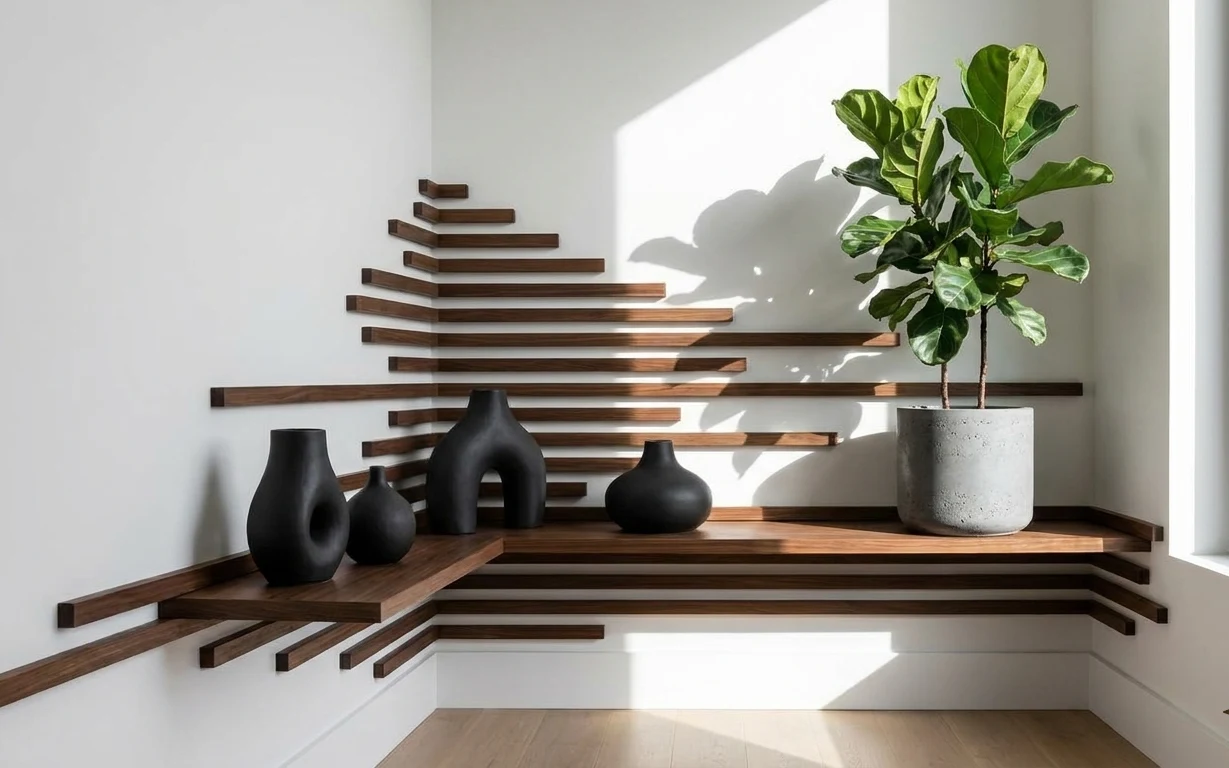
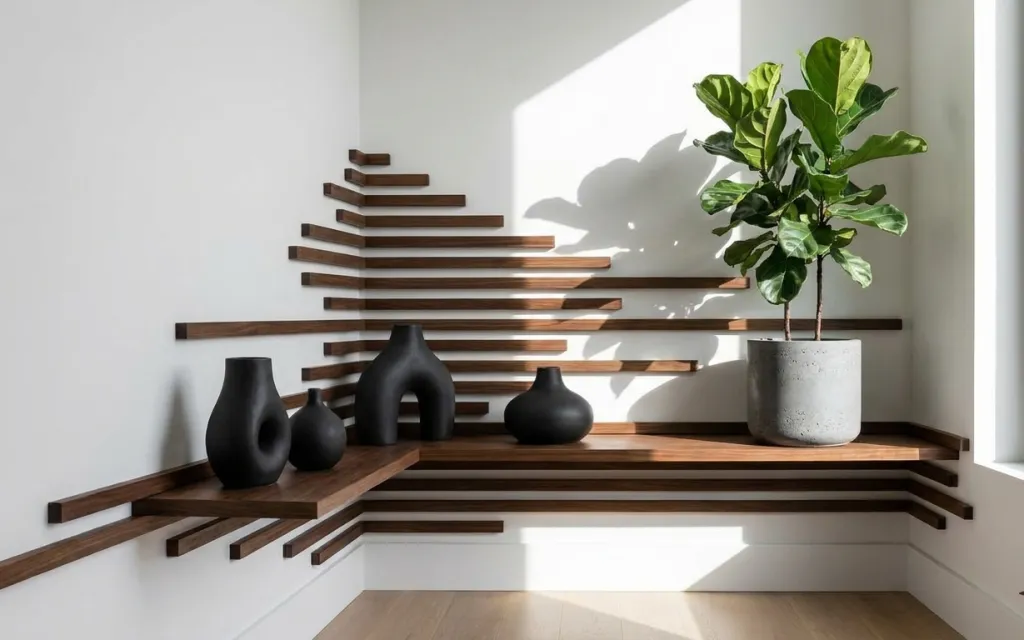
What carries this corner is the contrast: dark matte ceramic set against warm walnut, with daylight from the window drawing crisp edges around all of it. Texture is doing the heavy lifting here — rounded ceramic surfaces, the grainy concrete pot, and the straight-but-not-perfectly-even lines of the slat shelf. In every place I’ve rented, I’ve rebuilt some version of this by thinking of it as a still life I can pick up and carry, not a built-in I have to commit to. When you move often, that habit counts for as much as the pieces themselves.
My first attempt at a built-in look went sideways: I grabbed a pile of small odds and ends, and they just argued with the shelf’s clean lines. The fix was cutting the palette down to black, walnut, and a single plant, then letting only the shapes change — tall, round, arched. On a shelf like this, a few sculptural forms come across as deliberate, and that’s never more obvious than when the window light rakes across them.
Layer 1 — large matte black vase ($35) Tall ceramic holds down the left end
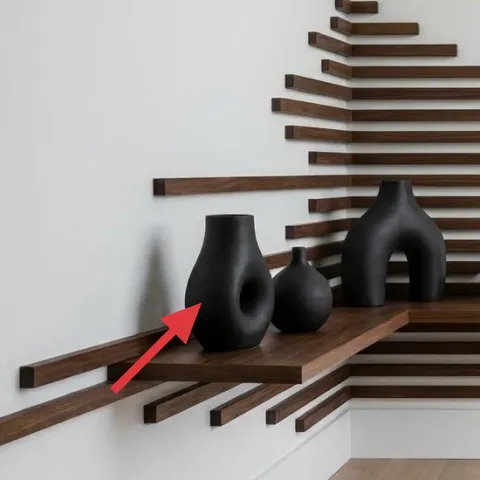
A large matte black vase plants visual weight on the left without picking a fight with the straight wood slats. The finish is the point here: matte throws back far less light than a glossy glaze, so it stays quiet even with bright sun pouring through the window. The catch is that it reads strong, which means it pairs best with a tight palette — black, warm wood, and the concrete and green nearby — instead of a spread of colors. Next to a clear or pale vase, the black one also shrugs off dust and fingerprints between moves.
Let the tallest piece break the slat rhythm
Choose a vase tall enough to cut across the horizontal run of the slats, and give it open space on both sides.
Layer 2 — small matte black vase ($25) A second curve that keeps its distance
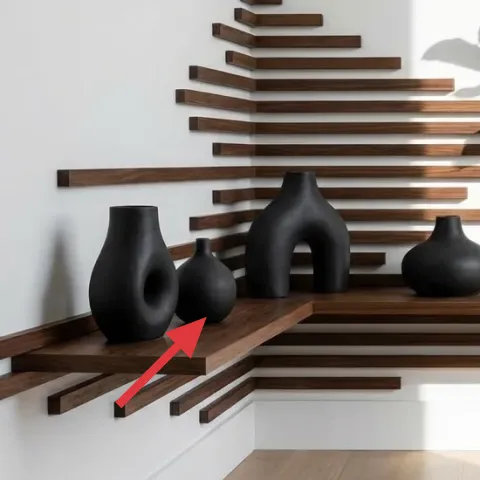
This smaller matte black vase plays a supporting part — dark enough to belong, short enough to stay out of the big vase's way. It lands toward the middle of the shelf, linking the left end to the arched piece. The matte surface keeps the group from collapsing into flat cutouts. The downside is its size: it can vanish if the shelf is too bare, or if the plant and concrete pot crowd right up against it. Even spacing is what saves it — one clear gap, then the next object, then another.
Match the finish before you match the color
Even if the tones don't line up exactly, keeping everything matte rather than blending matte with glossy holds the grouping together.
Layer 3 — arched matte black vase ($45) A curved profile that adds motion
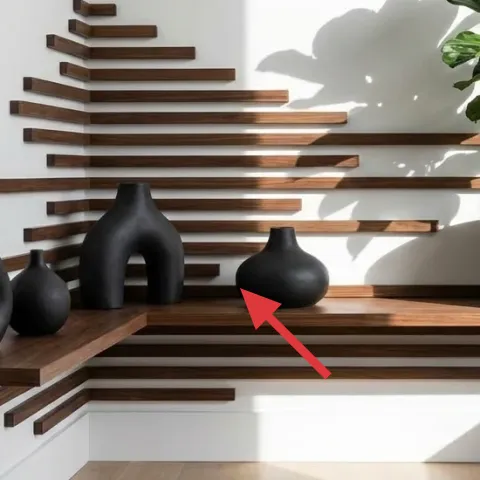
The arched matte black vase is the piece that tips the group from accidental to planned. Its open curve rhymes with how the slats read — ordered, but not stiff. In daylight, the arch picks up faint highlights along its edges, adding depth without bringing in a new material. Scale is the thing to watch: an arch too big for the ledge starts cutting off your view across the shelf. Here it sits so the wood ledge still shows beneath it, which keeps the corner feeling open instead of stuffed.
Turn its best side toward you
Rotate the vase until the opening and curve face the spot you usually look from, not the wall.
Layer 4 — small round matte black vase ($25) A low, round full stop
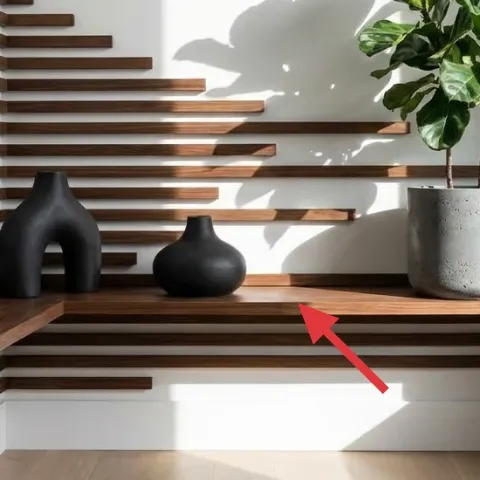
This small round matte black vase acts like a full stop — lower, more compact, and easier to wrap and box than a tall piece. It also steadies the arched vase by setting a calmer, closed shape near the center-right. Sticking with matte keeps the group from going shiny and loud beside the speckled concrete pot. The risk is repetition: if the other two black vases sit at similar heights, it just echoes them, so use it to mark the one low note in the line. Placed on purpose, it makes the vases read as a trio rather than a heap.
Stop at three black shapes
On a shelf with bold horizontal slats, one more small black piece tips the whole grouping into clutter in a hurry.
Layer 5 — concrete planter pot ($40) Speckled grit grounds the ceramic group
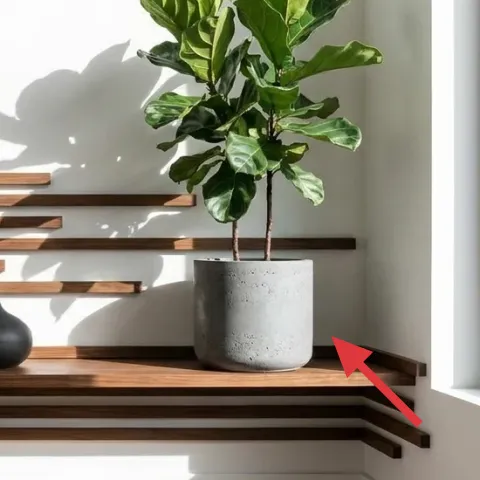
The concrete planter brings a rough, speckled surface that settles the black ceramics and keeps them from floating. It’s a sensible pick for moving, too: one solid object that rides safely once you roll it in paper or a towel. Against a smooth ceramic pot, the concrete look forgives the small chips and scuffs that build up over time. The trade-off is weight — concrete runs heavier than a plastic or resin planter, so think about where it goes in the box. Here it sits on the right, where the shelf line meets the window light and that grain really reads.
Let the pot carry the variation
With the rest of the palette stuck on black and walnut, the concrete’s gray speckle adds interest without introducing a new color.
Layer 6 — green leafy indoor plant ($30) Live color against the neutrals
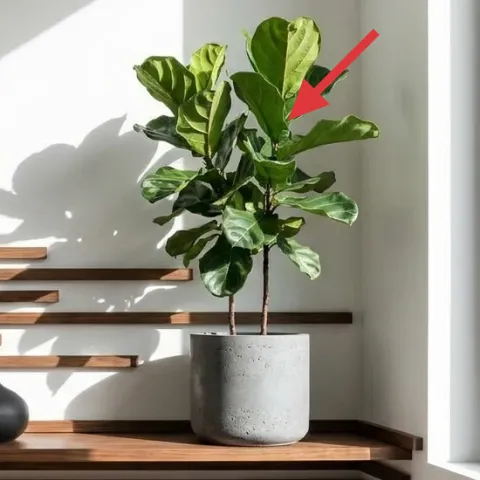
The leafy plant is the splash of color that stops the grouping from going all one tone. Leaf shape earns its keep here, too: broad leaves blunt the shelf’s hard angles and make the corner feel lived-in rather than staged. Upkeep is the cost — plants want light and the occasional drink — but in a shared house that’s usually less hassle than babysitting a row of breakables. For moving day, pick something you can lift one-handed in a pot stable enough to survive a short ride. Set near the window, the leaves catch real light and keep their shape.
One plant beats a jungle
A single focal plant looks cleaner on a slatted shelf than a scatter of little pots.
Layer 7 — wooden slat wall shelf ($80) Warm walnut lines do the built-in work
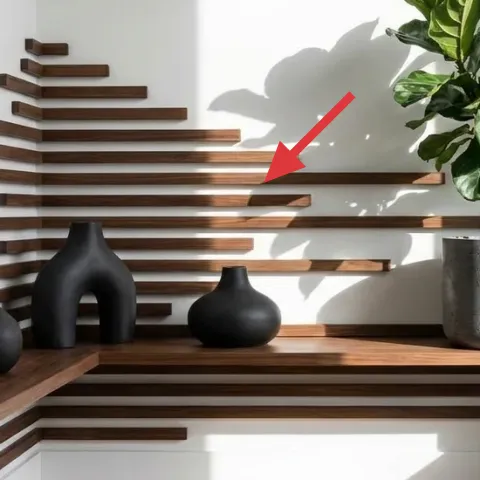
The slat shelf is the backbone that makes the ceramic pieces look chosen rather than stranded. Its warm walnut tone reads naturally with daylight, and the slats set up a rhythm that means you don’t need any art on the wall. The flip side is that a wood shelf exposes spacing errors — crowd it or set things crooked and everyone sees it. To get this in a rental, line your objects up to the shelf’s ledge so the eye reads one tidy row. Against a solid shelf, the slats throw in their own texture, so you can run fewer pieces and still land the look.
Leave the ledge showing
A clear strip of bare shelf keeps the grouping from looking crammed against the wall.
The cost, layer by layer
| Layer | Item | Cost |
|---|---|---|
| 1 | Large matte black vase | $35 |
| 2 | Small matte black vase | $25 |
| 3 | Arched matte black vase | $45 |
| 4 | Small round matte black vase | $25 |
| 5 | Concrete planter pot | $40 |
| 6 | Green leafy indoor plant | $30 |
| 7 | Wooden slat wall shelf | $80 |
| Total | $280 | |
To spend less, hold the same black-walnut-green recipe but switch the sourcing: thrifted matte black vases, a lighter-weight planter, and a budget wood shelf with fewer slats. The arrangement carries more than the exact shapes do, so small substitutions won’t sink it.
What worked, what didn't (across the whole room)
The biggest win was staying strict about the palette: matte black ceramics, walnut wood, and one plant kept the shelf looking deliberate in daylight. The runner-up was the spread of shapes — tall, arched, and low round forms that hang together as a set instead of scattered odds and ends.
What worked
- The matte black vases hold steady in strong window light and stay out of the wood slats’ way.
- Mixing the heights — tall, medium, low — stops the group from flattening into one straight line.
- The concrete planter’s speckled grit does the job a pile of extra accents would have.
- A single leafy plant blunts the shelf’s straight edges and balances out the neutrals.
- The wood slat shelf supplies a built-in rhythm, so no framed art was needed above it.
- Leaving the ledge visible kept the corner feeling lighter and quicker to pack.
What didn't
- Glossy ceramics bounced too much window light and made the whole shelf look busy.
- A fourth black object pushed the grouping straight into clutter against the slats.
- Setting the plant too far from the window left the leaves looking thin within a couple of weeks.
- A smooth pot gave up the grain, so the shelf read flatter from across the room.
- Loading one side with too many pieces cut off the view straight across the ledge.
What we'd skip if we did it again
I’d skip buying a full matched set of vases from one store. On a slatted shelf, identical outlines look like a display rack, not a hand-picked corner — and they’re harder to repurpose and rearrange when you move.
I’d skip the little filler bits — tiny figurines, a row of mini candles, scattered beads. The shelf’s own geometry already hands you texture, so more odds and ends just turn it noisy.
I’d skip any plant that’s fussy to haul around or demands tight humidity. In a shared house, the plant worth keeping is the one that rolls with shifting light and still looks good in the next apartment.
Frequently asked
Roughly how much time does putting this shelf together take?
Budget 45 to 90 minutes to gather the pieces, set them down once, and nudge the spacing. With shopping already handled, the actual styling on the shelf runs under an hour. What eats the most time is dialing in the heights — the tall, arched, and low shapes deserve a second look from wherever you usually stand by the window.
Will this hold up in a rental or a shared house?
It does, because it leans on things you can carry: the vases, the planter, and the plant. The result comes from where you set pieces and how much air you leave between them, not from anything you bolt to the wall. If the slat shelf is already mounted in your unit, the portable version is just rebuilding the same lineup with your own objects.
What if my corner is tighter or has no window nearby?
Trim the palette further: one tall black vase, one smaller black piece, and the plant — or a single textured pot — for contrast. With less daylight, matte finishes hold up better than glossy ones, and concrete still shows its grain in dim light. Scale the plant down so the foliage doesn't look thin.
Where do I find these pieces cheaply?
Check thrift shops and local marketplace listings first for matte black vases and concrete-look pots — sculptural shapes turn up there regularly. For the plant, a neighborhood nursery or a big-box garden section usually beats a boutique florist. Need a shelf? Compare the cheaper end of a hardware store's wood aisle, or secondhand shelving, before paying full price.
What trips most people up with a nook like this?
Adding too much. A slatted shelf already brings its own texture and pattern, so heaping on extra little accents makes the grouping look thrown together. Settle on three core shapes — tall, arched, and low — and let the concrete pot and one plant cover the rest.