- Best for
- Framing a rented niche with botanical warmth
- Cost
- $315 total (about $350 with buffer)
- Difficulty
- Beginner-friendly (mostly textiles and styling)
- Time
- 1 weekend, plus a short DIY frame session
Why gold-and-white styling is the tub alcove bath of 2026
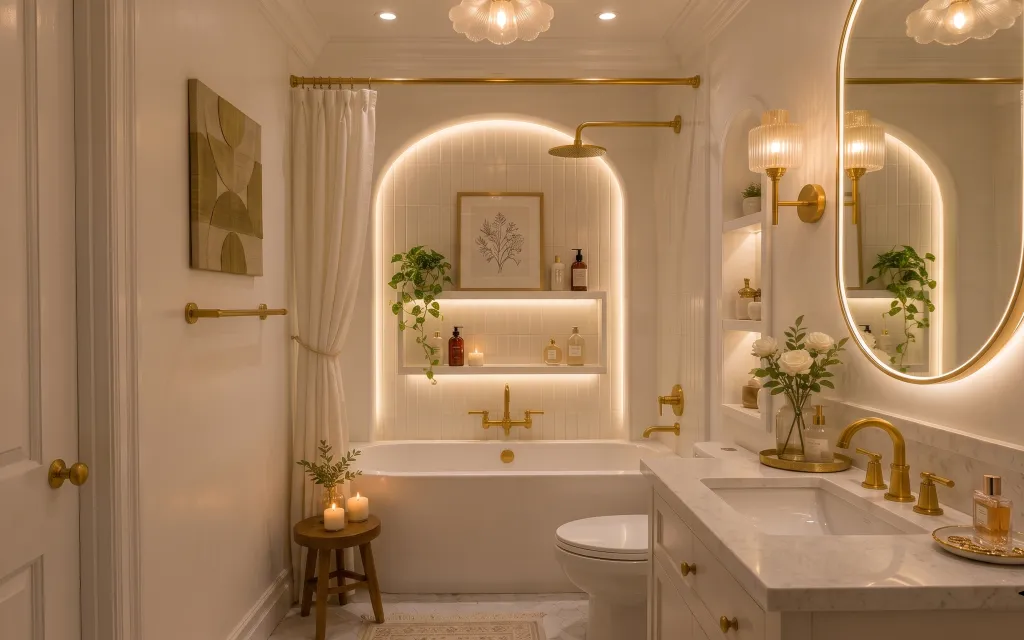
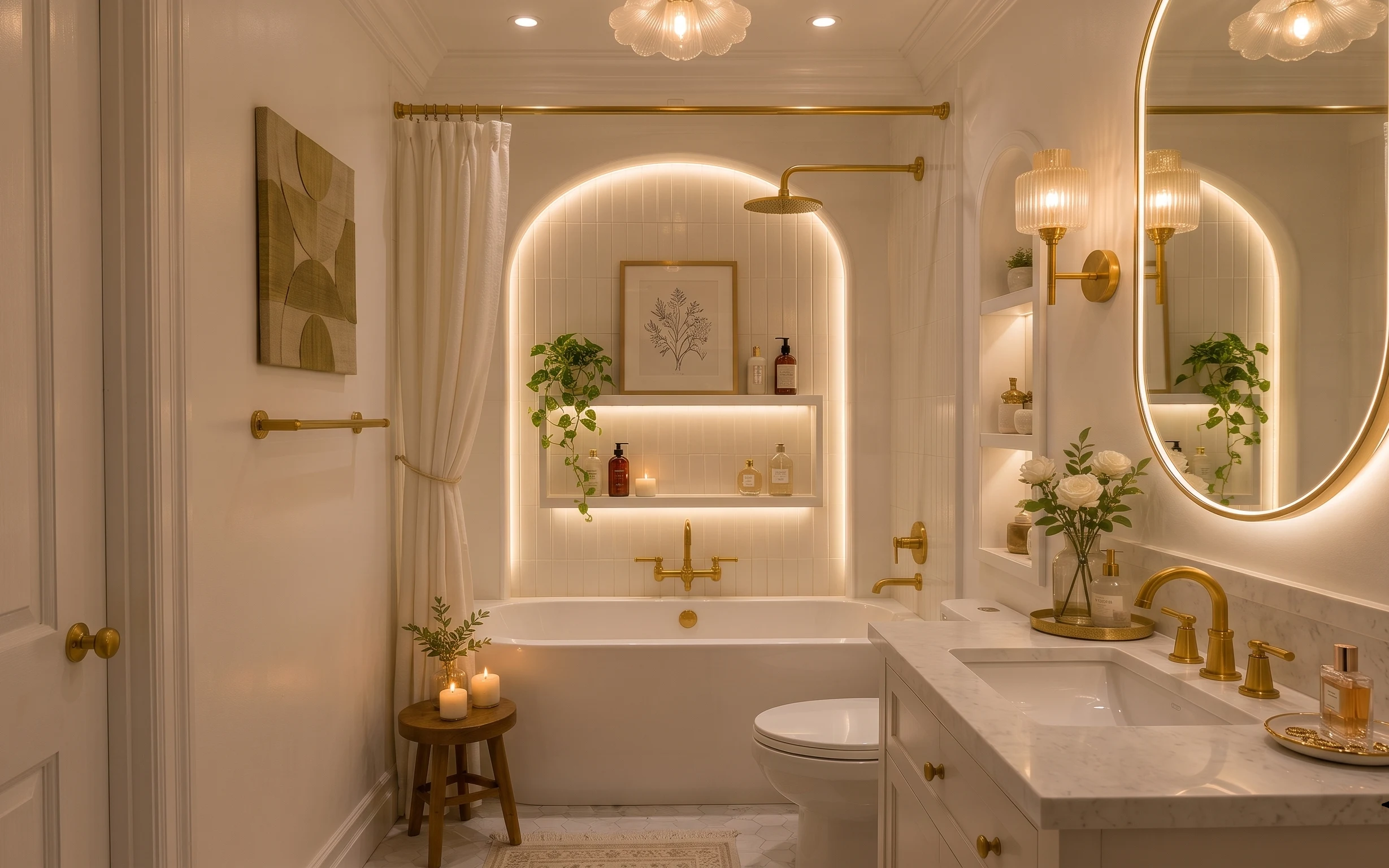
What makes this bathroom feel pulled-together isn’t any one “statement”—it’s the repeat of warm brass details against white tile, plus a calm grid of textures. In the photo, the white shower curtain hangs in soft folds, the area rug adds a quieter underfoot layer, and the framed botanical print gives the niche a focal point. The plants bring a little movement over the static tile lines, while the candle jars add that gentle evening glow. For renters, this works because the biggest visual moves are textiles, art, and styled objects that come with you at move-out.
The first time I tried styling a bathroom niche, I overdid it with too many matching bottles. I remember stepping back and realizing the tile pattern already does the heavy lifting—extra “stuff” just made it feel busy. This version keeps the botanicals airy and leaves breathing room around the framed print, so the brass reads intentional instead of crowded. If there’s one rule that stuck with me, it’s to repeat the same two materials (brass tones and creamy neutrals) and let plants be the variation.
Layer 1 — area rug under the tub ($80) Soft underfoot, even with warm tile
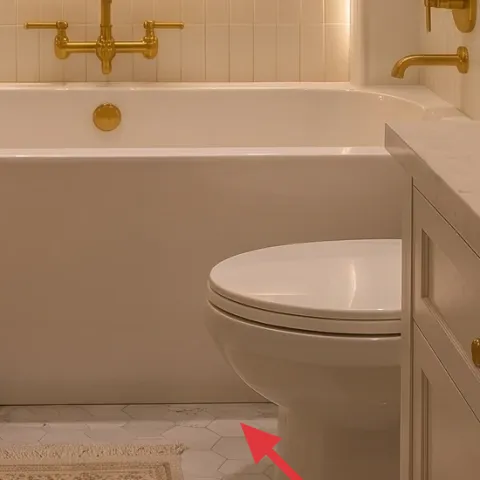
A medium pile area rug (under the tub zone) is the easiest way to make a tile-heavy bathroom feel softer. In the hero, the rug anchors the bottom edge of the scene and absorbs some of the visual “shine” from the countertop and wall tile. The trade-off is that rugs need basic upkeep—shake or vacuum regularly—especially if bath water ever splashes. Compared with adding bath mats that move around, an anchored rug gives a calmer, more styled look that still stays fully removable for a lease change.
Rug placement without slipping
Keep the rug slightly centered and use a non-slip pad if it tends to shift when you step out of the tub.
Layer 2 — vase with white flowers ($30) Repeats the brightness of the tile
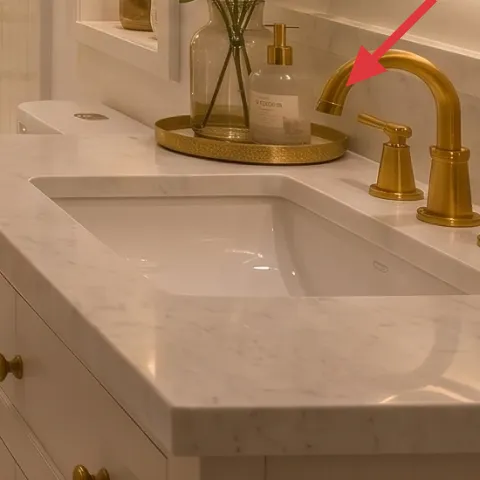
The vase with white flowers adds height and a crisp color note that matches the bathroom’s bright whites. Here, it sits low and forward on the right side, which balances the darker depth of the arched niche. The reason this works is visual rhythm: white petals echo the tile grid and help the brass accents read warmer, not brassy. The trade-off is that fresh stems won’t last forever, but that’s also why this look is renter-friendly—the arrangement can be swapped quickly with seasonal stems or even a simple greenery branch.
Go for white blooms or soft greenery
White flowers keep the palette clean; if the bouquet yellows, switch to a greener filler instead.
Layer 3 — framed botanical print in niche ($80) DIY art that fits the alcove grid
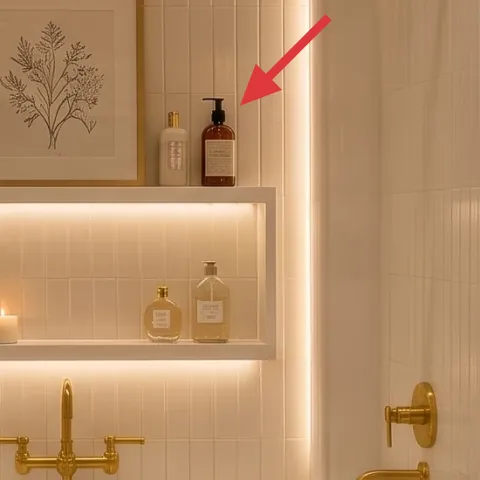
A framed botanical print gives the arched niche a clear focal point, and it harmonizes with the repeating tile pattern behind it. In the photo, the print’s muted linework and botanical shapes echo the natural plants draping over the shelf, so nothing competes. The trade-off with buying frames is that they can get expensive fast—especially if you want the right size. This is where a DIY pressed flower frame makes sense: you get a custom, nature-forward look that stays removable and looks intentional even up close.
Make it instead of buying it
DIY a pressed flower frame that matches the niche scale and keeps the botanical theme cohesive without paying for a custom print.
Materials
- Thrifted or budget frame — 1 — store display/frame aisle — $40
- Pressed botanicals assortment — 1 small bag — craft store or online — $10
- Clear acrylic sheet or thick clear packaging plastic — 1 insert — craft store — $8
- Craft glue (for securing pieces) — small bottle — craft store — $6
- White cardstock backing — 1 sheet — craft store — $6
Steps
- Choose a frame that fits the niche opening visually, then remove the backing and glass insert.
- Cut white cardstock to match the frame’s inner opening.
- Arrange pressed botanicals directly on the cardstock until the composition feels balanced.
- Use a tiny amount of craft glue to secure only the stems/edges that need anchoring.
- Swap in the clear acrylic/plastic insert, close the frame, and wipe fingerprints before hanging.
Total DIY cost: $70 — saves about $10 over buying.
Layer 4 — white shower curtain ($30) Softens the arched tile without changing fixtures
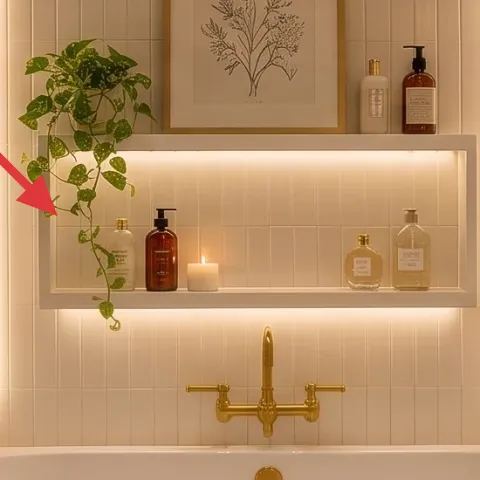
A white shower curtain creates the “breathing space” that makes an arched niche feel curated instead of harsh. In the hero, the curtain panels fall in gentle vertical folds that soften the geometry of the alcove and give the plants a lighter backdrop. The reason to choose curtain fabric over adding extra wall decor is coverage: textiles instantly smooth the visual noise of small items. The trade-off is that fabric needs light care—spot clean if anything splashes—but it’s still completely replaceable at move-out and doesn’t require any drilling or fixture swapping.
Mind the length and puddling
Choose a curtain length that just reaches the tub edge; too-short panels look flimsy, too-long ones can pool water.
Layer 5 — trailing green plant on shelf ($35) Adds movement in front of a grid
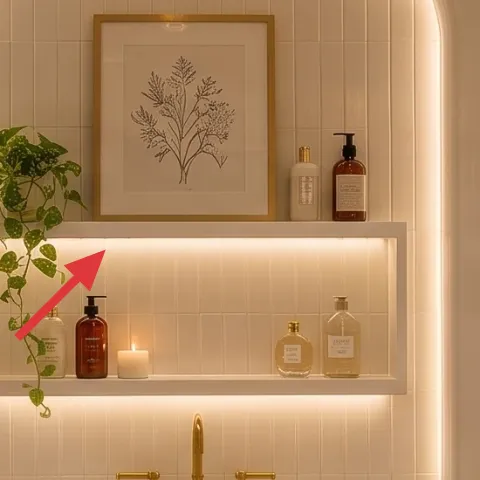
A trailing green plant draped across the shelf edge is one of the fastest ways to break up straight lines in a tiled bath. In the photo, the vine-like leaves spill forward, which makes the niche feel lived-in and less “staged.” The trade-off here is realism: plants need a little light and occasional wiping, but bathrooms with a window or strong ambient light can handle it. Compared with using only small potted plants, trailing greenery gives vertical variation and reads more expensive, even when it’s just a single pot you reposition.
Use the shelf lip as your planting anchor
Let the longest vine edge hang over the front lip so the drape looks intentional, not accidental.
Layer 6 — decorative tray on vanity countertop ($25) Keeps bottles and small items tidy
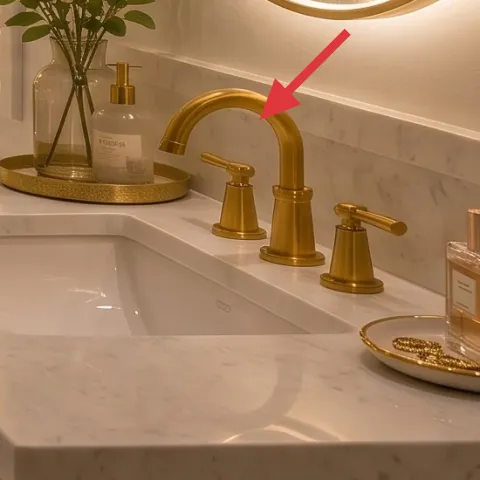
A decorative tray is a simple organizer layer that makes countertop styling look deliberate. In the hero, the tray sits beside the gold-toned accessories and creates a “landing zone” for small bathroom objects so the countertop doesn’t feel like storage. The trade-off is that trays take up a little surface area, so it’s best to keep the number of items minimal—one scent, one small jar, and maybe a folded cloth. It’s also renter-friendly: a tray lifts off in one motion at the end of the lease, and it doesn’t require replacing any landlord-installed hardware.
Choose a tray that matches the metal warmth
Warm metallics (gold-toned) pair especially well with white tile and calm, botanical art.
Layer 7 — glass candle jar on wooden stool ($35) Soft glow for evening routines
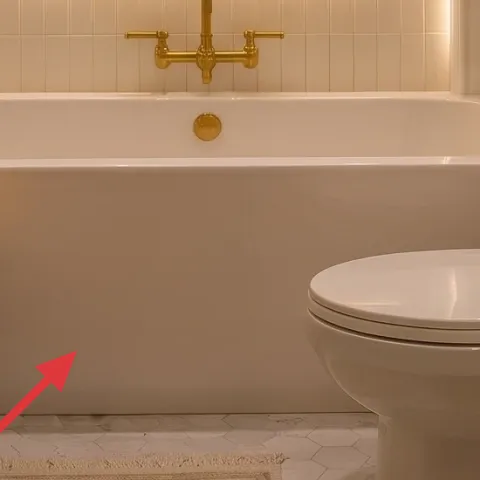
Glass candle jars bring warm, low light that makes the bathroom feel calmer after sunset. In the photo, the candle sits on a small wooden stool near the tub zone, which raises the “light source height” and balances the overhead recessed lighting. The trade-off is obvious: never leave candles unattended, and choose a stable surface so the jar can’t tip. Compared with swapping lighting fixtures, candles deliver the mood quickly and can be swapped out whenever the season changes—no permission required.
Style with a matched pair
Two candles spaced evenly read balanced; one candle often feels unfinished unless the stool is very large.
The cost, layer by layer
| Layer | Item | Cost |
|---|---|---|
| 1 | Area rug (5×7) | $80 |
| 2 | Vase with white flowers | $30 |
| 3 | Framed botanical print (DIY option) | $80 |
| 4 | White shower curtain (pair) | $30 |
| 5 | Trailing indoor plant | $35 |
| 6 | Decorative tray on vanity | $25 |
| 7 | Glass candle jar (pair) | $35 |
| Total | $315 | |
If a full vase-and-print combo feels like too much, keep the rug and curtain first—those are the big visual softeners. Then swap the flowers for greenery-only and do the pressed flower frame with a thrifted frame to stay closer to $250–$300.
What worked, what didn't (across the whole room)
This bathroom styling succeeds because it repeats a warm brass tone, then balances it with airy white textiles and botanical shapes. The result feels cohesive without needing permanent changes to the fixtures. The only parts that need restraint are countertop items and candle volume.
What worked
- The area rug softens underfoot comfort and reduces how “shiny” the tile feels at a glance.
- The white shower curtain brings vertical softness that flatters the arched niche shape.
- A framed botanical print ties the shelf decor and trailing plant into one calm focal point.
- Trailing greenery adds movement, breaking up the straight lines of the tiled wall.
- A decorative tray keeps bottles and small items visually grouped instead of scattered.
- Candle jars add warm evening light without changing any landlord-installed lighting.
What didn't
- Too many countertop bottles at once makes the tray look like crowded storage instead of styling.
- If the curtain puddles, the whole niche reads messy; length matters more than fabric weight.
- Green plants placed too high look decorative only—drape down to create the same depth effect.
- Mixing warm and cool metals on small accessories can fight the brass warmth in the scene.
What we'd skip if we did it again
Skip adding extra framed pieces around the niche. One botanical print is enough; the tile grid and the trailing plant already create the layered look.
Skip going heavy on scented products. A single decorative tray plus one bottle/jar keeps the countertop calm, while too many labels compete visually with the framed art.
Skip fresh flowers every week. Swap to greenery or a smaller vase and keep the color palette white-and-green—your bathroom will stay consistent, and costs stay predictable.
Frequently asked
How long does this bathroom refresh take?
Plan for about 2–4 hours for placement and styling if the decor is already on hand. The pressed flower frame usually takes 30–60 minutes for arranging and assembling, plus a little extra time if the frame needs sourcing. If materials are already prepped, most of the visible “finishing” work is simply centering the rug, hanging the curtain, and adjusting plant drape.
Will this work in a rental where I can’t change the vanity or lighting?
Yes—this plan avoids fixture swaps. The biggest visual moves are removable: a white shower curtain, a framed botanical print, an area rug, and countertop styling with a tray. Candle jars also add warmth without touching wiring. When the lease ends, each item can be packed out with normal cleaning.
What if my tub alcove is smaller or larger than the photo?
Size the framed botanical print and rug to match the space around the niche, not the niche itself. For smaller alcoves, use a narrower print or a simpler frame finish, and choose a rug that still clears the tub edge comfortably. For larger spaces, keep the same palette but add one extra plant length (more trailing drape) so the vertical movement doesn’t feel lost.
Where should the rug and curtain land for the best look?
The rug should sit centered under the tub zone with enough perimeter so it doesn’t look like a tiny accent. The curtain should fall in gentle folds that reach close to the tub edge, avoiding puddling. In both cases, small shifts of a few inches make a noticeable difference because tile lines are so structured.
What’s the biggest styling mistake in bathrooms like this?
Overcrowding the countertop. A tray works as a grouping tool, but it still needs breathing room—one decorative bottle or jar, one small accessory, and that’s it. The framed botanical print and trailing plant already provide “art” and movement, so adding more labels usually makes the scene feel busy.
Where can I shop for renter-friendly versions of these items?
Start with basic textiles (shower curtains and rugs) at home goods retailers or online marketplaces that offer multiple sizes. For the framed botanical print, look for budget frames in standard sizes or thrift store frames for DIY. Plants and vases are easiest to find at garden centers or local florists, and candle jars are widely available—just keep the style consistent with the gold-and-white palette.
More in Bathroom
5 no-drill upgrades for a tub alcove bath for $350
A tub alcove bath refresh with brass-and-white styling, soft lighting, and easy renter-friendly swaps. This look comes in around $350 with …
A candle-and-curtain bathroom tub nook for $400
A pastel bathroom tub nook refresh built from no-drill swaps and packable soft goods, all aimed at a calmer, candlelit feel. For $400, this…
What $300 buys: a warm marble renter bathroom refresh
A renter-friendly bathroom refresh with no-drill styling: warm lighting emphasis, folded towels, and shelf-calm accessories. This look fits…