- Best for
- Shared housing living rooms
- Time
- 1 afternoon
- Total cost
- $565 (aim $600)
- Renter-safe
- Yes — textiles + freestanding decor
Why warm minimalist neutrals are the sofa living room of 2026
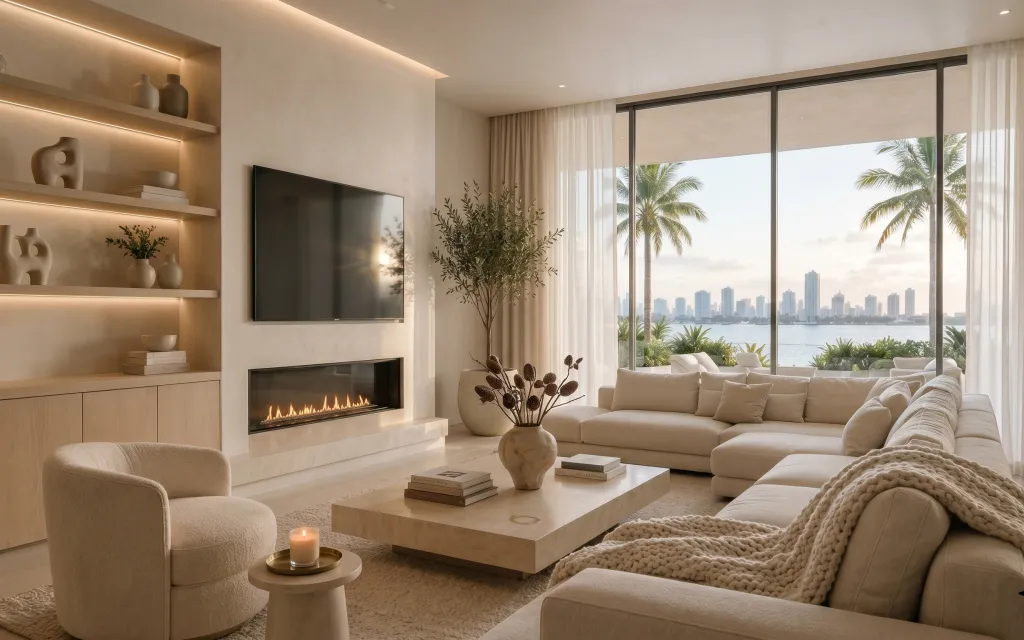
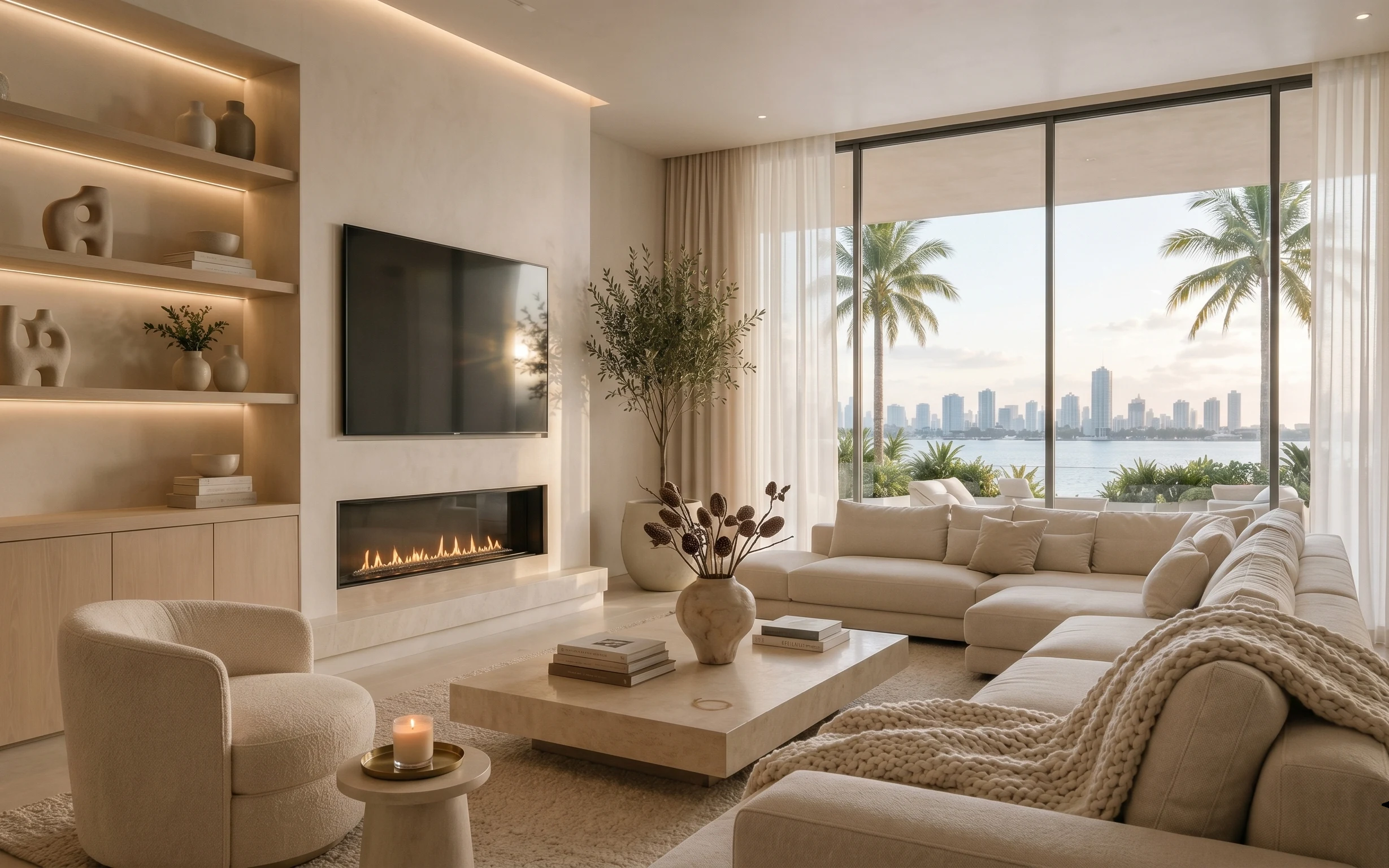
That soft glow comes from the same place as so many magazine interiors: warm layers and simple shapes. In this photo, cream sofa cushions, a chunky beige throw, and a low, light coffee table keep the space calm, while the beige floor-length curtains add height and drape. Even without changing anything fixed, the eye reads “designed” because the textures agree—wooly knits, smooth ceramics, and brushed stone. For shared housing, this is achievable because you can swap textiles and decor that dismantle in minutes.
The first time I tried to copy a look like this, I went too matchy-matchy—same shade everywhere, no texture, and it ended up flat. What changed my mind was noticing the contrast: a soft rug underfoot, layered curtains at the window, and small objects (a vase and books) that break up the expanse. That’s the trick—keep the palette, then vary the textures and scale so it doesn’t feel like one big beige sheet.
Layer 1 — cream sofa cushions ($30) Plush seats, not shiny upholstery
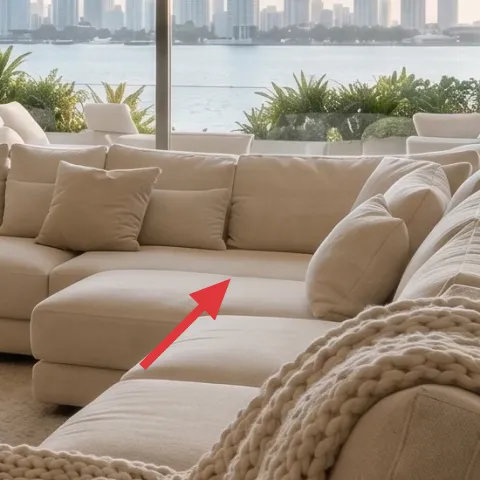
These cream sofa cushions are the anchor color for the whole photo—soft, light, and forgiving on busy shared-house schedules. Go for cushion covers (or a mix of covers and inserts) that read matte rather than glossy, because the room’s warmth comes from texture, not shine. The trade-off is that you’re choosing comfort over crisp tailoring; the cushions look “lived in,” which hides everyday marks better. If the existing cushions are already in the right neighborhood of cream, this layer is mostly about keeping the covers fresh and the proportions even across the seating.
Match fabric “finish,” not just color
In warm minimalist interiors, matte textiles look more expensive than exact color-matching with reflective fabrics.
Layer 2 — lit candle on small round tray ($35) A low flame, high impact
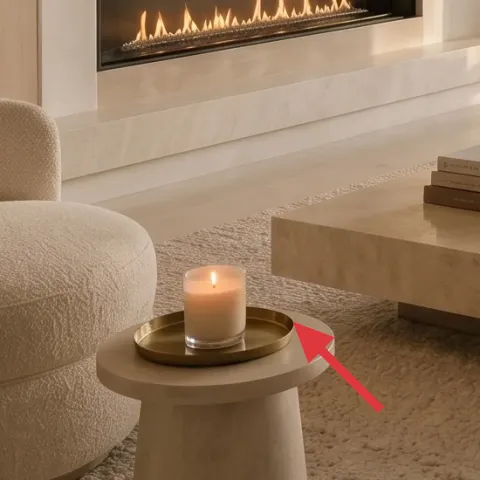
Make it instead of buying it
This DIY candle pour gives you a similar warm glow on a small tray without committing to a single store’s candle style.
Materials
- Paraffin or soy candle wax — ~12 oz — craft store — $18
- Wicks (pre-tabbed) — 1–2 — craft store — $7
- Candle dye (warm nude/taupe tint) — small tube — craft store — $6
- Fragrance oil (optional) — 1 small bottle — craft store — $4
Steps
- Melt wax in a heat-safe container using gentle heat.
- Prepare the wick: center it, secure it to the container base.
- Stir in dye (a little goes far) and fragrance if using.
- Pour slowly into the container.
- Let the candle cure fully, then trim the wick before lighting.
- Use the candle on the same kind of small round tray styling setup.
Layer 3 — tall ceramic vase with branches ($40) Bring height without clutter
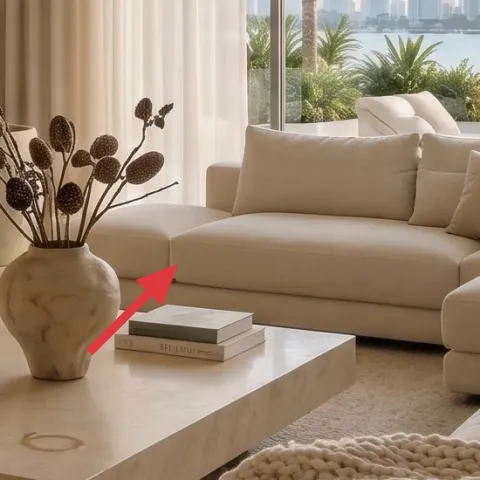
The tall vase and branch stems are doing two jobs at once: they add vertical line next to the window, and they keep the styling airy so the room doesn’t feel crowded. Look for a medium-to-tall ceramic vessel with a slightly matte finish, then add stems with lots of small leaves or buds for a “filled” silhouette. The trade-off is that real branches eventually shed and need refreshing; if that’s a headache, choose faux stems that still move slightly and photograph well. Either way, this is easy to pack because it’s one object (vase) plus a bundle of greenery that breaks down.
Pick stems that read “fine” from a few feet away
Big, chunky florals make the vase look heavy; this photo keeps things delicate and evenly speckled.
Layer 4 — round side table ($80) Make a styling landing pad
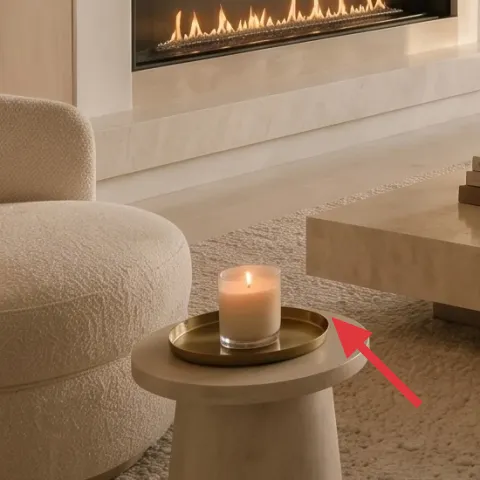
That round side table works because it’s visually simple and because it gives you a surface for small lighting and objects. A round top also softens the room’s angles—everything here is straight-lined built-in shelving and window framing, so the circle keeps the composition calm. The trade-off is that round tables can feel less practical for storage, so style with what you can swap quickly: one candle, a small book stack, or a tray. For shared housing, freestanding round tables are usually easier to move than matching end tables, and they still look intentional with the right height.
Match the table height to your seat
If the surface sits at about cushion height, it looks “designed,” not borrowed.
Layer 5 — beige floor-length curtains ($80) Privacy with soft structure
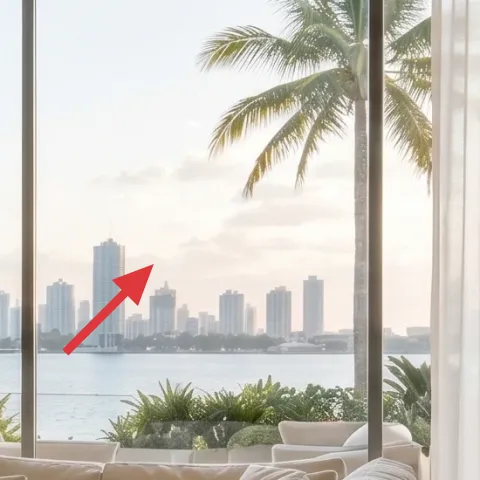
The beige floor-length curtains add softness and “finished” height along the window, which is especially important when you can’t change the wall or fixed trim. Choose a heavier curtain in a warm neutral that falls in straight, relaxed folds—no crisp sheers that cling. This works with the sheer layer in the photo because the two fabrics create depth: airy light diffusion plus weight at the bottom. The trade-off is that very thick curtains can feel too warm for summer, so stick to a medium-weight fabric and embrace a gentle drape.
Avoid curtain fabric that wrinkles permanently
If the weave sets creases fast, it won’t look as smooth after transport between leases.
Layer 6 — rectangular coffee table ($120) Style the surface, not the floor
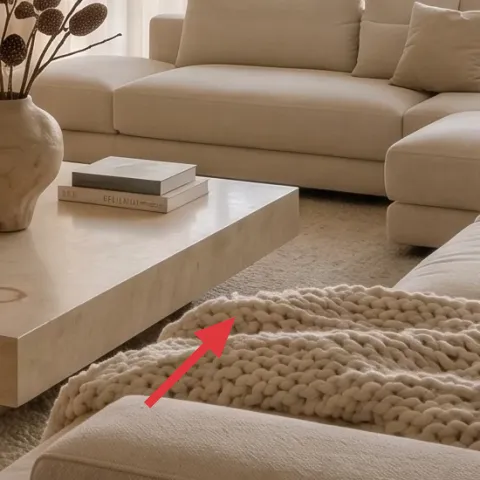
This rectangular coffee table is the “stage” for the room’s calm, minimal styling—books plus a single vase element keeps the surface from feeling busy. Go for a low, simple silhouette so the view to the window stays open, then anchor it with 2–3 items that have different textures (ceramic, paper, and natural greenery). The trade-off is that you’re committing to a lighter visual load: if you add baskets, remotes, or lots of odds and ends, the look stops reading minimalist. The upside for shared housing is that the styling items pack flat, while the table is still an easy carry compared to larger furniture.
Keep the object count small, not the colors
A few tactile objects read richer than a full tray of similar items.
Layer 7 — beige area rug ($180) The grounding layer
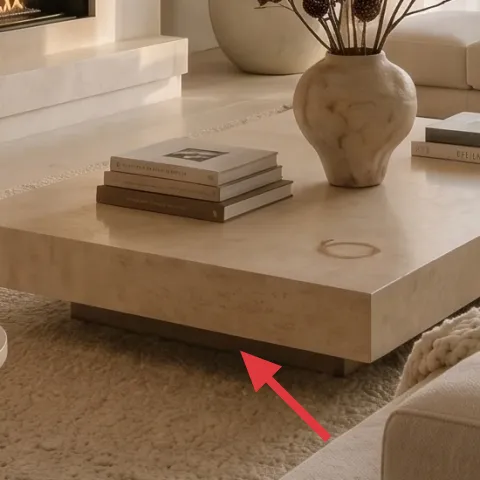
The beige area rug is what turns a seating area into a “room within a room.” It unifies the cream sofa cushions, the warm wood tones, and the stone fireplace surround, so nothing feels like it’s floating. Choose a rug with a low-to-medium pile or a textured weave that can handle foot traffic; the goal is to hide everyday scuffs while still catching light softly. The trade-off is that ultra-thin rugs can look cheap under low lighting, so invest in actual fiber presence. This one is also the most practical move for shared housing: roll, wrap, and move in one trip.
Extend the rug past the front legs
That simple layout makes seating feel anchored instead of accidental.
The cost, layer by layer
| Layer | Item | Cost |
|---|---|---|
| 1 | Cushion covers for cream sofa cushions | $30 |
| 2 | Lit candle on small round tray | $35 |
| 3 | Tall ceramic vase with branches | $40 |
| 4 | Round side table | $80 |
| 5 | Beige floor-length curtains | $80 |
| 6 | Rectangular coffee table | $120 |
| 7 | Beige area rug | $180 |
| Total | $565 | |
For a cheaper variant, prioritize the rug plus one curtain panel pair, then use thrifted candle trays and existing ceramic vases. You can also downsize the coffee table to a smaller rectangular model so the styling still feels intentional, just less “architectural.”
What worked, what didn't (across the whole room)
The biggest win is how the soft palette stays consistent while the textures do the variety work. The second win is that the styling feels curated without needing permanent changes. The main miss: going too matchy on texture can flatten the whole effect fast.
What worked
- Cream cushions keep the seating bright, even when daylight shifts across the day.
- Beige curtains add height and gentle structure over sheer light.
- The tall ceramic vase introduces vertical rhythm without cluttering the coffee table.
- A round side table gives a dedicated “home” for the candle and a small book moment.
- The rectangular coffee table stays visually open, letting the window remain the focal point.
- The beige area rug anchors everything and hides everyday wear better than pale flat-weave options.
What didn't
- Overstuffing the coffee table made the room feel styled for a photoshoot, not lived in.
- If cushion covers are too shiny, the whole warm palette reads cooler than intended.
- Curtains that are too thin can lose the “folded” look and feel accidental.
- Skipping the rug layout (front legs off the rug) makes the seating feel disconnected.
What we'd skip if we did it again
Skip buying extra matching “set” pieces just to look coordinated. In shared housing, you’ll regret it when you move—plain shapes plus varied textures travel better and still photograph the same.
Skip ultra-thin rugs that slide under furniture. Spend on fiber presence instead, because a rug is what tells your brain “this is one zone,” especially under warm lighting.
Skip candles that require a special burner or complicated setup. A simple container and a small tray are easier to pack, swap, and keep lit without fussing over tools.
Frequently asked
How long does this $600 living room refresh take?
Plan for about 3–5 hours total if most items are already in place. The fastest wins are swapping cushion covers, arranging the vase and book stack, and adjusting curtain placement. The slow part is rug layout—front legs on the rug matters—and making sure the coffee table objects sit at the right height.
If I’m renting, will curtains work without drilling?
Yes. Use a tension rod mounted inside the window frame, or clip-on curtain rings that hang from an existing rod. The key is keeping the curtain fabric long enough to pool slightly and still look intentional when moved between rooms. Avoid anything that needs hard mounting or wall anchors.
What if my living room is smaller than this one?
Scale down the coffee table or switch to a narrower rectangular model so the seating still feels open. Keep the rug large enough that the front legs of the sofa land on it, even if that means going slightly thinner in pile. Use one tall vase instead of several small ones to keep vertical rhythm without clutter.
What if my living room is bigger?
Add a second candle tray moment (same warm tone, different height) and go for wider curtain panels so you get fuller folds. Keep the number of objects on the coffee table low, but add one larger ceramic or a longer book stack. A larger rug will help if the seating zone feels too spread out.
Where should I shop for these move-friendly pieces?
Start with affordable soft goods: cushion covers, curtain panels, and a rug from retailers that offer free returns. For the vase and candle setup, look for home sections at thrift stores or discount decor shops. Freestanding furniture like the side table and coffee table often comes from IKEA-style flat-pack brands for easier moving.
What’s the biggest mistake people make in a warm-neutral living room?
Going all one texture and one finish. If everything is smooth, the room reads flat; if everything is too matte, it can feel dull. Aim for three textures—something knit, something ceramic/stone, and something woven—so the palette stays calm but the surface interest stays lively.
More in Living Room
7 no-drill refreshes for a $600 sofa living room
A move-friendly sofa living room refresh for shared housing, built around warm neutrals and zero permanent changes. This $600 plan focuses …
Renter-Friendly Japandi Living Room Refresh for Under $400
A renter-friendly living room makeover that stays under $400, anchored by a 5x7 jute-look rug and a pair of airy sheer panels. A muted gree…