- Season
- Year-round with swap-in textiles
- Weatherproof
- Prioritize wash-friendly throws
- Cost
- $600 budget for the full refresh
- Difficulty
- Easy (mostly swaps + styling)
Why warm wood-and-green accents is the courtyard seating nook of 2026
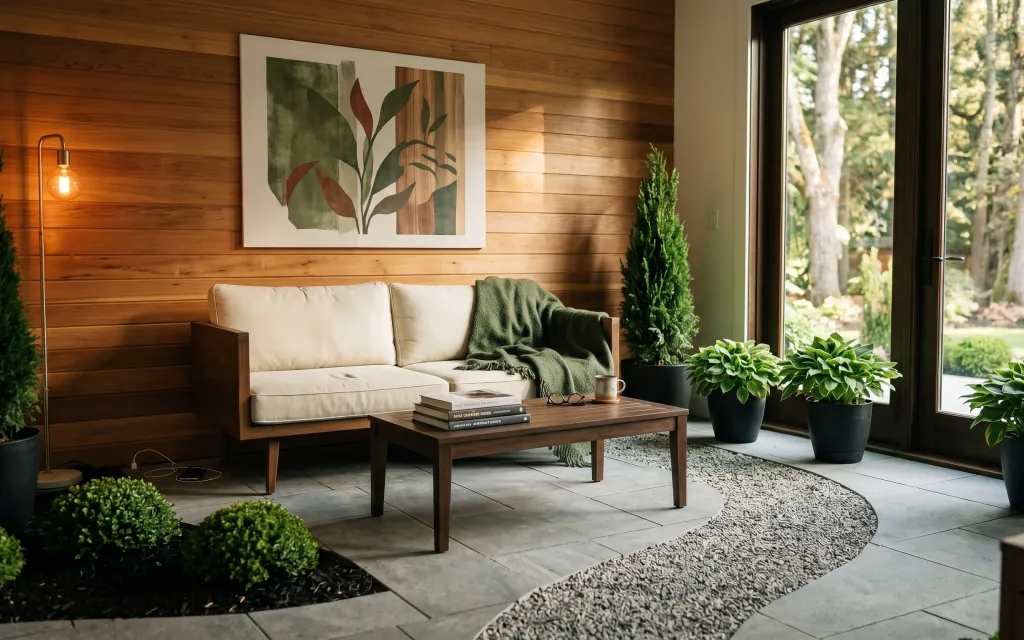
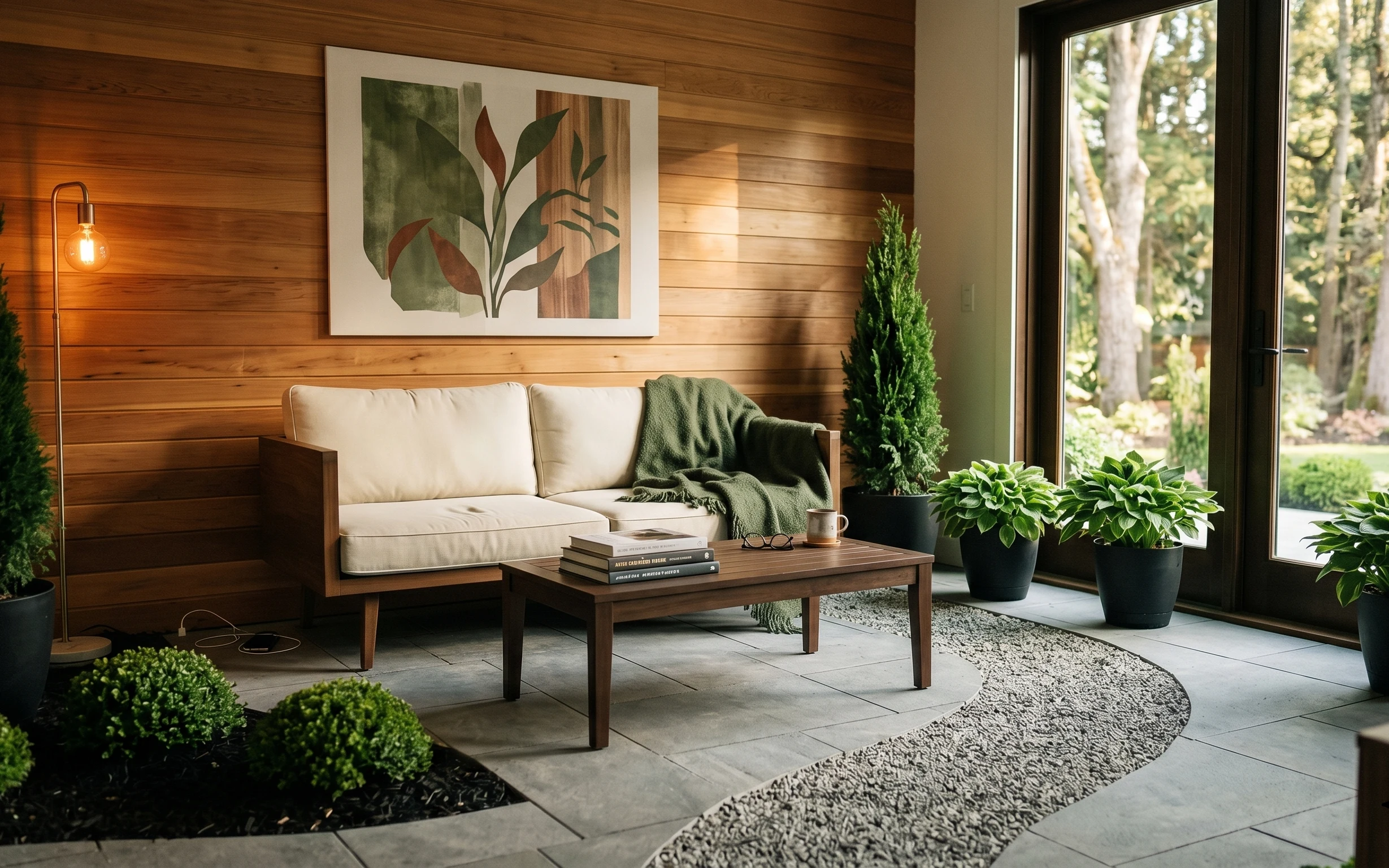
That warm wood wall and the green throw set the tone for a space that feels grounded, not fussy. The framed botanical print gives you a focal point at eye level, while the exposed-bulb lamp adds a vintage-leaning glow. Texture-wise, you’ve got cream cushions, a textured green throw, and a neutral rug that softens the tile floor. For shared housing, this is achievable because it’s mostly swaps: textiles, freestanding pieces, and clip-on style styling that packs into a few boxes.
I almost overdid it the first time I tried to make a shared corner “feel like mine.” I kept adding matching decor until it looked coordinated instead of lived-in. What fixed it was choosing one repeat (green) and giving it three jobs: a throw, plants, and one framing moment. If you keep the palette tight and let texture do the work, the nook reads finished even after a move.
Layer 1 — round patio rug ($200) Texture underfoot that hides tile cold
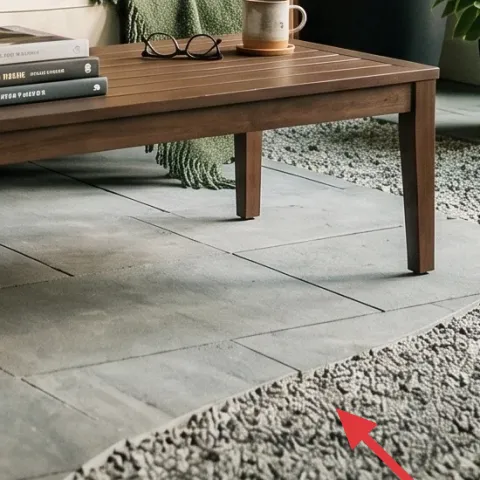
A round patio rug turns a hard tile floor into something you’ll actually sit on without thinking about it. In the photo, the neutral gray tone balances the warm wood wall and lets the green stand out. I like this over a rectangular runner here because a circle mirrors the grouping of furniture and plants, making the whole area feel wrapped. The trade-off is that round rugs can be a little trickier to find in compact sizes, so measure the seating footprint first. For move-ability, it rolls up, slides into a tote, and comes with you when leases change.
Pick a low-shed fiber if you’re outside-adjacent
Even in covered courtyards, choose a rug that brushes clean easily—less scrubbing means more “use it daily.”
Layer 2 — green throw blanket ($60) Drape for color you can pack
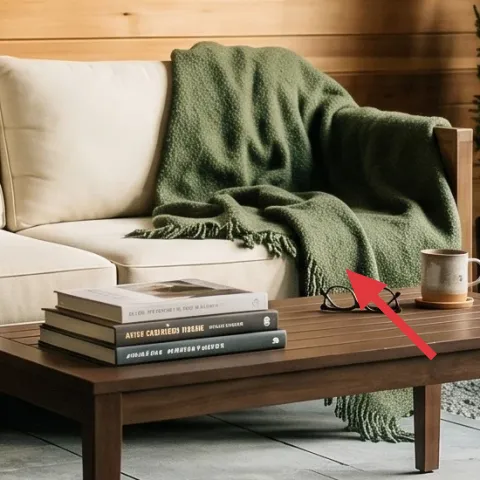
This green throw blanket does two jobs at once: it adds color and it gives your loveseat a casual, lived-in silhouette. On the bench in the hero, it’s folded so the texture shows, but it’s still light enough to take down in seconds. I’d rather start with a throw than add extra pillows because throws cover more surface area and feel intentional even when you’re not “done styling.” The trade-off is that you’ll want a second backup throw if you spill a drink—laundering outdoor textiles is real life. When moving, it folds flat, so it’s one of the easiest items to keep.
Match the green family, not the exact shade
You’re echoing the plants’ leaf tone, so a slightly different green reads cohesive instead of forced.
Layer 3 — framed botanical wall art print ($80) A nature focal point over the sofa
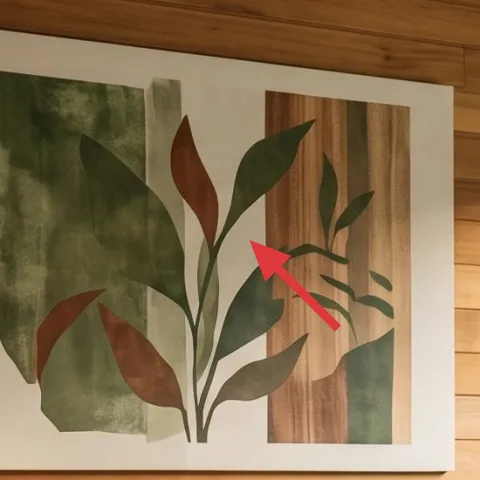
The framed botanical wall art print is what makes the space feel like it belongs to a person, not just a rental layout. In the photo, it sits centered on the warm wood plank wall, giving that vertical “anchor” that plants can’t. I’d choose art over a second shelf or hanging decor because it’s one clean focal point—simpler to pack, too. The trade-off is frames take up space, but you can protect corners with paper wrap and move it like a book. For shared housing rules, use no-drill hanging methods and keep the art removable for your next place.
Keep it centered with the loveseat back height
A quick visual check: the art’s midpoint should land around where shoulders sit when you’re lounging.
Layer 4 — tall metal floor lamp with exposed bulb ($120) Warm light that reads “evening-ready”
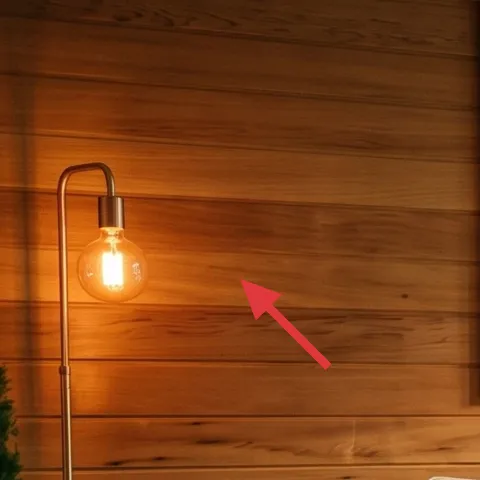
A tall metal floor lamp with an exposed bulb adds atmosphere without needing any hardwired install. The warm glow in the hero makes the cream cushions look softer and makes the wood wall feel even richer. I like this over string lights alone because the light has direction—everything looks better when it’s not only overhead ambient. The trade-off is that you’ll want to place it where the cord is easy to route safely along the floor. Since it’s freestanding and moveable, it’s also a “buy once, relocate forever” type of piece.
Don’t rely on only one warm source
If the rest of the corner stays dim, add lamp height contrast (like a throw + rug base) so the room doesn’t flatten.
Layer 5 — wood coffee table ($15) Styling surface for books and small rituals
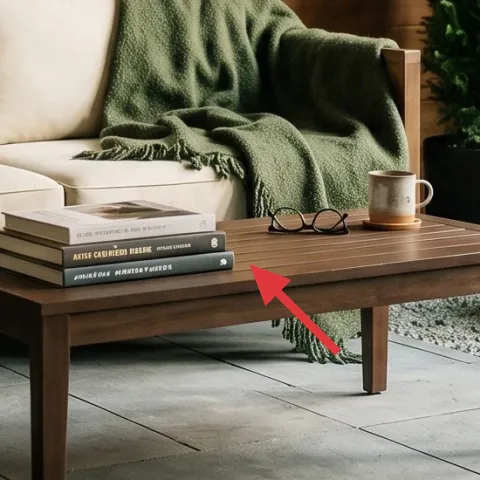
The wood coffee table isn’t just function—it’s the stage for the small objects that make a nook feel lived-in. In the hero, it’s where the stacked books and everyday cups live, and it’s exactly the kind of surface that looks tidy even when you’re not “decorating.” I’m calling it out because swapping the surface styling is far cheaper than swapping furniture. The trade-off: tabletop clutter shows fast on glossy days, so you’ll be choosing fewer, better objects. For packability, the table stays, but you can keep your decor accessories in the same box each move.
Keep objects grouped in threes
One tall thing, one medium, one small makes the table read intentional instead of scattered.
Layer 6 — cream seat cushion ($12) Soft anchor that unifies the palette
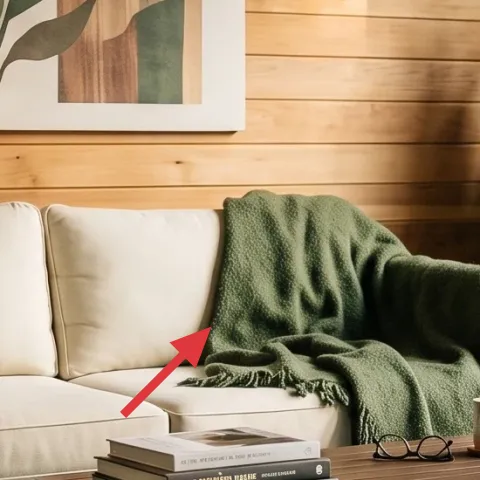
That cream seat cushion ties the whole color story together. It balances the warm wood wall and makes the green throw and plants look brighter by contrast. I like starting here because cushions are the easiest “swap without consequences” item for shared housing—cover, remove, bring. The trade-off is that you’ll have to keep it clean enough to keep the cream looking fresh, especially in outdoor-adjacent spaces. If you’re changing seasons, plan for a spare cover you can rotate. For moves, cushions vacuum-compress or fold down, so they fit in a box quickly.
Choose a cover you can wash
Even a quick spot-clean habit keeps the cream from looking tired.
Layer 7 — large dark planter with leafy plants on right ($40) Repeat the green for a planted feel
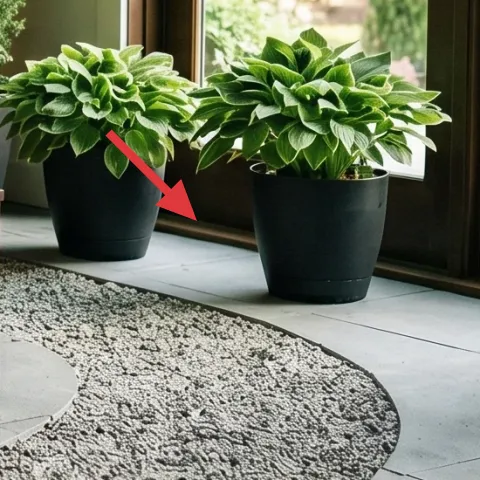
Large dark planters bring the biophilic look home, and they also give you the “color repeat” that makes everything else feel deliberate. In the photo, the leafy plants on the right side create a soft frame for the window door, so the outdoor view and your interior corner agree. I’d skip adding more wall art here because the plants are doing the heavy lifting in mood and scale. The trade-off is that plants need light and occasional care—so pick hardy varieties that match the door’s exposure. For shared housing, planters and soil are easy to pack when you empty the pot and move only the container.
Make it instead of buying it
DIY a painted terracotta planter set so the green plants match the nook palette, while the move-friendly containers come apart and pack flat.
Materials
- Terracotta pots — 3 small pots — craft store — $14
- Acrylic paint (green/earth tones) — 1 set — craft store — $8
- Sponge brush — 1 pack — craft store — $4
- Painter’s tape — 1 roll — hardware store — $2
- Thin plastic liner (for waterproofing) — 1 pack — hardware store — $2
Steps
- Wash and fully dry the terracotta pots so paint grips evenly.
- Use painter’s tape to block simple leaf-like bands and shapes.
- Stipple or sponge-paint the first base color across the pot face.
- After the first color dries, add a second darker green layer for depth.
- Peel tape while paint is just set, not fully cured, for cleaner edges.
- Let the pots dry completely in a ventilated area, then line with thin plastic.
Total DIY cost: $30 — saves about $10 over buying.
The cost, layer by layer
| Layer | Item | Cost |
|---|---|---|
| 1 | round patio rug | $200 |
| 2 | green throw blanket | $60 |
| 3 | framed botanical wall art print | $80 |
| 4 | tall metal floor lamp with exposed bulb | $120 |
| 5 | wood coffee table styling accessories | $15 |
| 6 | cream cushion cover | $12 |
| 7 | large dark planter with leafy plants on right | $40 |
| Total | $527 | |
A cheaper variant keeps the same layout but drops cost by choosing a flatweave rug, a lighter-weight throw, and one larger planter instead of several—still using warm lighting and one framed botanical print.
What worked, what didn't (across the whole room)
This nook works because it repeats one green accent in three places while the neutrals (cream, gray, and warm wood) keep the palette calm. The lighting and rug base also make the corner feel intentionally “set,” not like a leftover patio corner. The only downside is that the more plants and textiles you add, the more maintenance you feel day-to-day.
What worked
- The round rug softens tile and makes the seating feel anchored instead of floating.
- The green throw blanket adds color depth without requiring extra furniture or permanent changes.
- The framed botanical print gives a clear focal point against the wood plank wall.
- The exposed-bulb lamp provides warm direction that flatters cushions at night.
- Leafy planters near the door tie the interior corner to the outside view.
- Cream cushions keep the whole setup cohesive with warm wood and green accents.
What didn't
- Too many small objects on the table can read cluttered fast when lighting is bright.
- Plants that need different watering schedules make shared-house routines harder.
- Large framed art can be bulky to move unless you protect corners during packing.
- If the rug tone is too cool, it can make cream cushions look dull.
What we'd skip if we did it again
Skip adding a second framed botanical print. One statement piece over the loveseat does more for the eye than stacking smaller frames, and it’s easier to protect (and pack) for the next lease.
Skip a bright, high-saturation throw if the plants are already deep green. A calmer green or muted texture keeps the corner from looking seasonal or “too much” when you live in it daily.
Skip oversized planters that force heavy moving. Choose containers you can lift one-handed, and make them match with DIY-painted pots so you get the look without the hassle.
Frequently asked
How long does this courtyard seating nook refresh take?
Plan for about 2–3 hours the first day: rug placement, throw drape, arranging planters, and setting the lamp position. The botanical print may take 15–20 minutes depending on the no-drill hanging method. If you DIY the terracotta pots, add one short dry time window (it’s mostly hands-on painting and spacing decisions). After that, expect only quick styling tweaks.
Is this renter- or shared-housing friendly if the space isn’t “all mine”?
Yes—most of the impact comes from removable items: the rug, throw, framed print, a freestanding floor lamp, and moveable planters. You’re not changing fixed fixtures, and you can pack everything into cardboard boxes for the next lease. The only “care” component is plant maintenance, which you can keep simple by choosing hardier varieties and using liners so containers stay clean.
What if my courtyard or room is smaller than this photo?
Use the same recipe but scale down: a smaller rug works if it still sits under the loveseat’s front legs, and keep one planter grouping rather than multiple clustered pots. Choose a throw with more drape and fewer folds so texture reads even in tighter corners. For wall art, pick one statement print sized to the loveseat back—avoid adding multiple frames that overwhelm a small wall.
Where should I shop differently to stay under budget?
For the big visual hitters, look for a rug and framed art at home goods stores or thrifted-frame shops, but source planters and lighting from places that offer freestanding options. For the DIY planter set, craft stores are best because the terracotta pots are inexpensive and paint comes in the right earth tones. If you’re replacing textiles, search by color family (cream/green) rather than matching exact brands.
What’s the biggest mistake people make with outdoor-adjacent lounge styling?
They buy too many matching items that all compete. The hero look works because warm wood and cream provide a neutral backbone, then green repeats in only a few places: throw + plants. If you add too many greens (or too many different textures), it starts reading “decor store” instead of “lived-in.” Keep one focal point on the wall and let plants do the softer, moving background work.
Can I swap the rug shape if I can’t find a round one?
Absolutely. A small rectangular or oval rug can keep the anchored feeling as long as it sits beneath the loveseat’s seating area. The main goal is a buffer between tile and legs, plus a soft visual boundary for the nook. Just keep the color in the same gray-to-taupe family so the cream cushions and green throw still feel balanced.
More in Outdoor & Patio
7 no-drill updates for a courtyard seating nook
A courtyard seating nook makeover with seven move-friendly swaps built for shared housing, guided by a $600 budget. The look leans modern f…
How to light a garden lounge patio for under $600
A garden lounge patio, built for renters: soft string lights, warm candle jars, and a cream throw over an outdoor loveseat. This move-frien…
How-to: a tropical outdoor lounge patio for $500
A tropical outdoor lounge patio refresh built for move-friendly living: warm string lights, hanging paper lanterns, and pillow color that r…