- Best for
- a coastal-calm living room refresh
- Cost
- about $400
- Difficulty
- easy (mostly textiles + plug-in lighting)
- Time
- 2–4 hours
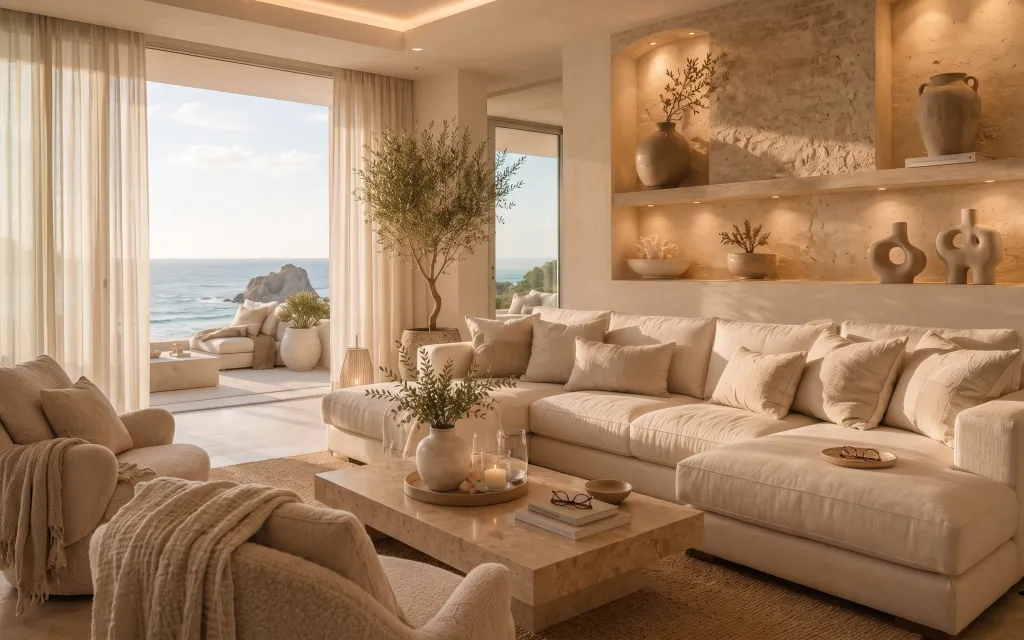
Why warm-beige coastal palette is the sofa seating area of 2026
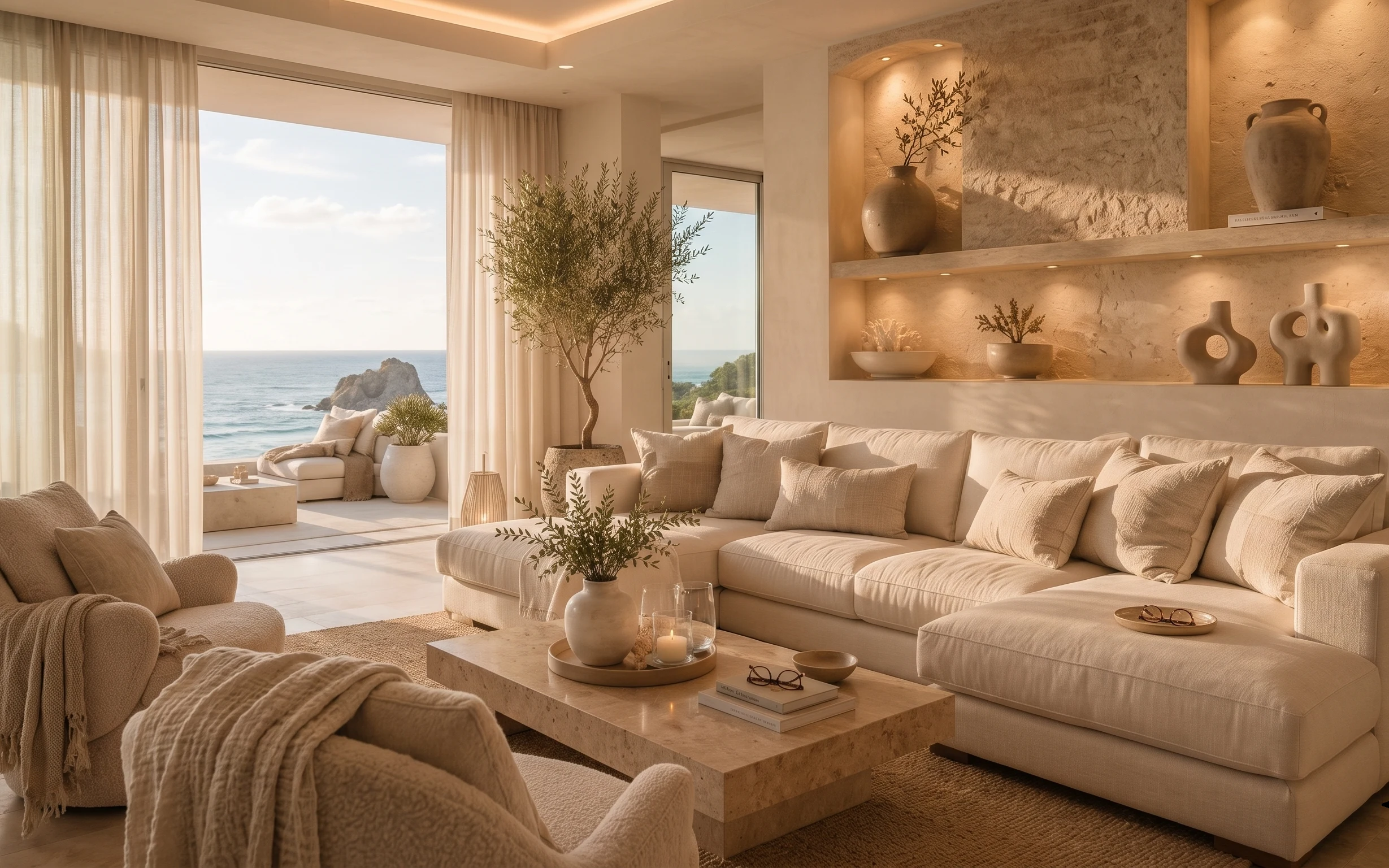
That airy, spa-like feeling comes less from big-ticket furniture and more from material choices: sheer beige curtains, a textured beige rug, and pillows and throws that look lived-in. The lighting stays soft and warm, and the styling leans sculptural—vases and candleglass on a stone-toned coffee table. I first tried to fake this in my own apartment with “too matchy” neutrals, and it looked flat. What changed my approach was matching texture first, then adding one glow source and one plant moment. For renters, it’s absolutely achievable because everything here is swap-in, swap-out.
I’ll admit a personal mistake: I once bought a pretty lamp and didn’t notice the bulb temperature was basically “office white.” In photos it looked fine, but in real life it killed the calm. Here, the warm lamp light and candleglass do the heavy lifting, so the beige tones read cozy instead of yellow. The other thing I learned the hard way is to keep styling at two heights—table level and shelf level—so the room doesn’t feel empty or cluttered.
Layer 1 — candle pour (DIY in glass jar) ($15) Soft glow in the coffee-table center
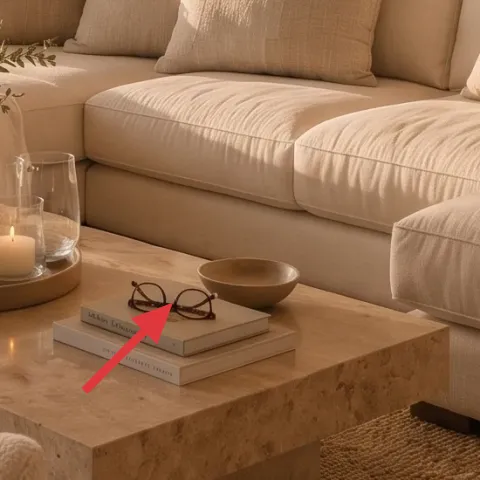
Replicating the candleglass look is easier than it seems: pour a small, clean-burning candle in a clear jar and place it on the coffee table near the center. The key is scale—this isn’t a tall centerpiece, it’s the warm “breathing point” that makes beige textures feel intentional. I like glass jars because they catch the lamp light, and the flame adds depth without adding another color. Choosing a candle pour also keeps the project move-out friendly: keep the jar and pour again later, or re-home the jar when the lease ends. For the trade-off, you’ll have to refresh the candle periodically.
Make it instead of buying it
This candle pour lets you get the same clear-jar glow as the coffee-table candles without committing to a new decor purchase.
Materials
- Wax—enough for 1 small jar candle (around 8–10 oz) — 6 — craft store — $6
- Wick + wick tab (1 set) — 1 — craft store — $2
- Clear glass jar (reuse or buy 1) — 1 — thrift or craft store — $1
Steps
- Choose a clear jar and weigh the wax so you can fill the jar to the height you want.
- Center the wick in the jar and secure it with the wick tab.
- Melt the wax gently until fully liquefied.
- Pour into the jar slowly to reduce bubbles.
- Let it cool at room temperature until fully set (no touching yet).
- Trim the wick to a safe length.
Total DIY cost: $9 — saves about $6 over buying.
Use warm lighting, not just “a lit candle”
Clear jars reflect lamp light, so pair this with a warm plug-in bulb for that soft, golden look.
Layer 2 — beige throw blanket ($25) Textured drape on the sofa arm
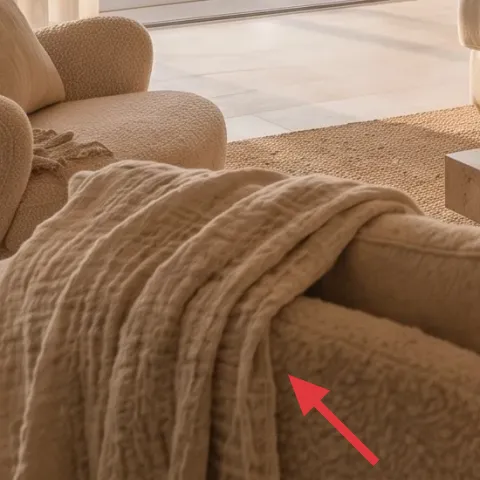
Add a beige throw blanket with an obvious knit or woven texture and drape it over the sofa arm the way the hero does—slightly rumpled, not perfectly folded. This works because texture reads even when the palette is mostly monochrome, and the blanket also frames the darker edges of the cushions. I’ve found that a “flat” cotton throw makes beige look tired, while a chunkier weave keeps everything looking intentional. The trade-off is weight: you’ll feel the difference, so choose a breathable fabric if your living room runs warm. This is also one of the easiest layers to remove at move-out without stress.
Pick a weave you can see from across the room
If you can’t spot the stitch pattern at a glance, it won’t add the same depth to the neutral scheme.
Layer 3 — medium indoor plant in white pot ($35) A leafy silhouette near the window
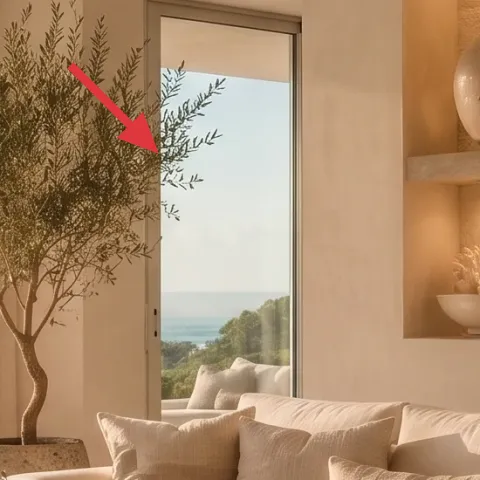
Bring in one medium indoor plant with airy branches and keep it in a white pot so it matches the bright, coastal styling in the photo. Place it near your brightest window or in the natural “gap” between seating and curtains—where the hero’s potted tree creates a vertical line. Plants do two jobs here: they add shape beyond textiles, and they soften the clean edges of furniture and stone-toned surfaces. The trade-off is upkeep; even low-light plants still need occasional rotation and watering. If you want the same look fast, buy the plant already grown rather than starting from seed.
Keep leaves airy, not bushy-dense
Branchy silhouettes read coastal and give the room that “sunlight sketch” effect.
Layer 4 — sheer beige curtain panel pair ($80) Light filtering on the left side
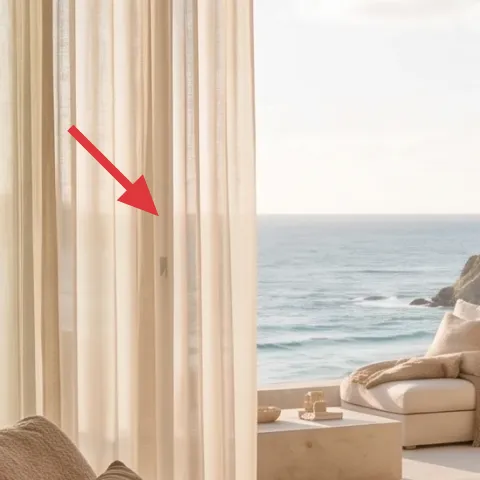
Sheer beige curtains are what make the whole room feel bright without looking stark. Choose a curtain panel pair with a soft, slightly textured weave and hang them high enough to visually lengthen the wall—aim for near-ceiling height like the hero’s composition. This works better than buying thicker drapes because the look depends on layered light: your rug and throws bring texture, while the sheers keep the space airy. The trade-off is privacy—sheers alone won’t stop neighbors from seeing silhouettes at night. For renters, sheers are also easy to pack away, and you can use tension rods or Command-compatible hang solutions where appropriate.
Don’t skip the hem weight
Very lightweight sheers can float unevenly; a better-weight panel stays smooth and tailored.
Layer 5 — beige area rug (5×7) ($120) Grounding texture under the coffee table
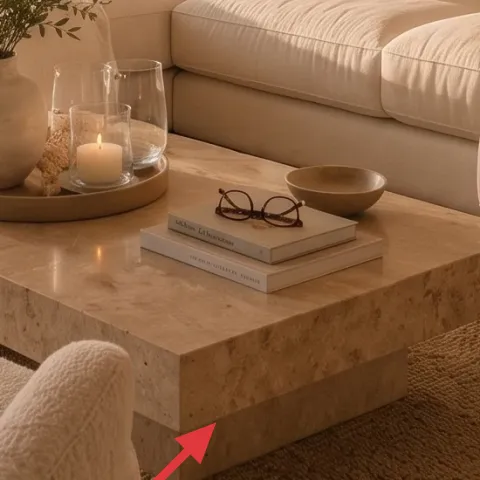
Start with a beige rug that has visible texture or a subtle pattern so the room doesn’t rely on pillows alone. In the hero, the rug anchors everything in warm sand tones and softens the stone tile feel. A 5×7 size is the practical renter move for a seating area: it tucks under the front legs of the sofa and gives you a clear landing spot for the coffee table styling. The trade-off is shedding—some natural-fiber looks shed at first, so plan a quick vacuum routine in the first couple weeks. If you’re between sizes, go larger rather than smaller for a cohesive footprint.
Let the rug do the “patterning”
With a mostly neutral palette, the rug is your safe place to add visual interest.
Layer 6 — ribbed glass table lamp ($60) Warm pool of light beside the plant
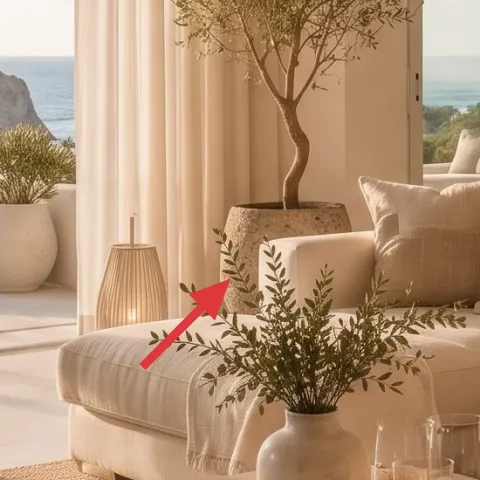
A ribbed glass table lamp keeps the beige scheme from feeling flat. The hero uses warm, low-glare light that makes candleglass and ceramics glow, and the ribbing adds a gentle sparkle when the lamp is on. Choose a plug-in lamp with a glass body or glass shade texture and use a warm bulb so the room stays in “golden evening” territory. The trade-off is finding the right brightness—too bright and it looks harsh, too dim and your beige reads gray. Place the lamp near the plant so you’re lighting that vertical silhouette, not just the coffee-table surface.
Match lamp temperature to candle warmth
Warm bulbs keep beige from turning dull, especially under recessed ceiling lighting.
Layer 7 — decorative tray on coffee table ($20) Styling boundaries for ceramics and books
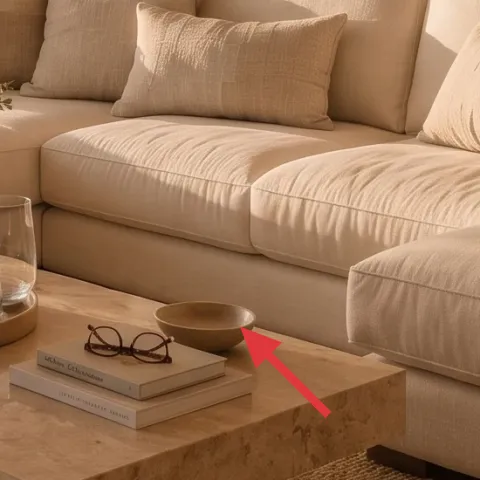
Use a decorative tray on the coffee table to group the small objects the way the hero does—ceramics, a candle jar, and a book stack all sit within one “zone.” This works because trays create visual order in neutral rooms, so the styling looks curated instead of accidental. I like a tray with a warm stone or matte finish because it blends into beige without fading away. The trade-off is you’ll have to edit: if you overload the tray, it stops reading coastal-calm and starts reading clutter. Keep it simple—one vase, one small plant, and one book moment is usually enough.
Tray rules beat matching sets
Even if your ceramics don’t match, a tray makes them feel like a single collection.
The cost, layer by layer
| Layer | Item | Cost |
|---|---|---|
| 1 | Candle pour (DIY in glass jar) | $15 |
| 2 | Beige throw blanket | $25 |
| 3 | Medium indoor plant in white pot | $35 |
| 4 | Sheer beige curtain panel pair | $80 |
| 5 | Beige area rug (5×7) | $120 |
| 6 | Ribbed glass table lamp | $60 |
| 7 | Decorative tray on coffee table | $20 |
| Total | $355 | |
If you want to go cheaper, swap the curtain panel pair for a single sheer panel set (or shorter width) and choose a rug with a simpler flat weave. Keep the lamp + plant + tray—the three items do most of the “styled” work even when the budget softens.
What worked, what didn't (across the whole room)
The biggest win is how the beige palette stays interesting through texture and light: sheers, rug pile, knit throws, and warm lamp glow all stack without adding color clutter. The styling also works because it’s organized into zones—a tray at coffee-table height and plant presence to balance the room vertically.
What worked
- Sheer beige curtains make the seating area feel bright while still softening hard edges.
- A textured beige throw adds visible depth even when pillows and walls are similarly toned.
- The beige rug grounds the coffee table and prevents the room from reading “floating.”
- Warm plug-in lamp lighting keeps ceramics and candleglass looking golden, not yellow-green.
- A medium plant creates the vertical silhouette the eye expects near the window.
- A decorative tray gives neutral styling structure without needing matching sets.
What didn't
- Trying to match every beige item exactly can flatten the room into one uniform tone.
- Choosing a dim or cool-glow bulb makes candlelight look dull and less intentional.
- Skipping a rug means the coffee table styling looks like it’s sitting on tile “by itself.”
- Overloading the tray with too many small objects breaks the calm, curated rhythm.
- Very lightweight sheers can hang unevenly, which reads more messy than airy.
What we'd skip if we did it again
Skip replacing the sofa first. In a renter setup like this, the sofa reads close to the same “shape” either way; the real change comes from sheers, rug texture, and warm lighting that you can pack up later.
Skip cool-white bulbs in any lamp. Beige can go gray fast under cooler temperatures, and the candleglass glow won’t feel intentional—warm bulbs keep the whole palette cohesive.
Skip adding multiple small decor colors at once. If a jar candle, one vase, and one plant are already in the mix, extra accents tend to fight the neutral calm instead of supporting it.
Frequently asked
How long does this renter-friendly refresh usually take?
Plan on a quick day for the big “visual anchors” (rug placement, curtains, and lamp position). The styling work—tray grouping, pillow/throw arrangement, and candle placement—is usually another 1–2 hours. If you choose the candle pour DIY, build in cooling time and wick trimming, then you’re ready to style the coffee table the same day.
What if my living room is smaller than the photo?
Go smaller on the rug first, but don’t go too small: aim for at least the front legs of the sofa on the rug. Keep one plant and one lamp instead of adding duplicates. For curtains, prioritize hang height and sheer texture over width. The goal is the same: bright light, one warm glow source, and a clear styling zone on the coffee table.
Can this work in a bright apartment with a lot of window light?
Yes—bright rooms actually love sheers because they soften glare and keep the palette creamy instead of harsh. In that case, you can keep the lamp light as a mood layer for evenings rather than daytime. Candle placement still matters because candleglass reflects warm tones, which helps beige feel “finished” after dark.
Do I need to match decor styles exactly to get the look?
Not at all. The hero mixes sculptural ceramics with plants and woven textiles, and the cohesion comes from materials and placement rather than identical pieces. Use a tray to group the ceramics and a single plant silhouette to create the vertical line. If you’re shopping, prioritize texture and warm undertones over perfect matching.
Where should I shop if I’m building this on a renter budget?
For sheers and throws, look at home basics brands and discount retailers—fabric texture matters more than brand. Rugs and plug-in lamps often show up with the best price at big-box retailers or during seasonal sales. For the tray, candles, and ceramics, thrift stores and marketplace finds usually fit the look better than “new set” collections.
What’s the most common mistake renters make with neutral living rooms?
The most common mistake is choosing neutrals that are the same undertone and the same texture. Beige on beige without weave, pile, and light temperature turns flat. Fix it by stacking texture (rug + knit throw + sheers) and using warm lighting so the palette reads cozy instead of dull.
More in Living Room
7 renter-friendly no-drill swaps for a $400 sofa seating area
A renter-friendly refresh for a warm beige sofa seating area built from curtains, a beige rug, and shelf-style styling—no drilling required…
What $700 buys: a sofa-and-console living room corner refresh
A warm neutral sofa-and-console living room corner refresh built around a new rug, layered textiles, and a pair of framed botanicals. For a…
7 no-drill ways to style a living room for $800
A living room lounge refresh on a $800 ceiling: swap a flatweave rug, add a teal-and-gold pillow mix, and tune the warm lighting with match…