- Best for
- a calm, modern terrace refresh
- Season
- spring through early fall
- Weatherproof
- pick outdoor-safe rug and breathable textiles
- Cost
- about $300
Why warm wood-and-olive terrace styling is the balcony seating nook of 2026
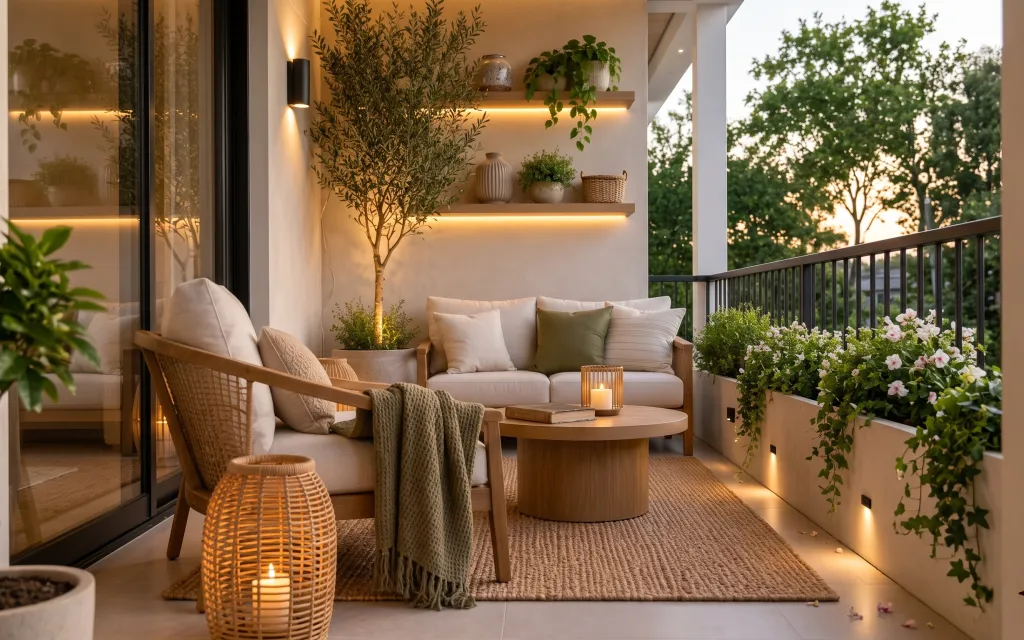
The first thing I notice is how the warm beige rug and the light wood furniture make the whole terrace feel calmer, even at night. The texture stack matters: a chunky-looking beige throw, crisp-looking cream pillows, and an olive accent pillow all give you contrast without going loud. On the wall, the floating shelves and cylindrical wall sconces add that slow, golden layer of light. None of this requires a renovation—just a few shopping wins that match what you already like about the space.
The move I almost skipped was the “base” rug. I kept thinking I’d be fine without it because the furniture already has warm tones, but the rug is what makes the seating feel anchored instead of floating. Once I tried swapping in a similar beige weave, the pillows and throw started looking like they belonged together. If you’re refreshing your own place, that’s the order that works: ground the floor, then add the softness.
Layer 1 — large beige area rug ($80) Quiet weave underfoot
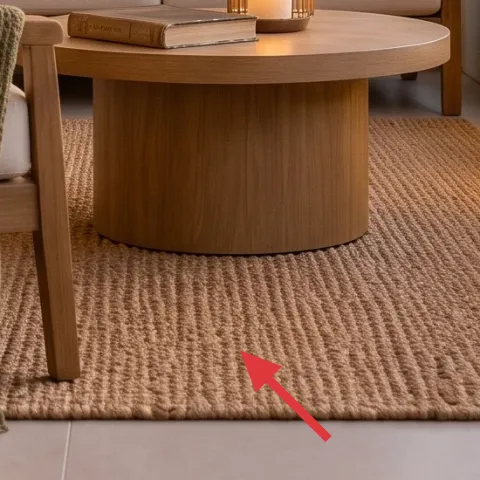
A large beige area rug turns a balcony seating nook into something that feels like a real room. In this photo, the rug’s warm, slightly textured weave softens the tile and gives the wood sofa and side table a “home” spot. The obvious alternative is using a smaller mat, but then your feet land on hard floor and the seating reads disconnected. For this look, aim for a warm neutral (oat, sand, or light taupe) and a medium pile so it doesn’t look too precious for outdoors. Keep it centered under the front edge of the seating for the clean, anchored feel.
Use the seating footprint, not the railing, as your centering guide
Center the rug to the sofa and side table first—then let the railing stay as an architectural frame.
Layer 2 — beige throw blanket ($35) Adds one cozy texture
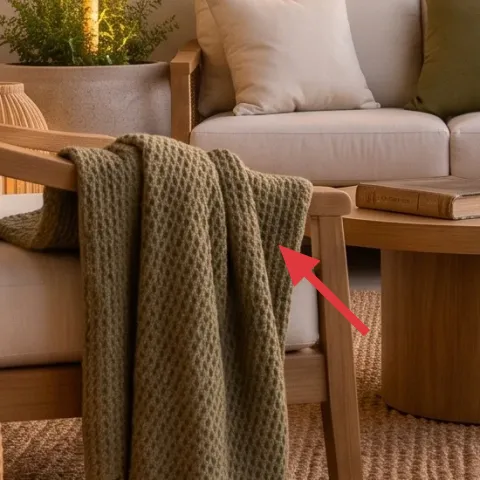
This beige throw blanket is doing more work than it looks like it is. Draped over the arm/seat area, it introduces a softer, thicker texture that balances the smoother wood and the clean-lined pillows. I like choosing a neutral throw here because it echoes the rug color but still reads “layered” when the light hits it. The alternative is another solid color throw, but you risk turning the whole corner into a spot of one note. A cream or oatmeal beige keeps the olive pillow from feeling isolated and makes the lighting look warmer.
Texture beats color when you’re working with warm wood
If your furniture already leans honey-colored, a neutral throw keeps the palette cohesive.
Layer 3 — olive throw pillow ($12) Teaches the palette to repeat
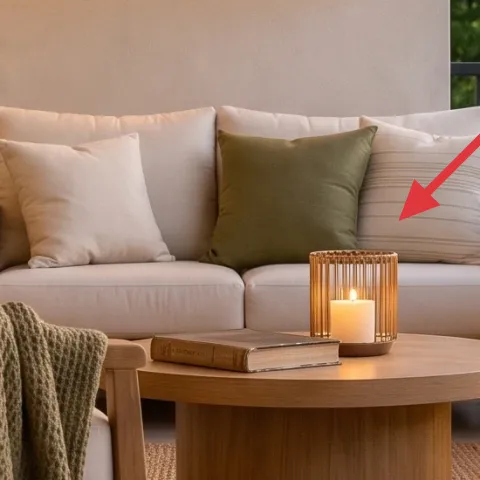
The olive throw pillow is the color that repeats the plant life without turning the terrace into a garden collage. Placed on the sofa, it gives the whole scene a grounded, earthy reference point, especially under warm sconce light. The obvious alternative—adding another cream pillow—would keep everything soft but might make the seating feel a little too samey. Olive gives you contrast that still feels natural next to beige rug and light wood. When choosing, look for a fabric finish that doesn’t shine; matte texture reads more intentional in outdoor light.
Pick one accent color and repeat it once more elsewhere
Here, the olive repeats through the pillows and plant greenery so nothing feels random.
Layer 4 — wall sconce with cylindrical shade ($45) Makes evenings look curated
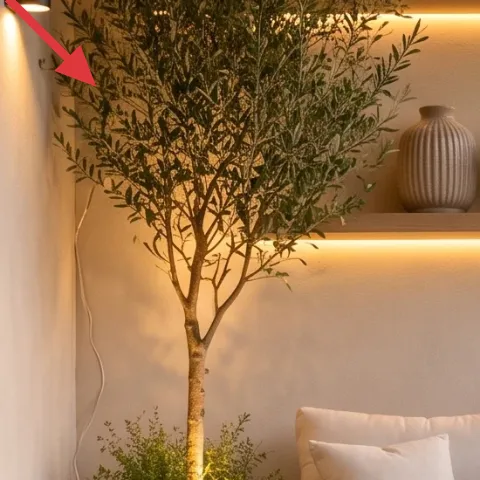
The cylindrical wall sconce is the “nighttime editor” for this balcony seating nook. It throws a warm pool of light up and across the plaster wall, and that glow makes the shelves look purposeful instead of decorative. The alternative is relying only on lanterns, but then the room reads dim and the textures flatten out. If your home already has a spot for a sconce, swapping to something with a similar cylinder silhouette is a high-impact move. Choose a warm bulb temperature so beige reads creamy, not yellow-brassy.
Don’t match cool-white bulbs to warm neutrals
Cool light can make beige look gray and makes plants lose that fresh green pop.
Layer 5 — small candle lantern ($30) A low, flickering glow
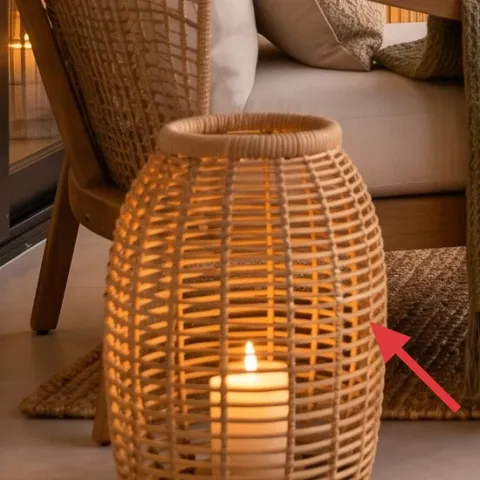
A small candle lantern adds motion where your eye expects it—on the floor level near the seating. In the photo, the lantern’s woven look and candle flame make the terrace feel lived-in, not styled from far away. You could replace this with a bigger standing lamp, but the vibe would shift; a high source of light can overwhelm the calm palette. A lantern keeps the glow low and cozy, and it pairs beautifully with the beige rug and olive pillow because it adds warm highlights. Choose one with a stable base and warm light output that stays consistent.
Keep candle placement low, near where people sit
Lower light sources flatter textiles and soften edges against tile.
Layer 6 — vase on floating shelf ($30) Paint one existing shape
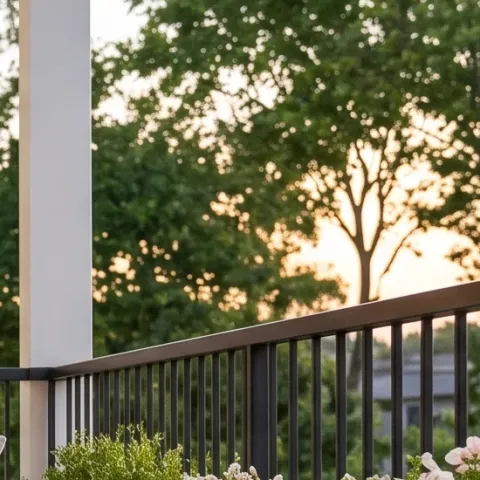
The vase on the floating shelf is where your palette gets to look “designed,” not just furnished. Even with the same plant textures, a simple ceramic form becomes the focal point when it matches the room’s warm beige tones. Painting is a faster route than hunting for the exact same ceramic, and it’s the easiest place to create visual continuity across the shelves. The alternative is buying a new vase, but you’ll usually end up with a color that’s slightly off under warm light. Keeping the shape and updating the finish gives you a calmer, more cohesive shelf story.
Make it instead of buying it
Paint the floating-shelf ceramic vase so it matches the terrace’s warm beige and reads intentional under the sconces.
Materials
- Acrylic craft paint (warm beige) — 2 small bottles — craft store — $12
- Paint primer (for ceramics, spray or bonding) — 1 can — hardware store — $7
- Fine-grit sandpaper (220–320) — 1 sheet — hardware store — $3
Steps
- Scuff-sand the vase lightly so paint will grip.
- Wipe off dust and let the vase dry completely.
- Apply primer in thin coats and let it dry fully.
- Brush on the warm beige paint, covering evenly.
- Add a second coat for opacity and let it dry fully.
- Check for thin spots, then touch up and let cure before styling.
Total DIY cost: $22 — saves about $8 over buying.
Layer 7 — woven basket planter ($50) Soft storage for shelf styling
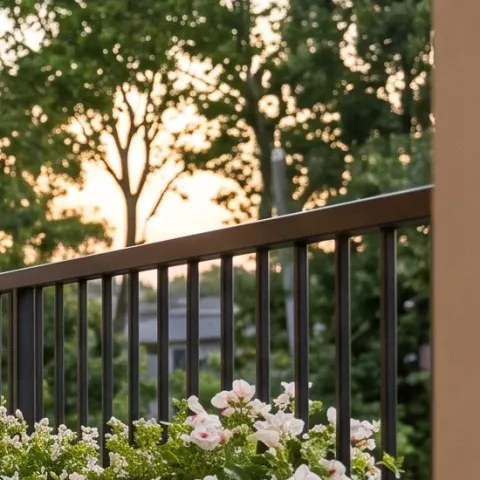
The woven basket planter brings a second texture that feels natural next to the rug weave and the plant leaves. It also gives the shelf a practical role—holding smaller pots, extra greenery, or even folded outdoor throws—so the shelf looks styled and functional. The alternative is leaving everything “open” with just vases, but then the shelf can feel too airy and flat. Woven baskets add warmth and a gentle pattern, and they keep the shelf from looking like a lineup of matching ceramics. For this look, pick a natural weave in tan or honey so it harmonizes with the light wood furniture.
Choose a basket that hides the next thing you’ll add
If you plan to add more plants, the weave gives you a place to store them neatly.
The cost, layer by layer
| Layer | Item | Cost |
|---|---|---|
| 1 | Area rug (warm beige, outdoor-friendly 5×7) | $80 |
| 2 | Throw blanket (beige) | $35 |
| 3 | Throw pillow cover (olive) | $12 |
| 4 | Wall sconce with cylindrical shade (warm bulb) | $45 |
| 5 | Small candle lantern (woven) | $30 |
| 6 | Vase on floating shelf (DIY-painted equivalent) | $30 |
| 7 | Woven basket planter | $50 |
| Total | $282 | |
If you want a cheaper version, prioritize the rug and one soft textile layer. Skip the wall sconce swap and use existing lighting, then add only the olive pillow and a single shelf vase—those four moves still make the terrace read finished.
What worked, what didn't (across the whole room)
The overall look works because every layer repeats the same warm neutrals while adding one grounded plant color. Lighting and textiles do the heavy lifting, and the shelf styling keeps the background from going blank.
What worked
- The warm beige rug anchors seating and stops the terrace from feeling like a hallway.
- Textural stacking (throw + pillows) makes the sofa feel softer without extra furniture.
- The cylindrical wall sconce keeps the shelves readable after dark, not just pretty in daytime.
- Olive as the one accent color repeats plant life and avoids a “random color” feeling.
- Low candle light adds motion and depth right where people are actually sitting.
- Woven basket texture ties together shelf decor and the rug’s weave.
What didn't
- Without a rug, the sofa would float visually and the tile would steal attention.
- Skipping one painted/updated shelf piece can make the floating shelves feel mismatched.
- Relying on high light only flattens textiles and reduces the cozy look.
- Adding multiple accent colors at once would interrupt the calm, earthy palette.
What we'd skip if we did it again
Skip matching outdoor furniture “sets.” On a balcony, that often means too much of the same finish and not enough texture contrast. Instead, keep one warm wood base and choose textiles and shelf decor that differ in texture, like a woven basket and a matte olive pillow.
Skip cool-white bulbs. Warm beige and light wood need warm light to look creamy, and cool light can make the whole palette feel off. If changing bulbs is easier than swapping fixtures, do that first.
Skip buying new shelf decor in too many shades. Choose one vase to paint and keep everything else in the same warm-neutral family, then let the plants do the color work.
Frequently asked
How long does this balcony seating nook refresh take?
For most homeowners, plan on about a weekend. Shopping and swap-in styling usually takes the most time. The DIY vase prep and painting is the only step that benefits from extra drying/cure time, so it’s best done early Saturday. If you already have the wall sconce location, you can usually complete the lighting upgrade in one day plus bulb selection.
What if I rent and can’t change wall lighting?
Keep the lighting layer optional. You can still get most of the look by anchoring the seating with the beige rug, adding the olive pillow, and styling the floating shelves with a painted vase plus a woven basket. For lighting, use the candle lantern and any plug-in wall or floor option you’re allowed to install temporarily.
My balcony is smaller—how do I scale these choices?
Go smaller on the rug but keep the same rule: center it to the seating, not to the railing. Use one throw blanket and two pillows instead of three, and choose one statement shelf piece (the painted vase) plus one texture object (the woven basket). In small spaces, fewer objects read more intentional.
What if my balcony gets less light or feels darker at night?
Lean into warm light levels rather than more fixtures. A warm bulb in the sconce and a candle lantern on the floor level add atmosphere without turning the space into a showroom. Also consider a slightly lighter rug (oat/beige instead of taupe) so textiles don’t disappear in dim light.
Where can I shop for items that match this palette?
For textiles, look for warm beige throws and olive pillow covers in home and outdoor sections at big-box retailers, TJ Maxx/Marshalls-style off-price stores, or linen-focused brands. For shelves and woven baskets, home decor markets and craft stores are easiest for natural weaves. The vase paint DIY is usually fastest via a craft store paint aisle plus a ceramics primer from a hardware store.
Biggest mistake to avoid when styling a balcony seating nook?
Over-coloring the terrace. It’s tempting to add several accents at once, but the result can look busy against plants and city views. Pick one accent color (olive works here), repeat the warm neutral across rug and textiles, and let the greenery provide variation.
More in Outdoor & Patio
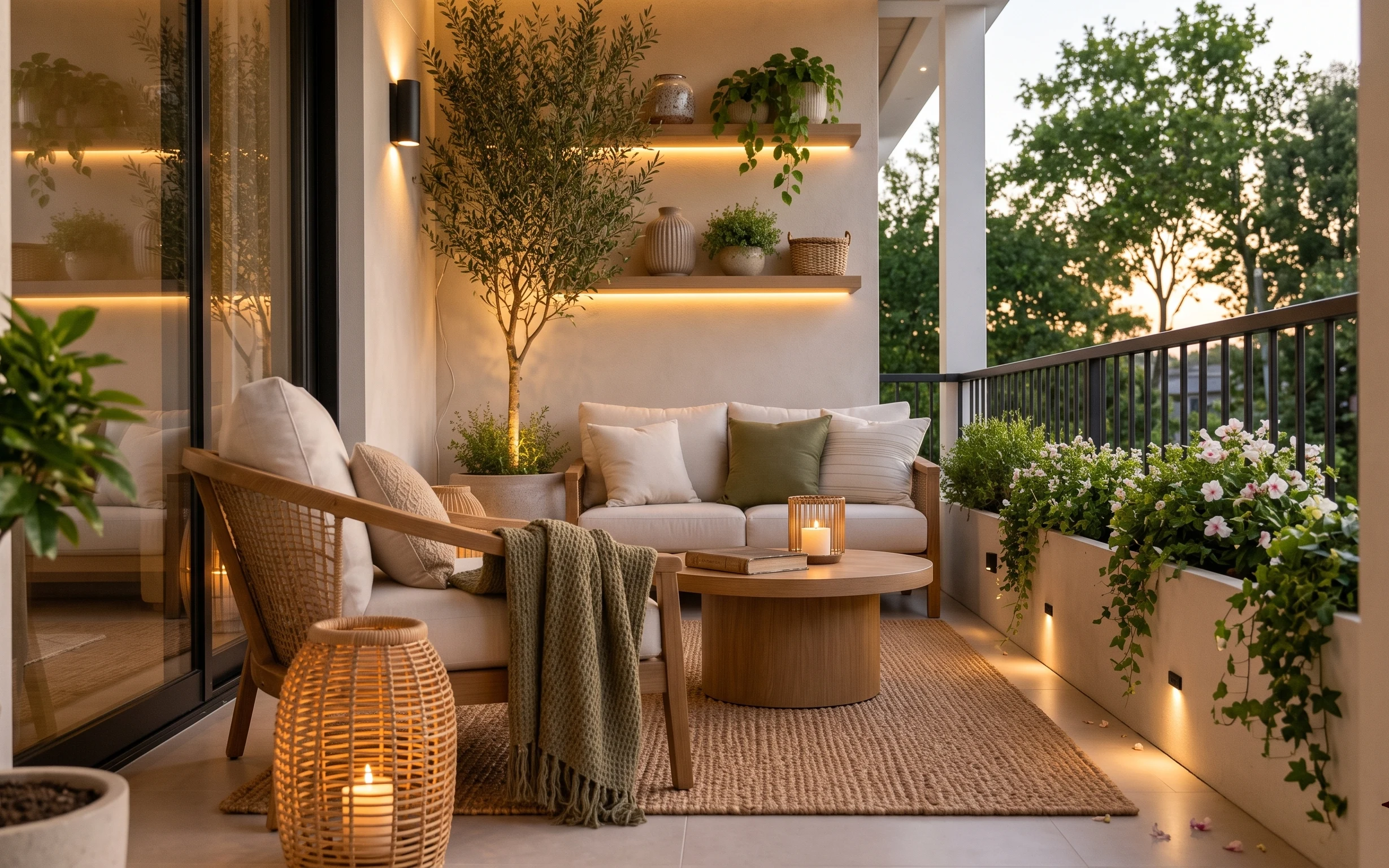
7 weekend swaps for a balcony seating nook with $300 impact
A balcony seating nook looks put-together fast when you swap in one grounding rug, a warm throw, and a few shelf accents. This $300 weekend…
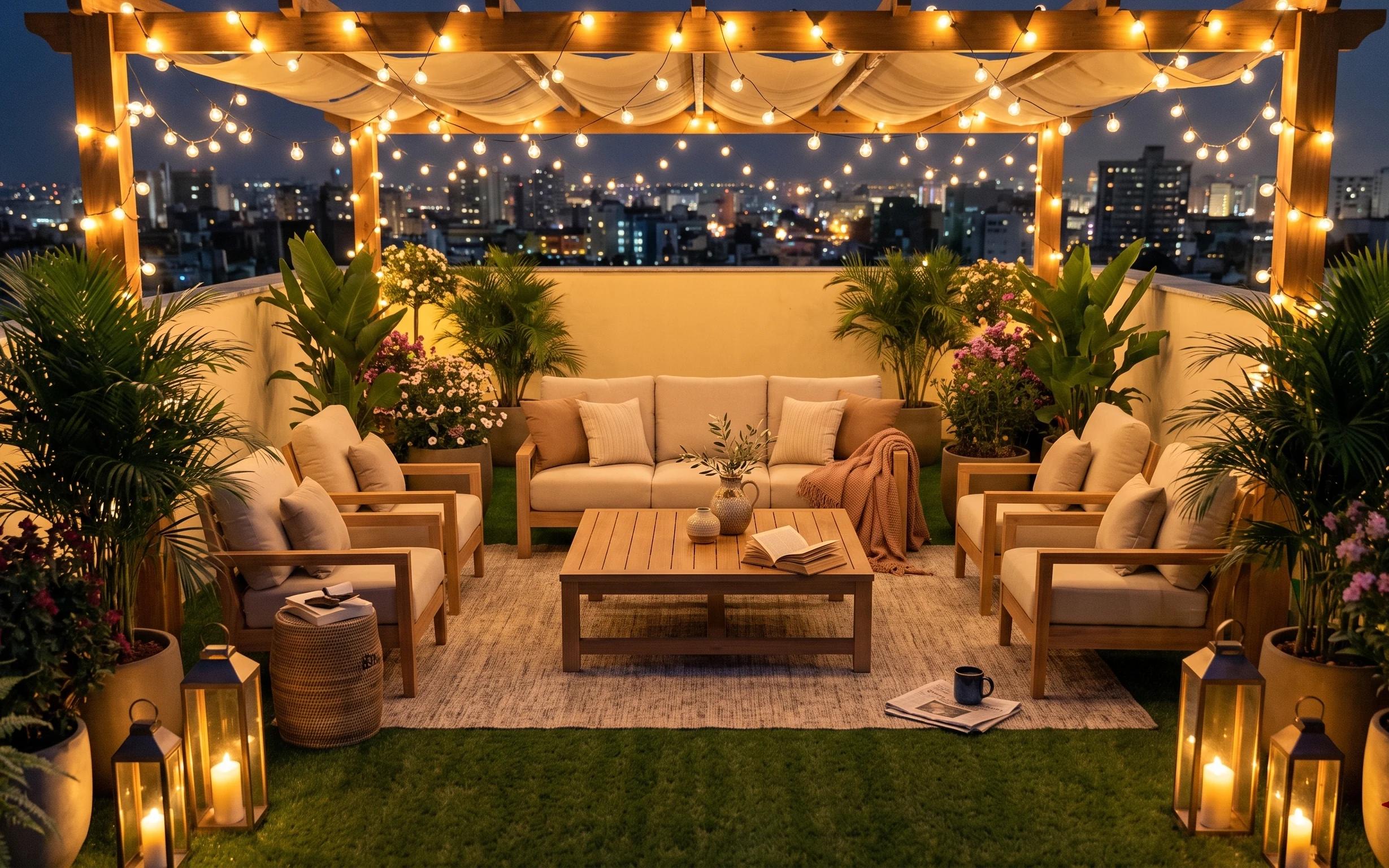
7 no-drill patio lounge swaps for under $600
A patio lounge refresh for shared housing that relies on move-with-you upgrades: a patterned rug, cream outdoor cushions, and warm string-l…
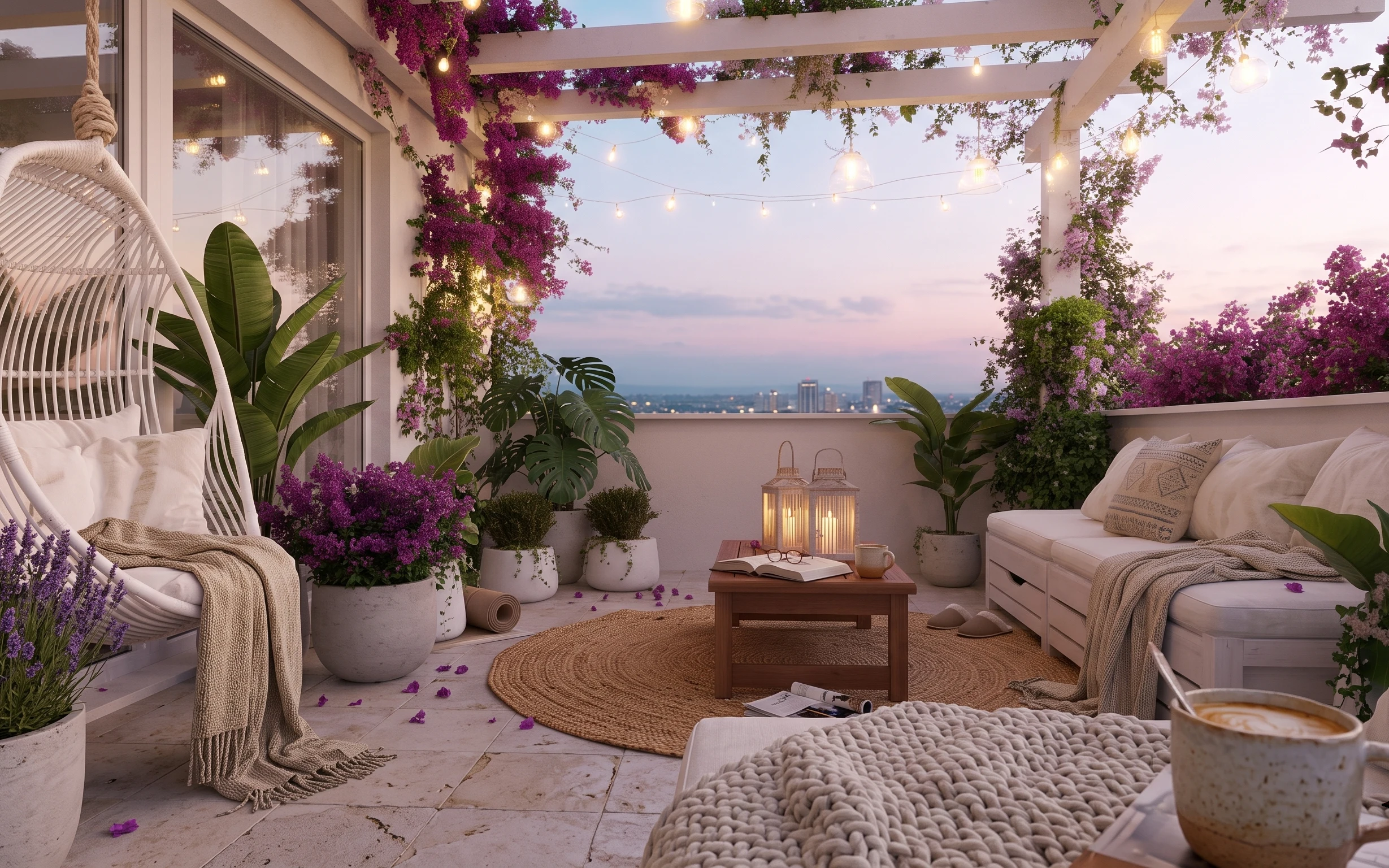
A renter-ready terrace seating area for $500
A renter-friendly terrace seating area refresh for $500: layer a jute rug, soft throws, warm string lights, and a lantern glow around purpl…