- Best for
- making a sofa-and-TV area feel calm with texture
- Cost
- $665 (plan under $700)
- Difficulty
- Easy-to-Moderate
- Time
- One weekend (plan + hang + style)
Why warm green-and-cream styling is the sofa-and-TV seating area of 2026
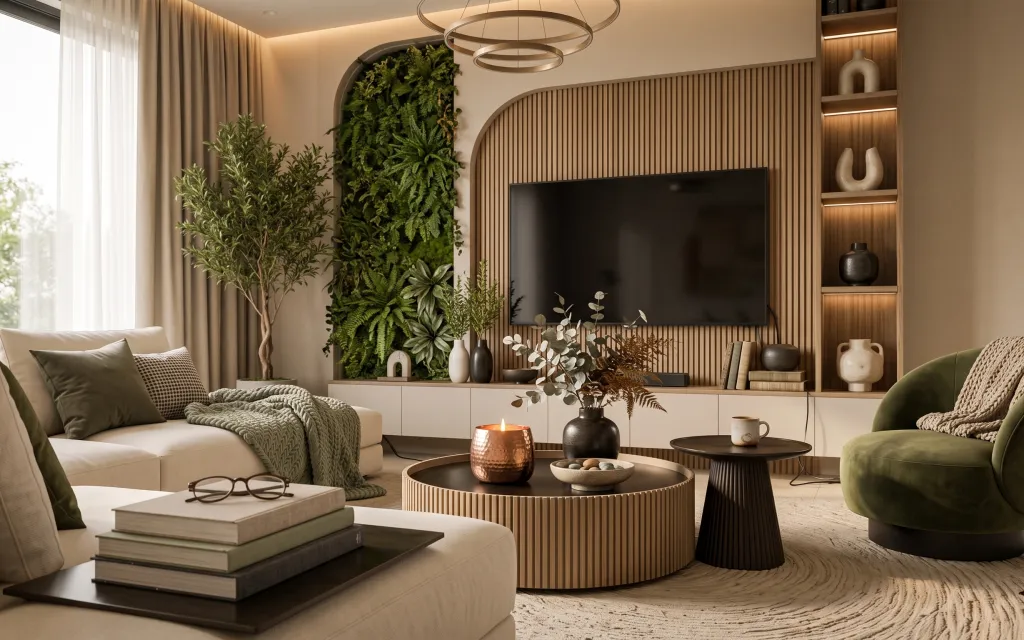
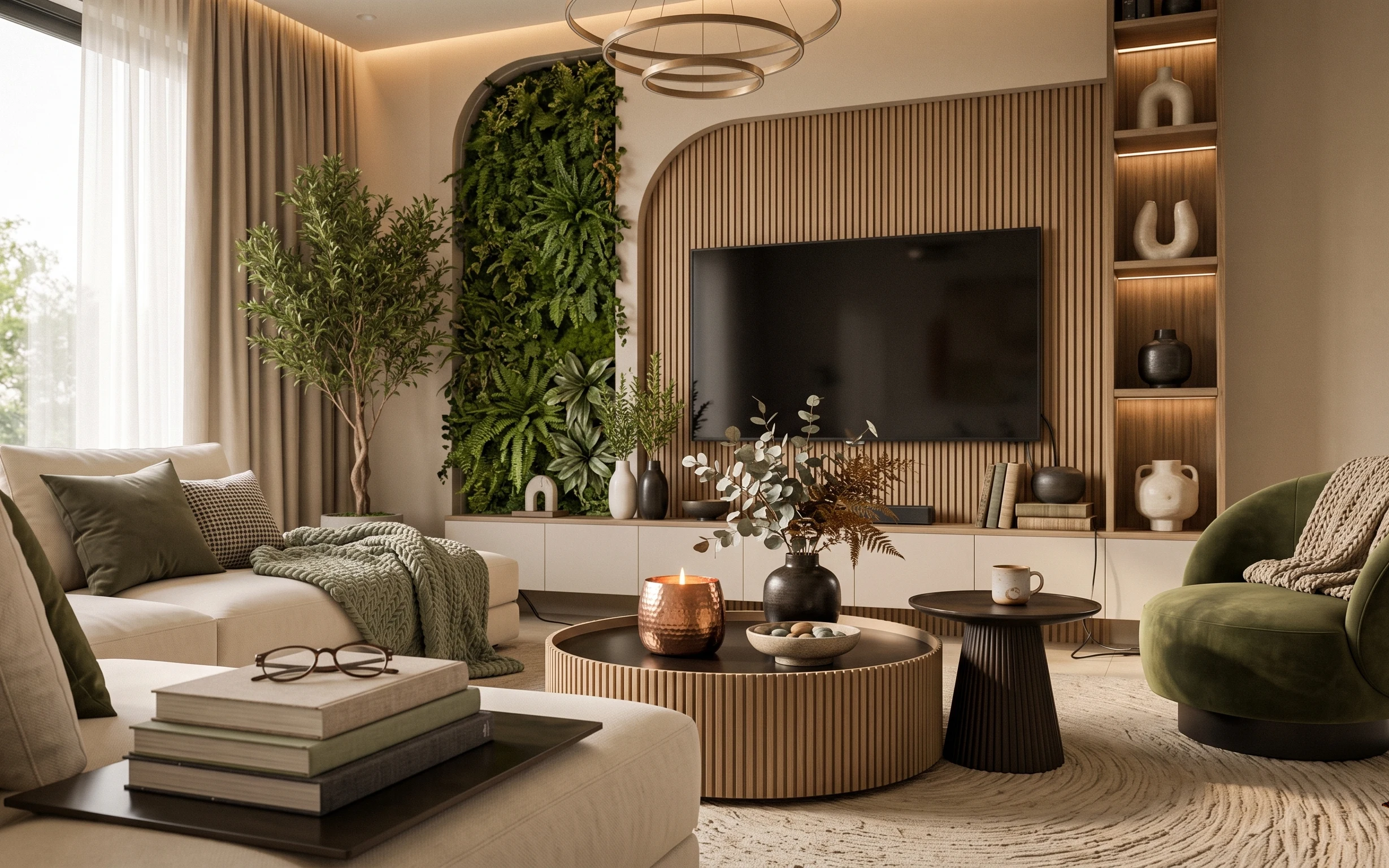
The quickest way to get this look is to stack texture at three heights: something woven on the floor, something soft at couch level, and something leafy up on the plant wall. In the photo, the natural woven rug, beige knit throw, and smooth cream ceramic pieces all play nicely with the deep green accents. That combo is very “japandi” in spirit—simple shapes, warm neutrals, and plants that do the hard work. Best of all, it’s achievable for homeowners on a weekend because you can change the feel without touching the bones of the room.
I used to chase “perfect” styling—matching colors, straightening objects, the whole thing. Then I noticed how the rooms I actually live in have soft edges: a blanket that looks casually tossed, one candle that’s actually lit, and greenery that’s a little wild. This setup convinced me that the cozy part isn’t in expensive items; it’s in letting textures overlap and giving your eye a few natural pauses.
Layer 1 — area rug with natural woven texture ($200) Ground your feet with a woven base
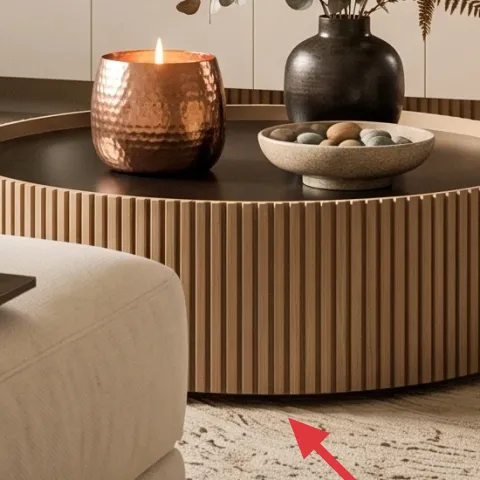
A natural woven area rug does what paint can’t: it adds texture you can feel under the sofa, even when the room is mostly cream and wood tones. Here it sits under the coffee-table zone and pulls the beige upholstery and deep green chair into one grounded footprint. The trade-off is that you’ll want to vacuum carefully along the fibers, and you may need a rug pad if your floor is slick. The upside is that this rug style forgives everyday life—small crumbs and “oops” moments don’t look as obvious as on glossy surfaces.
Anchor furniture at least a few inches on the rug
If the coffee table legs land fully on the rug, your seating area reads intentional instead of floating.
Layer 2 — beige curtains ($80) Soften the big window lines
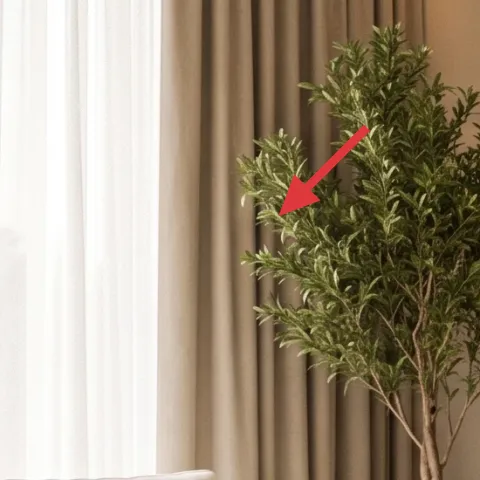
Beige curtains keep the light airy, but they also prevent the room from feeling too sharp. In this photo, the sheer-to-medium beige color harmonizes with the cream sofa and warms up the paneling behind the TV. Hang them high enough that they visually stretch the ceiling, then let them fall in relaxed folds rather than pulled-tight pleats. The trade-off is that curtains take a little measuring time—especially if you want them to skim the floor and not puddle. If you’re renting, stick with tension-rod-friendly options; for homeowners, a proper rod install is worth it.
Pick a curtain shade slightly warmer than the wall
That tiny temperature shift keeps the room from going flat or gray.
Layer 3 — rectangular coffee table ($180) Add a flat surface for styled clutter
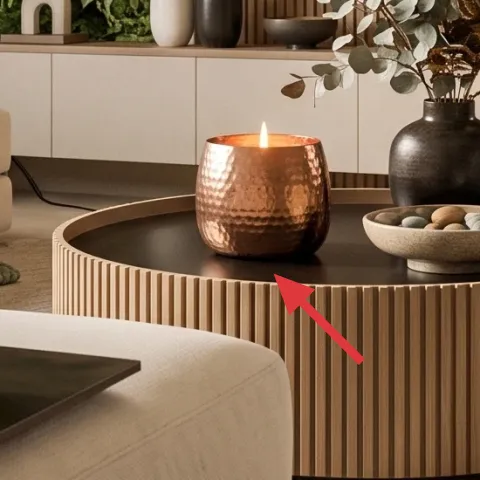
A rectangular coffee table is the practical piece that makes everything else look “curated.” In the image, the tabletop becomes the styling stage for a tray, a candle, and a small cup—so the room has layers without looking messy. I like this shape because it’s easy to center in front of the sofa and it supports both books and decorative objects. The trade-off versus a round table is that you’ll need a little more visual spacing for side seating, especially with the green accent chair. Still, the clean geometry matches the modern paneling and keeps the scene calm.
Avoid overfilling the tabletop
When trays, books, and candles all compete for attention, the room loses its breathing room.
Layer 4 — beige knit throw blanket ($60) Make the sofa feel touched, not staged
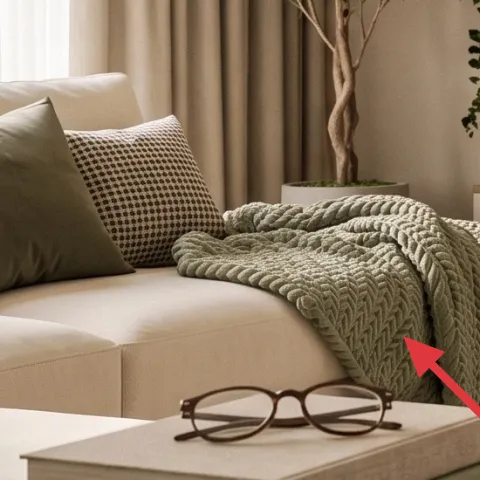
A beige knit throw adds that lived-in texture that instant “rooms render” always get right. Here, the chunky weave shows up at couch level, and it visually links the cream upholstery to the woven rug downstairs. The color choice matters too: it’s close enough to cream that it reads cohesive, but textured enough to feel intentional. The trade-off is simple—knits can shed if you buy the wrong fabric blend. Shake it out outside and consider a lint brush before styling. Once it’s there, it’s one of the easiest ways to change the mood without buying new furniture.
Drape with one loose end
One end hanging naturally looks more relaxed than folding it into a perfect rectangle.
Layer 5 — multiple tall potted plants in front of the plant wall panel ($80) Let greenery do the vertical work
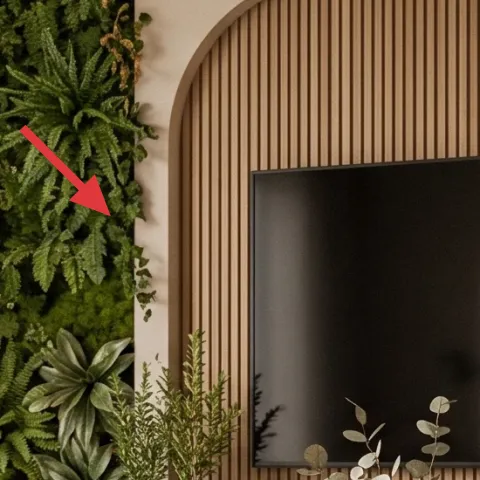
Tall plants are the fastest route to depth because they fill vertical space that artwork and shelves can’t fully match. In the photo, the leafy wall panel plus multiple potted plants create a dense green backdrop that makes the beige curtains and cream ceramics feel warmer. This is also why the room reads “designed” instead of just neutral: the plants add pattern, not just color. The trade-off is maintenance—dry air or inconsistent watering shows up fast. If your lighting is low, choose plants labeled for lower light or rotate them toward the window every couple of weeks.
Group leaves at different heights
Even small height differences make the arrangement look organic instead of uniform.
Layer 6 — decorative tray with small objects ($35) Create a repeatable styling zone
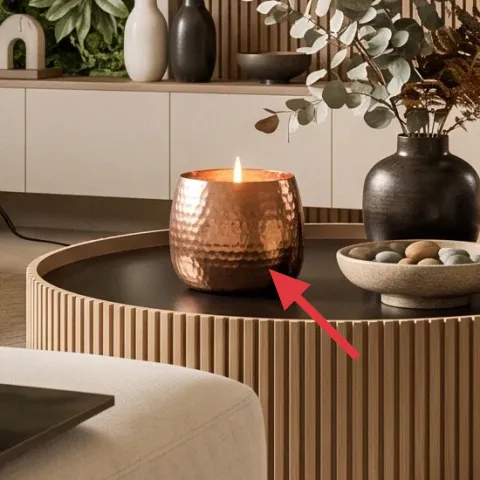
A decorative tray turns random objects into a plan. On the coffee table, the tray gives you a defined “landing pad” for small items—like a candle and a few sculptural pieces—so your styling stays contained even when you’re living in the space. This matters in a sofa-and-TV seating area because the table is always in view from multiple angles. The trade-off is that a tray needs enough surface area for breathing room; too small and everything looks jammed. Choose a tray that matches the room’s materials—here, warm metallic tones work with the earthiness of the plants and rug.
Let one object rise higher than the rest
Varying height (like a candle or book stack) keeps the arrangement from looking flat.
Layer 7 — light ceramic vase ($30) Add a bright neutral accent on the shelf
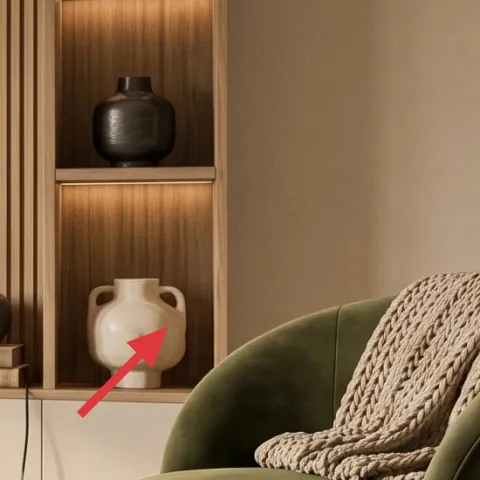
A light ceramic vase gives you a clean break from all the deep greens and warm wood tones. In the right-side shelving area, that pale shape reads crisp against the darker elements, and it also reflects the warm lighting in a way that looks soft rather than shiny. The trade-off is that light ceramics can show dust and smudges more easily, so you’ll want a quick wipe-down routine. If you have a few mismatched vases already, this is also the layer where it’s easiest to unify the look without replacing everything.
Make it instead of buying it
Paint a plain ceramic vase so it matches the light, creamy tone in the shelf styling—same idea, lower cost.
Materials
- Acrylic paint (warm cream) — 1 small bottle — craft store — $12
- Fine-grit sandpaper (220–320) — 1 pack — hardware store — $4
- Painter’s tape — 1 roll — hardware store — $2
Steps
- Sand the vase lightly to roughen the glaze.
- Wipe off dust with a dry cloth.
- Tape off any areas you want to keep unpainted.
- Apply a thin first coat of warm cream paint.
- Let it dry completely (about 30–45 minutes) and check for thin spots.
- Apply a second thin coat and let it dry fully (another 30–45 minutes).
- Remove tape carefully while the paint is still slightly firm.
- Let the painted surface cure undisturbed for 24 hours before styling.
Total DIY cost: $18 — saves about $12 over buying.
The cost, layer by layer
| Layer | Item | Cost |
|---|---|---|
| 1 | Area rug with natural woven texture | $200 |
| 2 | Beige curtains (panel pair) | $80 |
| 3 | Rectangular coffee table | $180 |
| 4 | Beige knit throw blanket | $60 |
| 5 | Multiple tall potted plants in front of plant wall panel | $80 |
| 6 | Decorative tray with small objects | $35 |
| 7 | Light ceramic vase | $30 |
| Total | $665 | |
If you want a cheaper version, swap the woven rug for a low-pile natural-look rug and choose basic beige curtains in a lighter fabric weight. Keep the same plant-and-tray styling pattern and the room will still read cohesive.
What worked, what didn't (across the whole room)
This combination of woven texture, soft curtains, and tall greenery makes the seating area feel composed without looking over-decorated. The styling stays calm because the coffee table has a tray zone and the shelf pieces are light and repeated.
What worked
- The natural woven rug hides everyday wear better than a high-sheen floor finish would.
- Beige curtains soften the large window and keep the lighting warm instead of crisp.
- The knit throw adds visible texture at couch level, so the sofa doesn’t look flat.
- Tall potted plants add vertical interest that balances the TV wall without more art.
- A tray creates a repeatable styling “landing zone” on the coffee table.
- The light ceramic vase breaks up deep greens and adds gentle contrast on the shelf.
What didn't
- If the tray is too crowded, the room reads busy instead of calm.
- Curtains hung too low make the ceiling feel shorter and flatten the window area.
- Plants that all sit at one height look less natural and more “arranged.”
- A throw that’s the wrong weight can look skimpy and won’t add the same texture impact.
What we'd skip if we did it again
Skip swapping the whole furniture layout first. This specific vibe comes from texture stacking—rug, curtains, throw, and greenery—so changing the big pieces too early usually wastes budget.
Skip “matchy” decor sets where every object is the same finish and size. The shelf and coffee table look better when one item is slightly taller and one ceramic tone is lighter than the rest.
Skip going too dark with curtains or rug if the room already has a lot of wood and paneling. Warm neutrals keep the seating area bright enough that the deep green accents feel intentional.
Frequently asked
How long does this sofa-and-TV seating area refresh take?
Plan for one full weekend if you’re doing the basics: rug + curtains + swapping the throw + arranging plants and shelf styling. The slow part is usually curtain measurements and final positioning. The DIY vase paint takes active time in short sessions, but the cure-at-home drying window means you’ll want to style it after it’s fully dry.
What if I’m renting instead of owning?
Keep the rug and throw (easy wins), and choose no-drill curtain hardware or a tension rod for lighter curtains. For styling, reuse what you already have and focus on the tray zone on the coffee table plus one tall plant grouping for vertical interest. If you want shelf color changes, swap decor objects rather than painting shelves.
My space is smaller—how do I scale this down?
Use the same texture recipe, just shrink the footprint: a smaller rug size, fewer objects on the coffee table tray, and plants clustered closer together instead of spread across multiple corners. For curtains, prioritize height and soft fall over width. The key is leaving negative space around the TV and coffee table so the look stays calm.
What if my room has less natural light than this photo?
Go slightly warmer in the rug and curtain tones, and lean into reflective but not shiny surfaces—ceramic and matte woven textures work well. Choose plants that tolerate lower light and place them nearer the window where you can. Keep the candle and vase lighting to evening hours so the room doesn’t look dim in daylight.
Where can I shop for the rug, curtains, and tray without overspending?
Rug and curtain shopping rewards filtering by color family first: warm beige, cream, and natural woven textures. For trays and ceramics, look for simple shapes in matte metal or minimal ceramic forms. If you already have a tray, reuse it and upgrade just one anchor item—usually the rug or the curtains.
Biggest mistake people make with this kind of cozy neutral look?
Overloading the coffee table and shelves. When everything is visually busy, the room stops feeling grounded and starts feeling cluttered—even if the colors match. Use a tray to confine small items, keep one or two larger pieces (like a tall plant cluster or one vase), and let the negative space do the calming work.
More in Living Room
A calmer sofa-and-TV seating area for $700
A weekend refresh for your sofa-and-TV seating area with a natural woven rug, beige curtains, a knit throw, leafy plants, and shelf vases. …
How to style a living room for under $500
Warm modern living room refresh for shared housing: one rug, two curtain layers, and small coffee-table styling to make everything feel pul…
How to refresh a living room for under $400
A renter-friendly living room look built from move-ready upgrades: a soft area rug, curtain panels, a round coffee table, and warm styling …