- Best for
- renter-friendly japandi living rooms
- Cost
- about $600 for the full refresh
- Difficulty
- easy, mostly textiles and hanging
- Time
- a weekend for most people
Why olive-and-cream biophilic styling is the sofa seating area of 2026
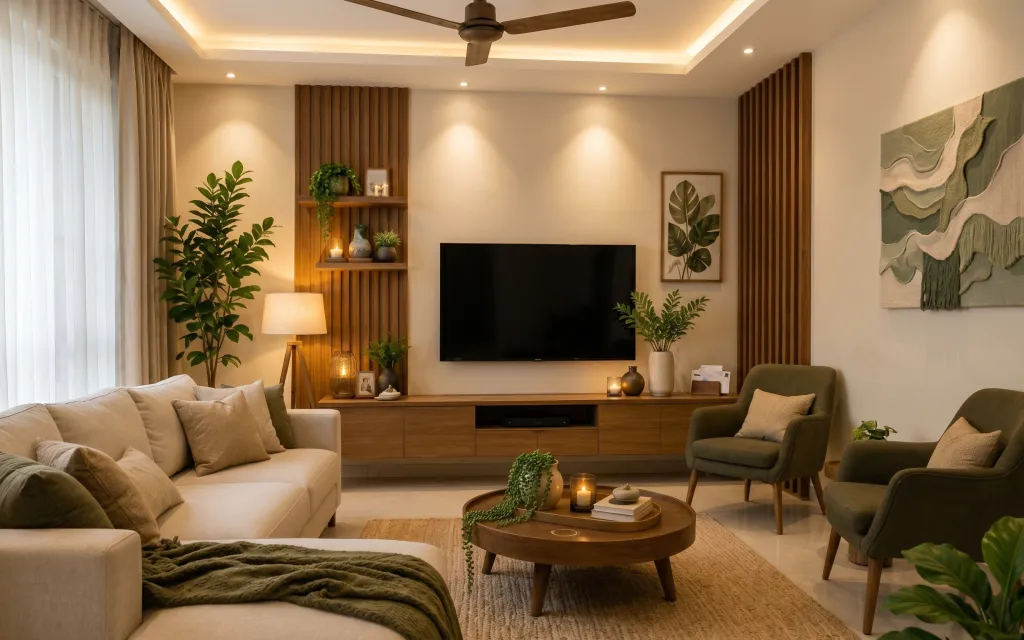
The fastest way to get this vibe is to treat texture like the main furniture. Start with a light beige area rug over wood plank flooring, then add an olive green throw blanket for the color echo. A plug-in table lamp with a beige shade keeps the lighting warm instead of harsh, and the tall leafy tree brings that “indoor garden” feeling without any major work. Even the wall balance matters: two framed pieces on the right wall make the room feel composed, not sparse.
I used to overdo matchy sets—same frame size, same lamp height, same everything—and the room would end up flat. The moment I loosened that (one lamp, two different art styles, and a single olive textile), it stopped looking themed and started looking lived-in. In this setup, the wood slat panels and cream walls do the calming work, while the rug and plants provide the softness your eye actually lands on.
Layer 1 — light beige area rug (5×7) ($200) Texture underfoot that hides reality
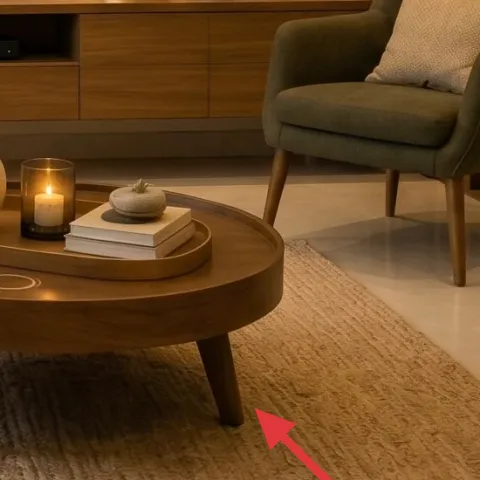
A light beige 5×7 area rug grounds the entire sofa seating area and makes the wood plank floor feel more intentional. In the photo, the rug reads warm and neutral, so the olive chair and throw blanket look richer instead of competing. The trade-off is that lighter rugs show foot traffic faster, so you want a rug with a subtle weave (not a glossy, high-sheen finish). The upside: when you’re renting, a rug is fully removable at move-out, and it’s one of the biggest visual “anchors” you can do without touching the lease.
Pick a weave, not a flat look
A rug with a visible texture will forgive everyday marks better than a perfectly smooth pile.
Layer 2 — olive green throw blanket ($45) Pulls the olive accents into one story
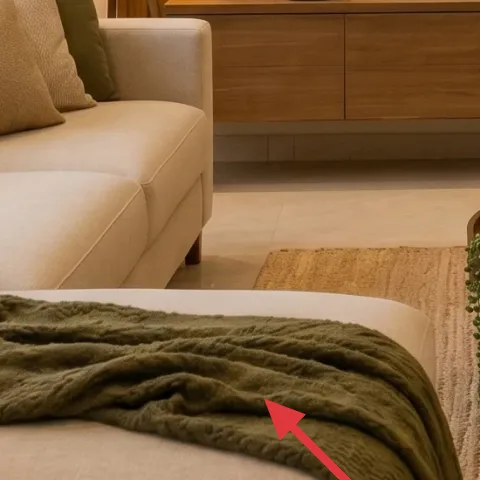
The olive green throw blanket draped over the sofa is where the color strategy clicks. It’s not a bright olive that screams “trend”; it’s muted enough to play nice with cream walls and warm wood. Keeping it casual—creased like it’s been used—does more for the vibe than a perfectly folded throw. The trade-off is that a heavier throw can feel warm and bulky in smaller spaces, so choose a weight that lays nicely at the edge of the cushion. This is also the easiest renter-friendly layer: it packs flat and never depends on landlord permissions.
Drape matters more than size
Let one edge fall naturally off the sofa arm so the olive reads as styling, not coverage.
Layer 3 — plug-in table lamp with beige shade ($60) Warm light without changing fixtures
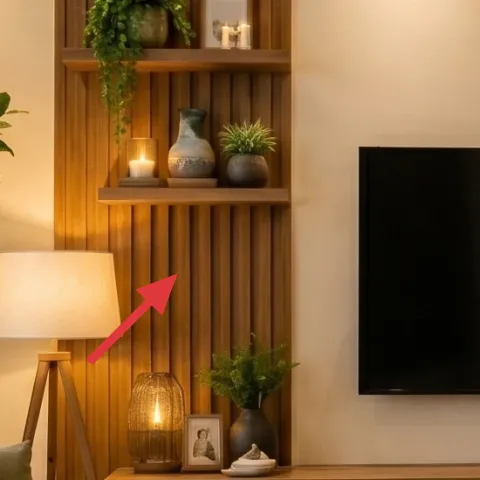
This plug-in table lamp with a beige shade creates the same “golden” warmth you see in the photo—without touching any hardwired lighting. The shade color is key: it filters light into a softer cream tone that makes the room feel calmer, especially after dark. A common alternative is overhead-only lighting, but it can make cream walls look flat and the olive chair look harsher. The trade-off with a standalone lamp is you’ll likely move the lamp slightly depending on where you’re sitting, but that flexibility is a renter superpower.
Choose a shade that matches the rug warmth
Beige or oatmeal shades blend with the floor/rug palette and keep the lighting from turning yellow-green.
Layer 4 — framed leaf-print artwork ($80) A graphic calm that works with plants
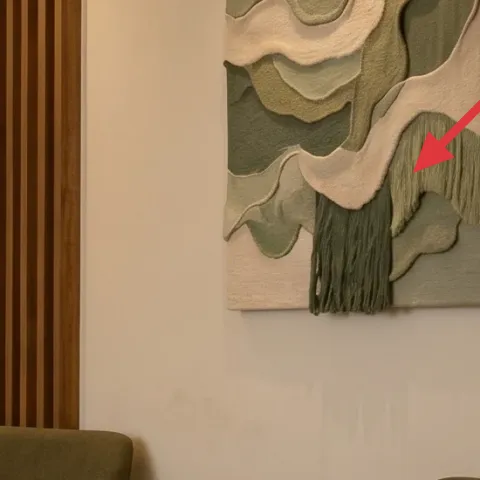
The framed leaf-print artwork is the bridge between “biophilic” plants and a pared-back wall. Its botanical shapes repeat the leaf language of the tall potted tree, but in a controlled, flat way that doesn’t compete with the room’s organic textures. The leaf print also helps balance all the verticals—wood slat paneling and the sofa’s straight lines—by giving the wall an easy-to-read pattern. The trade-off: busy leaf prints can look too busy next to greenery, so keep the palette muted and the linework crisp.
Skip glossy art if your lamp is close
High-gloss frames can glare under warm table-lamp light, especially if curtains are sheer.
Layer 5 — large framed abstract artwork ($85) Replace with a no-drill macramé statement
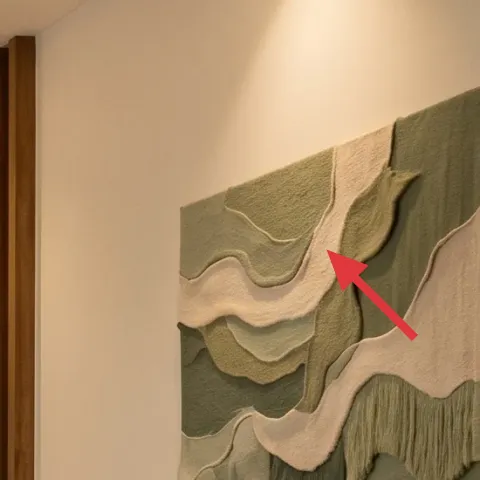
This large framed abstract piece gives the right wall visual weight so it doesn’t feel like “only TV and plants.” It also adds a soft, textural rhythm that complements the woven rug and the draped throw. Because it’s on the right wall, it counterbalances the left side’s window curtains and tall leafy plant. The trade-off with buying large wall art is cost, and in rentals it can be hard to justify. A macramé wall hanging keeps the same tactile effect while staying renter-friendly and easier to swap later.
Make it instead of buying it
DIY a macramé wall hanging to replace the large framed abstract art—same “textured wall weight,” but removable and easy to re-style.
Materials
- Macramé cotton cord — ~200 ft — craft store — $16
- Wood dowel (small) — 12–16 in — craft store — $10
- Fringe/trim yarn for finishing — 1 bundle — craft store — $8
- Command hook (large picture hook) — 1 pack — home goods — $4
- Decorative beads — small pack — craft store — $12
Steps
- Cut cord lengths for your desired width, then group them into even strands.
- Attach cords to the dowel using a secure lark’s-head style knot.
- Create a top row of knots (like square knots) to anchor the pattern.
- Work downward in repeating square-knot sections to build thickness gradually.
- Weave in beads at the intervals you want the texture to “spark.”
- Finish edges by trimming strands to an even fringe length.
- Hang the dowel with a Command hook at the same height as the artwork you’re replacing.
- Fluff and separate strands so the shape reads full from across the room.
- Step back and adjust the centerline so the macramé looks symmetrical on the wall.
Total DIY cost: $50 — saves about $35 over buying.
Layer 6 — tall potted leafy tree ($70) Biophilic height that fills empty corners
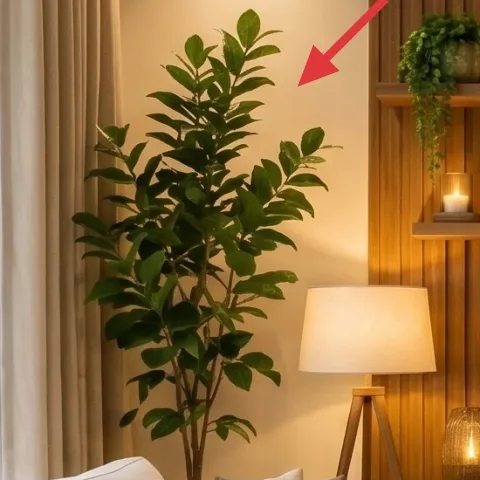
The tall potted leafy tree on the left side adds the vertical “breathing room” that makes the sofa seating area feel larger and more layered. It also echoes the leaf-print artwork, so the whole room looks intentional instead of random décor. The trade-off with real plants (if you choose them) is maintenance, but the upside is movement and texture that you can’t fake. If you want a similar effect right away, a larger indoor plant can replace any “I need a floor plant” panic. Either way, a pot placed near the curtain creates a natural frame for the seating.
Use a pot that matches your palette
In this scene, warm neutral pots keep the plant from turning into the loudest color.
Layer 7 — round wooden tray with candle ($25) Makes the coffee table look styled, not busy
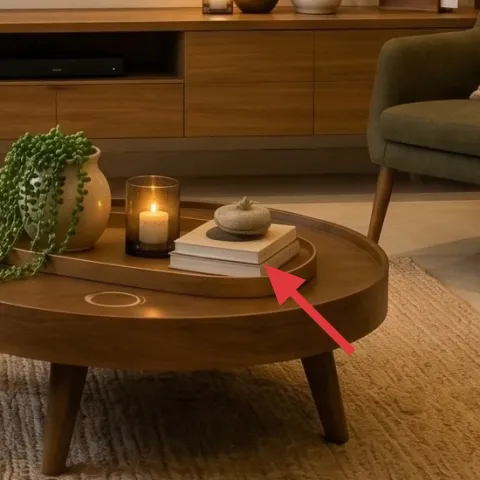
The round wooden tray with candle on the coffee table is what makes the surface feel curated. It collects small items—like the candle and a couple of succulents—into one “visual unit,” so the table reads neat even when the rest of the room has lots of texture. Without a tray, small decor can scatter visually, especially on a round table where objects drift toward the edges. The trade-off is that trays limit where items can go, but that’s exactly the point for a renter-friendly refresh: it creates structure fast. Choose warm wood to echo the console and coffee table tones.
Keep it to 3 items
Tray styling works best when there’s one tall element, one small element, and one grounding object.
The cost, layer by layer
| Layer | Item | Cost |
|---|---|---|
| 1 | Light beige area rug (5×7) | $200 |
| 2 | Olive green throw blanket | $45 |
| 3 | Plug-in table lamp with beige shade | $60 |
| 4 | Framed leaf-print artwork | $80 |
| 5 | Large framed abstract artwork (DIY substitute) | $85 |
| 6 | Tall potted leafy tree | $70 |
| 7 | Round wooden tray with candle | $25 |
| Total | $565 | |
If you want a cheaper version, swap the framed leaf print for an unframed botanical print in a simple frame and choose a smaller 5×4 rug or a blended-olive throw instead of the darker one.
What worked, what didn't (across the whole room)
The best pieces here are the ones that add texture at different heights: rug underfoot, throw on the sofa, lamp at table height, and wall art at eye level. The plant choices also reinforce the botanical theme without making the room feel cluttered. The main risk is letting wall décor and table décor multiply, which is why the tray and the “two art pieces” rule matter.
What worked
- The light beige rug makes cream walls feel warmer instead of washed out.
- The olive throw provides a consistent color echo between sofa, chair, and accessories.
- The plug-in table lamp creates soft, flattering light around the seating—not glare.
- The framed leaf print ties the live plant and wall styling into one visual theme.
- The tall potted leafy tree adds scale and keeps the corner from feeling empty.
- The round tray concentrates small items so the coffee table stays visually calm.
What didn't
- Wall décor that’s too bright or high-contrast fights the warm, minimal palette.
- If the throw blanket is tucked away, the olive accent disappears and the room looks flat.
- Too many table objects on a round surface creates visual clutter fast.
- Glossy frames can catch lamp glare and reduce how “soft” the wall feels.
What we'd skip if we did it again
Skip matching wall art pairs. In this room, the best look comes from one botanical print and one more textural abstract piece, not two nearly identical prints that read like a set.
Skip overhead-only lighting. Even in a bright apartment, a warm plug-in table lamp helps cream walls and olive textiles look rich instead of flat.
Skip adding decor everywhere “just because there’s space.” A round tray on the coffee table and a single tall plant in the corner give you breathing room, so the room feels intentional rather than crowded.
Frequently asked
How long does a refresh like this usually take?
Most of the work is simple placement: rug roll-out, drape the throw, set up the plug-in lamp, and style the tray. Hanging wall art with Command hooks is usually the most time-consuming part because it’s about measuring height and spacing. Expect about 2–5 hours for a typical renter (faster if you already have decor on hand).
Is this renter-safe if my lease has strict rules?
Yes—nothing in this look requires paint, drilling, or replacing landlord fixtures. The rug, throw, lamp, and plants are all movable. The only “wall” step is hanging framed art with renter-safe hooks, and that can be removed cleanly at move-out. If your landlord is extra picky, stick to Command hooks only and avoid adhesive wallpaper.
What if my living room is smaller than this one?
Use the same palette, but reduce scale: choose a 5×7 or even 4×6 rug, keep the plant a bit shorter, and use one wall art instead of two if needed. A single lamp plus a throw blanket still delivers the layered look. The key is keeping the coffee table styling to a tray with 2–3 items.
What if my living room is bigger and needs more balance?
Go up in rug size first, then add a second plant or a taller stand for greenery if corners still feel bare. For wall balance, keep the botanical print and make the abstract/mix texture piece larger, since that’s what fills vertical space without adding clutter.
Where should I shop for these items if I want the same materials?
For the rug and textiles, search for warm beige or oatmeal jute blends and olive throws in neutral-friendly weaves. For wall art, look for botanical leaf prints with muted greens and an abstract piece with soft texture. The easiest lamp route is a plug-in table lamp with a beige or oatmeal shade from any big-box home section.
What’s the biggest mistake people make in this style?
Over-styling surfaces and walls at the same time. This room looks calm because it repeats a limited palette—cream, warm wood, and olive—and then varies texture. Use a tray on the coffee table and limit wall art to two pieces, so plants and textiles stay the “main characters.”
More in Living Room
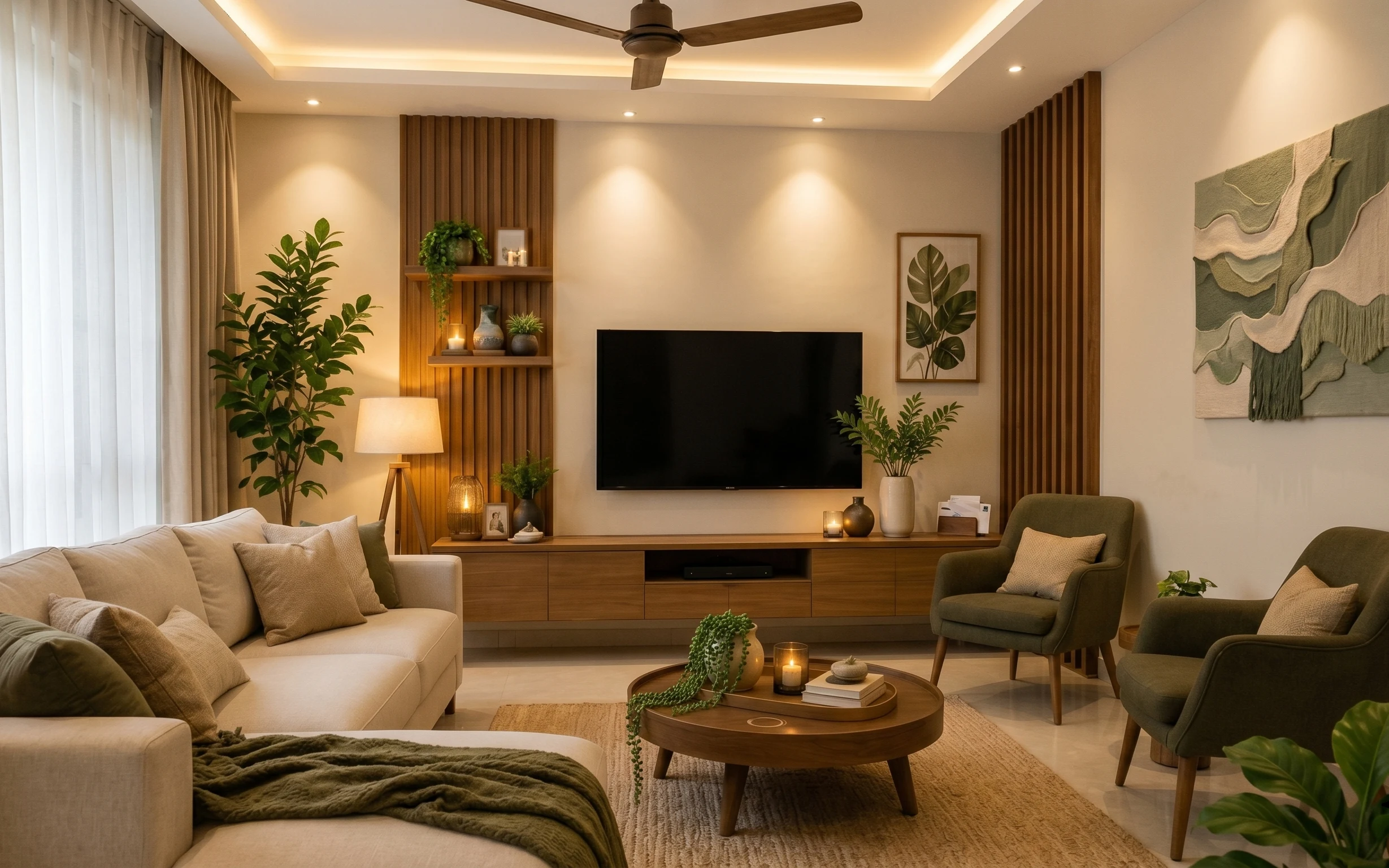
A calmer sofa seating area for $600
This sofa seating area refresh shows a renter-friendly japandi look with soft neutrals, olive accents, and plants. For about $600, you can …
7 no-drill refreshes for a $600 sofa living room
A move-friendly sofa living room refresh for shared housing, built around warm neutrals and zero permanent changes. This $600 plan focuses …
Renter-Friendly Japandi Living Room Refresh for Under $400
A renter-friendly living room makeover that stays under $400, anchored by a 5x7 jute-look rug and a pair of airy sheer panels. A muted gree…