- Best for
- High-impact wall + textiles refresh
- Total cost
- $700
- Difficulty
- Moderate (paint + install)
- Time
- 1–2 weekends
Why woven-light neutrals are the bedroom of 2026
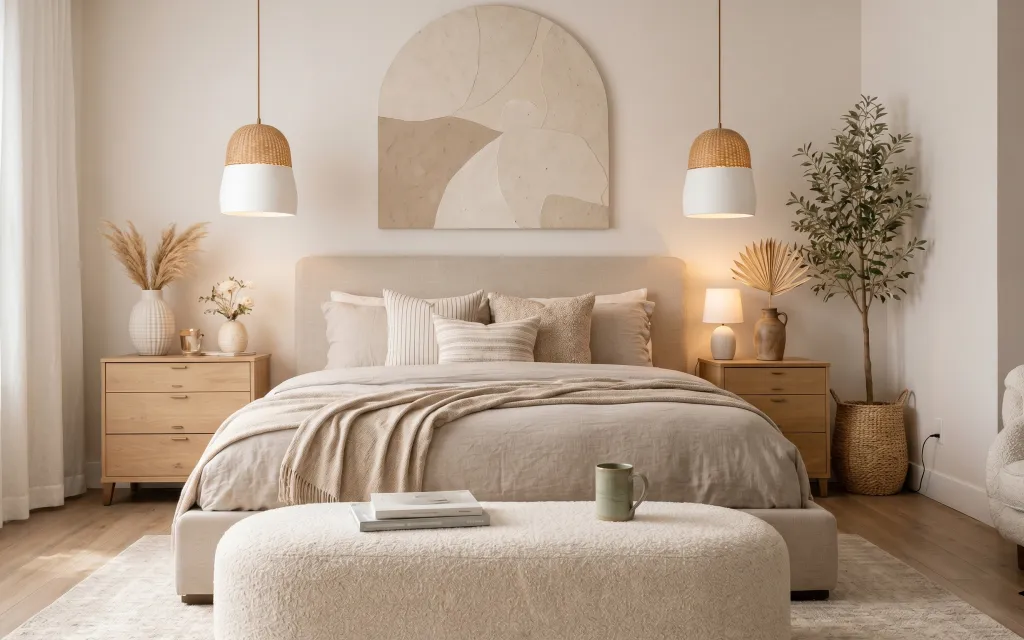
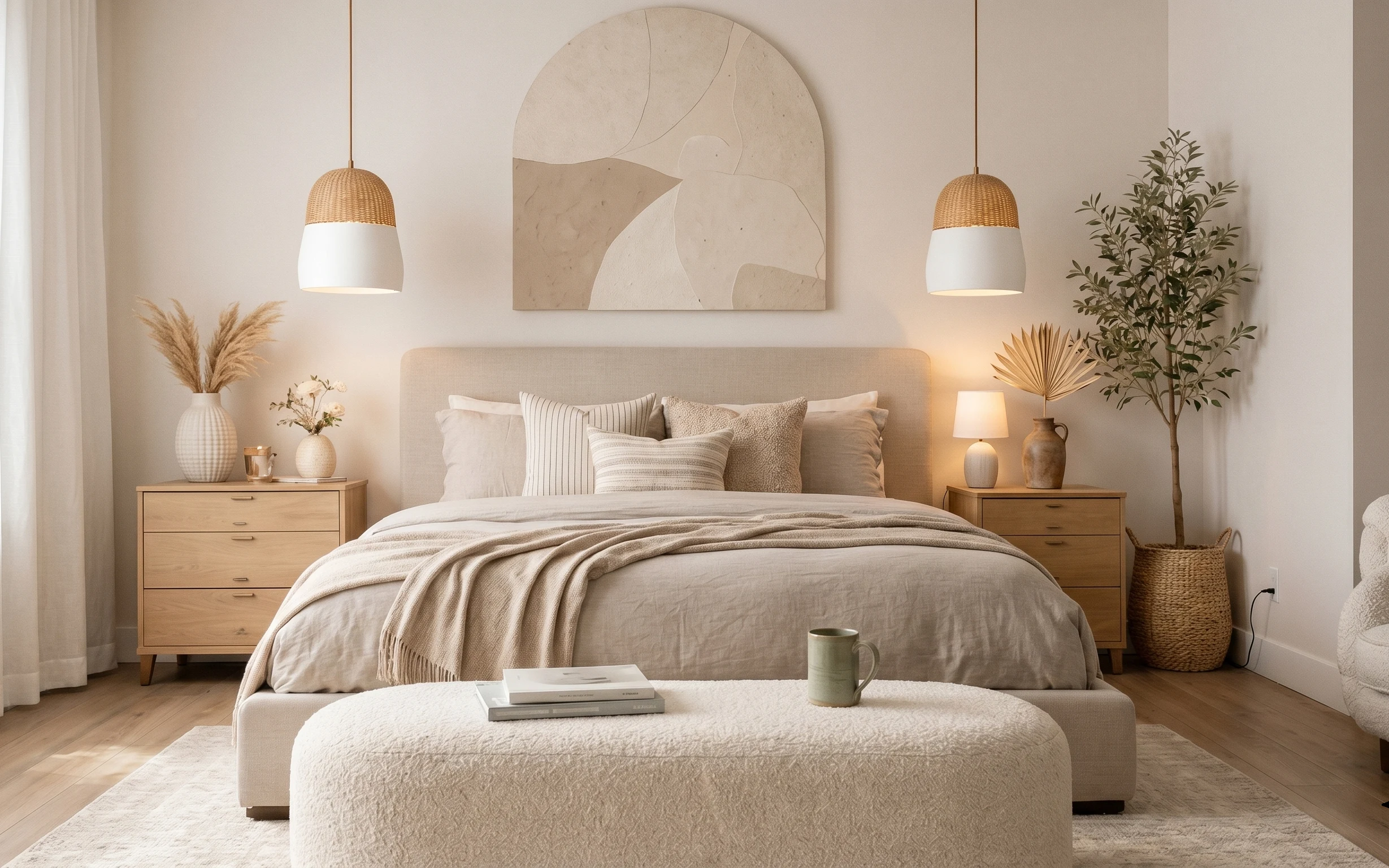
Start with the “quiet” elements: sheer curtains, a light neutral rug, and a large framed abstract piece above the bed. In the photo, you can see how creamy textiles and warm walnut wood (those nightstands) make the whole space feel pulled together even before you add accents. The woven pendant lights and beige table lamps also matter—soft warm light smooths over the contrast between white pillows and wood grain. For US homeowners with limited time, this mix is the sweet spot: you’re buying and styling what you can reach fast.
I learned the hard way that picking a pretty headboard isn’t the same as building a look. Early on, I tried to “match everything” and ended up with a room that felt flat and a little too curated. What changed for me was deciding on one repeating warmth: cream textiles paired with warm wood. That’s why the layered pillows and the plant on the right feel intentional instead of random.
Layer 1 — sheer white curtain panel pair ($80) Lightens the left window without blocking daylight
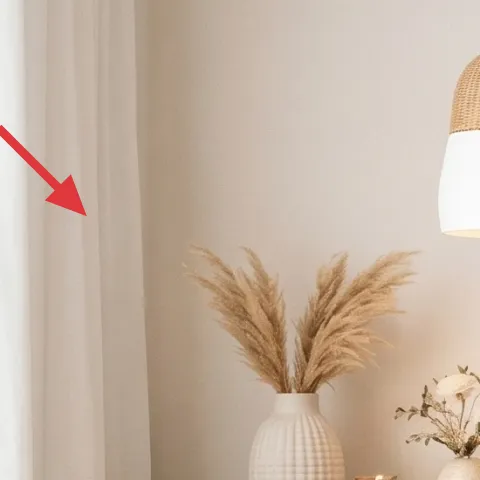
These sheer white curtain panels sit at the left window and soften the room’s edges without making the bed area feel enclosed. If you try to go opaque in a bedroom like this, the space can feel heavier around the headboard and nightstands. Sheers also “blur” busy sightlines from outside, which matters when you’re styling with a big framed abstract piece already taking center stage. The trade-off is privacy: you’re relying on the shade in your neighborhood and your bedroom’s layout more than the fabric.
Use them for height
Hang the sheers close to the ceiling line so they visually stretch upward.
Layer 2 — light neutral area rug 8×10 ($200) Grounds the bed with soft, easy color
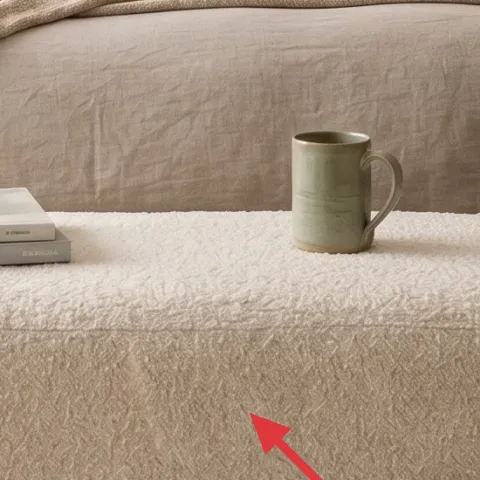
The light neutral rug in the foreground is doing the unglamorous job of making everything feel anchored. In this bedroom, the rug repeats the “cream + warm gray” range you see in the pillows and the framed abstract art, so you don’t have to add more color to create depth. If you choose a smaller rug, you’ll get that floating-bed feeling; if you choose something bold, it will fight the warm wood nightstands and the beige lamp shades. A 5×7 can work, but this image reads more like an 8×10—big enough for the nightstand legs and a clear landing zone for the bed.
Match undertones, not just “beige”
Bring your lamp shade color and bedding into the showroom so the rug doesn’t turn pink or gray.
Layer 3 — large framed abstract wall art ($80) Fills the space above the bed with calm texture
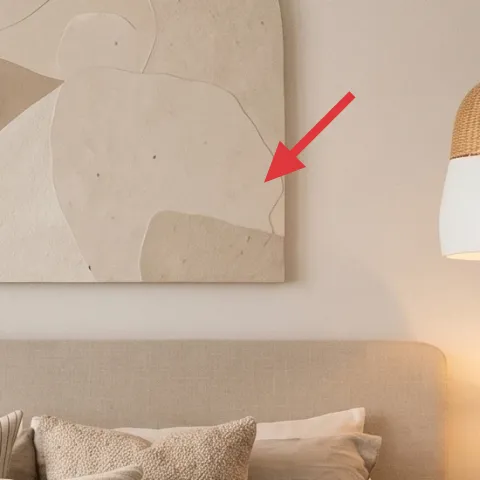
The framed abstract wall art above the bed is the room’s main visual anchor, and it’s why the palette stays cohesive. Because the art includes both pale neutrals and warm beige movement, it bridges the upholstered headboard, the white textiles, and the warm wood nightstands. The easy alternative would be a smaller print set, but that usually makes the wall feel busy—especially with pendants already adding vertical rhythm. The trade-off here is scale: the art needs to look substantial, centered, and tall enough that the bed doesn’t compete with it.
Center it to the bed, not the wall
Use the bed’s centerline as your reference so the symmetry feels natural.
Layer 4 — mixed throw pillow set in white and beige ($60) Adds layered texture without adding new color
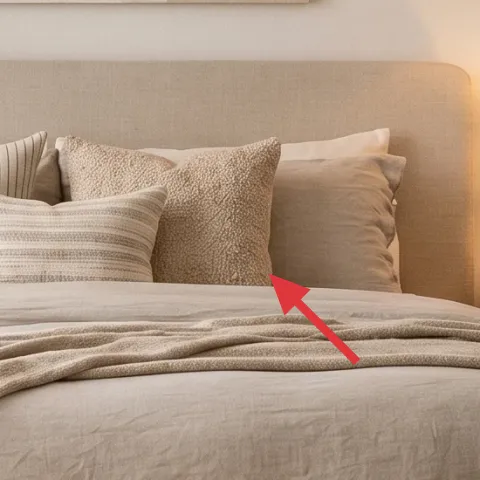
This layered pillow mix—white and beige, with one pillow showing subtle patterning—reads as “designed,” but it’s really texture doing the work. You can see how the different fabrics (smooth vs. lightly textured) create shadows across the bed, so the headboard area doesn’t look like a single flat block. The obvious alternative is matching pillow covers, but that removes dimension. A set like this keeps the room airy while still feeling styled enough for a guest-ready bedroom. Trade-off: you’ll have to fluff and rotate so the arrangement doesn’t collapse into one corner.
Balance smooth and nubby
One textured pillow next to cleaner white fabric keeps the look from feeling too minimal.
Layer 5 — tall leafy floor plant in a pot ($80) Brings height and softness to the right side
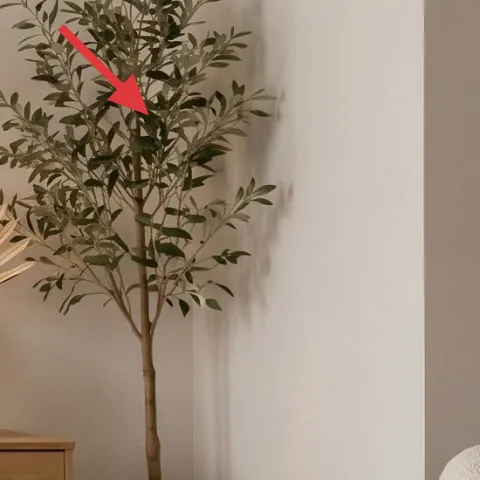
The tall leafy floor plant on the right gives the bedroom a vertical “breathing line,” balancing the horizontal weight of the bed and nightstands. Even though it’s a single object, it connects to the room’s other organic elements—dried stems in a ceramic vase and the woven materials from the lighting. If you swap this for a shorter plant, you’ll lose that height contrast and the right corner can feel visually empty next to the upholstered seat. The trade-off is light needs: plants want consistent brightness, so placement close to the window matters.
Skip tiny pots in corner spaces
A small plant in a big corner looks like it got placed there, not like it belongs.
Layer 6 — wood nightstand drawers (paint refresh) ($80) Makes the wood feel intentional and consistent
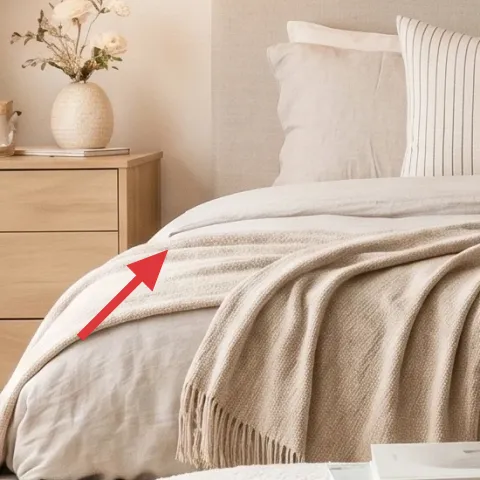
Those nightstands are warm wood with drawers, and in a room like this the details matter—drawer fronts catch light, and paint can either unify the palette or highlight imperfections. A quick paint refresh in a warm cream tone is the weekend-friendly way to keep everything cohesive with the white pillows, sheer curtains, and the beige lamp shades. Buying new nightstands is the obvious alternative, but it’s rarely worth it when you can update existing hardware and surfaces with a clean finish. The trade-off is prep time: you’ll get the best look with careful sanding and a primer that grips the existing surface.
Make it instead of buying it
Paint the nightstand drawers a warm cream so the wood reads calmer under the table-lamp glow.
Materials
- Bonding primer — 1 quart — hardware store — $12
- Warm cream cabinet/trim paint — 1 quart — hardware store — $25
- Sandpaper (120/220 grit) — assorted pack — hardware store — $8
- Foam roller + quality angled brush — set — hardware store — $15
- Painter’s tape + drop cloth — 1 kit — hardware store — $6
Steps
- Clean and degrease the nightstand surfaces until they squeak, then let dry fully.
- Sand the finish lightly with 120 grit to remove shine, then wipe dust away with a tack cloth.
- Apply bonding primer with a foam roller for flat areas and a brush for edges.
- Let the primer cure fully per the can’s label, then sand smooth with 220 grit.
- Apply the warm cream paint in thin coats, keeping the grain-lines even across drawers.
- Let the final coat cure before placing lamps or styling objects back on top.
Total DIY cost: $66 — saves about $14 over buying.
Layer 7 — pair of plug-in table lamps with beige shades ($120) Creates soft pools of light beside the bed
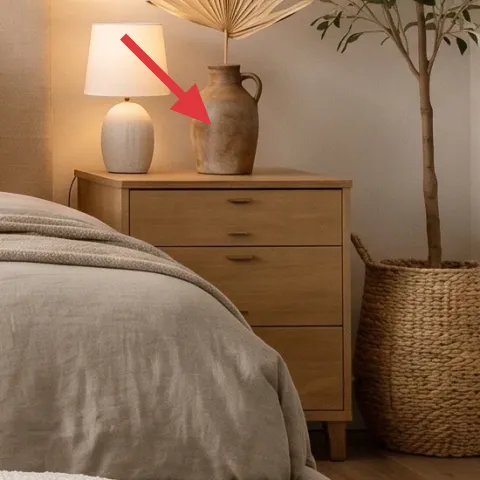
On each nightstand, the plug-in table lamps with beige/cream shades add warmth at eye level, which makes the bed feel inviting even when overhead light is off. In a palette built from cream textiles and warm wood, the lamp shade color keeps the room from turning either too cool or too yellow. The obvious alternative is one lamp instead of two, but that creates uneven brightness and draws attention to asymmetry. With two matching lamps, you get a balanced glow that supports reading and bedtime routines. Trade-off: you’ll need to shop for matching shade size so the height lines up visually.
Match lamp heights within 1–2 inches
If one shade sits higher, the whole “paired” look will read off.
The cost, layer by layer
| Layer | Item | Cost |
|---|---|---|
| 1 | Sheer white curtain panel pair | $80 |
| 2 | Area rug 8×10 in light neutral | $200 |
| 3 | Framed abstract wall art 16×20 | $80 |
| 4 | Throw pillow covers set (5–6 covers) | $60 |
| 5 | Indoor plant (4–6 ft) in pot | $80 |
| 6 | Wood nightstand drawers (paint refresh, retail eq.) | $80 |
| 7 | Pair of plug-in table lamps with beige shades | $120 |
| Total | $700 | |
If you want a cheaper variant, prioritize the rug and wall art first, then shop for one matching lamp pair at a time. Replace the full pillow mix with two larger covers plus one textured throw pillow cover, and keep the curtains sheer but in a simpler weave.
What worked, what didn't (across the whole room)
The overall result works because the big wall element and the rug keep the room calm, while texture (pillows, plant, woven shades) adds interest without more color. The lighting also holds up the mood from day to night, which is where a lot of weekend refreshes fall apart.
What worked
- The sheer curtains soften the left side and keep the bed wall from feeling visually boxed in.
- The light neutral 8×10 rug ties nightstands, bed, and walkway into one grounded zone.
- The large framed abstract art gives the headboard wall a clear focal point and prevents “blank wall” stress.
- Layered white and beige pillow textures create depth without adding new colors.
- The tall plant on the right adds vertical balance against the bed’s horizontal lines.
- Table lamps beside the bed create comfortable evening light without relying on harsh overhead bulbs.
What didn't
- Too-small rug sizes make the bed feel like it’s floating and disconnect it from the nightstands.
- Using only matching pillow covers flattens the headboard area and removes the shadow play.
- Placing a plant that’s too short leaves the corner looking like it needs “one more thing.”
- Skimping on lamp shade color can tip the room either too warm or too cool under evening light.
- Painting without primer can lead to uneven coverage on older finishes and drawer edges.
What we'd skip if we did it again
Skip going full blackout curtains. The bedroom here benefits from airiness, and opaque panels would compete with the large abstract art and woven lighting. If you need privacy, choose a sheer-first approach and add an easy inner liner instead of replacing everything.
Skip replacing the nightstands unless the shape truly doesn’t work. A paint refresh in warm cream keeps the warm wood energy while aligning the palette with the pillows and lamp shades. The time saved makes it easier to invest in better rug size and art scale.
Skip buying a lot of new “accent” items. The room already has enough texture cues—pillows, plant, woven shades, and dried stems. Put money into the rug, art, and lighting first, then stop; the best-looking bedrooms repeat warmth instead of adding clutter.
Frequently asked
How long does this bedroom refresh take over a weekend?
A realistic timeline is 6–10 hours of active work, then a second shorter day for styling and curing steps. Curtains and rug placement can be quick. The paint refresh is the time anchor: sanding, priming, painting, and letting the final coat cure before you place items back on top. If you’re careful with drying times and don’t rush the finishing coat, it stays weekend-friendly.
Can this work in a rental if I can’t paint the nightstands?
Yes—keep the rug, art, and pillow layering exactly the same, then swap the nightstand paint for a renter-safe alternative: use peel-and-stick contact paper on the drawer faces, or add removable drawer liners and a tray styling approach. For curtains, you can hang a tension rod inside the window frame. Lighting can stay the same if outlets are accessible.
What if my bedroom is smaller than the photo?
In a smaller bedroom, prioritize scale in reverse order: keep the framed art large enough to read as a focal point, but downsize the rug selection carefully. Look for a rug size that still reaches under the front legs of the bed. If the plant corner is too tight, choose a shorter floor plant and add height with a taller vase or dried-stem arrangement.
Where should I shop for the framed abstract art and rug without overpaying?
For wall art, focus on print size first (around 16×20 or larger) and then compare frame finishes. For rugs, filter by pile thickness and undertone—light neutral rugs can skew warm or gray depending on weave and dye. Big-box home stores, discount home sites, and local rug dealers with return policies are usually the most forgiving for weekend projects.
What’s the biggest styling mistake with this kind of neutral bedroom?
The biggest mistake is repeating “cream” without repeating texture. If everything is smooth and flat—pillows, blanket, and art—your bedroom reads like a showroom photo for about five minutes, then feels dull. Mix at least two textures (for example, a lightly textured pillow cover and a woven-looking throw) and keep one grounding element large (rug or art) so the room has a visual spine.
How do I keep the pendant + table-lamp look from feeling too bright at night?
You can’t always control overhead lighting, but you can control how the room is illuminated. Keep table lamps’ shades in a warm cream tone and use bulbs that read soft rather than cool. If the pendants cast a strong direct beam, dim or use them only in the evening. The goal is layered lighting: one focal glow at night plus ambient spill from the rest.
More in Bedroom
How to refresh a bedroom for under $700
A light-beige bedroom refresh with curtains, a neutral rug, and warm wall art—done over a satisfying weekend. This $700 plan focuses on the…
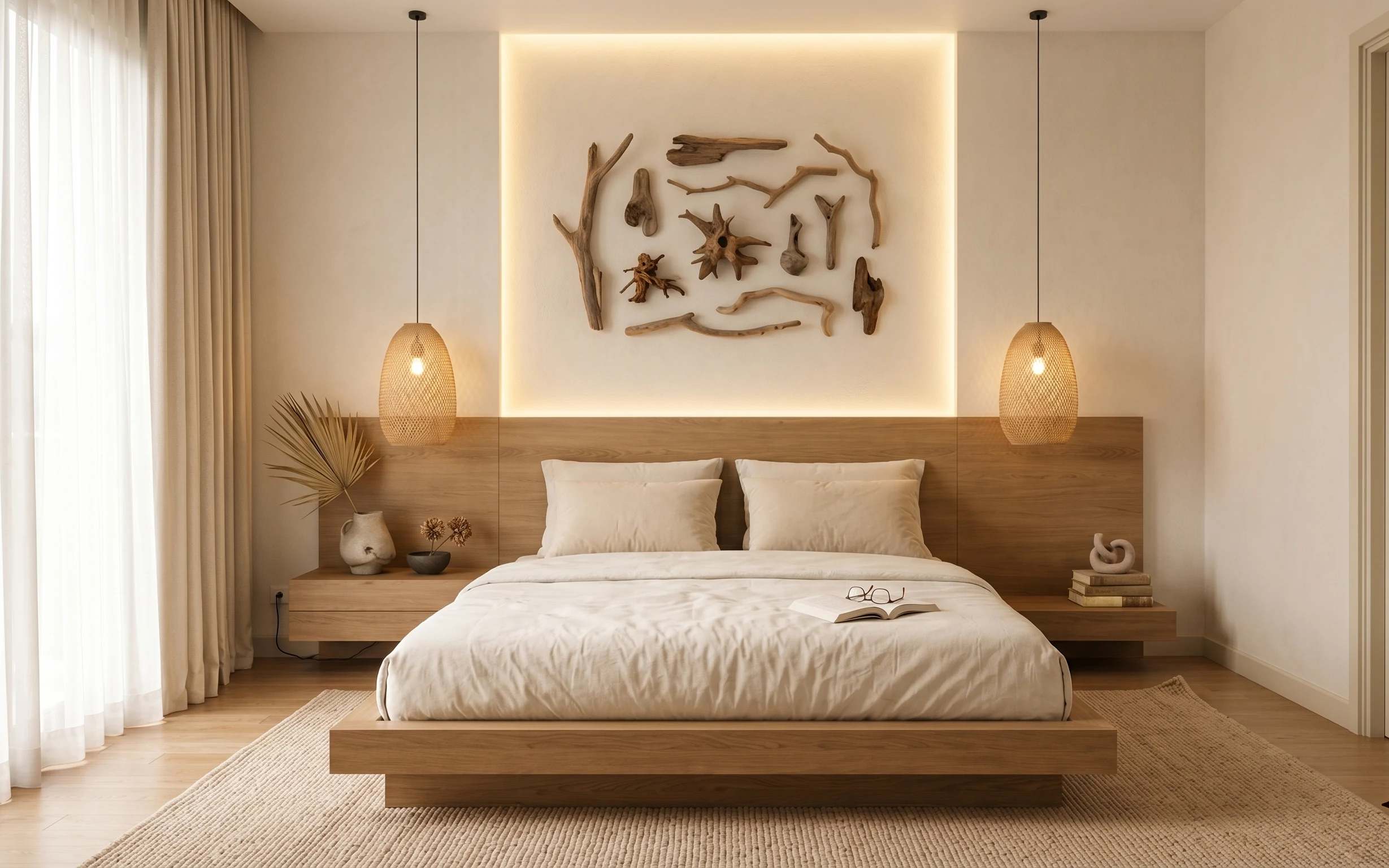
How to refresh a platform-bed bedroom for under $700
A platform-bed bedroom refresh for under $700: warm recessed wall paint, woven lighting, and a driftwood wall moment. This weekend set focu…
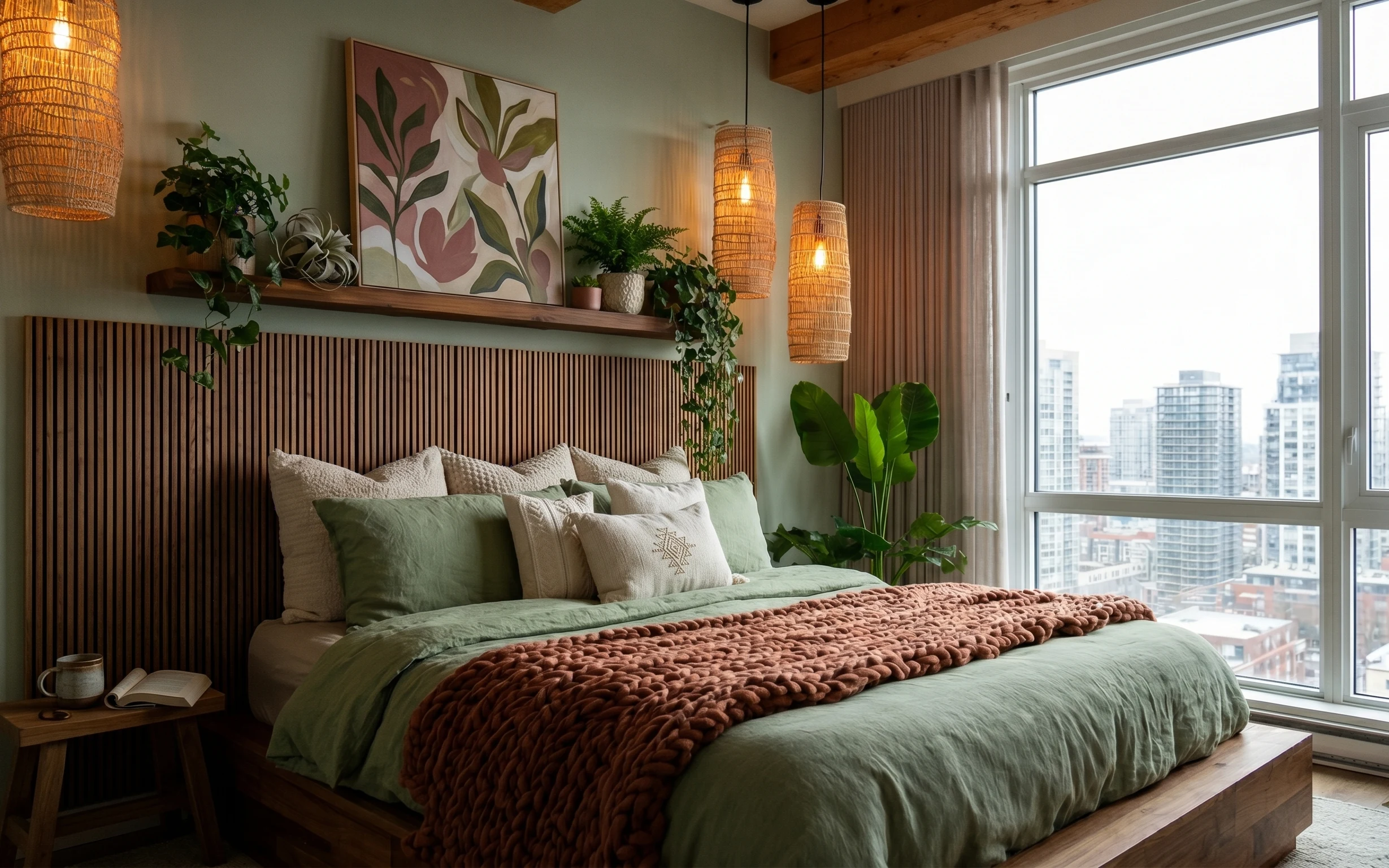
How to get a window-side bed nook for under $700
A window-side bed nook can look like a design magazine weekend project when you swap in curtains, a warm rattan pendant glow, and a chunky …