
- Best for
- Weekend bedroom polish
- Total cost
- $645
- Difficulty
- Moderate DIY
- Renter-safe
- No demolition required
Why warm wood-and-cream accents are the platform-bed bedroom of 2026
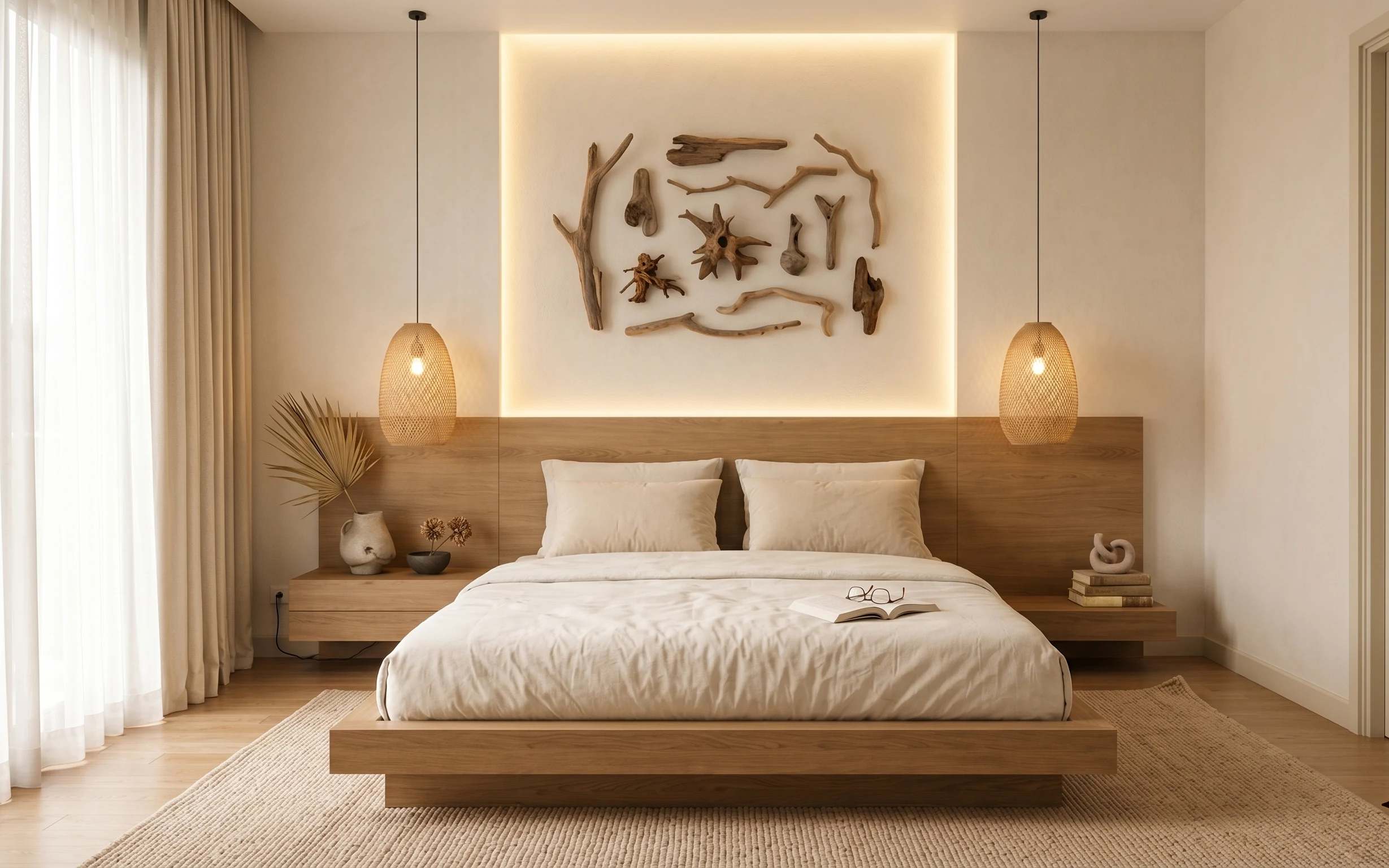
The bedroom already has great bones—warm wood paneling, soft white textiles, and that driftwood composition—but it still needs sharper contrast where your eye lands. Think of the look like Japanese-minimal meets coastal texture: linen-like curtains, a woven rug, and pendant light shades that glow instead of glare. The bed reads calm because the pillows stay white, while the wall art brings movement with irregular wood shapes. For US homeowners, the weekend version is picking the one change that adds depth—then repeating the materials you already have.
I caught myself wanting to add more stuff to “make it warmer,” which is how bedrooms turn into storage rooms. What changed my mind was stepping back and noticing the recessed bed wall already frames everything—it just needed a warmer paint read so the driftwood didn’t look pasted on. Once that backdrop matched the wood tone, the whole scene felt intentional, even with a clean bed and only a few objects on the shelf.
Layer 1 — Small ceramic bowl ($25) A quiet anchor on the left shelf
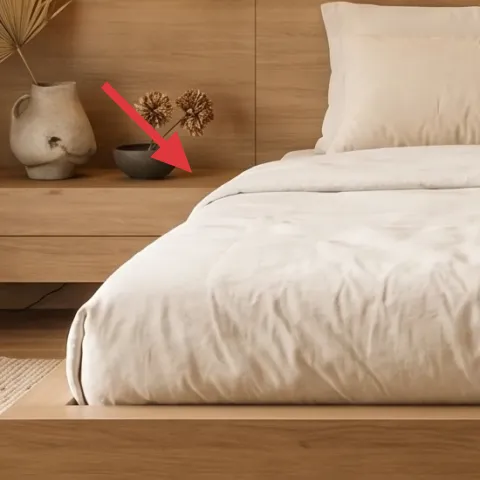
A small ceramic bowl sits on the left bedside shelf, and it does more than hold “decor.” Its matte, slightly imperfect surface keeps the shelf from feeling too sleek, especially next to the smooth wood paneling behind it. This is the easiest layer to overthink—often people buy something taller and suddenly the shelf feels busy. Here, the bowl’s scale stays modest so it supports the room’s airy look. Trade-off: it won’t add color by itself, but it adds texture and a place for the eye to rest between the pillows and the wall art.
Layer objects in pairs of heights
Balance a low bowl with one mid-height dried-stem container so the shelf looks styled, not accidental.
Layer 2 — Set of white bed pillows ($30) Clean, hotel-simple comfort
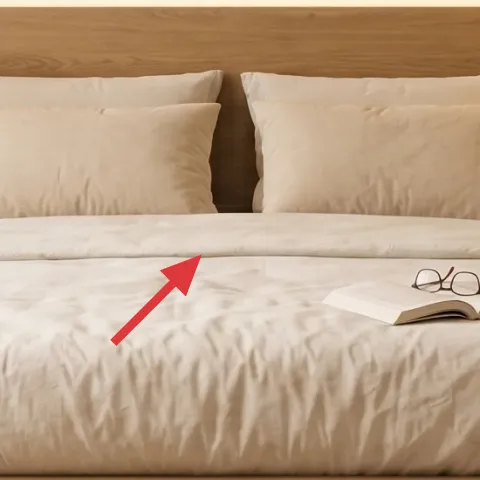
The two white pillows make the bed feel crisp and bright, which matters in a room that already leans warm. White here isn’t “sterile”—it’s a light fabric that reflects the pendant light glow and keeps the wood-and-beige palette from getting heavy. Buying new covers is cheaper than replacing anything structural, and pillow refreshes are also the most forgiving if you’re working around your existing duvet. The trade-off is obvious: you’ll need to keep up with pillow maintenance, because white shows everything. Pair them with a slightly wrinkled, relaxed tuck for the same lived-in look.
Why white works with driftwood
Irregular wood shapes read calmer against a light background than against another warm tone.
Layer 3 — Curtain panel pair ($80) Tall softness from ceiling to floor
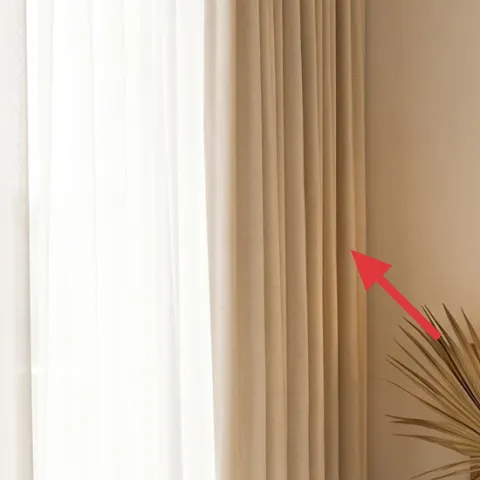
These beige curtain panels frame the left side of the room and help the bed wall feel bigger. The color is key: it stays in the same warm family as the wood, but it’s light enough to keep the windows from making the room feel dim. This layer is the alternative to “more furniture”—instead, it gives you vertical movement and softness. Choose panels that hang high and fall long; even one too-short hem will change the whole proportion. Trade-off: curtains are still maintenance (wash schedules), but they’re worth it because they change the feel of the room every day.
Hang higher than you think
If you can, mount the rod close to the ceiling so the fabric pulls the eye up.
Layer 4 — Woven pendant light ($120) Warm pools of light without harsh glare
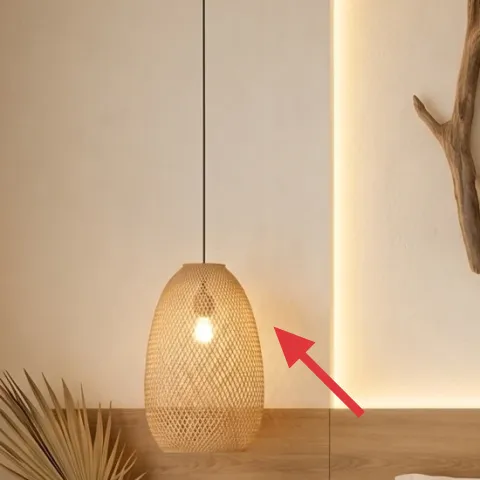
The woven pendant shades create that soft warm glow that makes wood paneling look richer. Picking woven lighting is a visual shortcut: it adds texture overhead, which the rest of the room keeps pretty minimal. Instead of a sleek glass or metal shade that can feel sharp, the woven material diffuses the light so the driftwood and bedding stay gentle. Trade-off: woven shades can dim the room slightly, so they work best when paired with enough ambient light elsewhere. If you’re hard-wiring, call an electrician for anything involving electrical work beyond swapping fixtures.
Don’t match the shade too closely to the curtains
Keep undertones slightly different so the eye reads separate layers: fabric for softness, shade for glow.
Layer 5 — Warm accent paint for the recessed bed wall ($70) A backdrop that makes the driftwood feel “built in”

The recessed wall behind the driftwood is where the whole look lands, so changing its paint read gives you a big impact without touching anything structural. A warm-beige paint rinse (one that sits between cream and wood tone) makes the driftwood look integrated instead of floating. This is also the most reversible-feeling option: you can repaint if you change your mind later, and you’re not relying on trends. Trade-off: prep matters. If the surface has uneven sheen or dust, the paint can look patchy and the driftwood will exaggerate it.
Keep sheen consistent
Use the same finish across the recessed panel so the light doesn’t create extra stripes.
Layer 6 — Driftwood wall art ($120) Movement made of irregular lines

That driftwood wall art adds the one “busy” element, and it works because the bed textiles stay plain and the shelves stay minimal. The irregular branches create motion at eye level, while the neutral wood stays compatible with beige curtains and warm pendant light. This is the obvious alternative—either put nothing on the wall (and let it feel blank) or hang something graphic. Driftwood hits the sweet spot between coastal and japandi: it’s organic but not cartoonish. Trade-off: because it’s natural material, the pieces can vary—so choose one with cohesive tone rather than the biggest assortment.
Center it over the warmest part of the bed wall
When the art sits in the brighter panel area, it reads crisp instead of shadowed.
Layer 7 — Large woven area rug ($200) Texture underfoot that softens everything
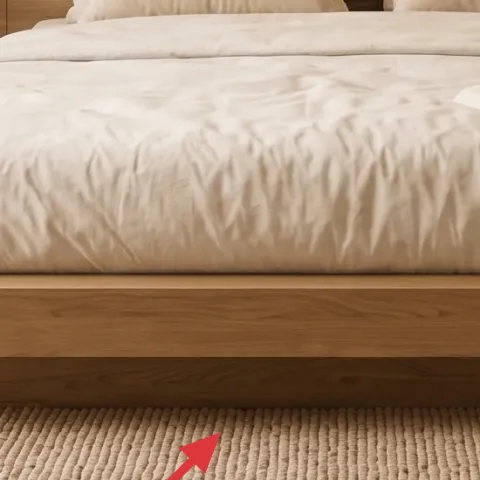
A large woven rug grounds the bed and makes the whole palette feel tactile. Even though the floor is wood, the rug adds a second “material language” that connects the curtains and the woven pendant shades. Pick a 5×7 or larger footprint so the bed doesn’t feel like it’s hovering; in a platform-bed setup, rug edges become very noticeable. Trade-off: woven rugs show foot traffic, but they’re forgiving if you spot-clean promptly. The best part is that a rug shifts the visual weight of the room instantly, without changing your furniture layout.
Use a pad if it slides
A thin rug pad keeps the woven texture comfortable and prevents creeping.
The cost, layer by layer
| Layer | Item | Cost |
|---|---|---|
| 1 | Small ceramic bowl | $25 |
| 2 | Set of white bed pillows | $30 |
| 3 | Curtain panel pair (84") | $80 |
| 4 | Woven pendant light | $120 |
| 5 | Warm accent paint for recessed bed wall (DIY) | $70 |
| 6 | Driftwood wall art | $120 |
| 7 | Large woven area rug | $200 |
| Total | $645 | |
If you want a cheaper variant, swap the driftwood wall art for a framed set of neutral botanical prints and choose an affordable jute-look rug with a similar warm undertone. Keep the woven pendant light, because it’s the detail that makes the whole room glow.
What worked, what didn't (across the whole room)
The biggest wins were the layers that add texture at multiple heights: curtains down low, a woven pendant overhead, and a warm recessed wall behind the driftwood. The bed stays bright because the pillows are simple, which keeps the organic wall art from feeling overwhelming.
What worked
- The beige curtain panels add vertical softness and make the window area feel larger.
- The woven pendant light diffuses glare and gives the wood paneling a richer tone.
- White pillows keep contrast high so the driftwood wall art reads intentional, not cluttered.
- The recessed wall paint read makes the wall art feel framed instead of floating.
- The large woven rug anchors the bed and ties together the curtain and pendant textures.
- The small ceramic bowl gives the bedside shelf a matte focal point without taking over.
What didn't
- If the curtain hem hits too high, the room loses that tall, calm proportion.
- Choosing a shade with a very dark weave can make the bed wall look heavier at night.
- Driftwood pieces that are too mixed in tone can clash with warm wood paneling.
- Picking a rug that’s too small makes the platform bed feel disconnected from the floor.
- Over-styling the bedside shelf fights the airy, coastal-japandi balance.
What we'd skip if we did it again
Skip swapping the platform bed structure or doing any “big” renovation. This room’s best results come from material layering—curtains, rug, and wall tone—so the same look can be achieved without structural changes.
Skip buying more wall decor to fill space. Driftwood wall art already supplies the focal movement; additional framed pieces would compete with its irregular lines.
Skip matching everything exactly. Keeping slight undertone differences between curtains, rug, and woven pendant shades makes the room feel curated instead of flat.
Frequently asked
How long does this platform-bed bedroom refresh take?
Most of the work is front-loaded into the biggest visual moves: hanging curtains, placing the rug, and setting the wall art. If you’re also repainting the recessed bed wall, plan a full day for prep and another for paint coverage plus drying time. Assuming you already have the bed and shelves, expect 1–2 weekends depending on drying and how quickly you dial in the curtain height and driftwood centering.
Is this weekend plan doable if I rent?
For renters, skip the paint layer and focus on reversible upgrades like curtain height (a proper tension rod or hardware that’s removable), swapping throw pillows, adding a rug pad, and styling the shelves with small objects. The driftwood wall art can also be hung with removable hooks if your rental allows it. The woven pendant choice can work if you keep the existing fixture and use a compatible shade solution; otherwise, leave lighting swaps to the landlord or an electrician with permission.
What if my bedroom is smaller or the ceiling is lower?
In a smaller bedroom, stick to the same material formula but scale down the rug size only if you can keep the bed centered and ensure the rug extends under at least the front edge. Keep curtain panels full-length and hang them high to add height. For wall art, make sure it doesn’t crowd the recessed panel—center it and keep the surrounding wall paint light so the composition doesn’t feel boxed in.
Where can I shop for the woven pendant light and neutral curtains?
Start with big home retailers for curtain panels and rug basics, then move to lighting stores or marketplaces that carry woven shades for a similar diffusion effect. Look for warm beige or natural straw-wrapped materials rather than gray or glossy finishes. For the curtains, prioritize true panel length and a fabric that drapes well when hung from a rod. That drape quality is what makes the room feel expensive.
What’s the biggest mistake people make in this bedroom style?
The most common misstep is introducing too many competing textures at once. Driftwood wall art plus woven lighting plus a woven rug is already three texture sources; adding another big patterned rug, heavy patterned bedding, or multiple bold frames can overwhelm. Keep textiles mostly neutral, let one natural focal point do the talking (driftwood), and use small accessories to support the palette instead of starting a new one.
More in Bedroom
How to refresh a platform-bed bedroom for under $700
A platform-bed bedroom refresh for under $700: warm recessed wall paint, woven lighting, and a driftwood wall moment. This weekend set focu…
How to get a window-side bed nook for under $700
A window-side bed nook can look like a design magazine weekend project when you swap in curtains, a warm rattan pendant glow, and a chunky …
7 no-drill bedroom upgrades for a $600 shared bedroom
Warm beige-and-walnut bedroom styling for shared housing, built around move-ready swaps. This $600 refresh focuses on a soft rug base, curt…