- Best for
- Move-ready bedroom styling
- Time
- 2–4 hours to set up
- Total cost
- $545 refresh
- Renter-safe
- No-drill textiles + plug-in light
Why warm tan-and-brown accents are the bedroom of 2026
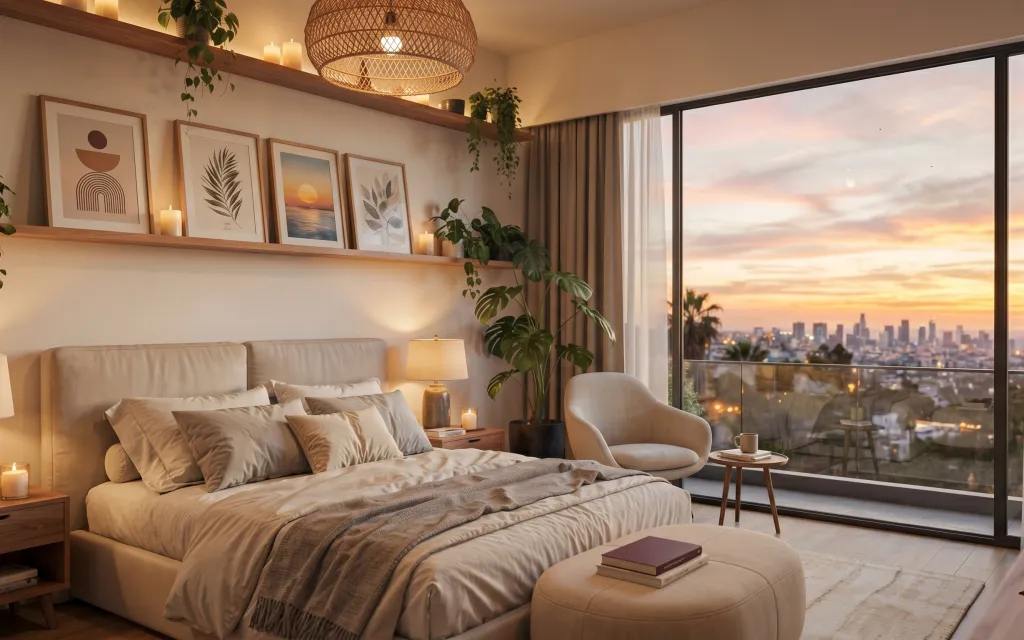
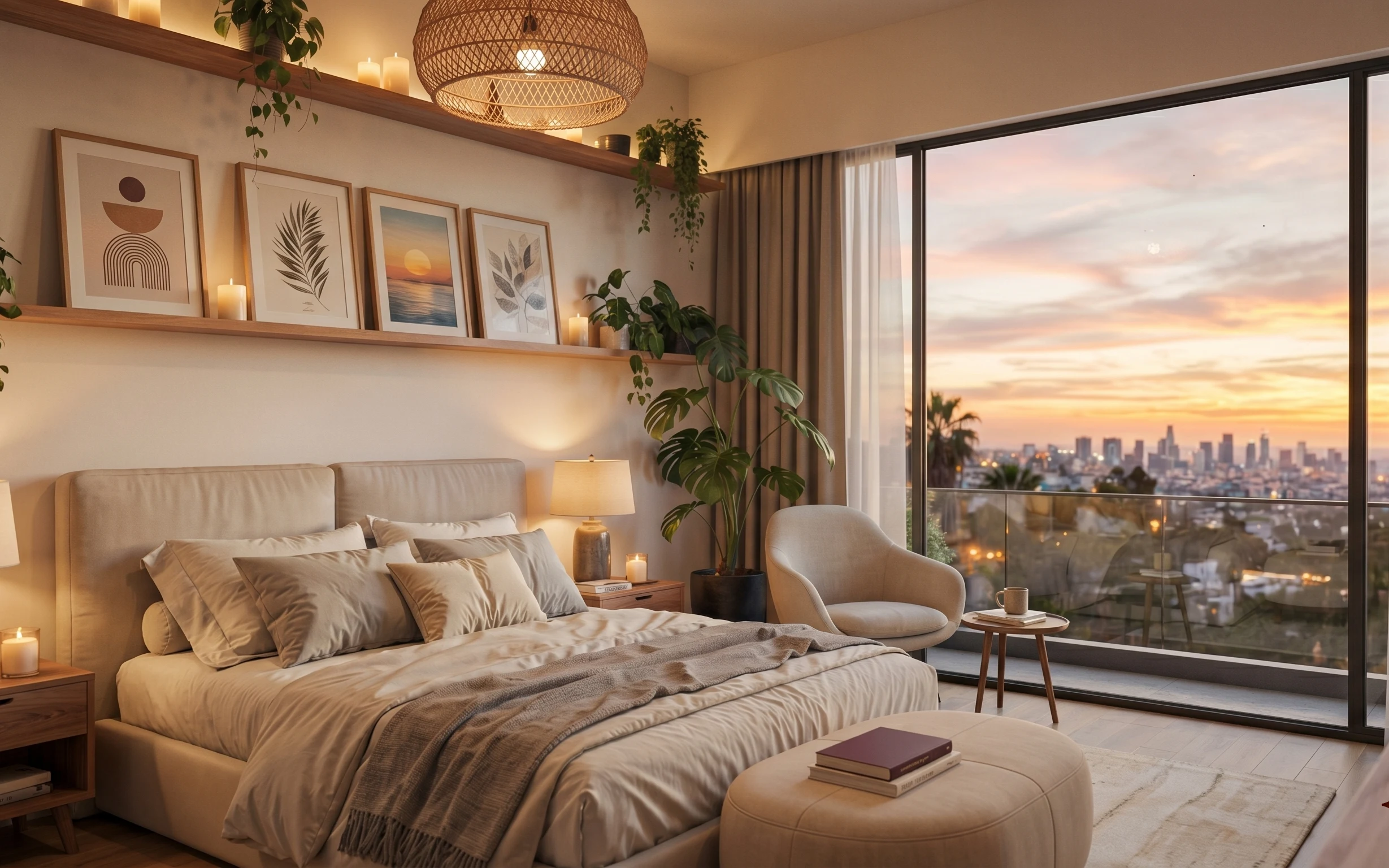
That rattan-and-warm-glow lighting sets the whole mood, but the real structure comes from soft textures: a beige area rug underfoot, a light duvet with multiple pillows, and a tan throw laid across the bed. The framed botanical prints on the wall ledge give you height without needing gallery-wall drilling. Even the brown curtains and white sheers create depth like a “designed” room, not just a rented one. For shared housing, this combination is achievable because it’s mostly textiles, plug-in light, and frames you can pack.
I used to overcorrect in move-outs—buying one big “statement” piece and then realizing it was too heavy to take or too fussy to re-style. In this photo, the better move is repeating smaller decisions: warm neutrals, leaf greens, and light sources at different heights (lamp, candles). Once I stopped chasing one perfect item, the room started looking intentional even when I was swapping pieces from box to box.
Layer 1 — beige area rug ($200) Ground the room with soft, packable coverage
A beige area rug acts like the floor’s “new outfit,” especially in a shared bedroom where you can’t touch the tile. In the hero, the rug sits at the bed edge and visually connects the bed, chair, and ottoman zone, so the whole room reads calmer. A 5×7 style is an easy fit for most shared layouts, and it rolls up or folds flat for the next move. I’d skip anything with a deep pattern here; the warm lamp light already adds contrast, and a subtler rug keeps the botanicals from fighting the curtains.
Choose a low-shed weave
For roommates, low-shed fibers make vacuuming quick and keep the rug looking good between moves.
Layer 2 — brown floor-length curtains ($80) Add instant “architectural” softness without hardware
The brown curtains in the hero are doing double duty: they frame the window wall and soften all that glass with a warm, vertical rhythm. Since renters/shared housing can’t rely on drilling or replacing fixed things, curtain panels are the cleanest upgrade—swap them, clip them to existing curtain hardware if there is any, or use a tension rod setup if your window treatment allows it. Going with brown keeps the warm palette consistent with the rattan pendant glow. The trade-off is volume: you’ll need fabric length and width, but that’s a packing issue, not a permanent-install issue.
Measure curtain width like you mean it
Fullness matters; aim for panels that look gathered, not stretched tight.
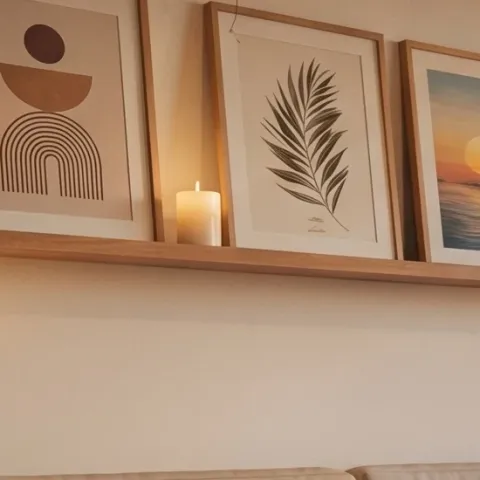
Layer 3 — framed botanical print ($80) Repeat nature tones across the wall ledge
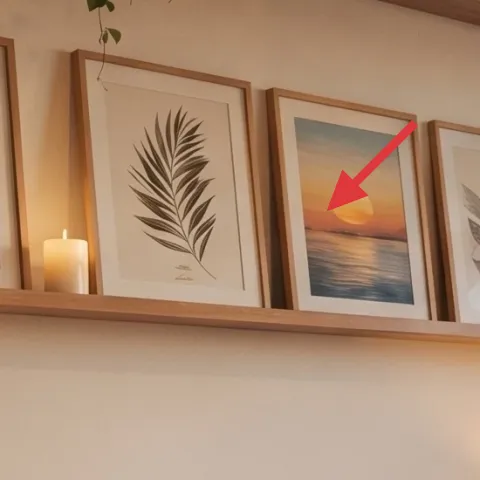
The hero’s framed botanicals give you that “carefully collected” feeling while staying lightweight enough for move days. Pick one framed botanical print to start, then build to a small grouping later—still no drilling required if you’re using a non-damaging hanging method. The leaf shapes and stacked arches complement the green plants and keep the room from feeling sterile. This is better than buying a single oversized landscape because you get flexibility: you can re-space the frames for a smaller room later, or pack them flat in the same way you’d pack books.
Keep mat colors neutral
A cream or off-white mat keeps botanical art warm under amber light.
Layer 4 — table lamp on the bedside table ($60) Bring warm light close to where you read
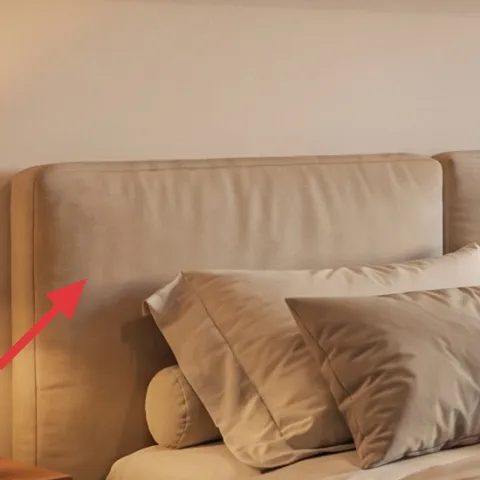
In the hero, the bedside table lamp creates a cozy pool of light that makes the whole bed zone feel “done,” not temporary. A plug-in table lamp is also one of the safest swaps for shared housing: no hardwiring, no wall changes, and it fits in a car when you move. Choose a shade with a tan or warm neutral tone so the light matches the rattan pendant’s warmth. The trade-off is brightness control—don’t rely on one lamp for the whole room. Pairing lamp glow with candlelight (below) keeps evenings soft without needing ceiling light.
Don’t buy a shade that casts a green or blue tint
Warm bulbs help, but cheap shades can still shift color.
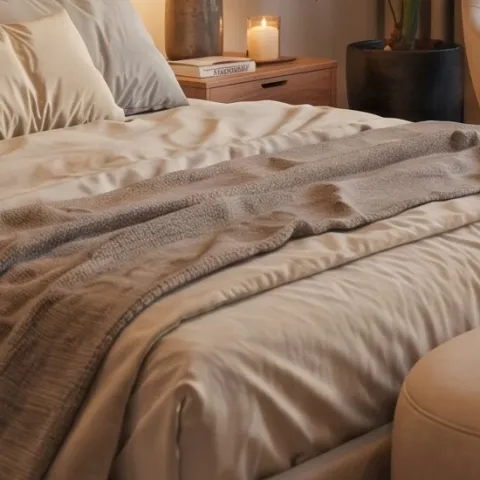
Layer 5 — tan throw blanket ($60) Make the bed feel styled every day
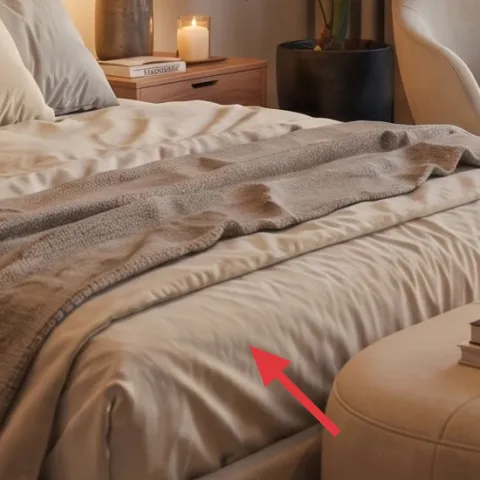
A tan throw blanket on the bed is one of the fastest “before/after” swaps because it changes texture more than color. In the hero, the throw adds a slightly heavier knit feel over the lighter duvet, and it visually bridges the rug and the curtains. For impermanence, throws are perfect: they pack flat, don’t require mounting, and can shift positions for your next layout. I like this over buying a full new bedding set because it’s cheaper per look and less risky if your next room’s lighting is cooler or warmer.
Use the throw like a visual frame
Let it drape at the front edge so the bed reads complete from the doorway.
Layer 6 — candle in a glass holder ($35) Layer soft light without changing anything fixed
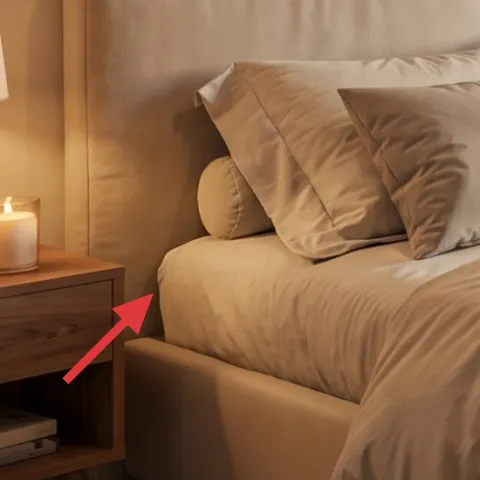
Candles in glass holders add the kind of low, flickering light that makes a bedroom feel intentional—especially in shared homes where the overhead lighting might be harsh. In the hero, they’re placed close to the bed, so the warmth is part of the everyday scene, not just an occasional event. A simple candle set is also easy to maintain and easy to relocate because it’s small and packable. The trade-off is real-world: candles need safe placement and quick cleanup, so choose stable holders and keep them away from curtains.
Match candle count to your surfaces
If you only have one nightstand surface, use one candle and scale up with height using the lamp.
Layer 7 — dyed pillow covers ($30) DIY color shift that travels in one box
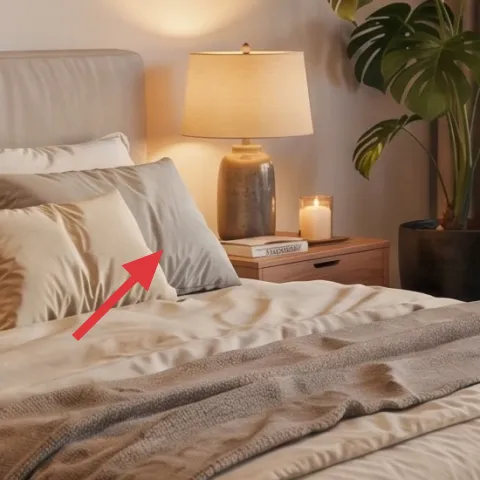
Pillow covers are the quickest way to tune a warm-beige palette—because color shows up instantly at eye level. The hero’s layered pillows keep the bed looking full, and dyed covers would let you nudge the undertone warmer (more clay/tan) or more neutral (less golden). For shared housing, you can swap covers without replacing fixed bedding or adding bulky inserts. The big advantage is packability: covers fold into the same moving box as books, and you can re-style them later when your next lease’s light changes.
Pick dye tones based on your existing lighting
Amber bulbs exaggerate yellows; cooler beige or clay dyes keep everything balanced.
The cost, layer by layer
| Layer | Item | Cost |
|---|---|---|
| 1 | Area rug (beige, ~5×7) | $200 |
| 2 | Curtain panel pair (brown) | $80 |
| 3 | Framed botanical print (16×20) | $80 |
| 4 | Plug-in table lamp | $60 |
| 5 | Throw blanket (tan) | $60 |
| 6 | Candle in a glass holder (2-pack) | $35 |
| 7 | Pillow cover (dyed look) | $30 |
| Total | $545 | |
A cheaper route is to buy a smaller rug size (like 4×6) and lean on curtain panels plus framed prints—texture still does most of the work, and you can upgrade once your lease feels stable.
What worked, what didn't (across the whole room)
This set of swaps makes the room feel layered and warm using only move-friendly items. The look holds up because multiple textures repeat the same beige-and-brown story.
What worked
- The beige rug anchors the bed zone and makes tile feel softer underfoot.
- Brown curtains add vertical shape and keep the window wall from looking “unfinished.”
- Framed botanicals repeat plant tones without needing a drill-friendly gallery setup.
- Table-lamp glow at night makes the bed read cozy even when the room’s ceiling lighting is basic.
- Throw placement gives the bed an everyday “styled” feel without bulky bedding changes.
- Candlelight in glass holders adds a gentle, warm low layer that matches rattan lighting.
What didn't
- Buying one big wall piece would have been harder to move and less flexible for new layouts.
- If the curtain panels are too narrow, the window wall loses that layered, intentional framing effect.
- Too-cool pillow or blanket tones can fight the warm lamp glow and make the room feel washed.
- Using only one light source makes the bed edge feel flat after dark.
- High-scent candles can overpower small bedrooms and feel like work during busy weeks.
What we'd skip if we did it again
Skip the impulse buy of a “perfect” statement piece that can’t be packed flat—like a heavy framed object or oversized decor. In shared housing, style should survive the next move, not just the next weekend.
Skip pattern-heavy textiles in this specific palette. With warm brown curtains, rattan pendant light, and botanical prints already doing visual work, a louder rug or throw makes the room feel busy instead of calm.
Skip relying on overhead light alone. The cozy read in the hero comes from close-to-bed lighting and low flicker; without that, the warm neutrals don’t land the same.
Frequently asked
How long does this bedroom refresh take?
Most of the time is logistics: rolling the rug out, hanging curtains, and placing frames at a spacing that looks intentional. In a typical shared-housing room, plan for about 2–4 hours total, with extra time if you’re adjusting curtain fullness or re-centering the bed’s textile layers.
Is this renter-safe if I can’t drill or hardwire anything?
Yes—this plan leans on textiles, plug-in lighting, and lightweight framed decor. You’re not replacing any fixed fixtures; you’re styling what you can carry. For frames, choose methods that don’t damage paint and that come down cleanly when leases change.
What if my bedroom is smaller or has a different bed size?
Keep the same sequencing: rug first, then curtain framing, then bed texture. In a smaller room, a slightly smaller rug and fewer frames can still look layered. With a larger bed, consider adding one more pillow layer or widening the curtain panels so the window wall doesn’t feel skimpy.
Where should I shop so everything packs easily?
Look for plug-in table lamps, curtain panels, and framed prints at home goods stores with easy returns. For the rug, prioritize a size that fits your room now and rolls for moves later. Candles and throw blankets are also simple “buy once, move often” categories—choose neutral colors that match warm lighting.
What’s the biggest mistake people make with this kind of warm bedroom look?
Overmixing undertones. Warm beige rugs and tan throws are forgiving, but if your pillow covers or curtains skew too cool or too gray, the whole room can feel mismatched under amber light. Stay in the same tan/brown/leaf-green family so everything reads cohesive.
Can I do this if I’m sharing the room with someone else?
Yes, because most items are personal and portable: pillow covers, throws, candles, and even a plug-in lamp. Curtains and framed prints are the only shared “agreement” items—pick neutral versions with earthy tones and leave a clear plan for how you’ll pack them out when it’s time to move.
More in Bedroom
7 no-drill bedroom upgrades for a $600 shared bedroom
Warm beige-and-walnut bedroom styling for shared housing, built around move-ready swaps. This $600 refresh focuses on a soft rug base, curt…
7 move-friendly bedroom swaps for a $500 refresh
A warm, japandi-style bedroom corner refresh on a $500 budget using 7 move-ready swaps. Focus areas: rug, green textiles, no-drill curtains…
Under $500: move-friendly bedroom refresh in warm sage
A move-friendly bedroom refresh built from 7 no-drill swaps and soft-goods upgrades, all achievable for about $500. The look leans japandi …