- Square footage
- Any kitchen peninsula zone
- Cost
- $270 total / $300 ceiling
- Difficulty
- Easy
- Renter-safe
- No drilling or permanent installs
Why warm neutrals-and-sage styling is the kitchen peninsula of 2026
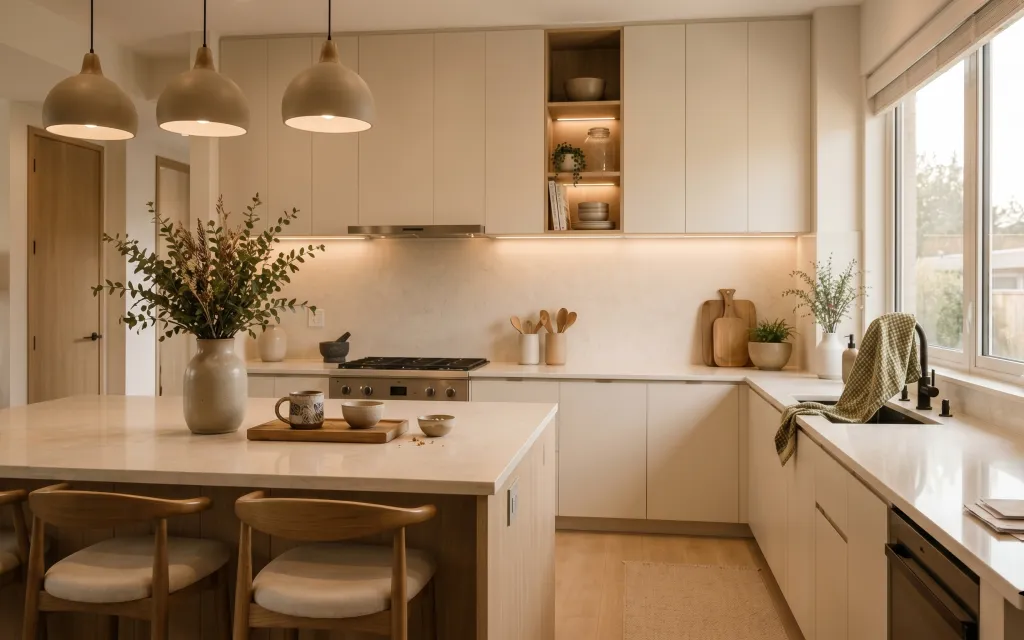
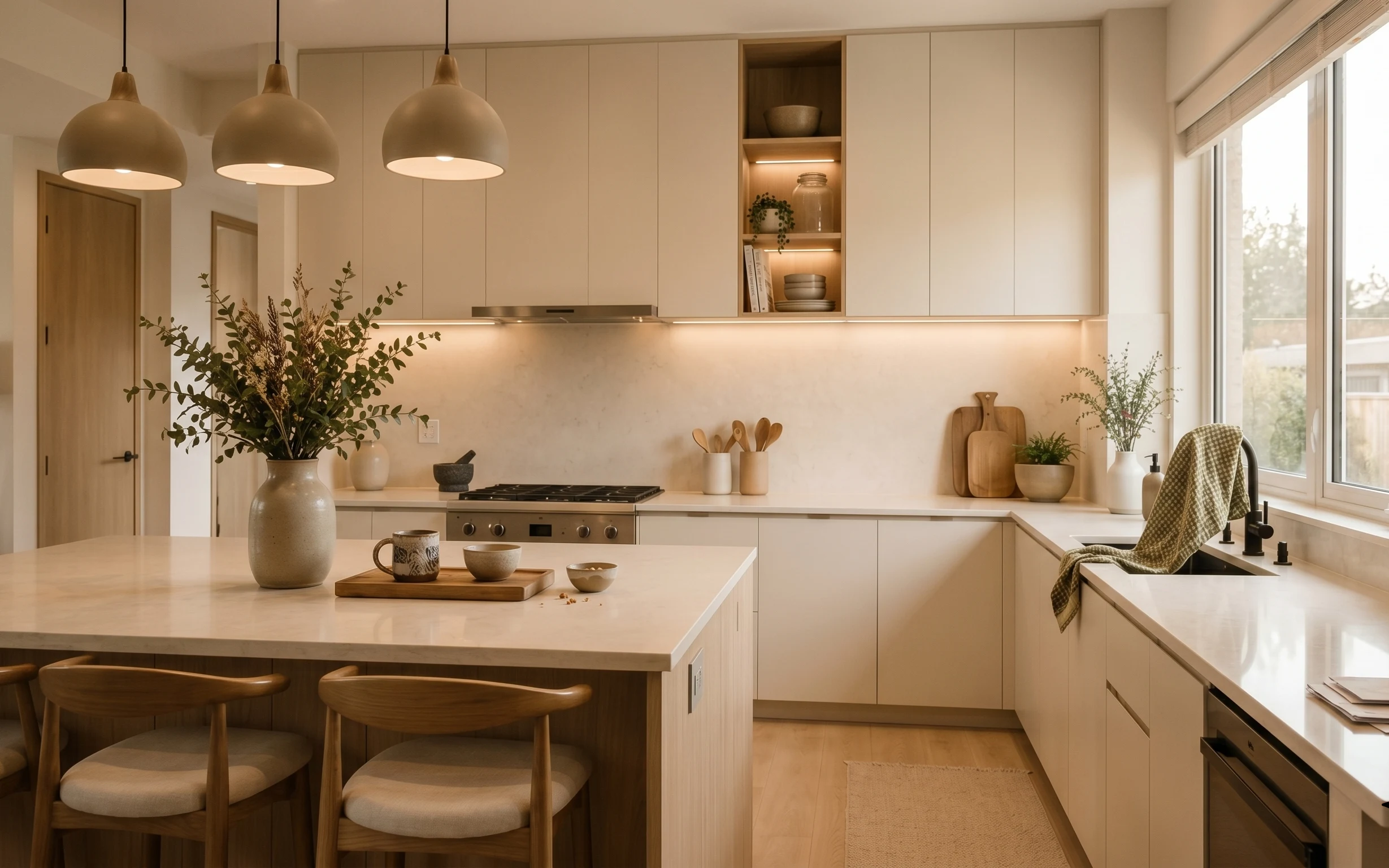
The first thing to notice here is how the palette stays quiet: warm cream walls, light wood, and soft sage-green plant tones. The counter reads clean because the textures are deliberate—glassy ceramic, matte terracotta tones, and a little greenery that repeats the same color family. This is also doable for students and professional sharers because every add-on is portable: textiles roll, decor boxes up, and plants travel with a little care. A setup like this is straight out of the warm-minimal pages you see in modern design magazines—just scaled for real leases.
I used to overdo “kitchen styling” by adding too many small objects, like every cup needed a spotlight. Then I caught myself noticing how busy it felt even when everything matched. What changed my mind was leaving space around the centerpiece and letting one plant and one ceramic grouping do the work, with the rug grounding the front edge. That’s the trick here: fewer items, better textures, and a clear visual rhythm.
Layer 1 — small area rug ($80) Softens the front edge without covering the whole floor
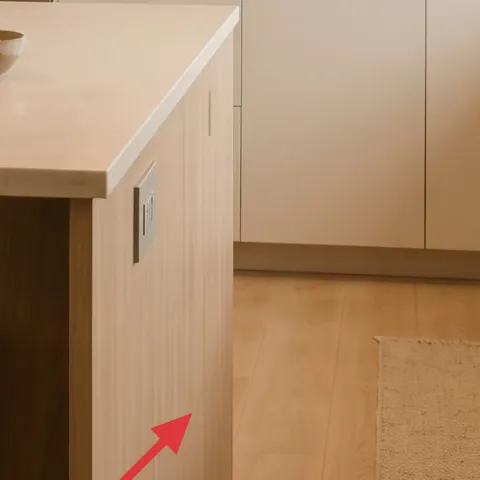
A small area rug brings instant warmth to the kitchen peninsula because your feet meet it first during mornings and late-night snacking. In the photo, it sits right in the foreground, so it reduces the hard, echo-y feel that light floors can create. The trade-off is that a rug needs a little shake-out and occasional vacuuming—still, it’s completely packable for a move. Compared with adding a bigger runner, this size is easier to store under a bed or in a closet and less risky if your next kitchen has a different layout.
Pick a flatweave or low-pile
Low pile makes it easier to vacuum and less likely to curl when you roll it for transport.
Layer 2 — checkered throw blanket on chair ($30) Adds a “living room” texture to a utilitarian zone
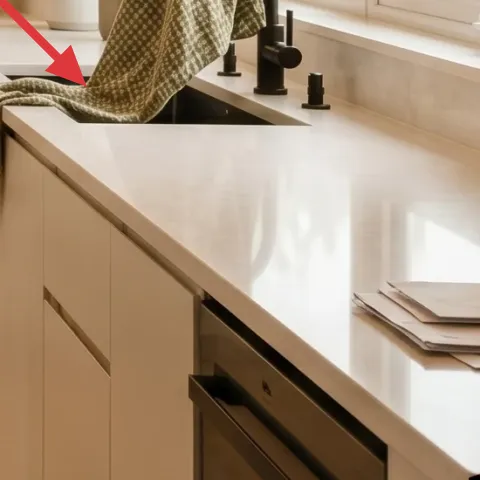
This checkered throw on the chair does what a decorative pillow can’t in a kitchen: it reads as cozy while still functioning as an actual textile. Because it’s draped over the chair, you can change the look in seconds—fold it tighter, swap corners, or move it to another seat on movie nights. The downside is kitchen throws pick up crumbs faster, so choose a washable fabric if your household actually cooks. Compared with buying matching chair pads, a throw is cheaper and packs flatter.
Let the pattern echo the plant color
The check works because it adds visual contrast without fighting the sage-green tones nearby.
Layer 3 — large ceramic vase with leafy stems ($25) A single sculptural “centerpiece” you can box safely
The large ceramic vase with leafy stems anchors the counter grouping without cluttering the whole peninsula. It’s noticeable from across the room, but it doesn’t require extra shelves or wall mounts—just a stable surface and a careful placement. The main trade-off is fragility: ceramics mean wrapping for moves. Still, it beats a decorative shelf install or an art-heavy approach because it packs as one main item. This is a better choice than buying multiple small planters, since the vase gives you height and structure in one go.
Wrap stems separately
Keep the foliage loose in a bag so leaves don’t bruise and you can reuse the stems later.
Layer 4 — wood decorative tray on countertop ($20) Creates a “landing pad” for small ceramics
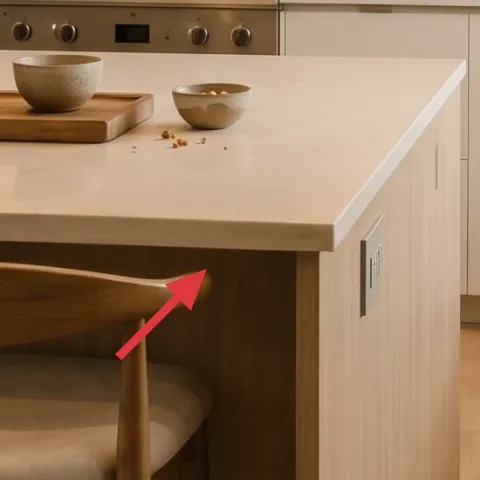
A wood decorative tray turns scattered counter items into one intentional vignette. In the photo, the tray sits on the countertop and keeps the small ceramics from looking random, which matters in shared kitchens where people grab cups constantly. The trade-off is you’re committing to one tray location—move it occasionally so it doesn’t collect kitchen grime in the same spot. Compared with placing items directly on the counter, a tray also protects the surface and makes the whole grouping easier to lift and clean.
Use it like a boundary line
If you’re unsure how much styling is “too much,” only style within the tray.
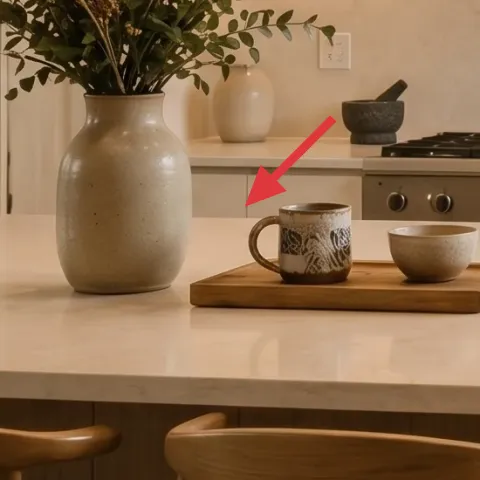
Layer 5 — small ceramic mug on countertop ($15) One everyday object that looks styled
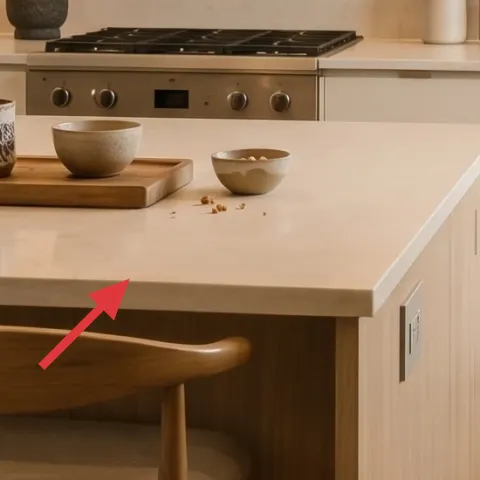
That small ceramic mug reads as both functional and decorative, which is exactly what move-friendly styling should do. Instead of buying a separate “fake” ornament, you’re styling something you’ll actually use—so the refresh survives real life. The trade-off is you can’t hide stains forever; keep it wipeable and don’t stack it with greasy cooking tools. Compared with adding a new canister set (which often becomes hard to replace), one mug plus a tray keeps the look cohesive and still easy to transport.
Skip anything with a heavy, fluted texture
Hard-to-clean grooves can look great in photos but feel annoying when you’re actually washing daily.
Layer 6 — small potted plant on the right windowsill ($40) Brings the soft-sage note to daylight
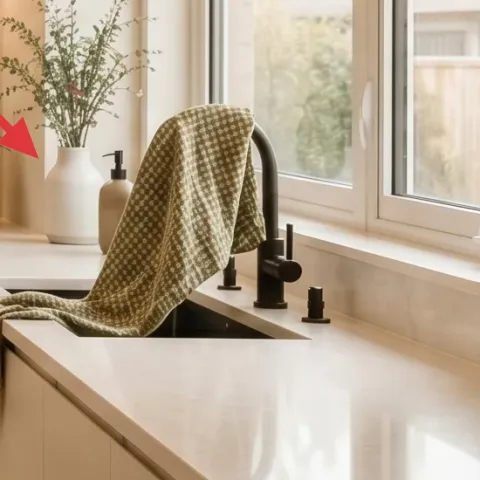
Make it instead of buying it
DIY a painted terracotta planter set so the windowsill plant matches the warm neutrals palette without depending on a specific store find.
Materials
- Terracotta pots (small set of 3) — 3 pots — craft store — $15
- Acrylic craft paint (warm cream + soft sage color) — 2 bottles — craft store — $8
- Foam brush or small paint brush — 1 pack — craft store — $6
- Plant saucers or liners — 3 liners — home goods store — $4
Steps
- Wipe pots clean and dry, then tape off any areas you want left natural.
- Paint the first base coat in warm cream and let it dry fully.
- Add a soft-sage accent band or small dabs for a repeating color note.
- Let the paint dry completely, then add a second coat if any terracotta shows through.
- Set each pot over a liner or saucer so water stays contained on the windowsill.
- Transfer the plant and top with fresh soil if needed, then style with the height you want.
Total DIY cost: $33 — saves about $7 over buying.
Layer 7 — bar stool seat and legs ($60) Keeps the peninsula casual and practical
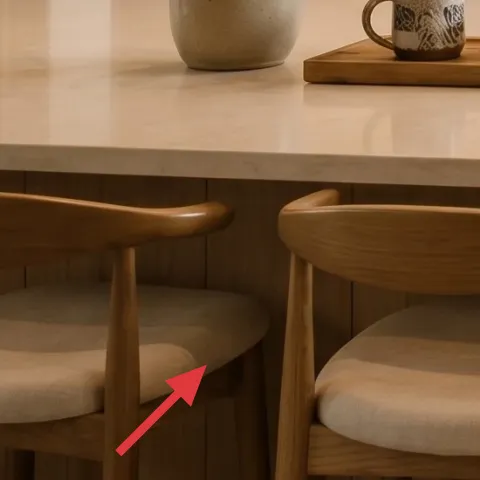
In a kitchen peninsula setup, seating is part of the decor—even when it’s simple. Those bar stools add warm wood tones and create an inviting, lived-in look that keeps the space from feeling like a showroom. The trade-off is that stool seats show scuffs, so plan on wiping them down more often. Compared with swapping the whole chair style (expensive and often fixed to the dining space), choosing portable stools or even reusing what you already have plus textiles is the fastest path to a refresh. Here, the wood and light upholstery tone align with the plant and ceramic palette.
Match the wood undertone, not the exact stain
Look for the same warm direction so the rug and ceramics don’t fight the seating.
The cost, layer by layer
| Layer | Item | Cost |
|---|---|---|
| 1 | Small area rug | $80 |
| 2 | Checkered throw blanket | $30 |
| 3 | Large ceramic vase | $25 |
| 4 | Wood decorative tray | $20 |
| 5 | Small ceramic mug | $15 |
| 6 | Small potted plant (DIY terracotta planter set) | $40 |
| 7 | Bar stool seat and legs | $60 |
| Total | $270 | |
A cheaper variant keeps everything move-ready: swap to a $60 rug, use a smaller ceramic vase, and buy a single terracotta pot instead of a set while keeping the same warm neutrals palette.
What worked, what didn't (across the whole room)
The win in this kitchen peninsula refresh is how the details repeat one color story—warm cream and soft sage—without turning the counter into a storage unit. The textiles do heavy lifting, especially the rug and the throw, because they soften a hard-surface space. The only misstep to watch for is over-styling: too many small ceramics nearby can make the peninsula feel busy fast.
What worked
- The small area rug grounds the peninsula and reduces the echo you feel on bare floors.
- The checkered throw adds texture without committing to a permanent seat cover.
- The large ceramic vase creates height and structure in one object.
- The wood tray keeps counter items contained and easier to lift for cleaning.
- The painted DIY planter set keeps the windowsill cohesive with the rest of the palette.
- The warm wood seating ties everything together even when nothing matches perfectly.
What didn't
- More than one “statement” vase can crowd the counter and compete with daily use.
- High-gloss ceramics show smudges faster near cooking areas.
- A deeper-pile rug would be harder to vacuum and pack for a move.
- Skipping saucers or liners under the windowsill plant risks water marks.
- Too many small accessories in the same tray can look decorative but feel cluttered.
What we'd skip if we did it again
Skip buying a decorative canister set or matching countertop “container system.” In shared housing it often becomes dead weight after a lease change, and it’s harder to transport than a tray + one or two everyday ceramics.
Skip a bigger wall-art moment or shelf install near the peninsula. Even if it looks intentional, it’s usually harder to remove and easier to damage than portable textiles and freestanding decor.
Skip more than one patterned textile in the kitchen. The checkered throw already gives the visual rhythm; adding another bold pattern on the rug or towels tends to make the space feel busy.
Frequently asked
How long does this kitchen peninsula refresh take?
For most shared-households, the prep and placement is the time saver: plan your rug and tray positions first, then style the ceramics and plant last. The DIY planter set paint-dry time is the only real waiting window; if you’re staging on a weekend, count about 2–3 hours of hands-on work and a few drying breaks across the day.
What if my kitchen is smaller or my peninsula layout is different?
Keep the same “system,” not the exact sizes. Choose a rug that still lands where feet step most often, and size the tray grouping so it fits your counter’s work zone. If your windowsill is narrow, place the plant in one terracotta pot only and let the vase do the vertical work.
Can this work for a shared kitchen with multiple people using the counter?
That’s actually the point. The tray creates a visual boundary, so even if someone adds a mug, it’s still contained. Leave one “free” area on the counter for day-to-day use, and reserve the vase + plant for evenings or weekend resets so it doesn’t become clutter.
Where should I shop for the textiles and small decor?
For the rug and throw, department stores with accessible returns and online marketplaces work well because you can match the palette in warm neutrals quickly. For plants and terracotta pots, local garden centers or craft stores usually have the best selection. Look for pieces that pack flat or wrap well.
What’s the biggest mistake people make with this look?
Over-styling the counter. When everything is “special,” nothing reads as intentional. A better approach is one anchor object (vase), one organizing base (tray), and one living accent (plant), with textiles doing the softness. If you can’t lift the grouping in one clean sweep, it’s probably too busy.
More in Kitchen & Dining
Under $300: no-drill kitchen peninsula refresh with warm neutrals
A move-friendly kitchen peninsula refresh for shared housing, built around textiles, countertop styling, and one no-drill plant moment. The…
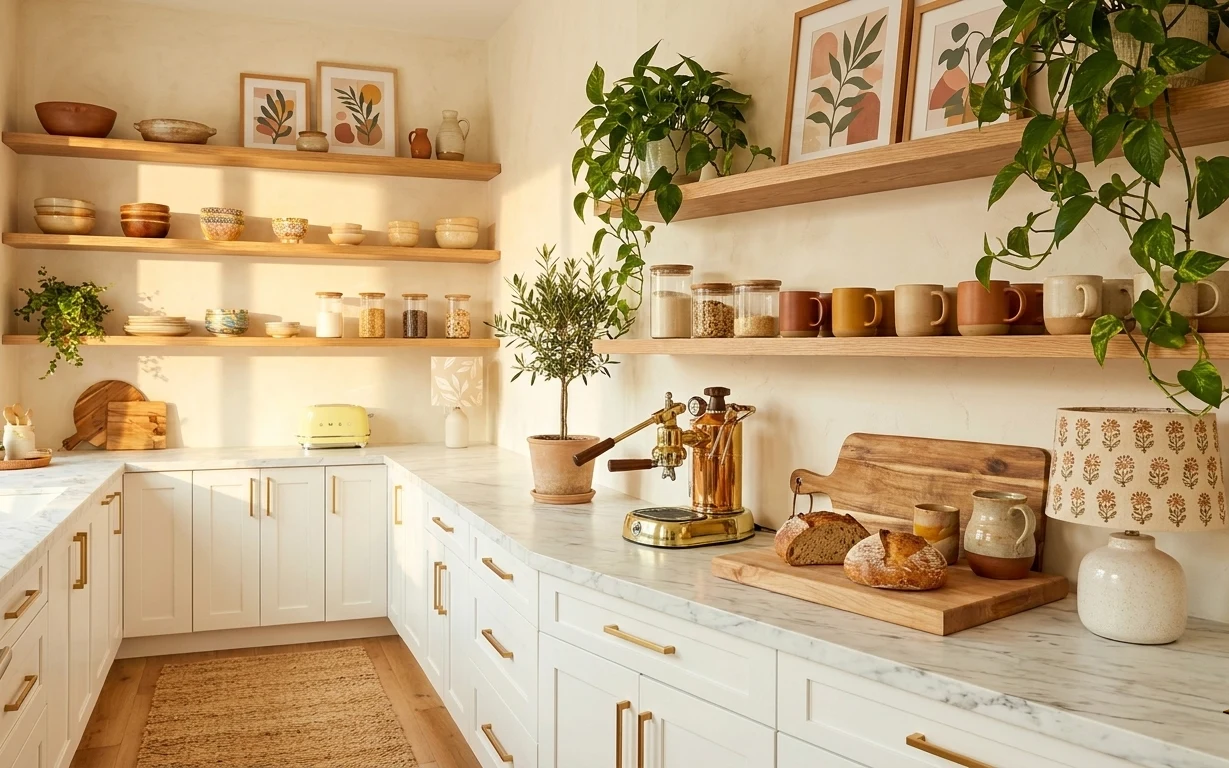
Under $700: A Warm Terracotta Kitchen Counter and Shelf Reset
A one-weekend kitchen counter-and-shelf corner in warm terracotta and light wood. It leans on a jute runner, a brass faucet, and styled ope…