- Best for
- Warming up a room with zero holes in the wall
- Cost
- Under $600
- Difficulty
- Mostly swapping and hanging
- Time
- One unhurried weekend
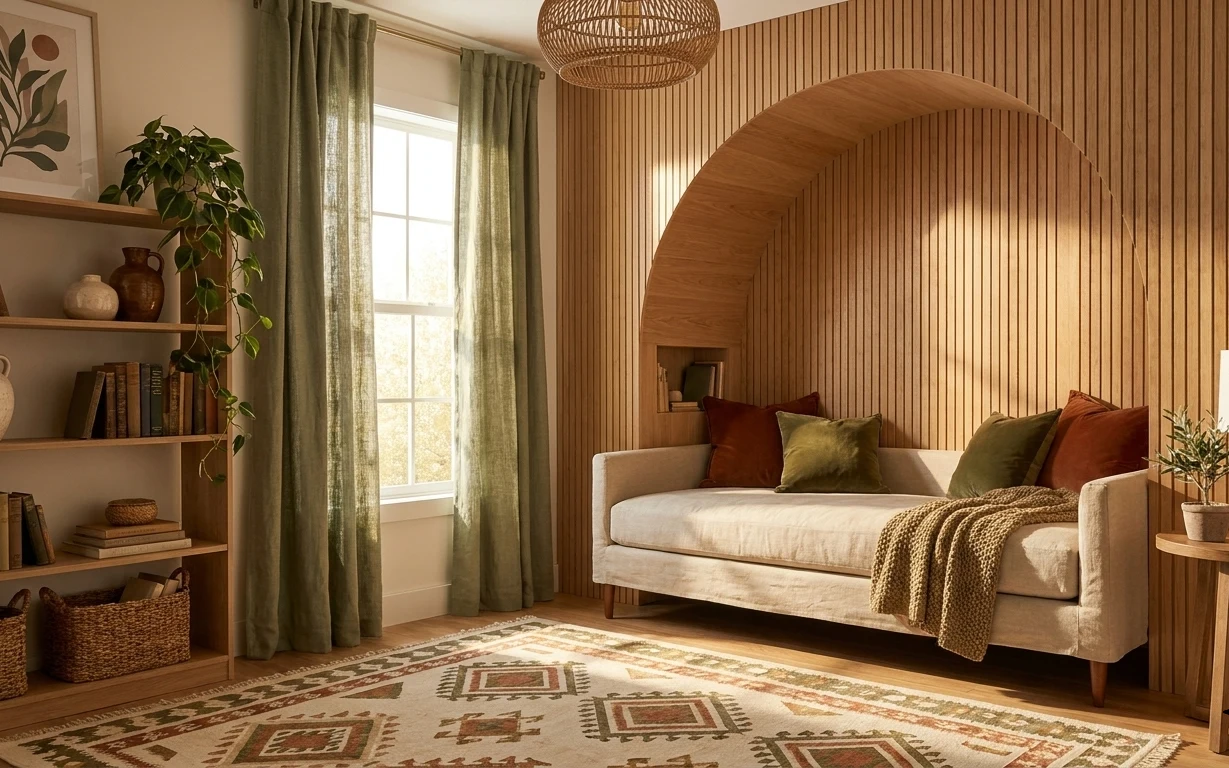
How olive and rust turned a bare arched bed alcove into a room
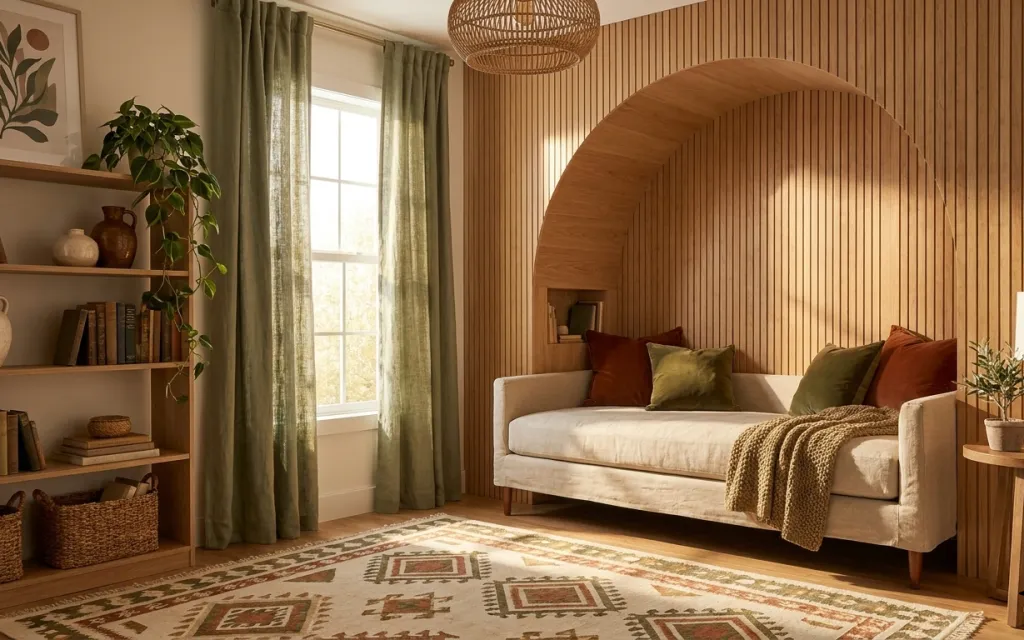
What sells this setup is how settled it looks without anything structural changing. The patterned rug pins the whole bed in place, and the olive panels wrap the window in fabric so the edges go soft. The throw and the pillow mix carry the lived-in texture, which means chunky knit and matte finishes, never anything shiny. The warm wood on the bed arch and the bookshelf keeps the room reading as one piece even with a few colors running at once. The renter move is to keep your layers swap-able, so the textiles, lamps, and art all box up cleanly when the lease is done.
The first time I tried something like this I nearly talked myself out of the color. I kept reaching for all-neutral, then it clicked that the color only holds up because it's repeated: olive shows again in the curtains, rust comes back in the pillows. The moment I quit hunting for a perfect match, the room actually got quieter. This whole plan is that lesson in furniture form, which is pick two lead tones and let texture handle everything else.
Layer 1 — patterned area rug 8×10 ($200) A woven pattern to set the bed on
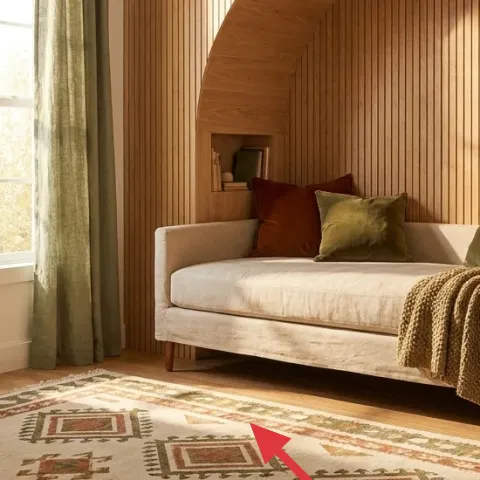
An 8×10 patterned rug carries most of the weight in this room, because it draws a line between the bed alcove, the bookshelf side, and the open stretch of floor. I'd hunt for a pattern that blends warm creams with rust and a muted green, so the color feels lifted straight from the pillows rather than dropped in at random. The catch is upkeep: a busy weave needs more vacuuming and rotating than a flat one, since footprints turn up faster. The flip side is forgiveness, because small scuffs and pet tracks disappear into the pattern.
Choose a rug carrying one olive-adjacent tone
When one color in the rug matches your curtains or pillows, the room looks planned instead of pieced together from leftovers.
Layer 2 — olive green curtain panels (pair) ($80) Height and softness around the window
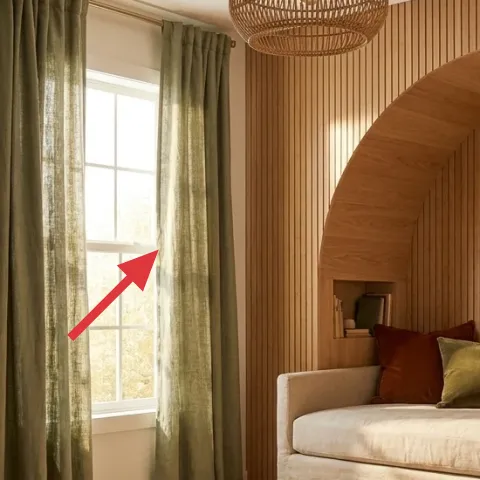
The olive panels build a tall, grounded frame around the window, which leans into the architectural feel of the arched bed alcove. For renters, the call to make is hanging them on a tension rod so the drama stays put without a single hole in the trim. Reach for a linen-look or a medium-weight textured fabric so it falls in folds rather than standing stiff. The trade-off is privacy and light, because lighter cloth drifts in daylight and shows more from the street after dark. Here, that softness is doing you a favor.
Why the way it falls matters
Curtains that hang in smooth folds make the ceiling read higher, which lands especially well next to an arch-shaped frame.
Layer 3 — table lamp with beige shade ($60) Warm bedside light you can move
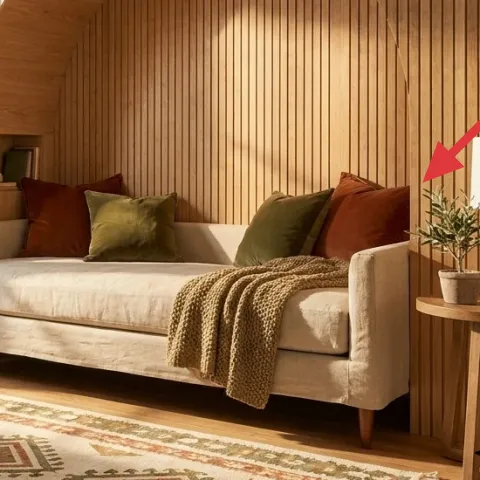
The beige-shade table lamp earns its spot for a practical reason: it puts warm light down low, and low warm light is exactly what makes a pile of textiles feel snug instead of flat. Set it on the wooden bedside table so the glow pools near the bed rather than washing the far wall. I'd choose a fabric shade over a glossy one, since the matte version softens the wood paneling behind it. Mind the bulb color, because anything too cool turns the rug and pillow reds harsh, so stay with warm bulbs. It also beats leaning on the ceiling fixture, which would just flatten the palette.
Pull the shade tone from your rug's base color
A beige shade over a white one keeps the wood-and-olive thread running through the room.
Layer 4 — framed leaf-pattern wall art print ($80) Echo the plant life on the walls
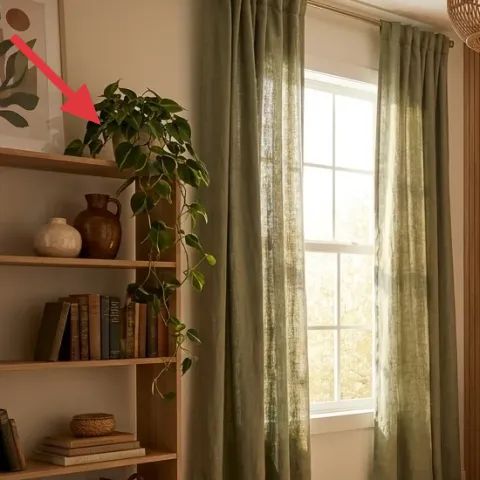
The framed leaf print pulls double duty: it carries forward the botanical note the live plant already started, and it repeats the room's rounded, organic shapes without piling on more stuff. For a renter-safe hang, lean on Command hooks and keep the frame light enough for removable mounting. Spacing is the real risk with art, because hung too high or too low it throws the whole bed alcove off balance. Aim for eye level when you're sitting on the bed, then nudge it a few inches until it feels tied to the window and pillows.
Make it instead of buying it
Hand-paint a loose abstract on cardstock, then frame it, and you land the same leaf-like calm without paying for a fresh print.
Materials
- Thick cardstock (8½×11 or larger) — 1 sheet — craft store — $6
- Small acrylic paint set — 1 set — art store — $12
- Paintbrush (flat or round) — 1 — craft store — $10
- Simple lightweight frame (matches your wall) — 1 — home goods — $22
- Painter's tape — 1 roll — craft store — $9
Steps
- Tape off 2–4 organic shapes on the cardstock (leaf curves, blocks, or arcs) using painter's tape.
- Paint the first color layer with light pressure, then let it dry completely.
- Paint the second color in narrower strokes to create movement, then let it dry completely.
- Remove the tape slowly to reveal crisp edges.
- Add tiny dot or vein marks with the smallest brush, then let it dry completely.
- Slide the finished cardstock into the lightweight frame and secure the backing.
Total DIY cost: $59 — saves about $21 over buying.
Layer 5 — woven storage baskets on bookshelf ($40) Hide clutter, leave the shelving alone
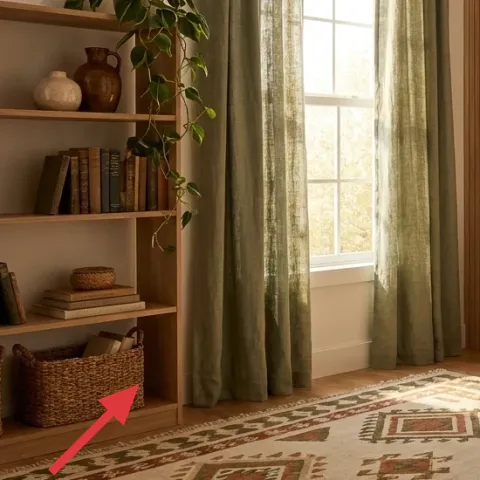
The woven baskets on the lower shelf are how you keep the room looking styled while real life keeps happening on it. Use them to round up the things that creep into messes, like spare books, chargers, or extra blankets, so the upper shelves can stay mostly for display. The texture contrast is the point here: the rug brings pattern, the bed brings soft upholstery, and the baskets add a natural woven rhythm against both. The cost is a little discipline, since you'll fold and bundle things to fit them in, but that's exactly what keeps the shelf looking deliberate. I'd reach for a medium warm tan so the baskets sit with the wood tones.
Steer clear of thin, flat weaves
Very lightweight baskets can read as flimsy next to the room's warm, substantial wood paneling.
Layer 6 — small tabletop plant in a pot ($25) A second strand of green by the lamp
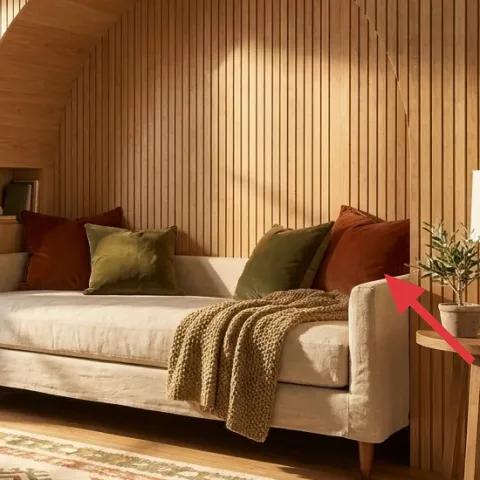
A small tabletop plant set right next to the lamp carries the leafy thread from the bookshelf over into the bedside zone, and it does that without you hauling in another big piece of furniture. I'd keep the pot a plain neutral, so clay, beige, or a muted ceramic, so it lands as intentional against the lamp's beige shade. The plant also breaks up the straight edges of the wooden side table and makes the lamp look less like it was just dropped there. The trade-off is that plants want a real routine of watering and the occasional turn toward the light, so match the plant to how attentive you'll actually be. If keeping things alive is a fight, go smaller and pick something low-maintenance.
Put it where your eyes settle at night
Beside the lamp, the leaves gain depth because the light casts shadows across them.
Layer 7 — throw blanket in warm knit texture ($35) Close out the bed with tactile color
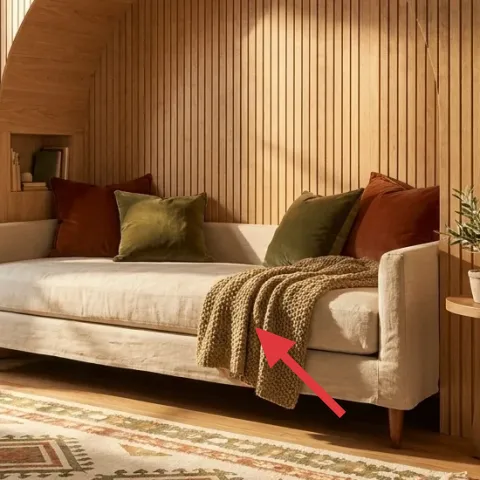
A warm knit throw at the foot of the bed is an easy way to add depth, and it pulls extra weight when you've already got a few pillow colors going. Pick a knit with visible texture rather than a flat sweater finish, in a warm brown or rust or an olive-adjacent shade so it folds into the rug and pillows. In a rental I'd rather drape a throw than tuck it, because draping makes the fold simple to reset every time you make the bed. The downside is lint, since knit throws collect fuzz, so keep a fabric shaver or a soft brush handy. Even so, it's one of the quickest ways to make an arched bed alcove feel actually lived-in.
Let the throw be your color bridge
Find one color that already shows up in both the rug and the pillows, then bring it back in the throw.
The cost, layer by layer
| Layer | Item | Cost |
|---|---|---|
| 1 | Patterned area rug 8×10 | $200 |
| 2 | Olive curtain panels (pair) | $80 |
| 3 | Table lamp with beige shade | $60 |
| 4 | Framed leaf-pattern wall art print (DIY in materials) | $80 |
| 5 | Woven storage baskets | $40 |
| 6 | Small tabletop plant in a pot | $25 |
| 7 | Warm knit throw blanket | $35 |
| Total | $520 | |
Want to spend less? Drop the rug to a 6×9 and pick a quieter pattern in the same colors. Hang onto the olive curtains, the beige-shade lamp, and a single framed piece, because those three give you the biggest finished-room payoff even when you run fewer layers.
What worked, what didn't (across the whole room)
The clearest win was leaning on just two color ideas, olive and warm rust, and repeating them through the curtains, the textiles, and the rug. Close behind was keeping the light low and warm with the beige-shade lamp, which deepens the wood. The one thing that took a couple of tries was where the art landed; the wrong height left the arched bed alcove feeling slightly off-kilter.
What worked
- The patterned rug holds the bed alcove down and gives every textile a shared color to speak.
- Olive panels add vertical softness without picking a fight with the wood arch's shape.
- The beige-shade lamp keeps the room warm after dark and flatters the rust in the pillows.
- Woven baskets on the shelf swallow the everyday clutter while staying textured and natural.
- Setting the small plant by the lamp carries the green across the room left to right.
- A knit throw adds tactile contrast and makes the bed look styled rather than merely made.
What didn't
- Going all neutral made the rug and pillow colors look random instead of chosen.
- Art hung too low left the arched bed alcove feeling top-heavy against the window.
- Swapping in a glossy lamp shade flattened the warm wood and pushed the colors harsher.
- Cramming the shelf killed the breathing room the curtains had opened up.
What we'd skip if we did it again
Skip buying one matching set of everything. This room holds together because separate pieces share a palette, olive, warm wood, and rust, not because they shipped from a single collection.
Skip flat, low-contrast curtains. If the fabric barely shows any texture or drape, it won't soften the window frame against the arch, and the room can feel boxy even when the rug is great.
Skip adding more to the walls once the framed leaf print is up. With books and ceramics already on the shelf, a second busy wall piece fights the plant theme and turns the room visually noisy.
Frequently asked
Roughly how long does this no-drill bedroom update take?
Budget around 4–6 hours if your rug has already arrived and you're sticking to swaps. The slowest parts are getting the olive panels even on a tension rod and setting the framed print at the right height with Command hooks. Styling the shelves and remaking the bed once the big pieces land adds another hour or two. Don't rush the drape or the art placement; that's where a quick job starts to look sloppy.
Will this work in a rental where I can't drill or use anchors?
It will, as long as you keep everything removable. Curtain panels go up on a tension rod, and lightweight art hangs on Command hooks. The rug, lamp, tabletop plant, and woven baskets all just sit where you put them and leave with you. The one thing to watch is picking a frame light enough that it doesn't need a screw in the wall.
My bedroom is smaller than this alcove. How do I scale it down?
Drop the rug one size and thin out the shelves so each bay holds fewer books. Hold onto the olive-plus-rust color repetition so the room still hangs together. For the window, use panels long enough to nearly graze the floor; that vertical line keeps the framed effect even in tight square footage. The bed zone may feel snug, but the tall drape pulls your eye up and takes the edge off.
What if my room is larger and ends up looking empty?
Size up where the room asks for it: a wider rug if the floor opens out, and a bigger leaf print so it can hold the wall above the bed. Add one more soft element too, a second throw pillow or a heftier knit throw, so the bed doesn't read as marooned in the space. Keep the lamp and plant where they are so the warm, guided sightline stays intact.
Where's the smart place to buy these renter swaps?
Shop the rug and curtain panels at mid-range stores with generous returns so you can test the drape and pattern scale in your own light before committing. Lamp shades and small plants are simplest from home-goods or big-box shops. For the leaf print, thrift racks and print-on-demand sites usually undercut new gallery framing. And size your Command hooks to the actual weight of the frame, not a guess.
What trips people up most with this style?
The usual slip is choosing colors that never come back around. If olive lives only in the curtains and nowhere else, it reads like an accident. The other common one is mounting the art without sighting the height from the bed first; get that wrong and the whole alcove looks mismatched even when every individual piece is nice.