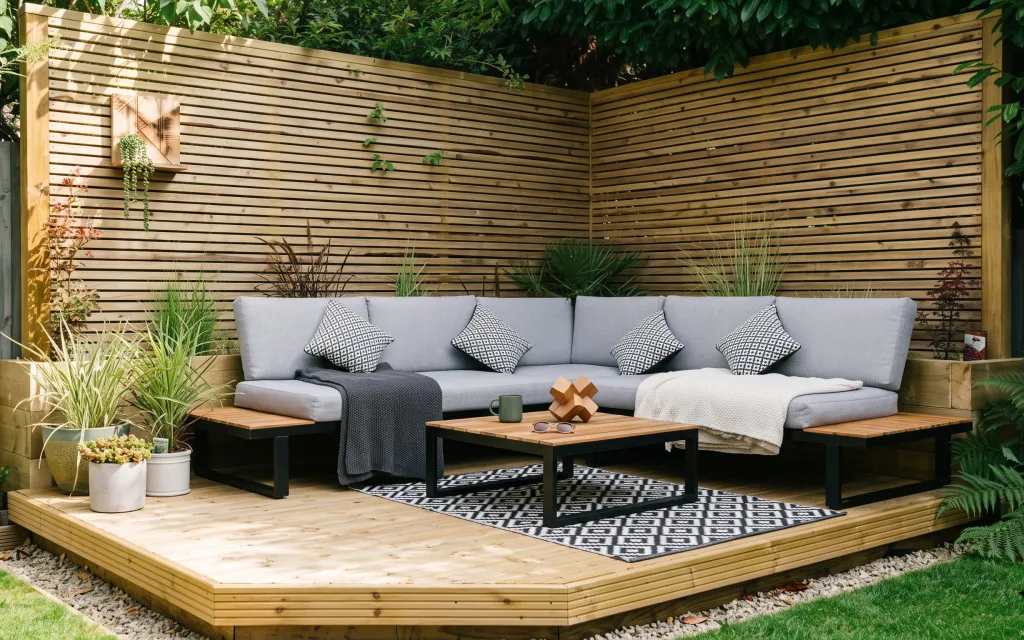
- Best for
- Deck seating that feels like a real room
- Cost
- $700 total refresh
- Difficulty
- Moderate weekend project
- Renter-safe
- Yes (no demolition)
Why warm wood-and-gray seating is the outdoor lounge of 2026
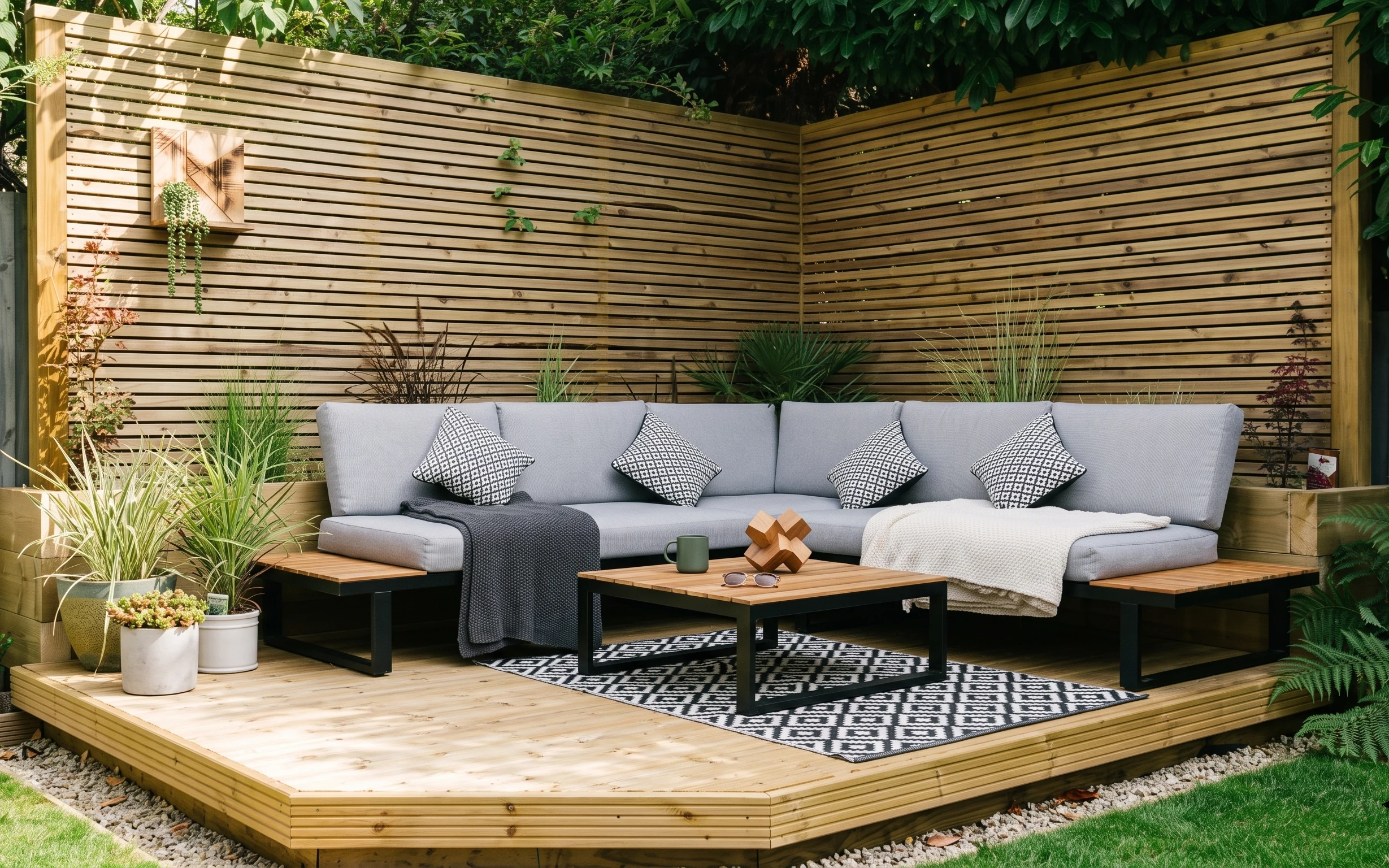
On decks like this, the biggest visual job is making seating feel intentional: one comfy sofa, one rug that anchors it, and one table that gives the space a “staying put” purpose. In this photo, the light gray upholstery, the black-and-white pattern on both pillows and the rug, and the warm wood deck all work together in bright daylight. I’ve used this same recipe in multiple rented setups, and it always comes back to texture—knit throw, woven-looking rug, and smooth wood—so the look doesn’t feel flat. For homeowners, it’s also the easiest place to choose the higher-impact option and stop second-guessing.
The mistake I used to make: chasing matchy-matchy. I’d pick pillows that “matched the rug” instead of repeating one graphic theme across both, and it made the whole area look busy in the wrong way. What finally clicked was keeping one neutral base (light gray), then repeating a high-contrast pattern (black-and-white) in multiple places. Once the sofa, rug, and pillows share that rhythm, everything else—like curtains and greenery—can just support.
Layer 1 — Outdoor sofa with light gray upholstery ($300) Wide, low, and easy to live on
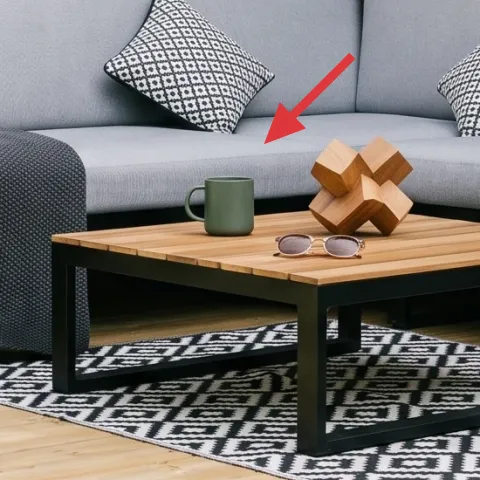
This is the piece that sets the “lounge” mood: a low, wide outdoor sofa in light gray upholstery that reads clean even when it’s crowded with pillows and throws. In the photo it’s centered against the wood slatted privacy wall, which means the sofa’s simple shape gives your eyes a place to land. The obvious alternative is a matching loveseat or a banged-up set that “fits the space,” but those often lack visual weight. You’re accepting a small trade-off—sofa comfort and fabric durability matter more than ultra-slim lines—because the room needs a true anchor.
Pick performance fabric you can wipe
Outdoor light gray looks great, but only if you can spot-clean. Choose stain-resistant upholstery so the color stays close to this photo.
Layer 2 — Black and white patterned area rug ($120) Brings contrast underfoot
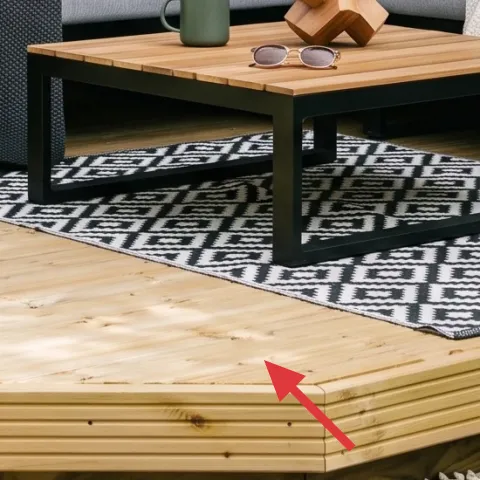
A patterned rug is what makes a deck feel like a designed room instead of a temporary seating pad. Here, the black-and-white geometric pattern gives structure against the warm wood deck and the green plants. The rug also ties together the pillows, so the sofa doesn’t feel like it’s floating. The alternative is a solid outdoor rug, but it won’t give you that “graphics in multiple spots” effect. The trade-off is practical: patterns hide dirt and light scuffs better than solids, but you still want an outdoor rug with weather-safe backing.
Anchor the rug to the sofa footprint
In this setup, the rug sits under the front legs area, so the furniture reads grounded.
Layer 3 — Rectangular outdoor coffee table with wood top ($120) A warm center for drinks and plants
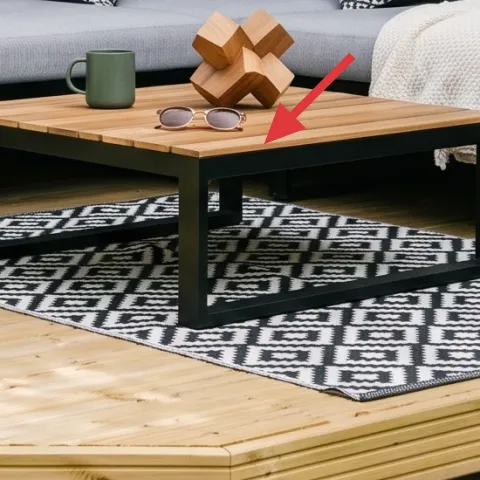
This wood-topped coffee table is the bridge between the upholstery and the deck. The warm tone echoes the wood slatted privacy wall and keeps the black-and-white textiles from feeling too stark in daylight. It’s also where you get to style without clutter: a small wooden object and a simple container plant sit neatly on top. The alternative is going without a table, but then the seating can feel staged instead of lived in. You’re accepting that a table will get used—so choose one with a sturdy top and outdoor-appropriate finish.
Style in odd numbers
A small plant plus one object (like the light wood decor here) looks intentional instead of crowded.
Layer 4 — Gray knit throw blanket ($30) Softens the hard outdoors
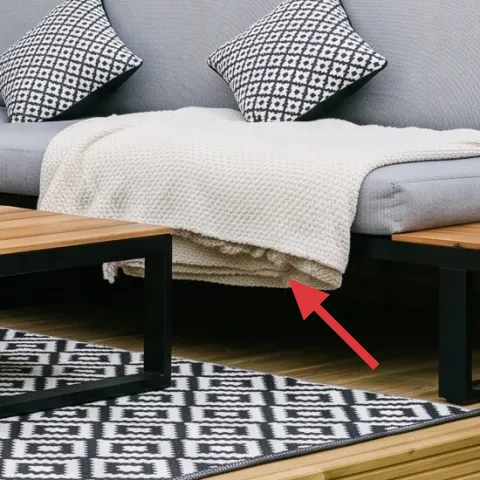
The gray knit throw is small, but it changes the texture read of the whole lounge. In the photo it’s draped across the right side of the sofa, which makes the seating look finished without adding more visual weight. The alternative is skipping a throw and relying only on pillows, but then the space loses that “touchable” layer. You’re choosing a trade-off: knit looks best when it’s styled neatly, so plan to shake it out and keep it from sitting wet for long periods. Still, this kind of soft layer is what makes outdoor seating feel more like a room.
Don’t leave knit out in soaked weather
If your patio gets heavy rain, store the throw overnight or cover it so it stays crisp instead of musty.
Layer 5 — Gray curtain panel curtains ($40) Adds privacy and vertical softness
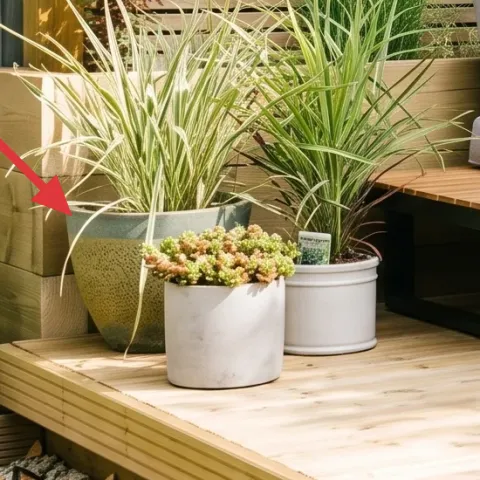
These gray curtain panels on the sides create a frame around the sofa and break up the horizontal lines of the wood slats. They also soften the edges where outdoor spaces can feel exposed. The alternative is relying only on the privacy wall, but then the seating area reads like it stops at the back panel. With curtains, you get motion potential and extra visual depth—especially when the light hits the fabric. The trade-off is upkeep: choose outdoor-safe fabric or plan to refresh/clean seasonally, but the payoff is that the lounge looks “intentional” from the street level.
Match the curtain tone to the sofa
Keeping the curtains close to the light gray upholstery keeps everything calm.
Layer 6 — Black and white patterned throw pillows ($60) Repeat the graphics in a smaller scale
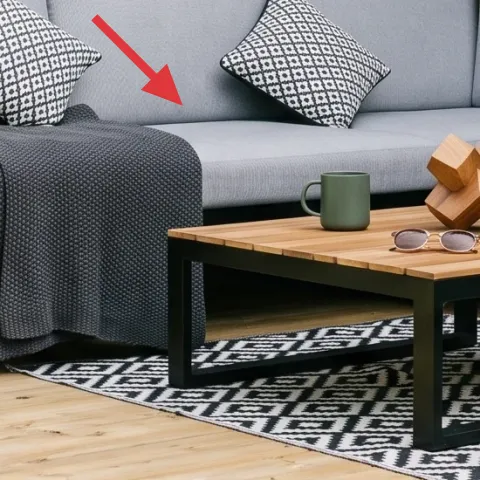
The patterned pillows are doing two jobs at once: they add comfort and they repeat the rug’s graphic theme so the whole outdoor lounge feels cohesive. In the photo, multiple pillows share the same black-and-white pattern, but they’re staggered across the sofa so it never looks flat. The obvious alternative is solid pillows, but you’d lose the crisp contrast that makes the gray upholstery look styled rather than plain. You’re accepting a small decision effort—choose one pattern and stick to it—but it’s what keeps the look from turning into random mix-and-match.
Vary size, keep one pattern
Use different pillow sizes as long as the graphic stays the same.
Layer 7 — Large white planter pot with green grass ($30) Frame the lounge with greenery
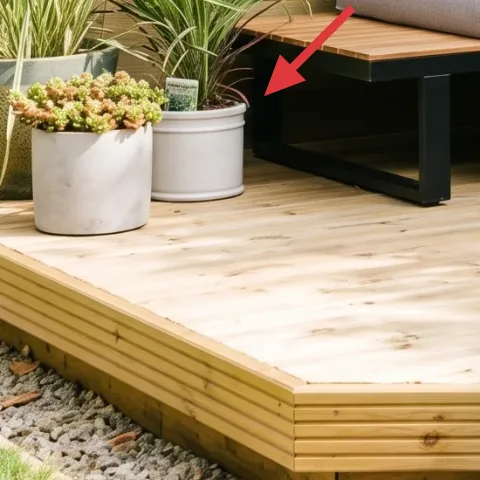
A big white planter pot gives the greenery a crisp container, which is why it looks so clean next to the warm wood deck. In the photo, the tall green grass adds movement and height, balancing the sofa’s horizontal line and the wood slatted backdrop. The alternative is small planters only, but then the space lacks vertical rhythm—so it feels lower and less “room-like.” You’re choosing an intentional asymmetry: one larger pot can do more than multiple tiny ones. Keep the pot in scale with the sofa, and let the plants do the styling work.
Make it instead of buying it
DIY-painted planter pot accents that echo the black-and-white theme so your greenery looks styled, even when the plants are the only living “texture.”
Materials
- Outdoor-safe paint (black or off-black) — small jar — $8
- Painter’s tape — 1 roll — $4
- Foam brush or small stencil brush — 1 set — $5
- Clear outdoor sealant spray — 1 can — $3
- Drop cloth/paper towels — 1 pack — $0
Steps
- Clean the white planter pot thoroughly and let it dry completely.
- Tape off simple stripes or small geometric shapes where you want the contrast.
- Paint over the exposed areas with thin coats.
- Let the paint dry between coats, then remove the tape once the final coat is dry to the touch.
- Apply clear outdoor sealant in light passes.
- Allow full dry time before placing the pot outdoors.
Total DIY cost: $20 — saves about $10 over buying.
The cost, layer by layer
| Layer | Item | Cost |
|---|---|---|
| 1 | Outdoor sofa with light gray upholstery | $300 |
| 2 | Black and white patterned area rug | $120 |
| 3 | Rectangular outdoor coffee table with wood top | $120 |
| 4 | Gray knit throw blanket | $30 |
| 5 | Gray curtain panel curtains | $40 |
| 6 | Black and white patterned throw pillows | $60 |
| 7 | Large white planter pot with green grass | $30 |
| Total | $700 | |
If you want a cheaper variant, start with the rug and sofa fabrics you already have, then buy just the highest-contrast items: one patterned rug, one set of repeat-pattern pillows, and a single large planter pot. You can keep everything in the same black-and-white theme to avoid expensive “matching furniture” buys.
What worked, what didn't (across the whole room)
This outdoor lounge works because the layout is simple and the visual language repeats: light gray base, black-and-white pattern, warm wood, and green height. The only area that can get fussy is styling—too many different prints or too-small planters will make the space feel busy instead of room-like.
What worked
- The light gray sofa keeps the lounge calm against the warm wood slatted backdrop.
- The black-and-white rug anchors the seating area and hides outdoor wear better than a solid.
- Wood tones repeat across the deck, coffee table, and backdrop for a cohesive base.
- Pattern repetition shows up in rug and pillows, so the look reads intentional from a distance.
- The tall green grass adds vertical rhythm and movement without extra furniture.
- Side curtain panels soften the edges and frame the seating area.
What didn't
- If the pillows don’t share the same graphic theme, the lounge shifts from styled to random.
- A plain coffee table top can feel too empty; it needs one simple object and/or plant.
- Knits look best when kept dry—wet storage makes them look tired quickly.
- Skipping a rug makes the sofa feel like it’s floating on the deck.
- Tiny planters only can make the seating read low and less “room-like.”
What we'd skip if we did it again
Skip a solid everything approach. On outdoor decks, a patterned rug plus a matching pattern in the pillows is what makes the lounge look designed without needing expensive built-ins.
Skip small planters as your first move. Start with one larger pot for height (like the tall grass planter), then add small greenery only if the proportions still feel balanced.
Skip knit throws that can’t be stored after rain. If your weather is unpredictable, choose outdoor-friendly fabric blends or keep a routine for quick dry-and-store.
Frequently asked
How long does this outdoor lounge refresh take in a weekend?
Plan on about 6–10 hours total. The sofa and rug placement is fast, and styling (pillows, throw, table object) is the part that usually takes longest because you’re aligning patterns. The only slower component is setting up curtains to hang evenly and painting planter accents if you DIY, which adds drying and sealing time.
What if I rent—can I still do this look without permanent changes?
Yes. The big items are a sofa, a rug, pillows, and outdoor curtains—none of which require structural changes. For curtains, use an existing outdoor rod if you have one, or select clip-style or tension-style options where possible. Keep your DIY limited to removable planter paint accents or swap-in textiles.
My patio is smaller—how do I scale this down without losing the “lounge” feel?
Keep the same visual hierarchy: one anchored seating piece, one rug that sits under the front legs, and one coffee table for height at center. For smaller spaces, shrink the rug first (still patterned), then reduce the pillow count while keeping the same black-and-white graphic. Use a single taller plant rather than multiple wide planters.
What if my deck is darker wood—will the light gray sofa still work?
It will. Light gray is forgiving because it reads as a neutral layer against warm timber. If your wood is very dark, consider keeping one or two elements brighter (a white planter pot, a lighter rug base, or a lighter throw) so the contrast stays crisp instead of muddy.
Where should I shop for these pieces on a budget?
For the sofa and coffee table, look at outdoor-rated sets from discount furniture stores and end-of-season sales. For the rug and pillows, focus on outdoor-friendly materials and pattern repetition rather than matching brands. Curtains and planters are usually easiest to find in seasonal home sections or online marketplaces with lots of sizing options.
What’s the biggest mistake people make with outdoor lounge styling?
Using too many unrelated patterns. When the rug and pillows share the same black-and-white graphic language, the lounge reads cohesive even with greenery and warm wood. Another common miss: skipping the table, which makes seating feel like a waiting area instead of a place you can actually use.
More in Outdoor & Patio
7 budget-friendly outdoor swaps for an outdoor lounge
A light-gray sofa, black-and-white rug, and wood coffee table turn a basic deck into an outdoor lounge. This $700 weekend refresh focuses o…
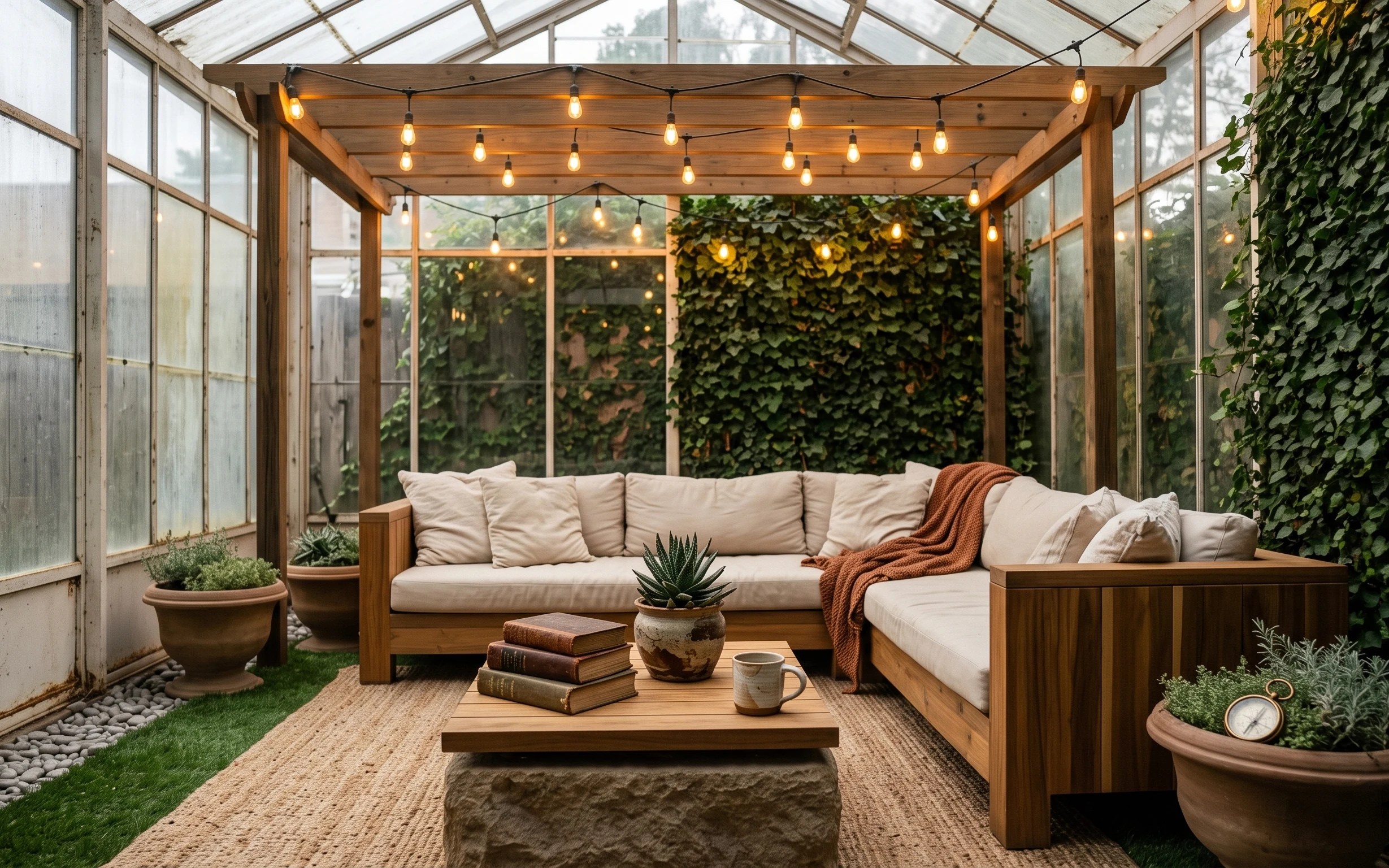
7 no-drill ways to build a garden pergola lounge, $350
A garden pergola lounge refresh for shared housing that leans on warm string lights, a cream rug base, and a couple of fabric swaps. This $…
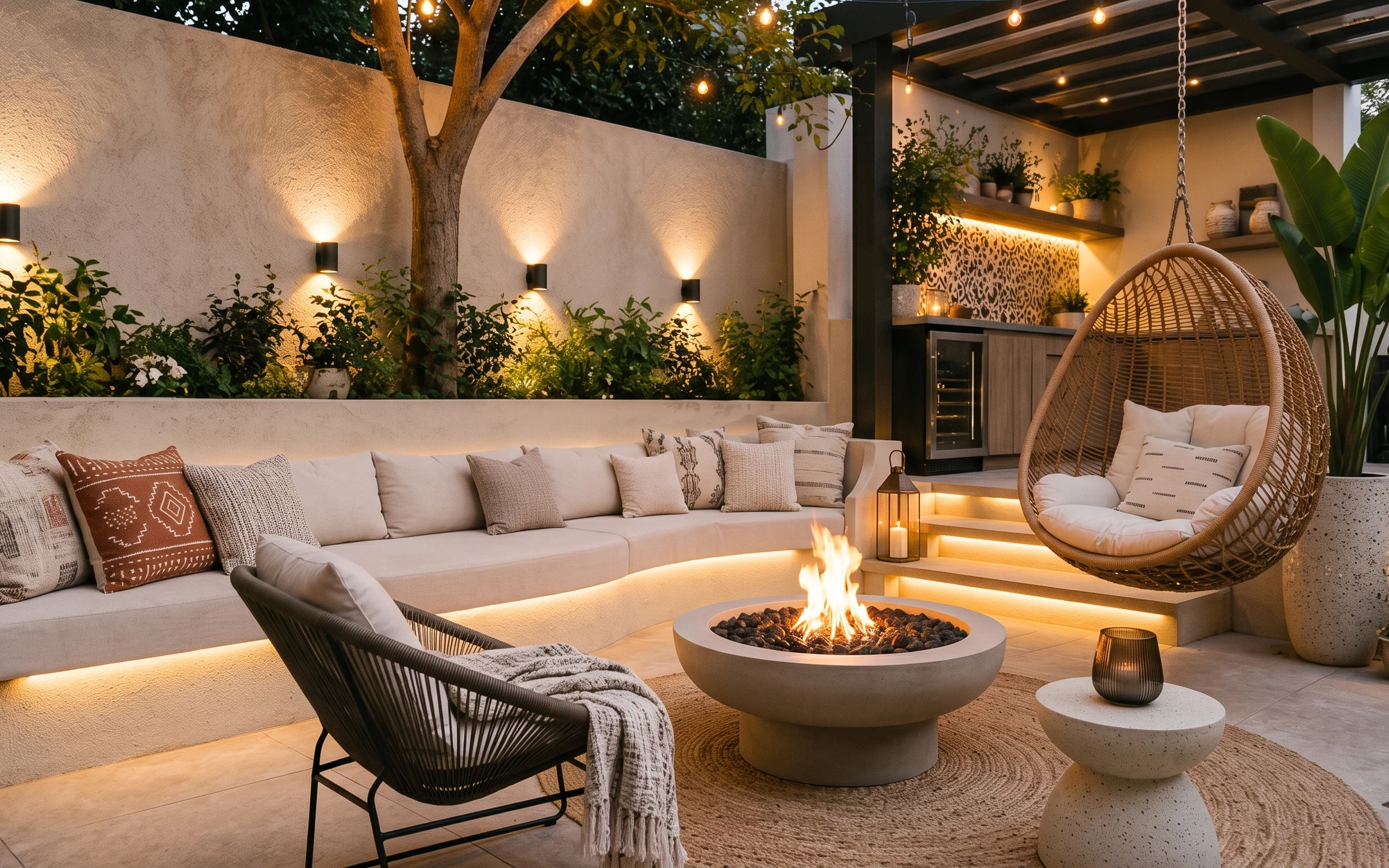
What $1,000 buys: a firepit patio seating refresh
A firepit patio seating area can look custom without a renovation. With $1,000 in weekend upgrades—string lights, warm sconces, and a few t…