- Best for
- Shared outdoor lounges and pergola setups
- Cost
- $350 plan
- Difficulty
- Easy
- Time
- About a weekend afternoon
Why warm wood-and-green outdoor seating is the garden pergola lounge of 2026
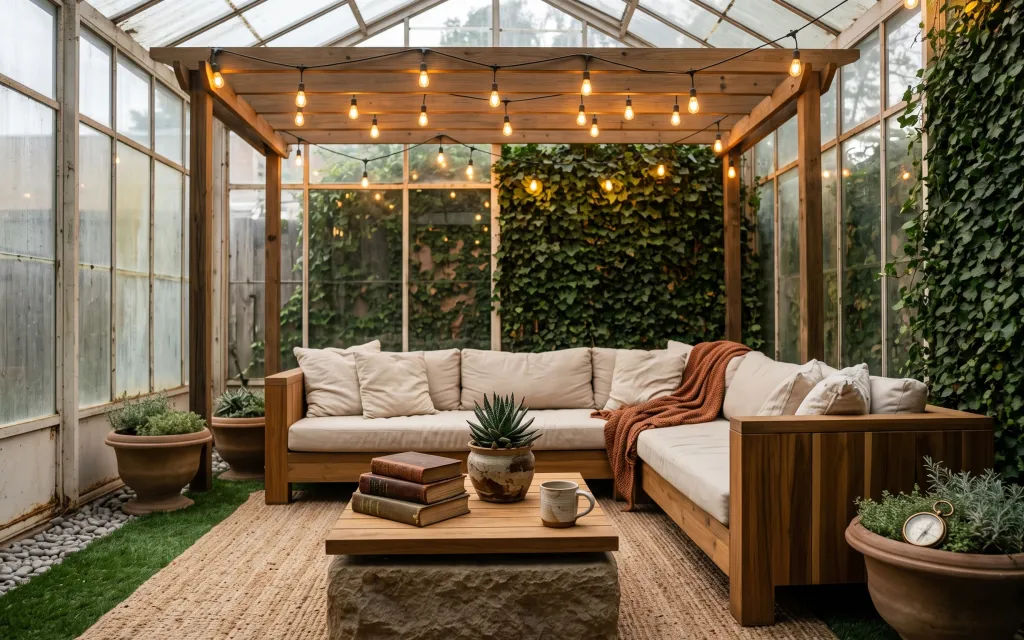
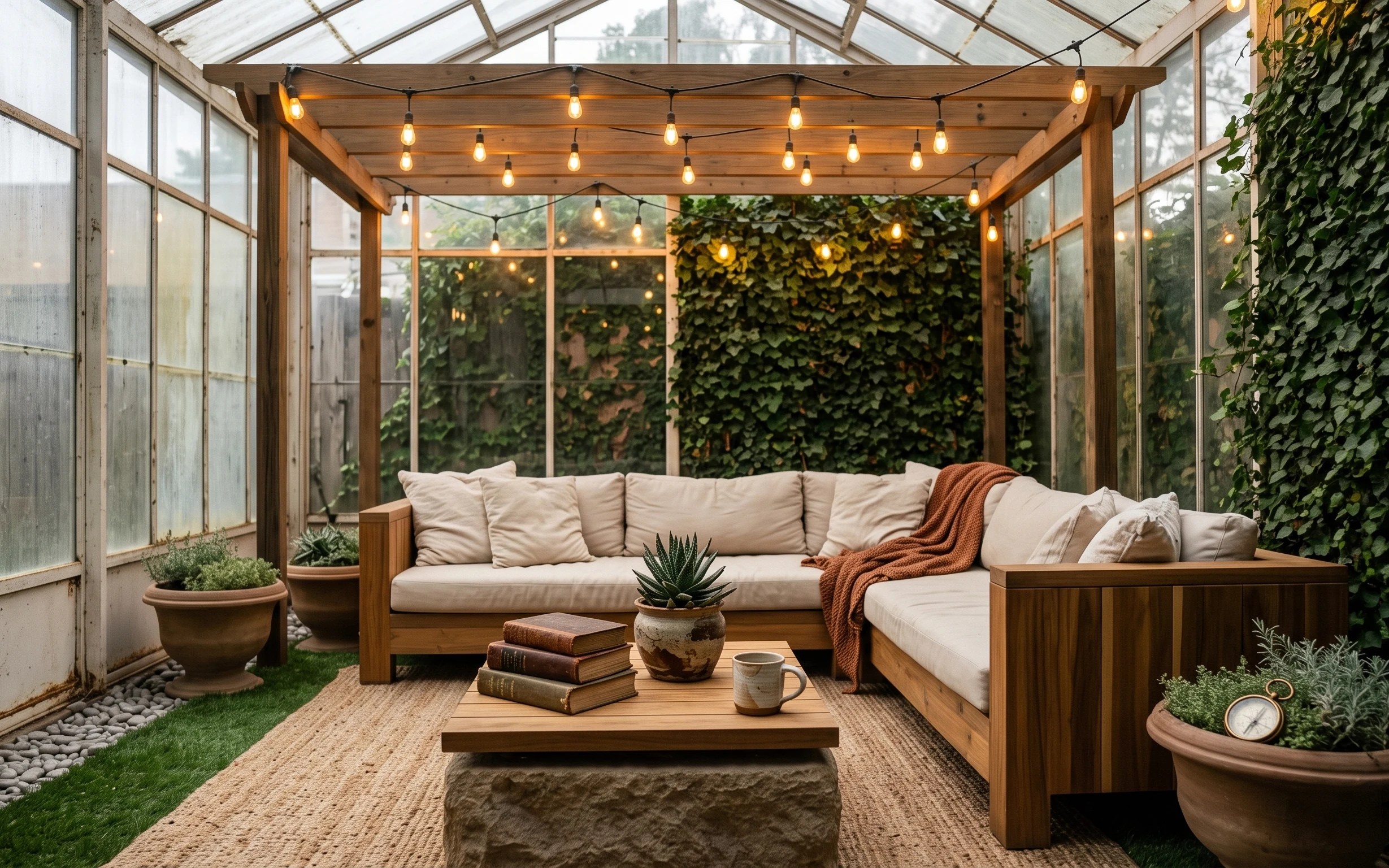
The starting point here is the warm wood daybed framed by glass walls and a wall of trailing green vines, so the room already has depth. What makes it wearable for shared housing is the mix of textures: a flatweave outdoor area rug, creamy throw cushions, and a rust-brown throw blanket draped where you’d actually reach for it. Then the string lights repeat the same amber tone as the wood, so the whole scene reads cohesive even on a cloudy evening. You can recreate this with foldable soft goods and plug-in lighting that packs into cardboard boxes.
I used to overdo lighting in my first shared house—string lights everywhere, at every height, and none of it matched the furniture scale. The cue that changed my mind was noticing how this layout keeps the light line mostly overhead, so the seating stays the focal point. After that, I stopped treating outdoor decor like a craft project and started treating it like staging: one grounded rug, one main furniture silhouette, and small green moments that you can move room to room.
Layer 1 — outdoor area rug ($120) Grounds the seating zone
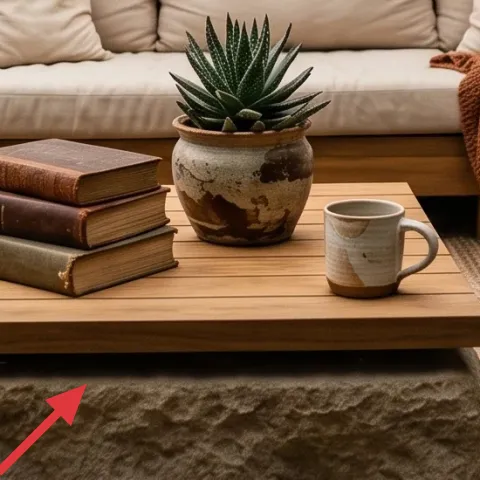
An outdoor area rug anchors the wooden daybed and keeps the whole pergola lounge from looking like “several pieces near each other.” In the photo, the rug’s flat, woven texture reads natural and also helps hide everyday marks—great when you’re sharing the space and inevitably spill something. The trade-off is that you’ll want a rug you can roll up tightly (not a delicate shag), so it fits in a small rental van. Compared with adding more furniture, a rug delivers the biggest visual change without needing heavy lifting or installs.
Go for a low-pile weave
Low piles shed water and dirt better outdoors, and they pack flatter for moves.
Layer 2 — outdoor wooden daybed/sofa ($110) Makes the lounge feel built-in
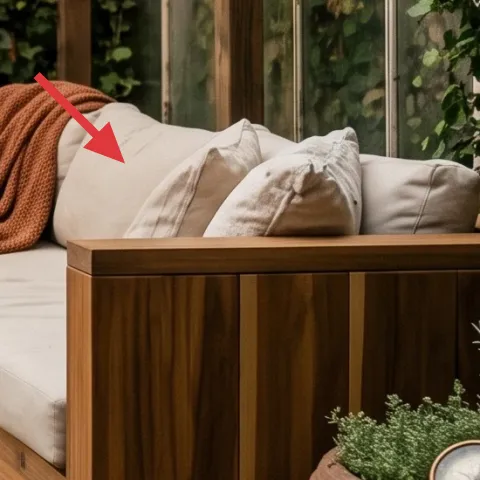
The outdoor wooden daybed is the structural “baseline” piece—cream cushions on top, warm wood at the sides, and clean lines that don’t compete with the greenery wall. Keeping the furniture color in the same warm family as the wood beams makes the whole canopy feel cohesive. If this were replaced with a white metal loveseat, it would look great in photos but feel busier in real life. The practical trade-off is scale: choose a daybed that breaks down or is light enough to move when leases change. In shared housing, that portability matters more than a perfect showroom silhouette.
Match undertones, not just colors
Warm wood + cream textiles look calm together because their undertones stay consistent.
Layer 3 — throw blanket ($25) Adds a rust-brown “seasonal” layer
That rust-brown throw blanket adds contrast against the cream cushions and echoes the warm amber glow from the string lights. Drape it over the daybed arm or along the seat edge so it looks styled but also functional—shared spaces get the blanket used, not just photographed. The trade-off is that throws wrinkle easily; folding it into thirds for storage is the difference between “magazine” and “messy.” Picking a thicker knit also helps outdoors where air drafts happen near glass walls.
Don’t choose a blanket that sheds
If it sheds fibers, the rug and cushions collect the lint quickly and the look turns untidy fast.
Layer 4 — throw pillow cover ($12) DIY-dye depth without buying more
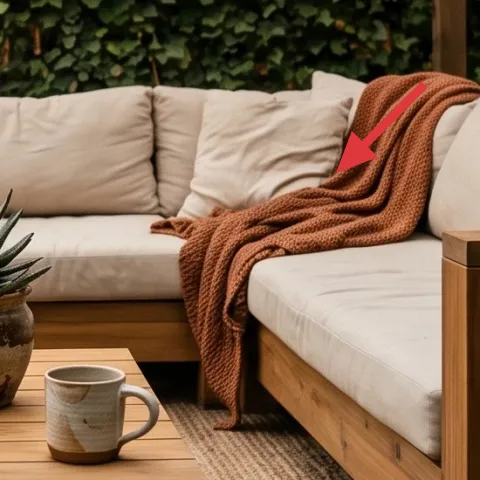
Make it instead of buying it
Dyed pillow covers let you match the rust-brown and warm-green palette while keeping the pillow covers easy to swap for your next place.
Materials
- Fabric dye (rust tone) — 1 small box — craft store — $4
- Gloves — 1 pair — discount store — $1
- Plastic basin or bucket — 1 — household reuse — $1
- Salt (for dye bath) — 1 small pinch jar — pantry — $0
- Paper towels — 1 roll — household — $0
Steps
- Pre-wash the pillow cover so dye clings evenly.
- Dampen the cover (it should feel slightly wet, not dripping).
- Mix the fabric dye in a bucket using the package ratio.
- Submerge the cover and stir steadily for even color.
- Let it sit to develop depth, then check color every few minutes.
- Rinse with cool water until it runs mostly clear.
- Wash once separately to remove excess dye.
- Dry fully before stuffing or putting it back on the daybed.
Total DIY cost: $6 — saves about $6 over buying.
Layer 5 — string lights (set of bulbs) ($15) Keeps evenings warm under the pergola
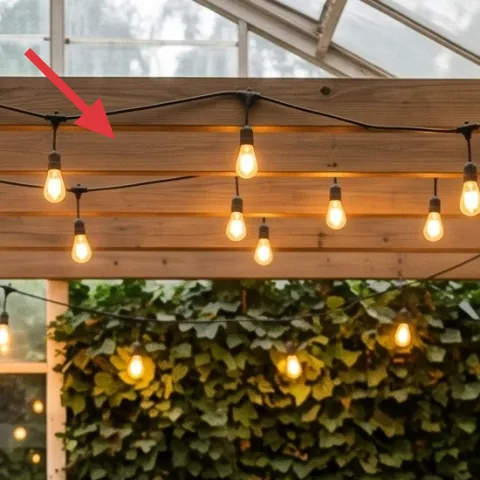
Those overhead string lights are doing two jobs: they add warm amber light and they visually “draw a line” across the pergola so the daybed feels placed on purpose. A key reason this works for shared housing is that you can choose plug-in string lights that drape and tuck—no drilling, and they pack flat when the next lease starts. The trade-off is you’ll need an outlet plan: use an extension cord you can coil and store, rather than leaving it across walkways. Compared with a standing lamp, overhead strings flatter the whole scene because they light the cushions and the vine wall together.
Hang them at one height, then stop
One overhead run looks intentional; extra strands start to feel cluttered outdoors.
Layer 6 — succulent in speckled ceramic pot ($20) Adds a small “still life” center
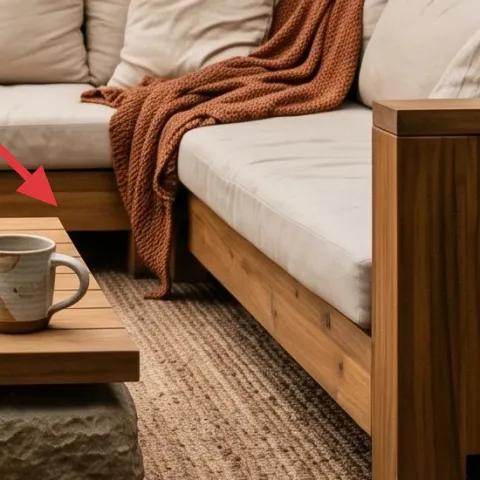
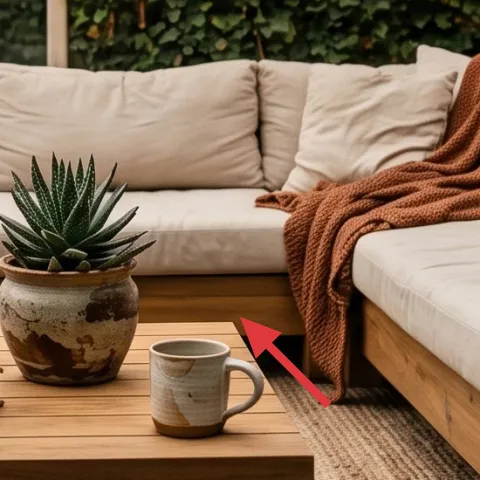
A succulent in a speckled ceramic pot turns the coffee-table surface into something you’d want to pause at—not just a place for keys. In the photo, it sits in the same warm neutral world as the rug and cushions, while its green picks up the bigger wall of vines. If you swap it for a tall plant, the table can feel top-heavy and less move-friendly. The trade-off is realism: small pots are easier to carry and less risky for shared spaces than large planters that tip. Choose something hardy enough for the “I forgot to water this” moments.
Pick a pot you can lift in one trip
Small ceramic planters are easier during moves and safer around shared walkways.
Layer 7 — decorative stack of books ($15) Makes the coffee table read styled
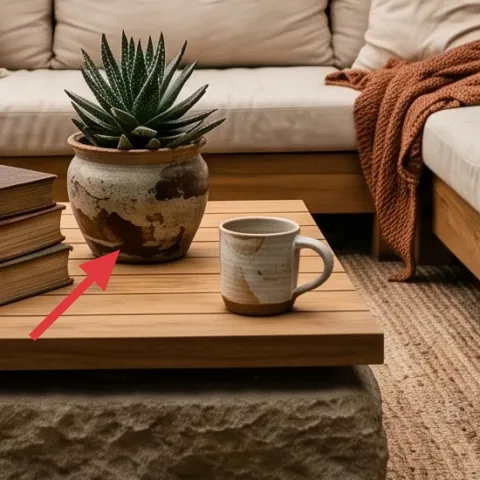
The decorative stack of books is a styling shortcut that keeps the coffee table from looking like random objects piled up. By choosing books with similar spine colors and placing them near the succulent, the table becomes a visual “anchor” that complements the daybed rather than competing with it. The trade-off is that stacks can look cluttered if they’re too tall, so keep the height modest and let the mug and small pot breathe visually. In shared housing, this is also a practical choice: you can swap book covers, or remove the stack entirely without changing any fixed elements.
Use one stack, not three small piles
A single controlled grouping looks calmer when multiple people share the same room.
The cost, layer by layer
| Layer | Item | Cost |
|---|---|---|
| 1 | Outdoor area rug 5×7 (low-pile) | $120 |
| 2 | Outdoor wooden daybed/sofa | $110 |
| 3 | Throw blanket in rust-brown | $25 |
| 4 | Throw pillow cover (DIY-dyed rust tone) | $12 |
| 5 | String lights (set of bulbs) | $15 |
| 6 | Speckled ceramic succulent pot | $20 |
| 7 | Decorative stack of books | $15 |
| Total | $317 | |
If the daybed cost is too high, swap Layer 2 for a lighter bench-style frame or a foldable outdoor loveseat—keep the rug and string lights, and the lounge still reads intentional.
What worked, what didn't (across the whole room)
The rug + daybed combination works because it sets one clear “home base” shape under the overhead light line. Warm amber string lights and rust-brown fabric also keep the outdoor palette consistent with the wood. The main thing that didn’t work in practice is adding too many small decor items—more objects made the coffee table feel busy fast.
What worked
- The low-pile outdoor area rug keeps the lounge defined on grass and reduces visible mess.
- Warm wooden daybed tones echo the amber bulbs, so the scene feels cohesive.
- Rust-brown throw fabric adds contrast without changing the whole color scheme.
- Overhead string lights light the daybed and the vine wall together instead of spotlighting one area.
- A small succulent pot creates a styled “center” on the coffee table without extra clutter.
- A controlled book stack adds order to shared surfaces that get used daily.
What didn't
- Multiple mini plants on the table competed with the succulent and made the surface look crowded.
- Too many height levels for string lights turned the pergola into a tangled look.
- Light-colored throws showed outdoor dust faster than medium tones.
- Blankets folded too loosely on the daybed looked accidental instead of styled.
- Book stacks that were too tall reduced the space for mugs and everyday items.
What we'd skip if we did it again
Skip buying a second sofa or armchair “to fill the corner.” The pergola already has a strong frame, and adding more fixed furniture usually creates move-night headaches later.
Skip plug-in lights that scatter in every direction. Overhead string lights work best when they keep to one line, so the daybed remains the focal point while vines and glass stay a backdrop.
Skip delicate, high-maintenance textiles outdoors. In shared housing, a washable throw and easy-dye pillow covers hold up better when schedules clash and nobody wants to babysit laundry.
Frequently asked
How long does this outdoor refresh take?
Most of the time is in choosing the right textures and doing the small styling: laying out the outdoor area rug, draping the rust-brown throw, and arranging the book stack. If you DIY-dye pillow covers, add about a half day for pre-wash, dye, rinse, and full dry. Expect a weekend afternoon start to finish if everything is already on hand and you’re not hunting for a specific rug size.
Is this renter- or shared-housing friendly?
Yes, because the “layers” are mostly soft goods and plug-in lighting. The rug rolls up, the throw and pillow covers pack flat, and the string lights can be coiled and stored. Even if the bigger furniture piece doesn’t travel well, you can still apply the same order—rug base first, fabric contrast second, then small green accents.
What if my pergola lounge is smaller?
Keep the rug size proportional so it still sits under the daybed front legs. For smaller spaces, reduce the height of the decorative book stack and choose one main pillow cover color plus the rust throw. You can also shorten the string lights run so the amber line stays centered and doesn’t spill into every corner.
What if my lounge is bigger than the photo?
In a bigger space, add a second rug only if you can keep the seating zone clearly defined; otherwise, go for a larger rug size and keep the same fabric palette. You can also extend the overhead string lights length so the line visually spans the seating area. Maintain one main color contrast (rust) and one repeated green note so it doesn’t feel random.
Where should I shop for the biggest wins?
For the rug and outdoor throws, focus on retailers that sell removable, washable outdoor textiles. For string lights, look for sets that are plug-in and meant for outdoor use, with bulb covers that don’t look cheap in daylight. For the succulent pot and small greenery, garden centers are usually best—speckled ceramics and hardy plants are easy to spot in person.
What’s the biggest mistake people make on outdoor lounge styling?
Over-styling the coffee table and adding too many lighting heights. The pergola lounge works because it has a grounded base (rug), one main silhouette (daybed), and one overhead light line. If the table has too many items, it stops reading as curated and starts reading as shared-disaster cleanup.
More in Outdoor & Patio
7 no-drill ways to build a garden pergola lounge, $350
A garden pergola lounge refresh for shared housing that leans on warm string lights, a cream rug base, and a couple of fabric swaps. This $…
What $1,000 buys: a firepit patio seating refresh
A firepit patio seating area can look custom without a renovation. With $1,000 in weekend upgrades—string lights, warm sconces, and a few t…
7 weekend swaps for a balcony seating nook with $300 impact
A balcony seating nook looks put-together fast when you swap in one grounding rug, a warm throw, and a few shelf accents. This $300 weekend…