- Best for
- Warm, renter-safe bed nook styling
- Cost
- $590 total for the layers
- Difficulty
- Easy (mostly swaps + styling)
- Time
- 2–4 hours to style and place
Why warm wood-and-sage styling is the bed nook of 2026
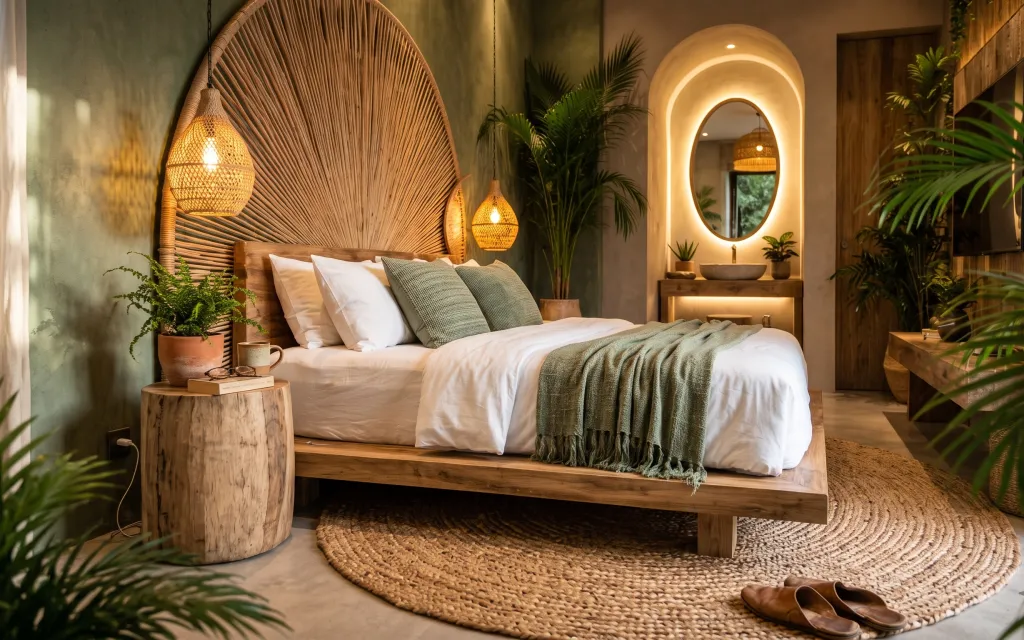
In this photo, the mood comes from layered materials: a jute rug underfoot, cream pillow covers, and a chunky sage throw draped where you actually sit. The oval mirror adds a focal point that bounces the soft light, while plants bring that lived-in “someone’s home” feeling. Even the warm wood surfaces keep it from reading cold or overly minimal. For renters, this works because every piece here is movable—swap in your favorites now, then pack them up when the lease ends.
The first time I tried to copy this look, I went too “matchy” with all-green textiles, and it ended up flat. What changed my mind was seeing how much contrast the room uses: sage texture against crisp white, plus the grounded jute pattern. Once I focused on that opposition—soft + textured, light + warm—everything started to look composed without needing any permanent changes.
Layer 1 — jute area rug ($200) Texture underfoot, not just a base
{{LAYER_1_FIGURE}}
A jute area rug in a rounded shape anchors the whole bed nook and makes the space feel softer the second you step out of bed. The woven pattern is visible even in warm light, and it hides everyday wear far better than a smooth, light-colored rug. In this layout, the rug sits partly under the bed and spills toward the front, which visually frames the “landing zone” for the bedside table. The trade-off is that jute can shed a little at first, so plan for a quick vacuum pass during the first week.
Use a rug pad
A pad keeps jute from creeping and reduces the scratchiness under bare feet, especially on light floors.
Layer 2 — oval mirror with warm backlight ($120) A focal point that pulls light forward
{{LAYER_2_FIGURE}}
The oval mirror is doing more than showing reflections—it visually lengthens the room and gives that warm, spa-like glow in one moveable piece. Its shape is key here: compared to a rectangle, the curve repeats the bed’s rounded, arched lines and softens the whole vignette. Place it so the reflected light hits the bed area; that’s what keeps the nook feeling cozy instead of dark. The warm backlight effect can be approximated with an additional lamp nearby if your setup doesn’t already have it, but the mirror itself still works as the main graphic element.
Why oval wins
Curves calm busy textures—jute, woven lamps, and plants—without turning the room into a tangle.
Layer 3 — round wood bedside table ($80) Height and warmth beside the bed
{{LAYER_3_FIGURE}}
A round wood bedside table adds that “hotel calm” height without blocking sightlines the way a bulky nightstand can. In the photo, it holds small styling objects and gives the rug space a clear boundary near the bed. The wood tone matters too: it’s warm and slightly weathered, which makes the sage textiles look richer instead of gray. If you’re tempted to go with a white table for brightness, the room will lose that warm contrast that makes the mirror glow look intentional.
Style it with one surface story
Pick a mug-and-book moment or a small plant, not both—round tops look crowded faster.
Layer 4 — sage green textured throw blanket ($60) Chunky color that reads cozy in photos
{{LAYER_4_FIGURE}}
This sage throw blanket is the texture “bridge” between the crisp white pillow covers and the warm wood elements. Because it’s draped over the bed, it shows off its weave and weight from multiple angles, which makes the nook feel layered even without artwork. The shade is also doing work: sage sits between green and neutral, so it pairs naturally with jute, terracotta, and wood. The trade-off is that textured throws can snag if you have pets, so choose one that’s easy to shake out and keep the fold gentle rather than tight.
Skip overly thin knits
If the throw barely has texture, it won’t visually “hold” the palette against the rug’s weave.
Layer 5 — sage green pillow covers ($30) DIY-dye the hue, keep the texture
{{LAYER_5_FIGURE}}
Sage green pillow covers are one of the fastest ways to borrow this bed nook palette without touching any landlord fixtures. In the photo, the covers sit against cream pillow covers and the sage throw, so they create a mid-tone layer that doesn’t feel loud. Look for a textured weave (linen-cotton blend, subtle basket weave, or knit) so the color shows depth under warm lighting. If the alternative is buying different whole pillows, covers are the better renter move: they’re cheaper to swap and they pack flat.
Make it match the room’s contrast
Keep one color family as “light” (white) and one as “mid-tone” (sage) so the nook stays balanced.
Layer 6 — potted fern plant ($60) Leafy volume that makes it feel lived-in
{{LAYER_6_FIGURE}}
A potted fern plant brings soft, feathery vertical texture that counters the straight lines of the furniture and the arched wood frame. The fern also works because it’s not the same color as everything else—it’s a darker green that deepens the palette, so the sage textiles don’t look washed out. In this setup, the plant sits near the bed zone and creates a visual “buffer” between the mirror and the sleeping area. The trade-off is maintenance: you’ll need to rotate it for even growth, and you’ll want to wipe dust from the leaves occasionally.
Rotate weekly for an even silhouette
Small rotations keep the fronds from leaning toward the light.
Layer 7 — terracotta planter with leafy plant ($40) Warm clay that echoes the wood
{{LAYER_7_FIGURE}}
Terracotta pulls the whole palette together because it repeats the warm wood undertone and softens the green tones. This planter reads as a little anchor on the left side of the bed nook, where smaller styling pieces would otherwise disappear against the rug. The leafy plant also adds height that’s lower than the big fern, so the room doesn’t feel top-heavy. The trade-off is that terracotta dries out faster than ceramic glaze, so if the air in your apartment runs dry, plan to check soil moisture more often.
Terracotta looks best with one “hero leaf”
If the plant is too sparse, it won’t carry the warm note—swap to something fuller when needed.
The cost, layer by layer
| Layer | Item | Cost |
|---|---|---|
| 1 | Jute area rug (rounded, 6–8 ft) | $200 |
| 2 | Oval mirror (24–36") | $120 |
| 3 | Round wood bedside table | $80 |
| 4 | Sage green textured throw blanket | $60 |
| 5 | Sage green pillow covers | $30 |
| 6 | Potted fern plant (4–6 ft) | $60 |
| 7 | Terracotta planter with leafy plant | $40 |
| Total | $590 | |
If you want a cheaper variant, swap one plant for a smaller tabletop plant ($25 range) and choose a simpler solid sage throw ($25–$35 range) while keeping the oval mirror and jute rug.
What worked, what didn't (across the whole room)
This bed nook nails the “warm + textured” formula: the rug grounds everything, the oval mirror creates a focal glow, and sage textiles keep the palette cohesive. The plants are doing real work, not decoration, because they add depth and movement near the bed.
What worked
- The jute rug’s weave makes the room feel layered even when the walls stay simple.
- The oval mirror adds a rounded focal point that softens the arched wood lines.
- Sage throw texture shows up clearly in warm light, which reads cozy in photos.
- Terracotta and wood tones keep the palette warm instead of trending gray-green.
- Fern volume creates vertical balance beside the bed.
- The round bedside table creates a calm, functional landing spot.
What didn't
- When pillow colors are too close to the rug tone, the bed looks flat instead of layered.
- If the throw is too thin, the nook loses that chunky “texture bridge” effect.
- Over-styling the bedside table makes the vignette look busy under warm light.
- If plants are placed too low or too small, the mirror area feels empty.
- Skipping a rug pad can turn jute into a sliding, scratchy problem.
What we'd skip if we did it again
Skip matching “set” furniture. A coordinated bedside table and matching drawer unit can look tidy, but this look depends on texture variety—wood, weave, and plant material—so mixed shapes win.
Skip buying a second throw in a different green. Two greens can drift toward the same tone and lose contrast; better to choose one sage throw and keep the rest of the palette anchored by white and terracotta.
Skip plant clutter around the mirror. One fuller fern plus one smaller terracotta planter keeps the room airy while still giving that lived-in depth.
Frequently asked
How long does this kind of bed nook refresh usually take?
Plan on about 2–4 hours if everything you’re buying is ready to go (rug, mirror, textiles, and plants). The slow part is usually styling: getting the throw drape right, placing pillows so the colors read as light + mid-tone, and arranging plants so the height feels intentional. If you’re waiting for plants to be delivered, the timeline shifts, but the actual assembly work stays quick.
Is this renter-friendly if my lease is strict?
Yes, because none of the core upgrades require permanent changes. The mirror, rug, bedside table, textiles, and plants are all movable. For anything that needs adhesive (like a cord cover or rug placement), keep it removable. The safest approach is to treat everything like “packable decor,” so the nook resets quickly at move-out.
What if my bedroom is smaller than the photo?
In a smaller room, keep the same palette but scale down the footprint. Choose a smaller oval mirror or hang it so it doesn’t dominate the bed height. Go with a compact plant on one side and keep the other side minimal—one strong focal point does more than two small distractions. If you’re constrained on rug size, focus on getting the rug front edge under the bed’s “landing” zone.
What if my room is larger or has higher ceilings?
Go bigger on the rug so it reads as a base, not a small accessory. For textiles, add visual weight with one chunky throw and keep the pillow covers textured so the bed doesn’t look under-styled. Plants can also be scaled: a taller fern can replace a second small plant while still keeping the overall look balanced.
Where should I shop for these pieces without overpaying?
Rugs, mirrors, and textiles often have the biggest swing in price. Look for rugs at home department stores and online during rug sales, then buy mirror and tables from secondhand shops or discount home sites. For plants, buy from a local greenhouse or reputable online sellers with good photos—plant quality matters more than the exact species when it comes to the leafy texture.
Biggest mistake people make in a boho bed nook?
They match too many items to the same shade of green. When every texture lives in the same narrow color range, the room looks flat. Aim for contrast: crisp white for light, sage for a mid-tone, and terracotta or warm wood for warmth. If the palette has contrast, even simple pieces read styled.
More in Bedroom
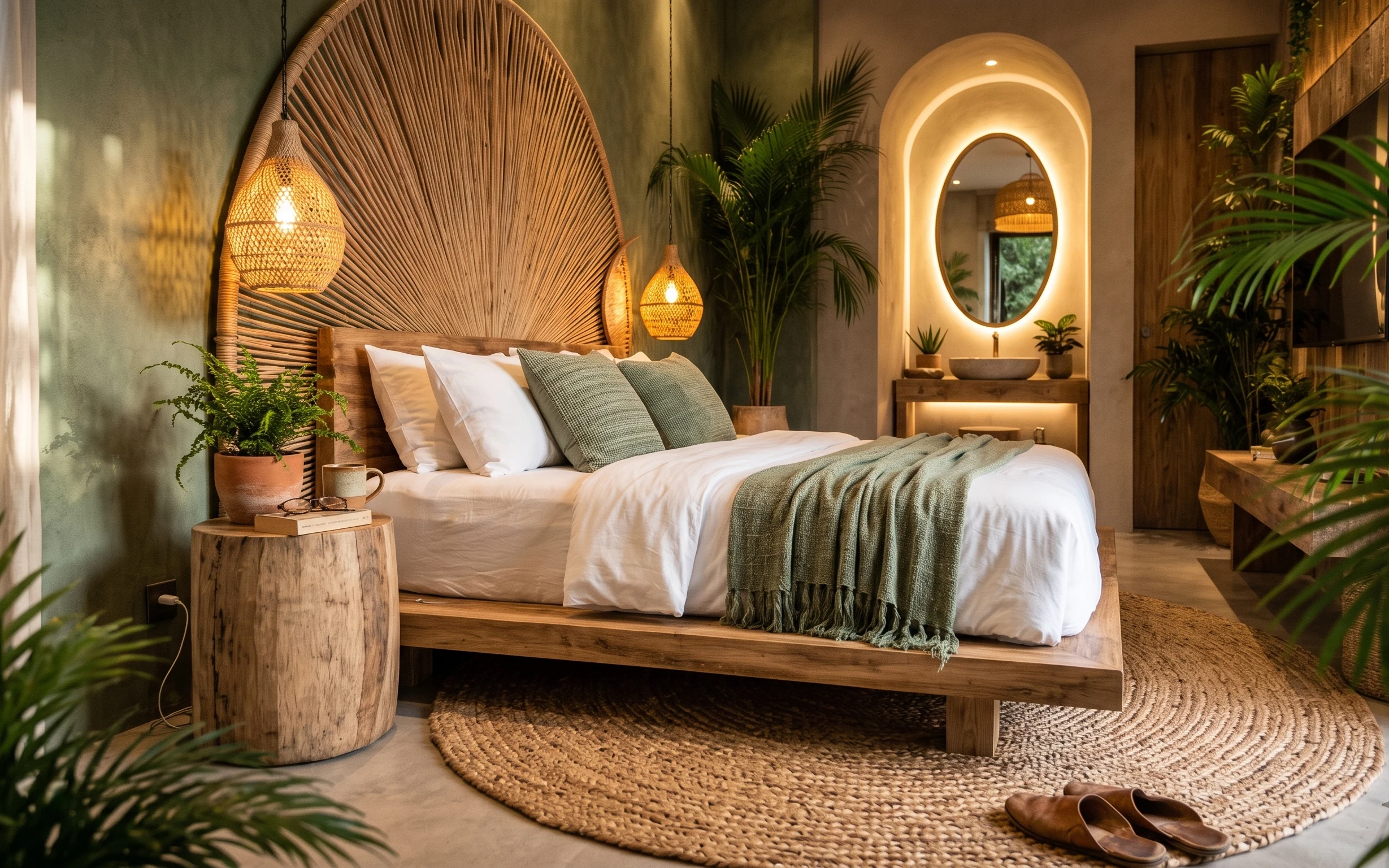
7 renter swaps for a $600 bed nook
A warm, boho bed nook refresh for renters with a $600 total budget. Focuses on a jute rug, oval mirror, and sage textiles plus plants—no dr…
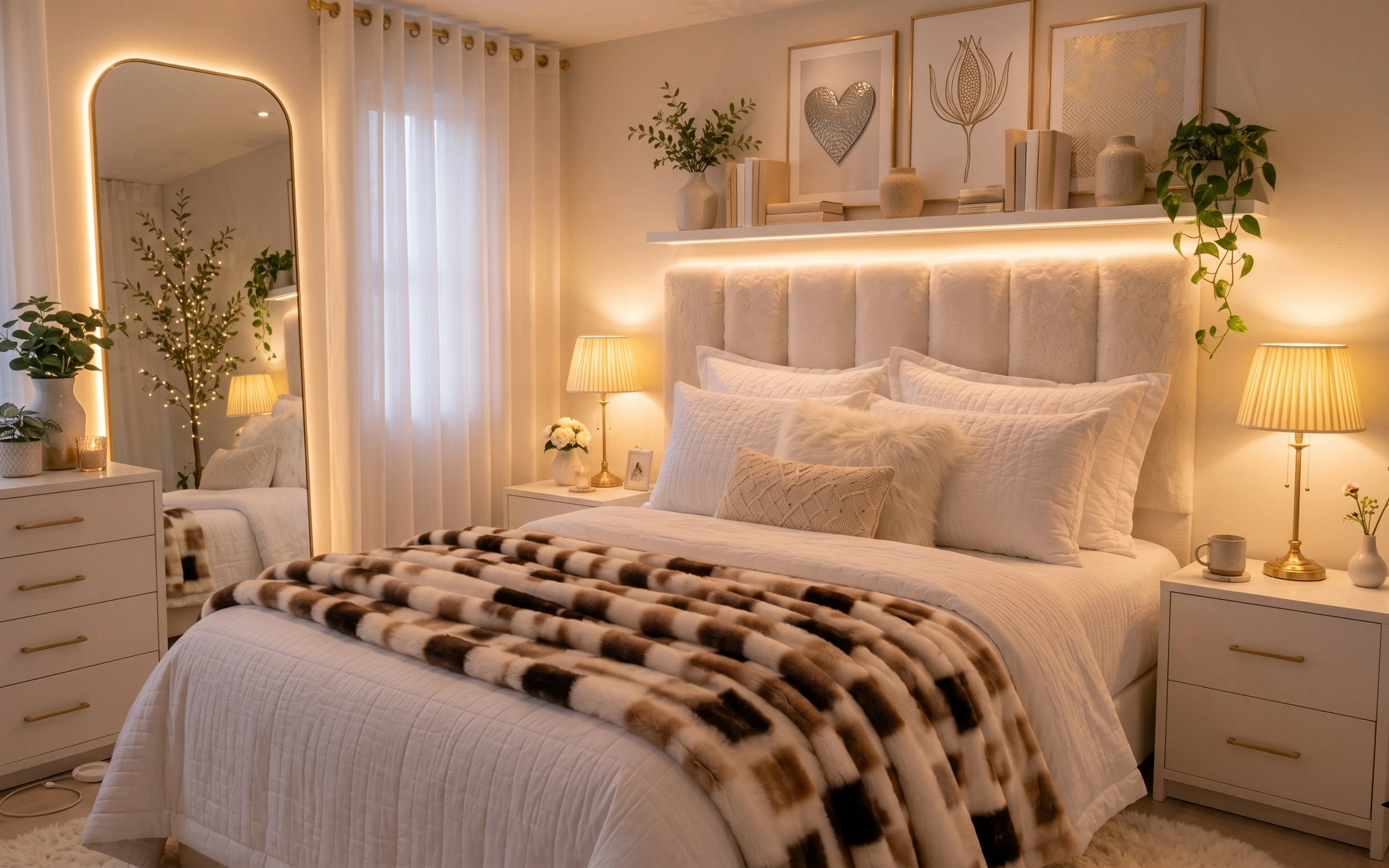
Warm brass-and-cream bedroom refresh, $800
A warm modern bedroom refresh for $800 that makes your bed feel styled, not accidental. This weekend plan focuses on a softer rug layer, ai…
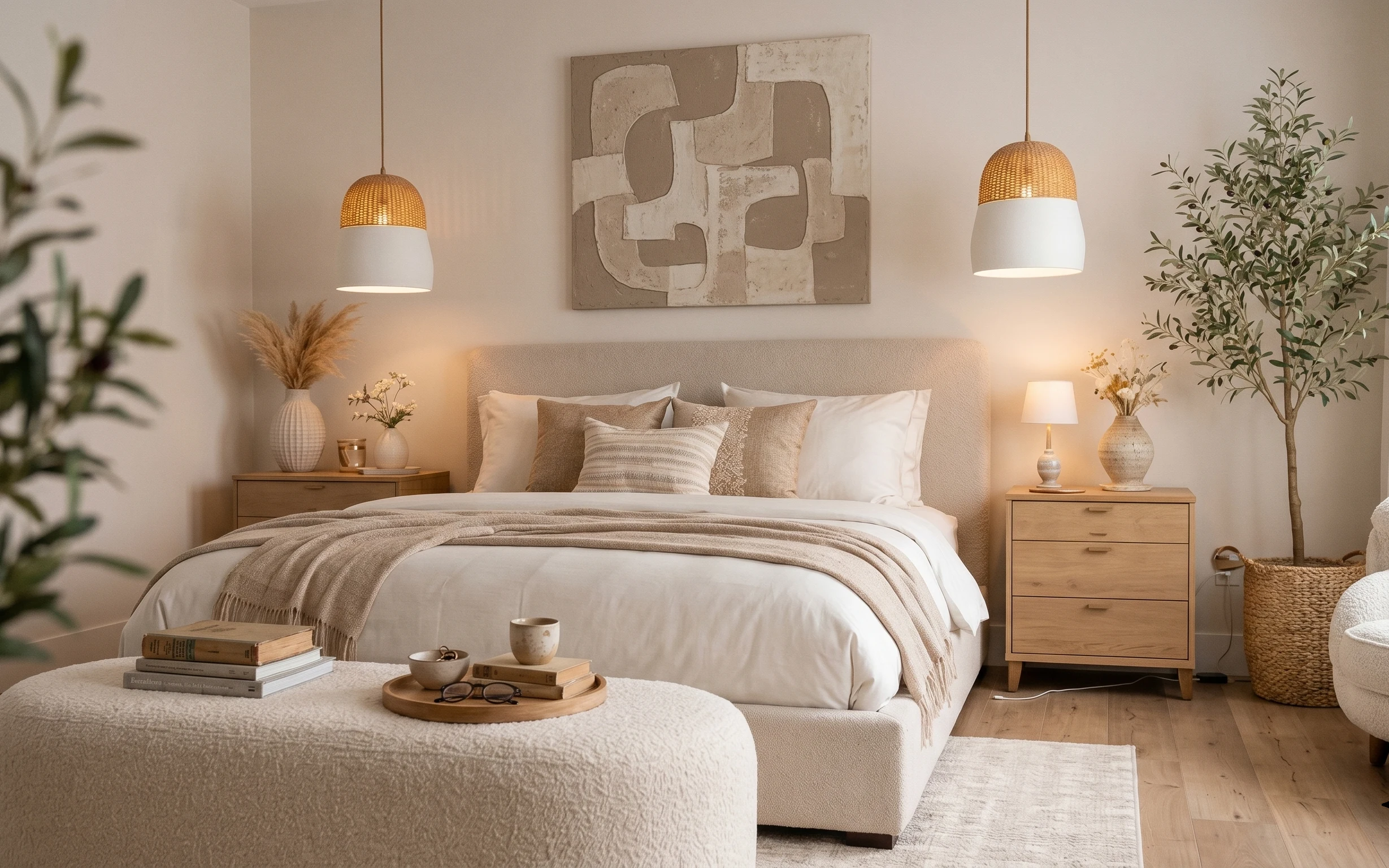
How to refresh a bedroom for under $700
A warm, japandi-style bedroom refresh on a $700 weekend budget. Swap in a rug, layered lighting, and statement wall art—then paint one wood…