- Best for
- Textile-led living room refresh
- Cost
- $555 total / $600 ceiling
- Difficulty
- Easy (mostly soft goods)
- Time
- 2–4 hours, plus styling
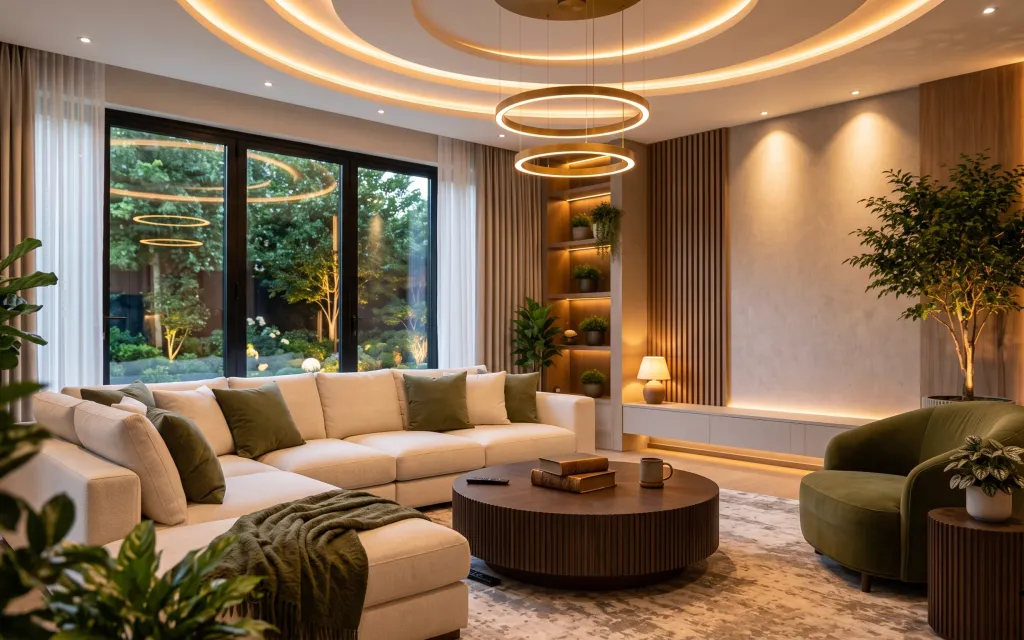
Why warm beige-and-olive lighting is the sofa lounge of 2026
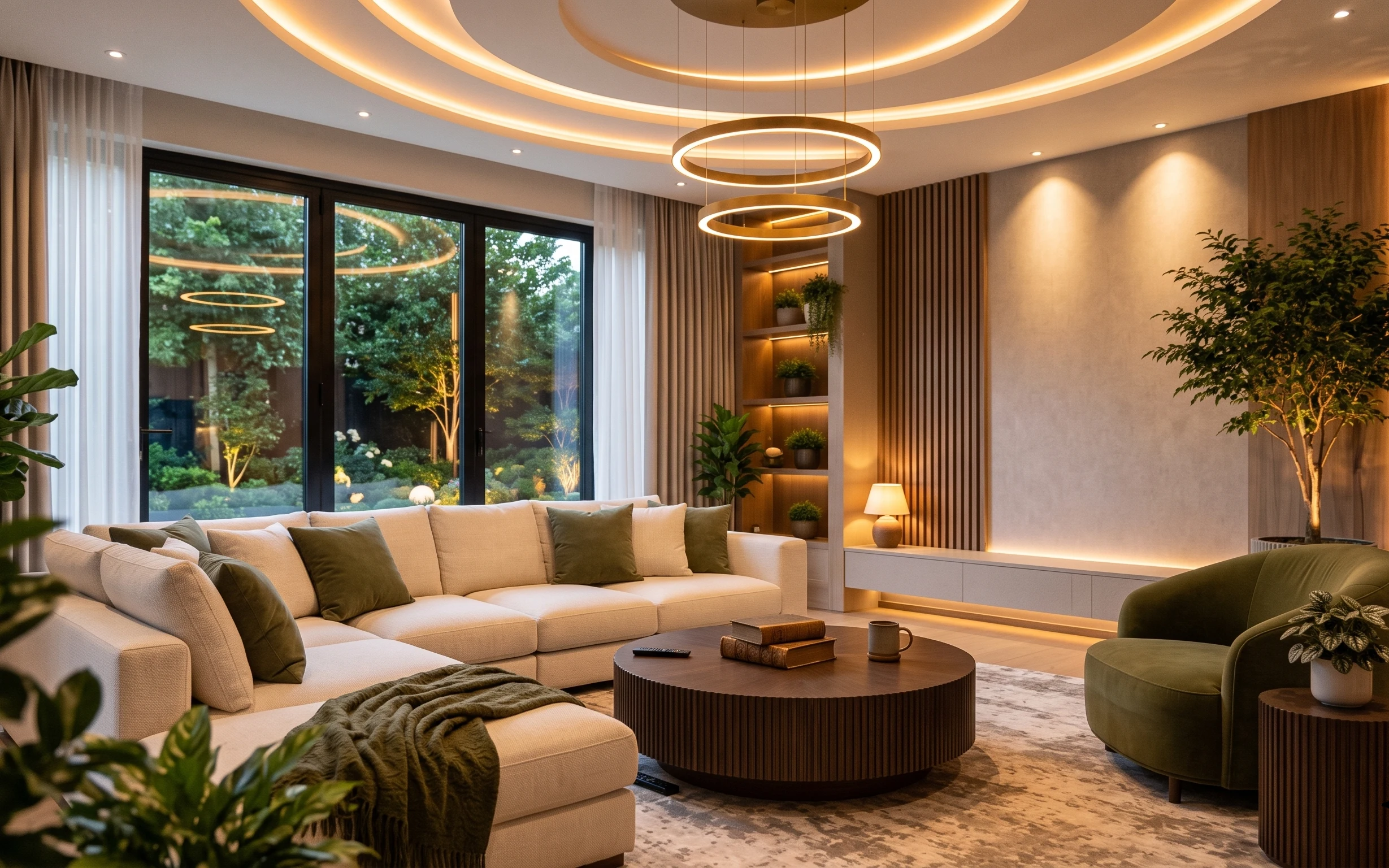
The first thing I notice is how the room reads as one calm “scene”: cream upholstery, olive textiles, and warm wood shapes, all softened by sheer curtains and a big patterned rug. The lighting feels like a layered glow—ceiling pendants plus a small lamp—so nothing looks harsh. If you’re in shared housing, the good news is that this look mostly comes from switchable pieces: rug, throws, curtains, and plug-in lighting. That’s the kind of refresh you can do between semesters without losing your deposit.
My biggest early mistake in shared houses was treating every upgrade like it had to be “structural.” I once spent too much time hunting for a perfect match couch cover and forgot the fastest win: textiles and light temperature. In a room like this, the olive throw and sage cushions visually “anchor” the cream sofa, while the sheer curtains keep everything airy. After that, I started shopping in layers—base rug first, then color, then one warm light source.
Layer 1 — Patterned area rug ($200) Grounds the sofa in one cozy zone
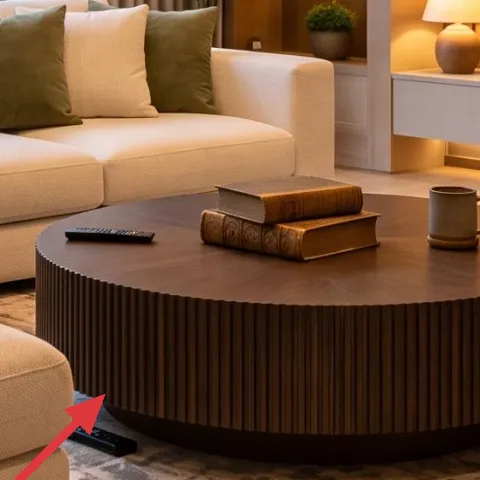
This patterned area rug sits under the coffee table and sofa, creating the visual boundary that makes a large lounge feel intentional. Choose a neutral base with muted contrast so the pattern doesn’t fight your pillows and curtains; in the photo, the rug’s beige-taupe tones let cream upholstery stay the star. A common alternative is going plain (solid), but it won’t give you that subtle texture rhythm you see here. The trade-off is that patterned rugs show fewer stains than you’d expect, but they still need a quick vacuum pass to keep the fibers from looking dusty.
Pick a neutral pattern scale
Medium-to-subtle patterning reads expensive but stays forgiving if your room changes around it.
Layer 2 — Olive throw blanket ($35) Adds depth without committing to new furniture
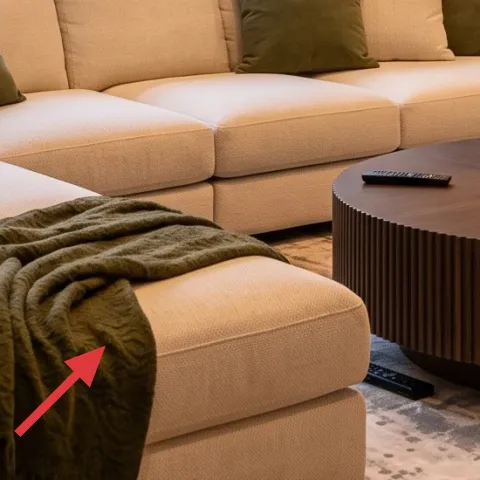
The olive throw blanket draped over the sofa corner does two jobs at once: it adds color and it breaks up the uniform cream. In a shared home, that matters because you’re not replacing the couch—you’re styling it. Olive also plays nicely with warm wood tones (like the ribbed coffee table) and with the green direction of the plants. The alternative—skipping a throw—usually makes the sofa look flat in photos, especially under warm lighting. The trade-off is storage: throws fold flat, so plan to keep one “seasonal color” in a box ready to rotate.
Match undertones, not just the green
Sage/olive look best when they lean warm, not neon, under warm lamp light.
Layer 3 — Sage-green throw pillow cover ($30) Brings the room’s color story to your hands
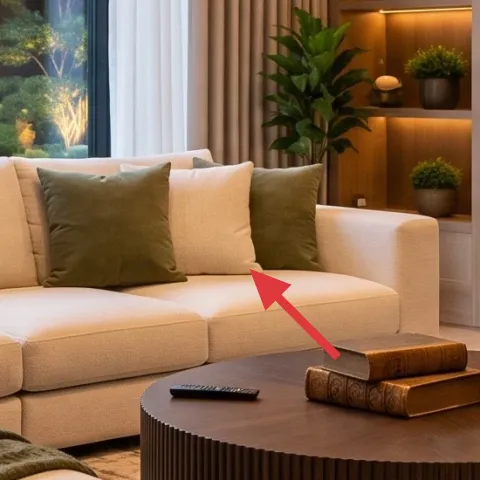
This sage-green pillow cover is where the color story becomes repeatable. The photo’s cushions aren’t random: they echo the olive throw and soften the cream upholstery with a second green layer. If you’re moving within a year, swapping covers is one of the most painless ways to keep the room “yours” without replacing anything fixed. Buying new covers is straightforward, but it can feel pricey—so the bigger idea is to choose a fabric that’s machine-washable and easy to pack. The trade-off: patterned covers hide wear longer, but solid covers photograph cleaner from a distance.
Don’t size up the pillow
Overstuffed covers can look lumpy on a sectional edge; keep the cover close to the insert size for a tailored look.
Layer 4 — White sheer curtain panels (pair) ($40) Keeps the lounge bright while you add privacy
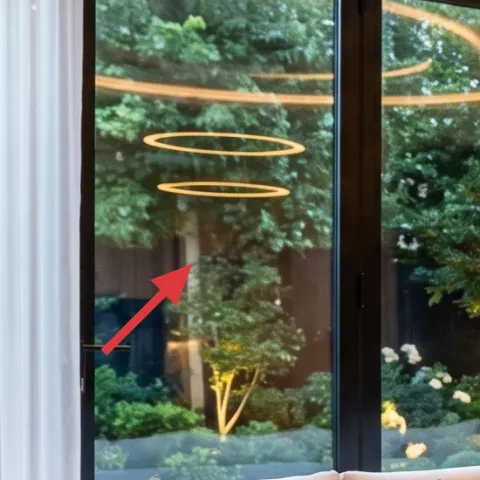
Those white sheer curtain panels soften everything—light, edges, and even the harshness of window frames. Because sheers hang and pack easily, they’re a renter-friendly way to get the “air” you see in the photo without touching the windows themselves. The trade-off is that sheers don’t block much light at night, so you’ll still rely on your room’s existing privacy options. In a room like this, the sheers also make the warm pendant glow feel cozy instead of heavy, because you’re layering diffusion over the light. If you can’t find exact-length sheers, aim for a similar fall that barely skims the window sill area.
Hem lengths for the ceiling height you actually have
Even a small change in fall height makes sheers look more intentional and less “temporary.”
Layer 5 — Round ribbed wood coffee table ($120) Adds the warm texture the room is missing
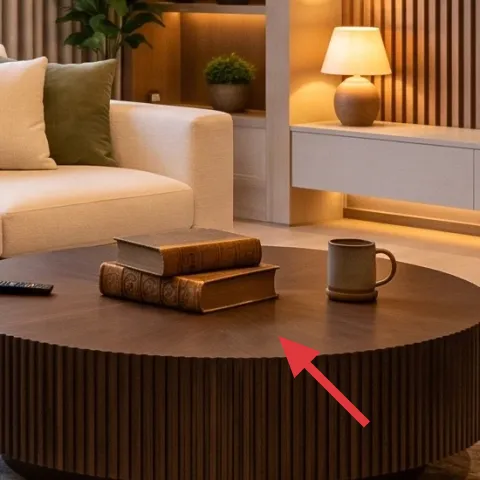
The coffee table in the photo is doing quiet design work: round shape keeps circulation easy, and the ribbed wood adds tactile interest that reads “designed” even with simple objects on top. For a shared space, a smaller round table is also more forgiving when you re-arrange the room—no awkward corners, fewer “can’t move it” constraints. Swap an all-flat-top table for something with dimension, and your lighting will bounce more evenly across the surface. The trade-off is care: ribbing collects dust, so you’ll want a quick wipe routine. Still, it’s worth it because it’s the texture you can’t get from pillows or rugs.
Style it with one-height items
If your objects vary wildly in height, the table looks busy instead of calm.
Layer 6 — Table lamp on back shelf niche ($60) Creates the second layer of warm glow
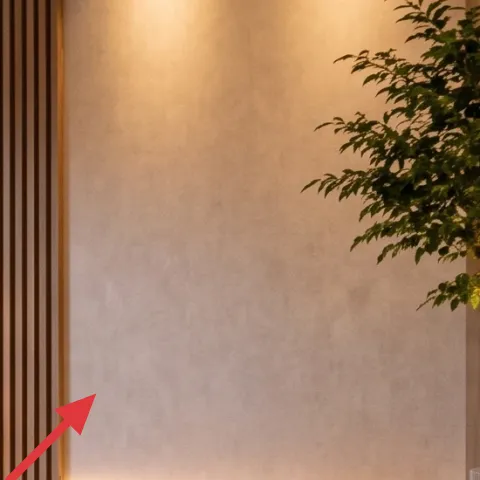
That warm-shaded table lamp is what makes the sofa lounge feel finished after dark. Even if you keep ceiling lighting minimal, a plug-in lamp gives you a controlled pool of light that flatters textiles—rug pattern, olive throw, and cream upholstery all look softer under warm bulbs. The alternative is relying only on overhead light, which tends to flatten the room and make everything feel more “temporary.” The trade-off is bulb consistency: use the same warm temperature across lamps so the room reads cohesive, not accidental. Placement matters too—keep it angled toward the seating area, not the wall behind it.
Choose a warm bulb temperature
A warm tone helps olive and wood look richer instead of gray under cool LEDs.
Layer 7 — Tall potted tree (right corner) ($70) Gives height without adding clutter
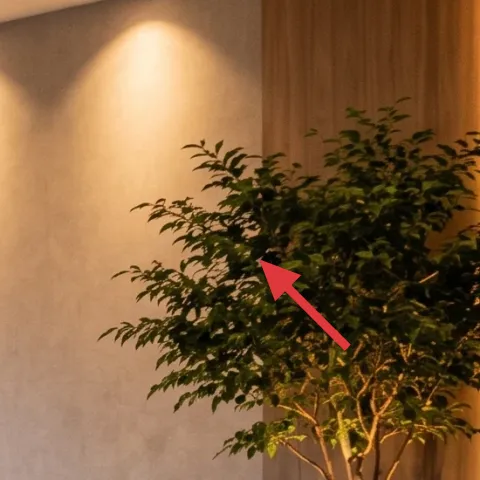
The tall potted tree provides vertical balance, especially in a room where furniture is mostly low and wide. In this photo, it also ties the outside view to the inside styling, so the plant feels like part of the architecture rather than a random accessory. For shared housing, an indoor plant is one of the easiest “bring it with you” items—pots can travel, leaves can be trimmed, and it doesn’t require permanent mounting. The alternative is stacking smaller plants, but that often looks busy and uneven. The trade-off is maintenance: plan for weekly watering and a quick dusting of leaves so it stays photo-ready.
Don’t trap it in a corner with no light
Corner plants slowly decline; a few hours of bright indirect light keeps them looking lush.
The cost, layer by layer
| Layer | Item | Cost |
|---|---|---|
| 1 | Patterned area rug (5×7, neutral) | $200 |
| 2 | Olive throw blanket | $35 |
| 3 | Sage-green throw pillow cover | $30 |
| 4 | White sheer curtain panels (pair) | $40 |
| 5 | Round ribbed wood coffee table | $120 |
| 6 | Plug-in table lamp with cream shade | $60 |
| 7 | Tall potted tree in planter | $70 |
| Total | $555 | |
If you need a cheaper route, swap the coffee table for a smooth round tabletop from a budget store and pick a simpler rug pattern. Keep the olive throw and warm lamp—those are the high-impact parts that still photograph like the inspiration.
What worked, what didn't (across the whole room)
This room’s comfort comes from repetition: cream base, olive accents, warm wood, and a second layer of warm light. The styling also stays mobile because most of it is textiles and tabletop objects. The main drawback is that the look depends on fabric quality and lighting temperature more than people expect.
What worked
- The patterned rug anchors the sofa and keeps the lounge from feeling visually “floating.”
- Olive throw placement adds depth where the eye naturally lands first.
- Sheer curtains soften window glare and make warm lamps feel gentler.
- The ribbed coffee table adds texture you can’t get from flat decor alone.
- The sage-green cushion ties the textiles to the plant palette.
- A second warm light source prevents harsh shadows on pillows and rug pattern.
What didn't
- Skipping a warm bulb makes olive and wood read more muted and a bit gray.
- Too many competing colors on the coffee table turns the lounge from calm to cluttered.
- Large-pattern rugs can feel busy if your pillows already have strong shapes.
- Overstuffed pillows create lumps on a sectional edge instead of clean drape.
- Corner plants without enough bright indirect light look leggy after a few weeks.
What we'd skip if we did it again
Skip buying a full matching furniture set. The inspiration look is mostly textiles, light, and surface texture—new sofa pieces cost too much and don’t pack well for shared housing moves.
Skip a plain rug with no pattern. In photos, the rug is doing the job of “building” the lounge zone; a simple rug rarely creates that same grounding effect under warm light.
Skip cool-white bulbs for any lamp. Even if everything else matches, the olive tones won’t look rich unless the bulb stays warm and consistent across your lighting.
Frequently asked
How long does a refresh like this take in a shared apartment?
For this kind of sofa lounge update, the hands-on time is usually 2–4 hours: rug in place, throw and pillows switched, curtains hung, lamp tested, then final object styling on the coffee table. The extra time is mostly deciding which olive shade reads closest to the room’s warm light. If you’re moving during a busy week, start with the rug and lighting first, then finish textiles after.
Can I do this if I rent and can’t change the walls or windows?
Yes. The whole plan is built on renter-safe elements: soft goods (rug, throws, pillow covers, sheer curtains) and plug-in lighting. Nothing requires drilling or permanent wall changes. If your window hardware is fixed, sheers can often work with existing curtain rods; otherwise you can choose curtains sized to your current setup and rely on tie-backs or clips for stability.
What if my room is smaller than the photo?
Go smaller on footprint, but don’t skip the zoning effect. Use a smaller rug that still sits under the front legs of the sofa, and keep the coffee table close enough that you can reach it without stretching. For textiles, use fewer pillow styles—one cream base and one olive/sage accent—so the room doesn’t feel busy. Sheers still help a lot in smaller rooms because they visually lighten the windows.
What if my room is larger than this—won’t it look empty?
In a bigger lounge, treat the rug as your “anchor rectangle” and size it so the coffee table and seating overlap the rug. Add one tall plant for height balance, but avoid adding multiple competing plants at different heights. For lighting, keep your warm bulb tone and make sure at least one lamp is aimed toward the seating, not only toward the wall behind it.
Where should I shop if I want this to feel japandi without overpaying?
Start with brands that specialize in neutral textiles: rugs, throws, and pillow covers. For the coffee table, look for simple ribbing or natural wood finishes at mainstream home stores and then style it with ceramic objects. For lighting, any plug-in table lamp with a cream shade works—bulb warmth matters more than brand. Plants can come from grocery store garden sections for smaller options.
What’s the biggest mistake people make with this look?
The biggest miss is chasing color with the wrong lighting. If bulbs are cool or inconsistent, olive and warm wood will look dull and the room won’t feel cohesive. The second most common mistake is adding too many patterned items at once—rug pattern plus heavy pillow patterns plus lots of small decor. Keep one pattern (usually the rug), repeat your olive tone, and let sheers do the softness work.
More in Living Room
A warmer japandi living room for $600
Create the same warm japandi sofa lounge look with $600 of renter-safe swaps. This plan focuses on a patterned rug, olive textiles, white s…
Warm earth-tone sofa corner refresh, $600
A renter-friendly sofa corner refresh built around an olive-and-warm-wood palette. For about $600, you’ll swap in a textured rug, one frame…
What $800 buys: a sofa-and-TV corner refresh
A warm, plant-forward sofa-and-TV corner refresh that reads collected, not crowded. This weekend plan uses 7 visible upgrades (rug, knit th…