- Best for
- A weekend sofa-and-TV refresh
- Cost
- $800 total (7 upgrades)
- Difficulty
- Easy to moderate
- Time
- 1–2 weekends
Why warm cream-and-olive lighting is the sofa-and-TV corner of 2026
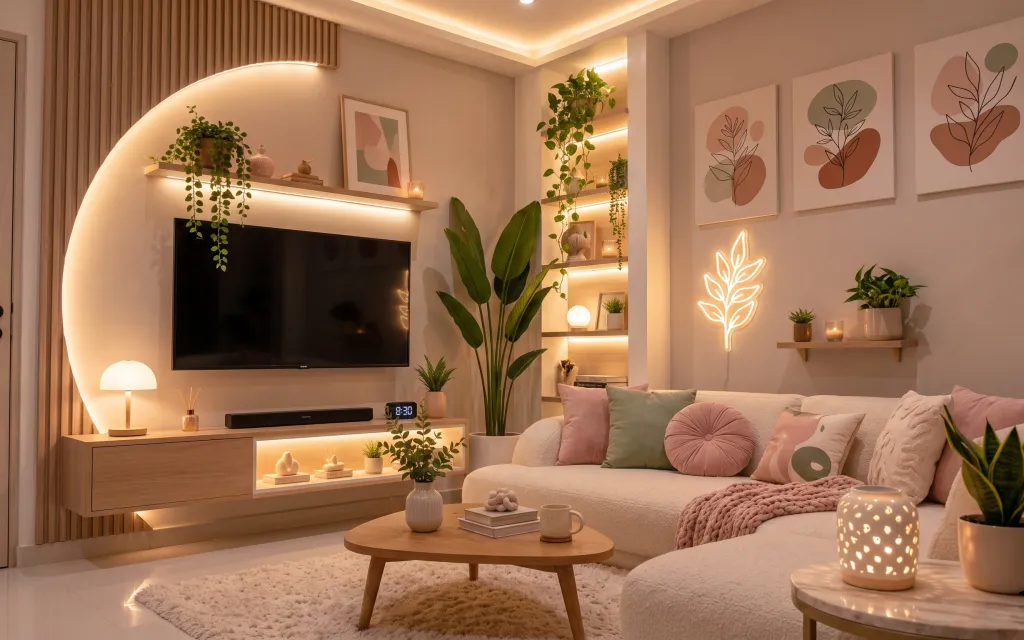
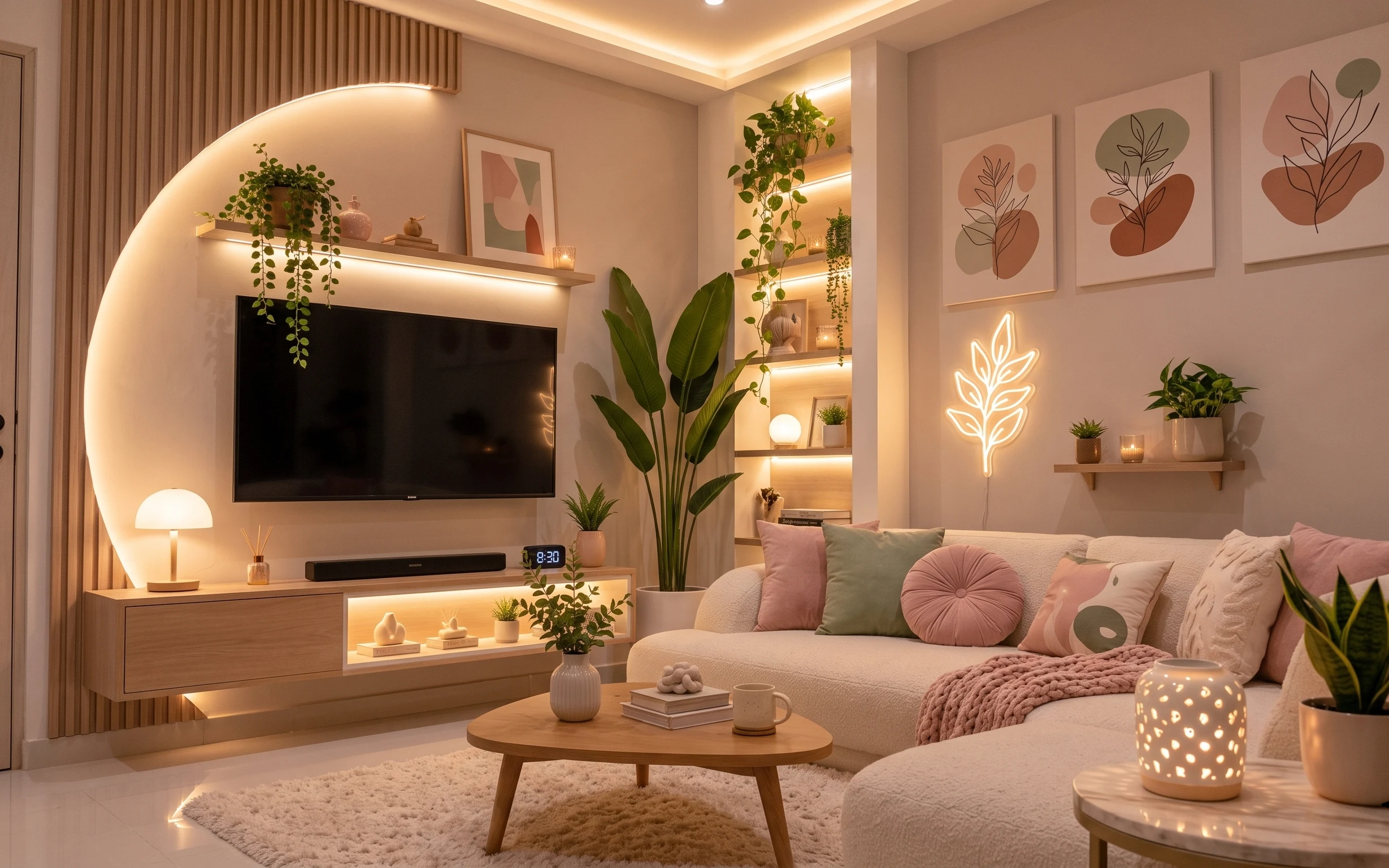
Start with the textures: a shag area rug underfoot, a knit throw blanket draped across the sofa, and layered framed botanical prints that keep the wall from feeling flat. The room already leans japandi—cream tones, clean lines, and potted plants—so you don’t need a thousand objects. If you’re a homeowner working on a weekend, this is achievable because each change is visible immediately and doesn’t require demolition. A warm table lamp also matters more than people expect; it makes all the soft materials look intentional.
I once rushed a living room “mood” by buying a pretty lamp and then wondering why everything else looked gray. In this photo, the lighting is doing its job: the warm pool of light and the layered plants help the cream wall and wood console feel cohesive. My lesson: start with the warm base (rug + lamp), then add the character (botanical prints, potted greenery), and only then fine-tune with throws and pillows.
Layer 1 — shag area rug ($200) Underfoot comfort that anchors the seating
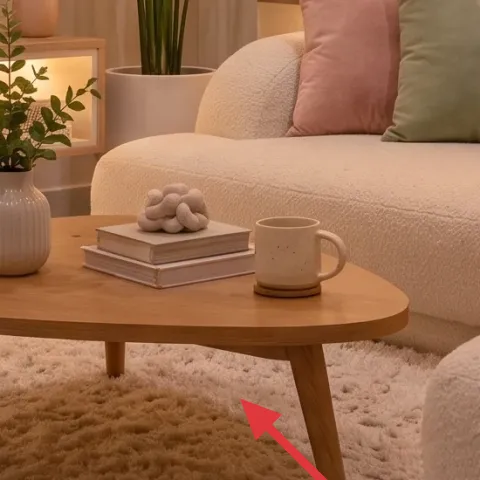
A shag area rug sits in front of the sofa and pulls the whole corner into one zone. Visually, it softens the contrast between the smooth painted walls and the wood TV console, so the room doesn’t feel too “boxy.” This is the obvious first buy if your space feels echo-y or visually bare—hard floors and minimal rugs can make even good wall art look lonely. The trade-off is maintenance: choose a rug that can handle everyday living, and vacuum slowly so the fibers don’t get matted. Keep the rug’s edges visible, not hidden under furniture, so it reads as the anchor.
Let the rug break up the floor lines
In a corner with a TV console, center the rug so the sofa and coffee table land on it, not just the front edge.
Layer 2 — knit throw blanket ($60) A textured layer that shows up in one glance
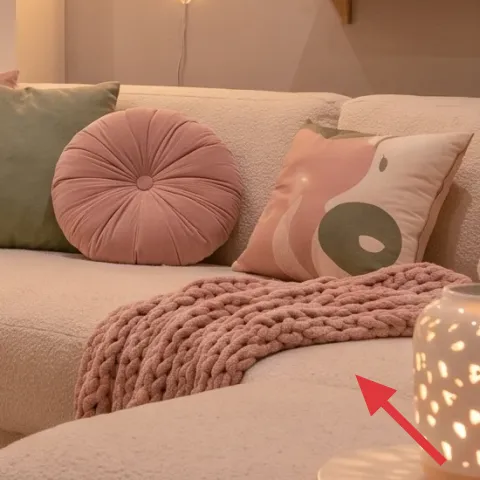
The knit throw blanket on the sofa is what turns “neutral” into “lived-in.” Its chunky texture gives your eye something tactile to follow after the big shapes—rug, sofa, and TV console—so the whole corner feels finished. An obvious alternative is a thin, smooth throw, but it won’t catch warm light the same way, especially in the evening. With a knit blanket, the trade-off is bulk: you’ll want to keep it draped loosely rather than folded like a blanket on a bed. That loose drape keeps it casual and keeps the sofa silhouette from looking heavy.
Texture beats color matching
Even when the palette is cream and olive, the knit’s depth is what makes the throw look intentional.
Layer 3 — coffee table ($180) The low wood piece that ties the surfaces together
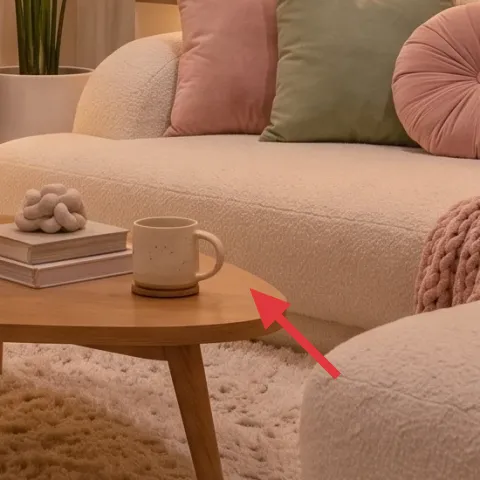
This coffee table sits low in the foreground and bridges the rug to the TV console behind it. Because it’s wood, it harmonizes with the light wood of the console and the warmth of the recessed ceiling lighting. If you’re deciding between a glass-top table and a wood one, the wood option wins here—glass can read cold next to a shag rug and upholstered sofa. The trade-off is surface care: wood shows water rings and polish buildup, so use coasters and wipe spills quickly. Keep styling minimal on top—just enough to reflect the lamp’s glow—so the wall art stays the star.
Match the wood warmth, not the exact finish
Look for a similar undertone to the TV console so everything feels related without being identical.
Layer 4 — table lamp ($60) Warm light that makes creams look creamy
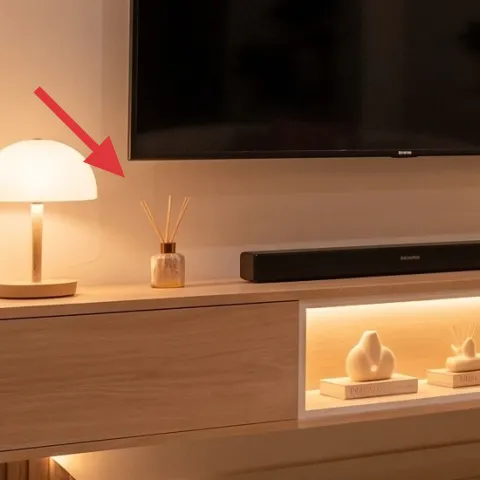
The table lamp adds the kind of soft warm lighting that makes the cream surfaces look richer instead of flat. It also gives the room a second “light height,” which matters when you have a TV screen at eye level and framed botanical prints up high. The obvious alternative is relying only on overhead recessed lighting, but that usually makes pillows and throws look dull and shadows harsh. With a table lamp, the trade-off is placement: you want it close enough to the seating zone that the light spills onto the sofa and coffee table. Aim for a shaded look so you get glow without glare.
Don’t position the lamp behind the sofa’s brightest reflection
If the TV shows the lamp glare, adjust the table lamp angle or move it a few inches until the reflections stop.
Layer 5 — framed botanical prints ($180) A consistent wall pattern without gallery clutter
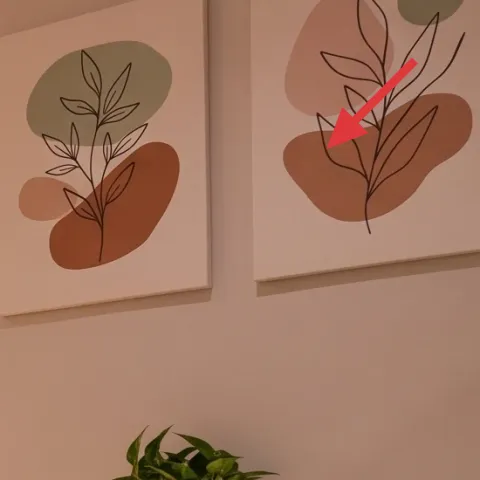
The framed botanical prints on the right wall are what keeps the corner from feeling like “just furniture.” They repeat the leaf shapes across multiple frames, so the wall reads styled even when you don’t add a lot of small decor. The obvious alternative is one large piece, but in a room with a TV console and layered shelves, smaller frames give you more flexibility for spacing. The trade-off is measurement: you have to align height and spacing so frames don’t look accidental. A good rule is to keep the middle frame roughly at eye level and build the rest off that axis.
Use framing as your scale control
Smaller frames keep the botanical theme delicate, which works well next to the TV and wood panel.
Layer 6 — potted plants ($80) Green that softens the lines
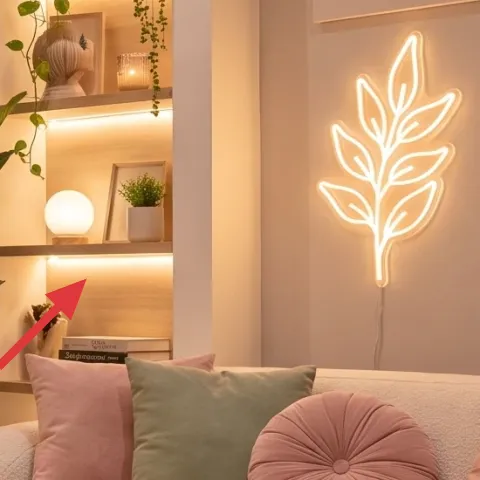
Potted plants in the corner bring life into the space and echo the botanical theme in the framed prints. They also soften the vertical lines of the wood slat panel behind the TV by adding layered leaf shapes and movement. An obvious alternative is cutting down to just one plant, but that can make the room feel like it’s “trying” too hard—especially in corners where the eye travels. The trade-off is that plants need consistent light and occasional rotation. Keep the pot colors neutral or warm so they don’t fight with the cream rug and the pink-toned pillows.
Repeat the green, don’t duplicate it
Mix one taller plant with smaller potted plants so you get depth without turning the room into a jungle shelf.
Layer 7 — terracotta planter pots (small set) ($40) A small DIY-scale upgrade for the plant shelf
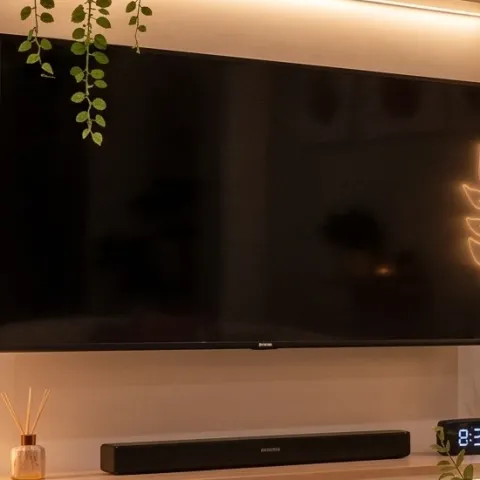
These terracotta planter pots are a tiny detail, but they matter because they sit close to the light and the rug line—your eye catches them when you stand up or walk by. They also help the corner feel warmer, especially against cream walls and the smooth wood textures. If you buy a matching set, you’ll get that tidy look right away; the trade-off is cost. Even without DIY, this is one of the easiest “weekend wins” because it’s mostly swaps: pot, plant arrangement, and a quick styling reset. Choose pots with drainage and stick to a consistent shape so the shelf doesn’t look scattered.
Let the pot color do the palette work
Terracotta adds warmth that makes olive leaves look richer without adding more colors to the room.
The cost, layer by layer
| Layer | Item | Cost |
|---|---|---|
| 1 | Shag area rug | $200 |
| 2 | Knit throw blanket | $60 |
| 3 | Coffee table | $180 |
| 4 | Table lamp | $60 |
| 5 | Framed botanical prints | $180 |
| 6 | Potted plants | $80 |
| 7 | Terracotta planter pots (small set) | $40 |
| Total | $800 | |
If you want a cheaper variant, focus on swapping the rug and throw first, then choose prints in smaller sizes and one taller plant instead of multiple potted plants. You can also rent a coffee table for photos and buy secondhand while keeping the lamp and rug new for the best payoff.
What worked, what didn't (across the whole room)
The strongest overall effect is the layering of warm light, soft textiles, and repeated botanical shapes. It reads calm because the textures do most of the work, not lots of small objects.
What worked
- The shag area rug anchors the sofa so the corner feels intentional, not accidental.
- The knit throw blanket adds visible texture that still looks good in warm table-lamp light.
- The wood coffee table harmonizes with the TV console, so surfaces feel related.
- The table lamp adds a second light height, softening shadows around the seating.
- Framed botanical prints repeat leaf shapes and keep the wall from feeling flat next to the TV.
- Potted plants bring softness that counters the straight lines of the wood slat panel.
What didn't
- Overhead-only lighting can make the cream surfaces look gray and flatten the knit throw texture.
- A single plant in a corner can feel underscaled next to the framed prints and tall visual panel.
- Too-small rug sizing can leave the coffee table floating instead of grounded.
- Matching everything too closely (same wood, same beige, same pot shape) can look overly staged.
What we'd skip if we did it again
Skip a glass-top coffee table in this exact setup. The shag rug and warm table lamp make wood look inviting, while glass can feel cold and highlights dust on top surfaces.
Skip buying one big framed piece if the wall has a TV console and a vertical wood slat panel. Multiple framed botanical prints give you better spacing control, especially when you want a calm, repeated pattern.
Skip relying on recessed ceiling lighting alone. Add the table lamp early so you can see how creams and olives actually read at night, before you commit to final throw and pillow styling.
Frequently asked
How long does this kind of living room refresh take?
Most homeowners can do the full version in 1–2 weekends. Plan 1 day for the rug/throw/coffee-table positioning and lamp placement, and a second day for wall alignment with framed botanical prints and plant styling. If you’re sourcing items from multiple stores, add time for delivery windows.
What if I’m renting—can I still get this look?
Yes. Keep the upgrades that don’t change the structure: rug, knit throw, pillows, table lamp, and potted plants. For wall items, use removable hanging methods that won’t damage paint, and stick to freestanding shelves only if they’re already in the lease setup. The framed botanicals can be rehung later at your next place.
My space is smaller—should I resize anything?
In a smaller living room, prioritize the rug first so the sofa doesn’t feel “floating.” Choose a rug that extends farther under the coffee table than you think, and keep the plants to one tall potted plant plus a smaller one, so the corner doesn’t feel crowded. For prints, use fewer framed botanical prints but keep the same vertical center alignment.
Where should I shop differently if I want to stay under $800?
Buy the rug and lamp new for the best look under warm lighting, then shop secondhand for the coffee table and frames. For plants, buy smaller now and upgrade later; a staged corner often looks better with a medium potted plant that’s thriving than a large one that’s stressed.
What’s the biggest mistake people make with sofa styling like this?
Relying on overhead light only. When the table lamp isn’t present, creams can look dull and the knit throw reads flatter, so everything feels less cohesive. Add the lamp early, then adjust throw drape and pillow colors based on what the room actually looks like at night.
More in Living Room
What $800 buys: a sofa-and-TV corner refresh
A warm, plant-forward sofa-and-TV corner refresh that reads collected, not crowded. This weekend plan uses 7 visible upgrades (rug, knit th…
What $700 buys: a sofa lounge refresh with arched-niche style
A bright sofa lounge refresh that leans sage, warm wood, and an arched vertical-stripe niche. With 7 buys (plus one DIY) totaling $700, you…
A calmer sofa-and-TV seating area for $700
A weekend refresh for your sofa-and-TV seating area with a natural woven rug, beige curtains, a knit throw, leafy plants, and shelf vases. …