- Best for
- renter sofa corners
- Cost
- about $600
- Difficulty
- easy (mostly styling)
- Time
- 1–2 weekends
Why this warm earth-tone living room is the sofa corner of 2026
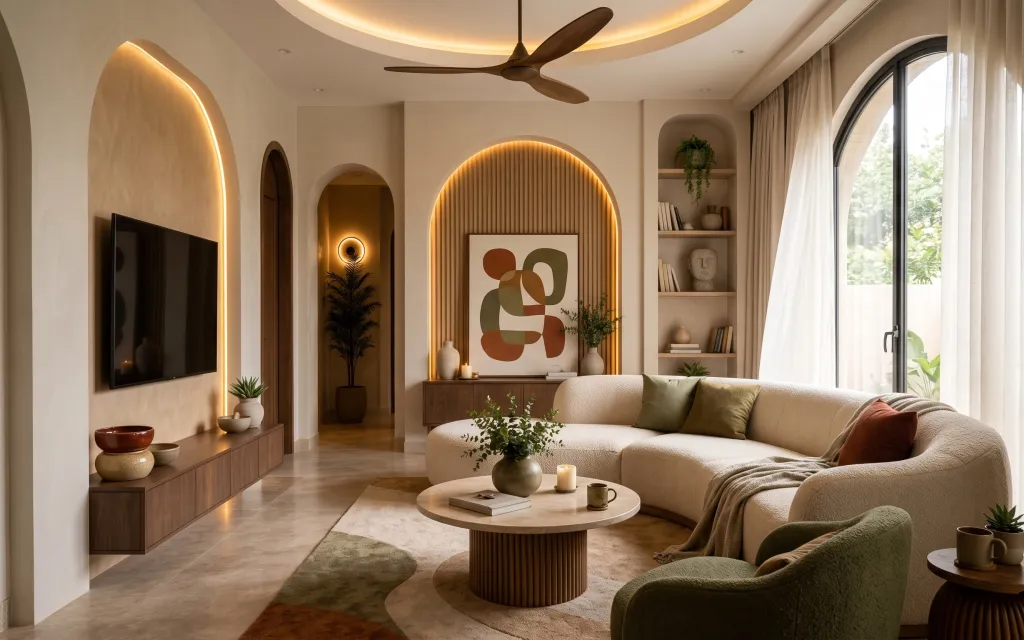
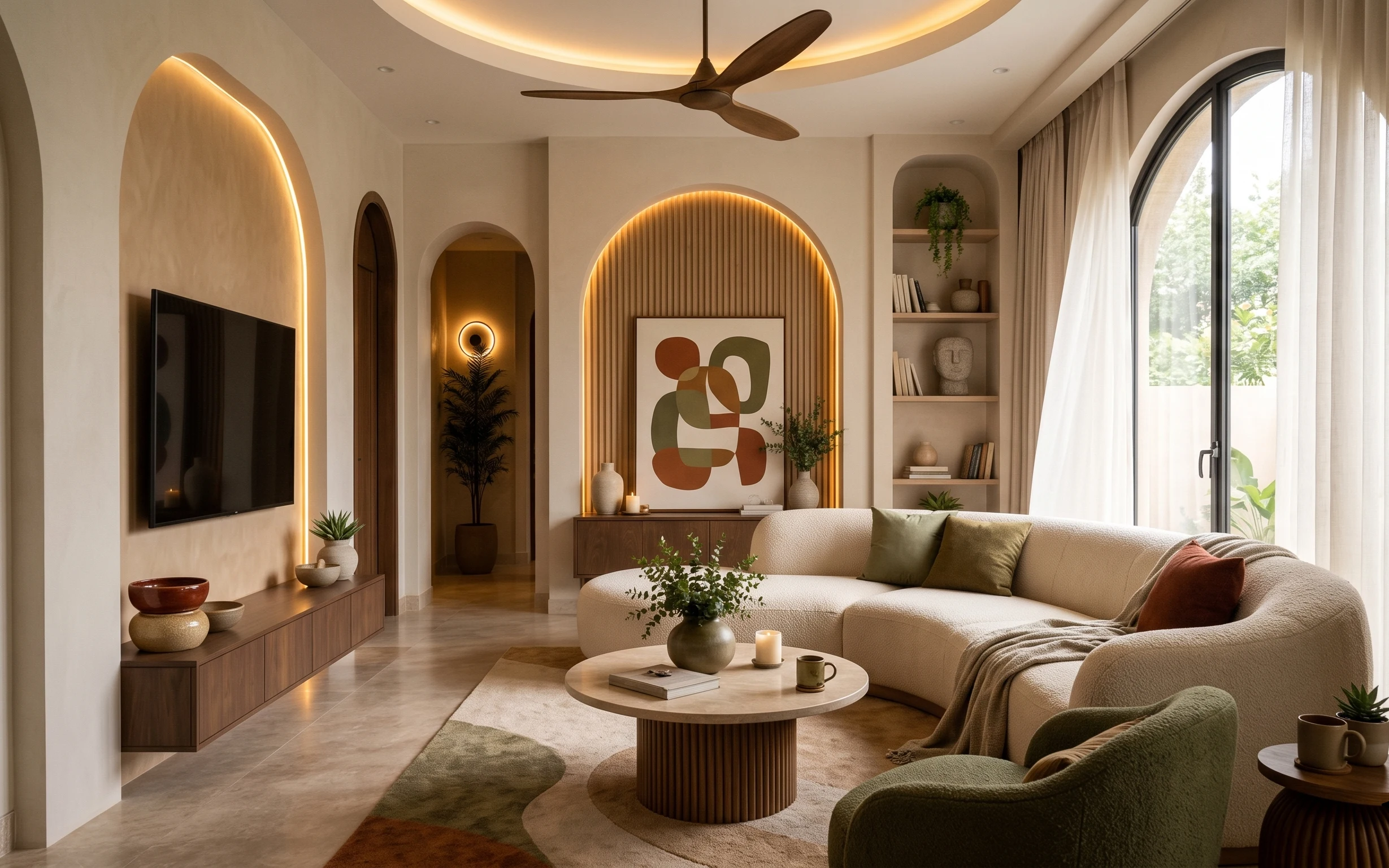
The quickest way to get this warm-modern feel is to copy the material stack: a grounded area rug under the seating, soft textiles over the beige sofa, and one framed abstract that echoes the olive tones. The architecture in the photo already gives you arches and niches, so your job is just to add contrast with earth materials—think wooly texture, matte pottery, and a few warm highlights from candles. This stays renter-friendly because every swap here either rolls up, comes down, or packs into a box without touching walls.
I’ve done the “buy the whole living room set” mistake more than once—matching everything made the room feel staged, not lived-in. What changed my mind was seeing how much calmer it looks when one piece (the framed abstract) carries the whole color story, while the rest is mostly texture and small objects. This is that approach: olive as an accent, warm neutrals as the base, and lighting that flatters skin tones and wood.
Layer 1 — area rug ($200) Texture underfoot that hides daily life
This area rug sits under the sofa and coffee table, which is why the whole corner reads intentional instead of “furniture floating.” Look for an off-white base with subtle olive or muted earth marks—enough pattern to disguise foot traffic, not so busy that it competes with the framed art. The trade-off is that a larger rug takes a little planning for measurements, but it’s still one of the most worth-it swaps for a renter because it rolls up cleanly when the lease ends. If you’re between sizes, go bigger—this look depends on the rug reaching the front legs.
Pick thickness, not just color
A low- to medium-pile rug feels neat and modern, but still gives you that cushioned “warmth” you see here.
Layer 2 — framed abstract wall art ($120) One centered graphic, warm-olive accents
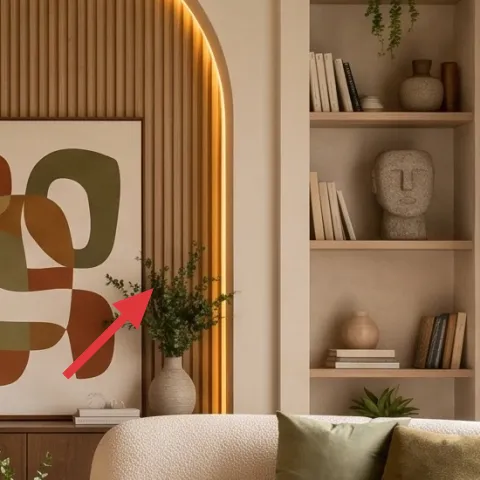
The framed abstract wall art is doing the heavy lifting: it anchors the arch opening and repeats the olive vibe from the plants and cushions without adding more clutter. I’d rather spend on one piece like this than scatter prints, because it keeps the corner calm while still feeling designed. Since this is a rental, the key is choosing something you can hang using Command hooks (only on the frame/back as allowed) or a picture-rail hook if you have one. The trade-off with DIY is that perfection isn’t the goal—the “imperfect” shapes actually look right with the rounded architecture.
Make it instead of buying it
DIY a hand-painted abstract on cardstock, then frame it, so you get this warm-olive graphic hit for less.
Materials
- Cardstock (thick, for painting) — 1 sheet (approx. 11x14) — craft store — $6
- Acrylic paint (earth tones: terracotta, olive, warm beige) — set — art store — $12
- Black paint marker or fine brush — 1 — craft store — $9
- Frame (matte or simple wood, size to fit) — 1 — thrift or big-box — $25
- Clear acrylic medium or spray fixative (optional, for protection) — small bottle — art store — $10
Steps
- Sketch a loose abstract layout lightly with a pencil or fine marker.
- Block in the biggest shapes with watered acrylic paint for softer edges.
- Paint the olive and terracotta accents in a few oversized curves, leaving breathing space.
- Let the first layer dry fully.
- Add small texture marks using a dry brush technique.
- Let everything dry fully again, then protect the surface with clear medium (if using).
- Trim the painting to fit the frame mat opening.
- Slide it into the frame and test placement against the arch opening.
Total DIY cost: $62 — saves about $58 over buying.
Match the frame, not the paint
Stick to a warm neutral frame so the artwork looks cohesive with the wood console and coffee table.
Layer 3 — throw pillow in olive green ($45) The accent that makes beige feel intentional
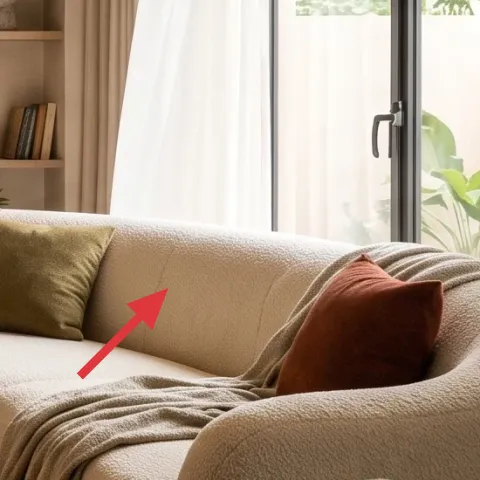
This olive-green throw pillow sits against the beige sofa backrest, which is why the room reads “designed” instead of generic. The color choice matters: olive is earthy like the greenery and wood, so it doesn’t feel like a random accent. Pick a pillow cover with a woven or soft textured finish (not shiny), because matte fabric blends into the warm lighting. The trade-off is that you’ll want a cover you can swap seasonally—olive is strong, so stick to one olive pillow and let the rest stay in creams and warm neutrals. If you want to be extra renter-smart, choose covers you can remove and re-use in future homes.
Avoid bright chartreuse olives
If the green pulls yellow under warm bulbs, it can look off next to the room’s terracotta-warm palette.
Layer 4 — light throw blanket draped over sofa ($60) Instant softness without adding clutter
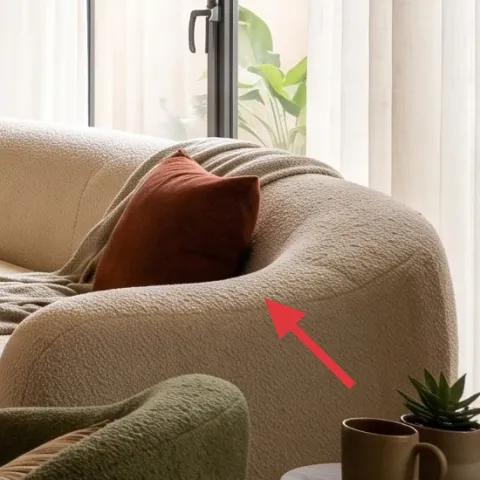
The light throw blanket is draped over the right side of the sofa, where it adds both texture and a visual “break” between the couch and the coffee table. A neutral throw with a subtle knit or boucle texture reads cozy without making the corner feel messy. I’d avoid a heavy cable-knit here—too thick can overwhelm the clean lines of the architecture. Instead, go for a light blanket that folds easily so you can style it quickly for photos and everyday use. The trade-off is that thinner throws may pill sooner, so choose a blend that feels substantial when you pull the fabric between your fingers.
Use the fold rule
Drape it with one intentional fold, then smooth the top edge—small effort, big difference.
Layer 5 — decorative tray on coffee table ($35) A landing spot for small objects
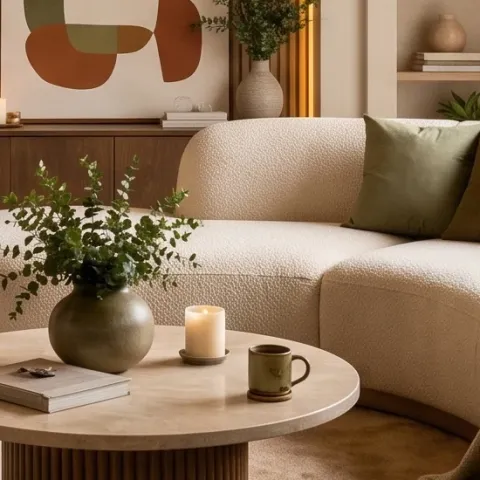
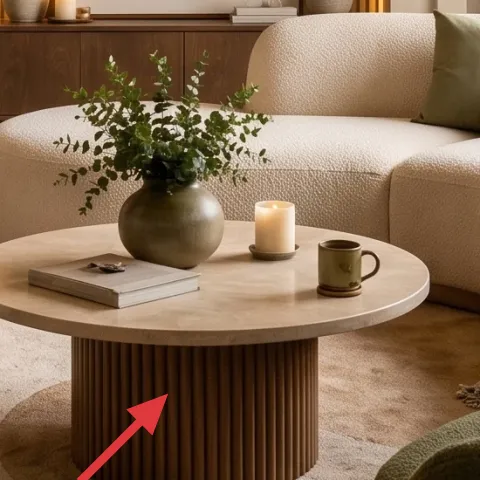
The decorative tray on the coffee table is what keeps candle + cup + book styling from turning into visual scatter. This corner has clean lines—round table, ribbed wood, warm neutrals—so a tray helps you corral small items into a neat rectangle (even though the table is round). Choose a tray in warm wood, light stone, or matte ceramic to echo the console and arch warmth. The trade-off is you’ll have to commit to one “front-and-center” cluster on the tray rather than spreading items across the table, but that’s exactly what makes it look curated. Reuse the tray for a future desk setup too.
Keep tray styling height low
Low stacks keep the sofa corner open and make the arch feel taller.
Layer 6 — candle cluster on coffee table ($35) Warm glow you can switch off
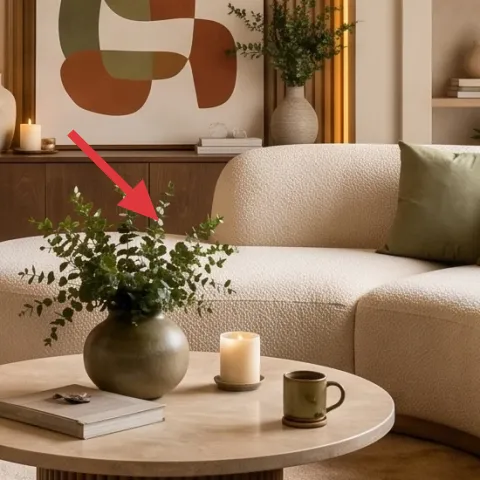
The candle cluster gives you that soft warm glow you see bouncing off the arched niche and wood coffee table. Instead of dozens of tiny candles, use two: one taller one for height and one smaller one for balance, both in neutral glass so they don’t fight the framed art. This works especially well in rooms with built-in warm lighting already happening, because the candles add a second layer of warmth at a lower height. The trade-off is safety and maintenance—real candles mean you’ll actually have to blow them out—so stick to short sessions or choose LED candles if you want the look long-term. Either way, it’s renter-proof styling.
Match glass color to the room
Clear or frosted glass keeps the palette light; amber glass leans more terracotta.
Layer 7 — small potted succulent in ceramic pot on floor ($40) Green that reads fresh in photos
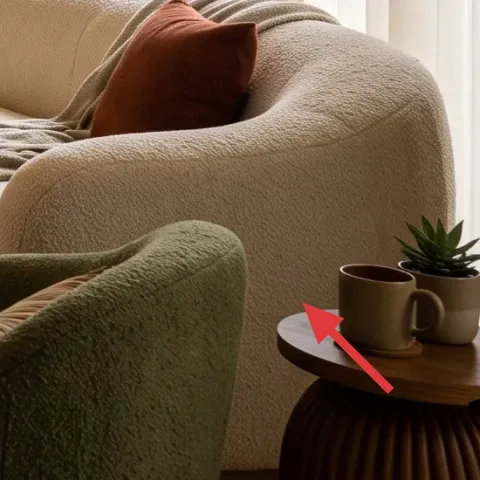
The small potted succulent on the floor adds a clean green note right where the eye drops near the side table, so it doesn’t feel like “green only lives on the shelves.” A simple ceramic pot makes the plant look styled instead of incidental, especially under warm light. Choose a plant with tight leaves (succulent, small zz plant, or pothos cutting) so it stays neat and doesn’t spill into pathways. The trade-off is that plants need a little consistency—light and watering—so if your schedule is unpredictable, pick something forgiving that you can leave alone for a week. This one is easy to pack up with the rest of your small décor at move-out.
Use a plant tray if you water monthly
A shallow drip tray prevents rings on light floors and makes cleanup painless.
The cost, layer by layer
| Layer | Item | Cost |
|---|---|---|
| 1 | Area rug (5x7, off-white with muted earth tones) | $200 |
| 2 | Framed abstract wall art (warm earth palette) | $120 |
| 3 | Throw pillow cover (olive green) | $45 |
| 4 | Light throw blanket (neutral knit) | $60 |
| 5 | Decorative tray for coffee table styling | $35 |
| 6 | Candle set (2 candles, neutral glass) | $35 |
| 7 | Small potted succulent in ceramic pot | $40 |
| Total | $535 | |
If you want to go cheaper, swap the framed art for an 8x10 print in a thrifted frame and pick a low-pile washable rug runner size instead of a full 5x7—those two changes usually cut the biggest line-items fast.
What worked, what didn't (across the whole room)
The best part of this sofa corner formula is how strongly texture leads: the rug and throw blanket make the beige sofa look intentional, even before accessories. The second win is concentration—one framed abstract and one tray cluster keep small items from competing with the arches and built-ins.
What worked
- The area rug anchors the sofa-and-coffee-table zone so the corner reads cohesive.
- The framed abstract is the single color-story leader, repeating olive through the room without extra clutter.
- The olive pillow adds contrast that feels natural under warm lighting.
- The light throw blanket softens the sofa’s shape and adds depth without bulk.
- The decorative tray keeps candles, cups, and books in one tidy, moveable cluster.
- Small greenery in a ceramic pot adds freshness without needing wall changes.
What didn't
- Too many accent colors at once (especially multiple greens) makes the arch feel visually busy.
- Using a shiny throw or glossy decor reflects warm light and can flatten the look.
- Scattering candles across the table instead of clustering them reduces the “intentional” feel.
- Skipping a rug makes the sofa corner look like separate pieces rather than a planned vignette.
- Picking an overly bright green plant can look off next to terracotta-warm neutrals.
What we'd skip if we did it again
Skip buying matching sets (rugs + curtains + pillows all from one collection). This corner looks better when one piece—like the framed abstract—sets the color story and the rest stays textural in neutrals.
Skip a thick, cable-knit blanket in this exact spot. The room’s arches and clean lines already do the dramatic work, and bulky knit can make the sofa look heavy under warm lighting.
Skip too many small decor objects on the coffee table. A single decorative tray cluster keeps the vibe calm, and it’s easier to pack up when you move.
Frequently asked
How long does this sofa corner refresh take?
If you’re only buying the seven items, plan about 4–6 hours including measuring for the rug and styling the tray cluster. The DIY framed abstract is the variable—give yourself an extra evening for painting and drying. Altogether, most renters can finish in one weekend, with a second pass the next day to tweak pillow and blanket placement.
Will this work in a smaller living room?
Yes—just adjust scale. Go for a smaller rug size only if it still sits under the front legs of the sofa and reaches toward the coffee table. Keep the abstract print proportionate (a smaller frame is fine) and use only one olive pillow so the corner doesn’t feel crowded.
What if my space is larger and I want more impact?
Lean into bigger scale where it matters: size up the rug first, then choose a slightly larger framed abstract so it visually balances the arch. You can also add a second plant, but place it on the floor opposite the sofa to keep symmetry without adding more small objects on the coffee table.
Where should I shop for these pieces if I want them move-friendly?
For the rug and basics, look at home stores with easy returns so you can swap quickly. Thrift and discount shops are great for trays, neutral candle holders, and frames. For the DIY art, craft stores are best for thick cardstock and acrylic sets, and you can reuse the frame for future prints.
What’s the biggest mistake renters make in rooms like this?
The most common miss is trying to decorate like a staged showroom—too many colors and too many small objects. This corner works because it concentrates decisions: one framed abstract, one rug, one tray cluster, and a couple of green notes. Keep everything else neutral and textured.
How can I hang the framed abstract without drilling?
Use Command Strips rated for the frame weight, placed on the back of the frame (and on a clean, dry wall surface). If your apartment has a picture rail, use picture-rail hooks instead. Check weight limits before applying, and avoid placing hooks where the frame will be bumped by daily traffic.
More in Living Room
Warm earth-tone sofa corner refresh, $600
A renter-friendly sofa corner refresh built around an olive-and-warm-wood palette. For about $600, you’ll swap in a textured rug, one frame…
What $800 buys: a sofa-and-TV corner refresh
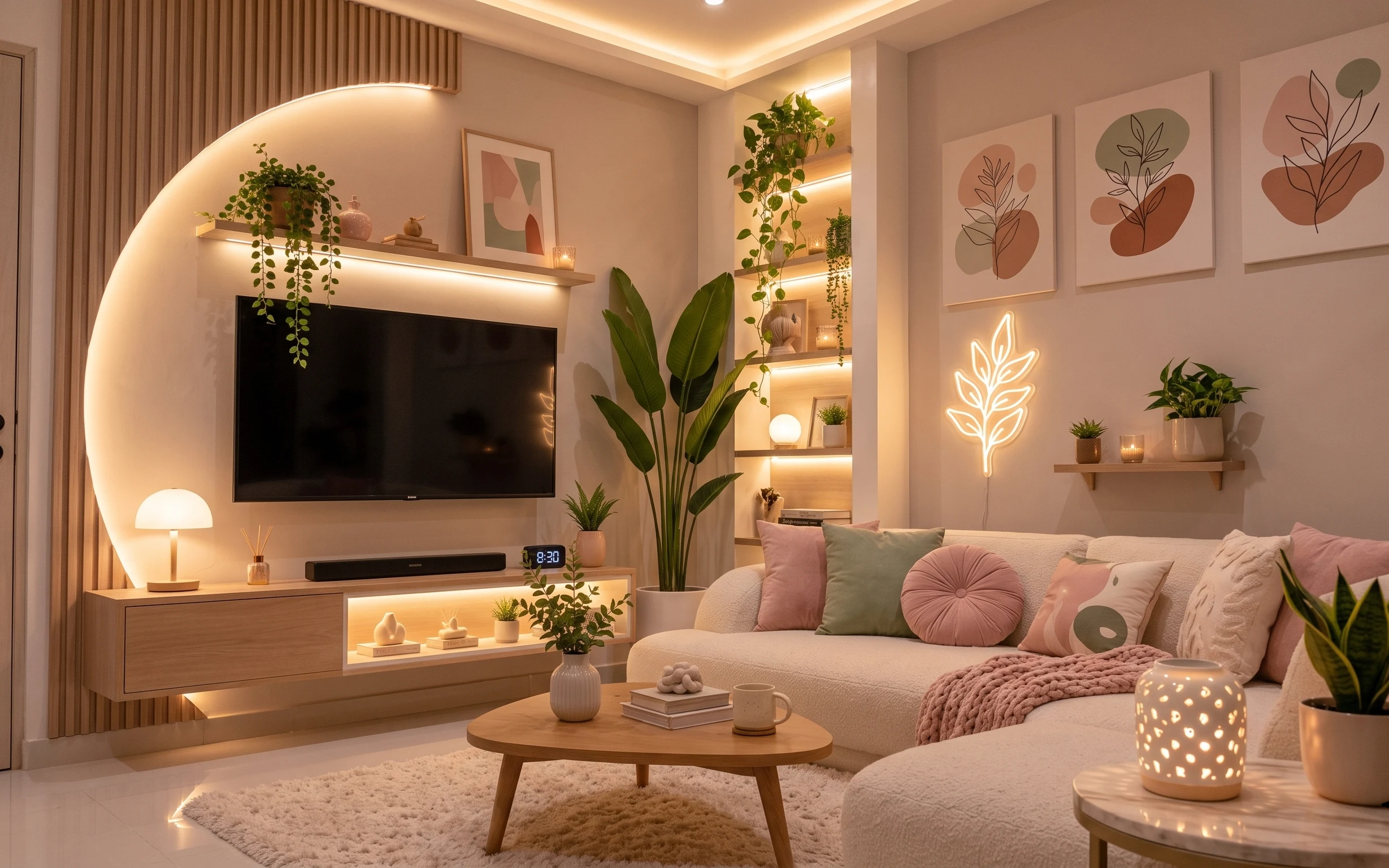
A warm, plant-forward sofa-and-TV corner refresh that reads collected, not crowded. This weekend plan uses 7 visible upgrades (rug, knit th…
What $700 buys: a sofa lounge refresh with arched-niche style
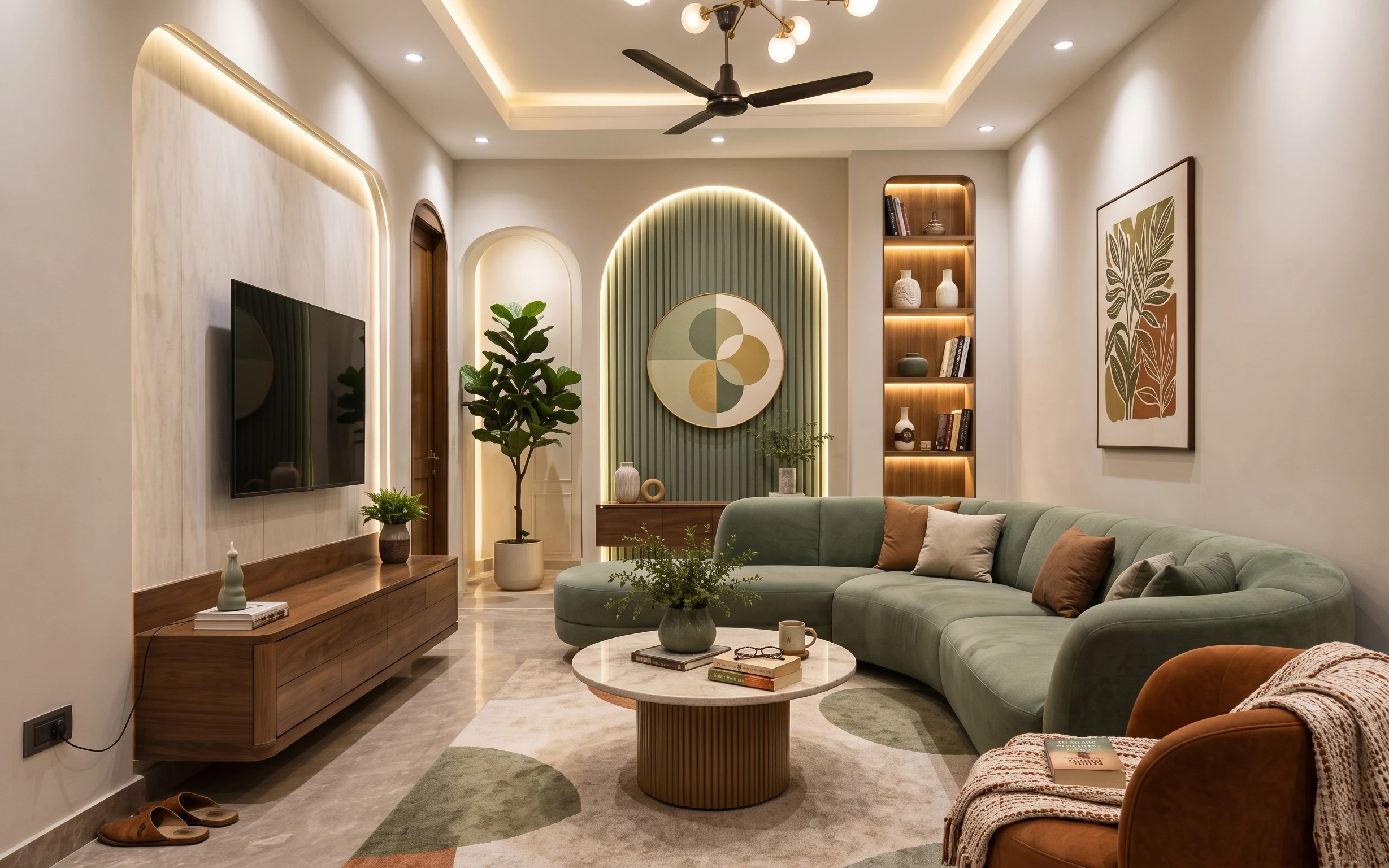
A bright sofa lounge refresh that leans sage, warm wood, and an arched vertical-stripe niche. With 7 buys (plus one DIY) totaling $700, you…