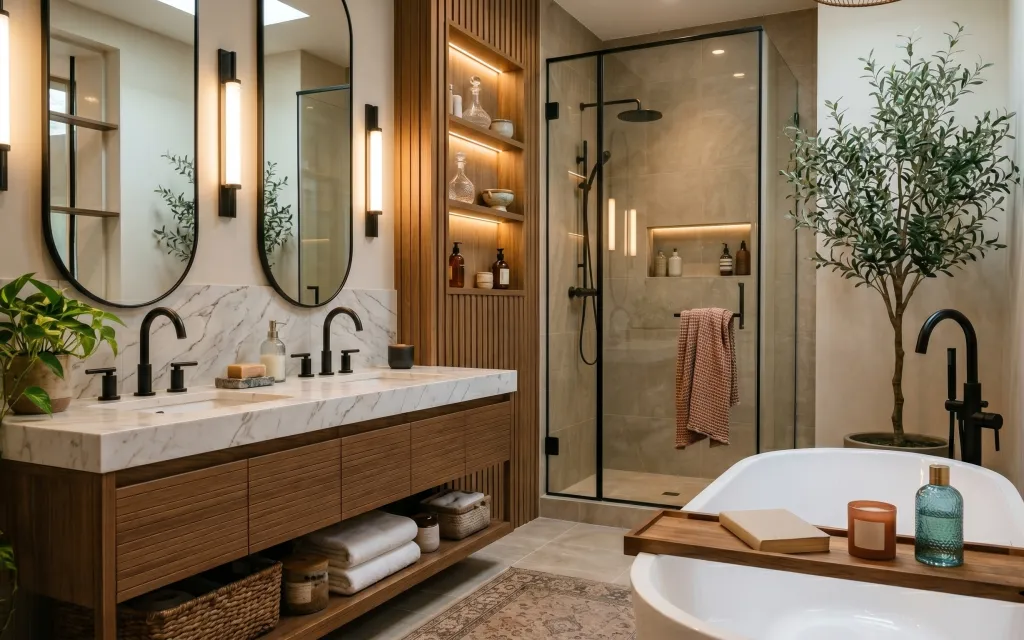
- Best for
- a spa-style bathroom feel
- Cost
- $390 total (aim $400)
- Difficulty
- Easy
- Renter-safe
- depends on sconce/mirror swaps
Why warm earthy-neutrals are the spa-style bathroom nook of 2026
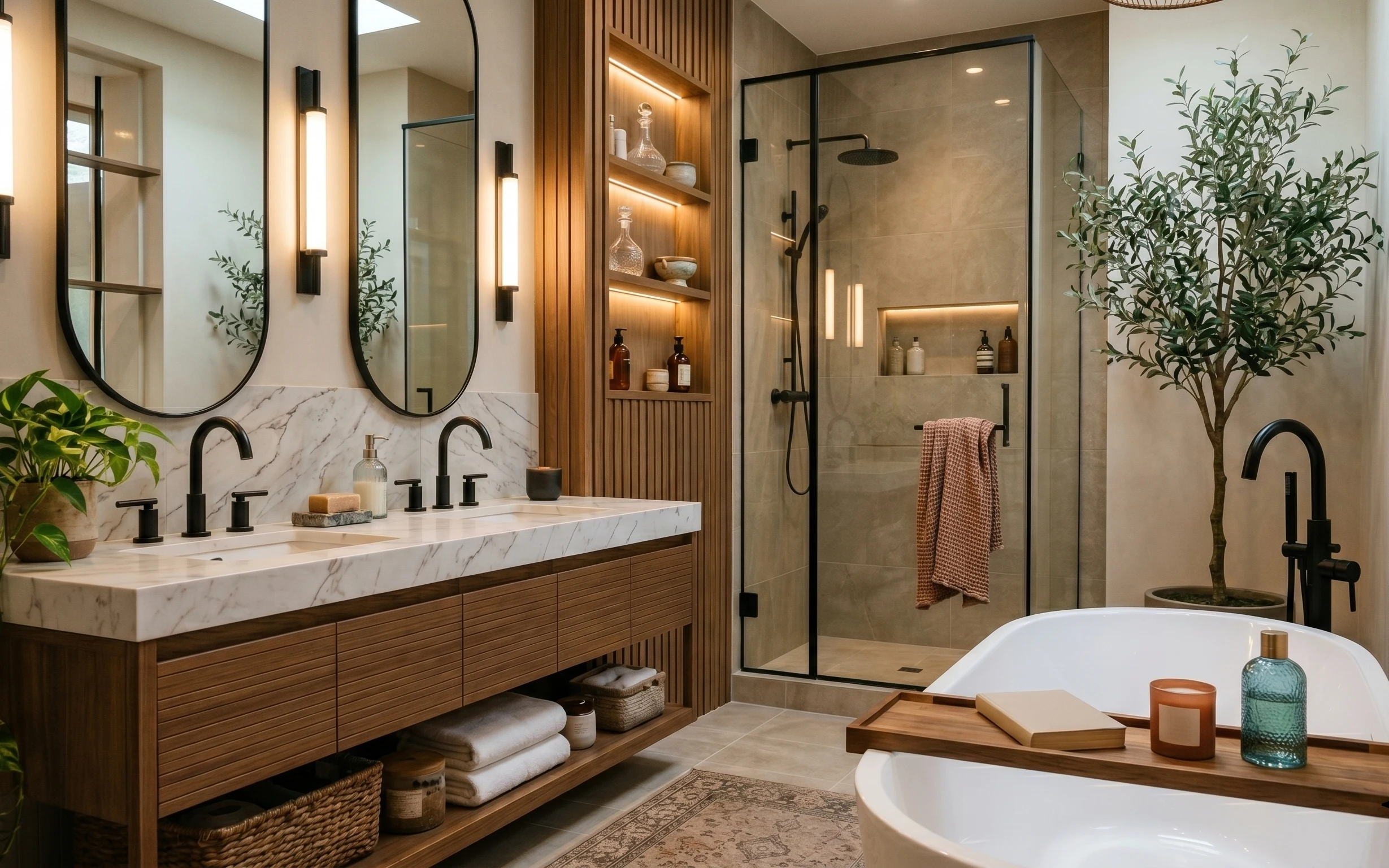
That soft glow around the mirrors and the warm walnut tones do a lot of heavy lifting here—think of it like the bathroom version of a hotel lobby. The marble countertop reads crisp, while the patterned rug and textured towel add friction (in a good way) so the room doesn’t feel too smooth. You can see the material mix: glossy tile, veined stone, matte wood, and a dark metal light. For US homeowners, the easiest path is swapping the visible “framing” pieces—mirror and sconce—and then styling with a few repeatable objects.
I used to overdo it by buying too many matching “bath sets.” The first time I regretted that was when the counter looked like a product photo, not like a lived-in bathroom. This time, I focused on repeating only one shape (oval mirror) and keeping the countertop accessories in warm neutrals. The result is cleaner—without feeling bare—so the whole spa-style nook reads intentional even from the doorway.
Layer 1 — Patterned area rug ($80) anchors a small spa zone
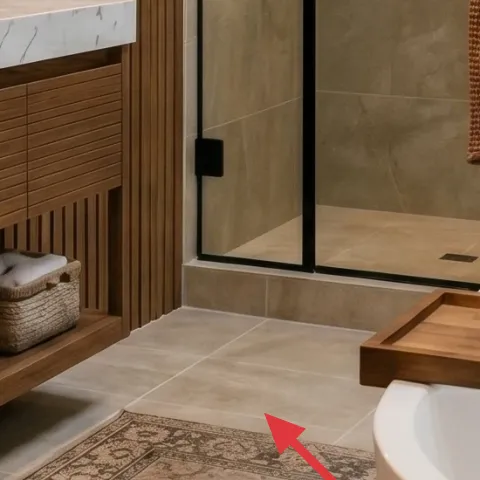
A patterned area rug is the fastest way to give the floor a focal point that isn’t just tile. Here, the rug sits under the vanity footprint and visually ties the wood cabinet tones to the marble top, while the pattern keeps the space from looking flat or overly matchy. The obvious alternative is a plain bath mat, but that won’t hold up across the “viewing angles” in a bathroom the way a real rug will. Trade-off: the rug needs quick vacuuming and prompt drying if water splashes, but it’s worth it for the grounded look.
Choose a pattern with a quiet base
When the bathroom has marble veining and warm wood, a low-contrast print reads calmer and hides everyday footprints.
Layer 2 — Ceramic candle jar ($25) adds warm scent-and-color without clutter
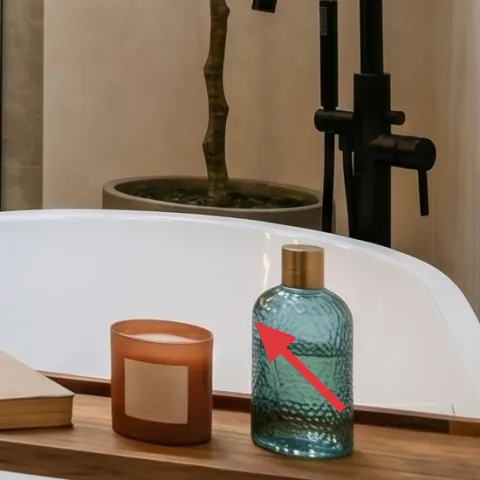
The ceramic candle jar on the tub-side surface gives a small “ritual” moment—height, color, and a soft shadow—without adding another big object. In this photo, it supports the palette: a muted neutral vessel that doesn’t fight the marble or the sage-green glass. The obvious alternative is adding more towels or extra bottles, but those can make the counters feel crowded fast. Trade-off: candle jars are one more thing to dust, so keep it to one or two and place them on a tray or a dedicated surface.
Keep it on the tray edge
In a bathroom, centering decorative items on a tray makes spills feel intentional, not messy.
Layer 3 — Wood bath tray ($35) creates an instant “spa deck”
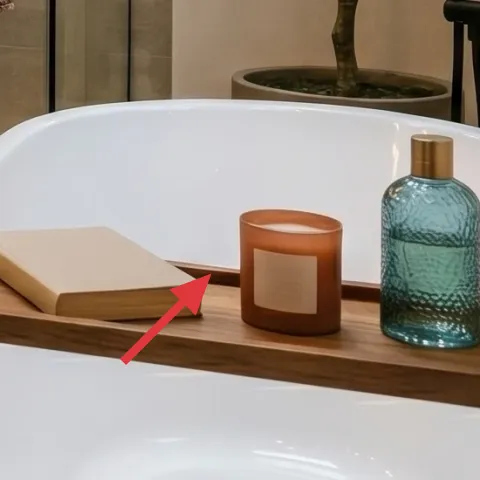
That wood bath tray by the bathtub is the difference between “decor” and “designed”: it turns the tub deck into a curated platform for an item group. Wood also bridges the vanity’s walnut tones with the warm lighting, which makes the whole room feel cohesive instead of assembled from separate corners. The obvious alternative is putting bath items straight on the tub edge, but then you’re stuck moving bottles every time you want things to look neat. Trade-off: choose a tray with a finish that tolerates water; wipe it down after use.
Use the tray as a boundary
If the items stay inside the tray, the surface always looks styled—even on the busy days.
Layer 4 — Soap bottles and bar soap on vanity ($30) makes the marble feel lived-in
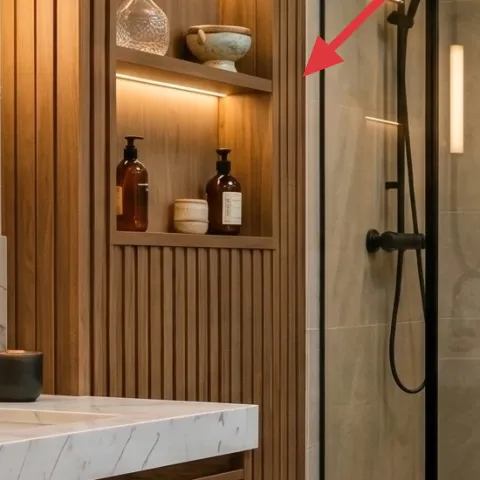
On a marble countertop, the goal isn’t “perfect minimal”—it’s tidy repetition. These bottles and bar soap do exactly that: the pump bottles create clean vertical lines, while the bar soap keeps the scene from looking generic. The obvious alternative is a random mix of whatever’s on hand, but that usually shows up as too many caps, labels, and heights. Trade-off: you’ll want to keep the labels coordinated (or swap to matching refills) so the styling stays calm.
Don’t let the labels become the design
If you can read every brand, the bathroom stops feeling spa-like and starts feeling like a pantry shelf.
Layer 5 — Oval mirror above vanity ($120) frames light and softens lines
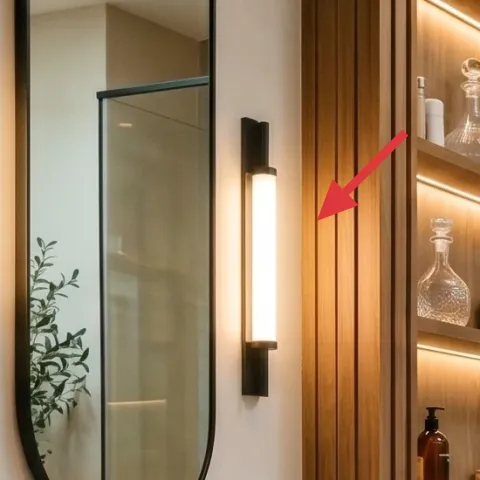
The oval mirrors above the sinks are doing more than reflecting—they’re softening the whole bathroom geometry. With wood cabinetry, sharp tile grout, and a tall shower glass panel, the oval shape brings a calm curve that keeps the space from feeling too linear. The obvious alternative is switching to rectangles, but then you’re back in “office bathroom” territory fast. Trade-off: oval mirrors are harder to align perfectly with fixtures, so measure height from the counter and keep the two mirrors symmetrical.
Match width, not just height
Even if the top lines up, small width differences show from the doorway.
Layer 6 — Black wall sconce ($60) adds warm light where you actually look
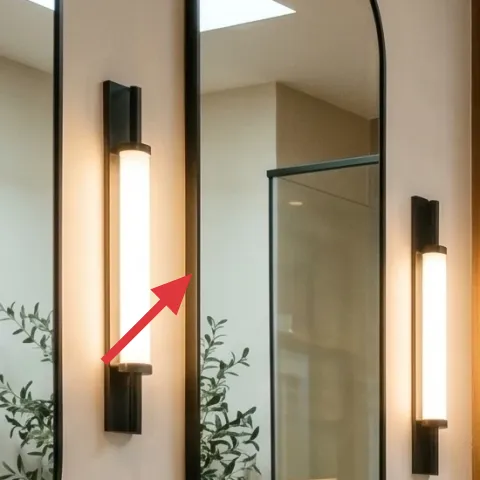
That black wall sconce with a cylindrical shade adds a warm pool of light right where the eyes move: near the mirrors and the countertop. It also creates contrast against the light tile and marble, so the room feels styled instead of flat. The obvious alternative is relying only on overhead lighting, but that leaves shadows on faces and countertop edges. Trade-off: wall sconces require a little planning for spacing and brightness; if hard-wiring isn’t in the plan, choose a plug-in sconce with a similar shade shape.
Keep the bulbs warm
A warmer bulb temperature makes the wood and marble feel richer instead of bluish.
Layer 7 — Plant pot near bathtub ($40) brings life without taking over
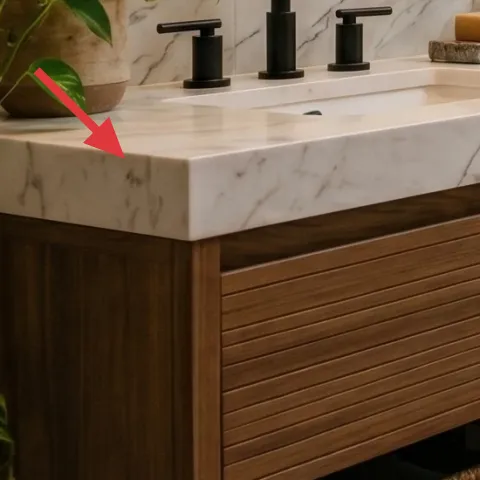
The plant pot is small, but it’s doing a lot: it grounds the tall greenery near the bathtub and adds a natural “vertical” that balances the horizontal vanity line. In this corner, the round pot shape echoes the oval mirror and keeps the overall bathroom rhythm cohesive. The obvious alternative is skipping the plant, but that usually leaves a bathroom feeling like everything is hard surfaces and stone. Trade-off: plant care matters—wipe the leaves occasionally and keep the pot from sitting in water so the base stays clean.
Pick a pot with a stable base
In a wet environment, a heavy pot is less likely to tip when you move bath items.
The cost, layer by layer
| Layer | Item | Cost |
|---|---|---|
| 1 | Patterned area rug | $80 |
| 2 | Ceramic candle jar | $25 |
| 3 | Wood bath tray | $35 |
| 4 | Soap bottles and bar soap | $30 |
| 5 | Oval mirror above vanity | $120 |
| 6 | Black wall sconce | $60 |
| 7 | Plant pot near bathtub | $40 |
| Total | $390 | |
If you want this look for less, start with the rug, a single matching candle jar, and one lighting swap. A lower-cost mirror and one plug-in wall sconce can carry the “framing” effect without replacing everything at once.
What worked, what didn't (across the whole room)
The overall win here is how the warm lighting and soft curves make the bathroom feel intentional even with lots of hard surfaces. The pieces that mattered most were the ones you notice immediately: mirrors, sconce, and the rug underfoot. A couple of styling choices can still tip the room into “too busy” if they aren’t kept tight.
What worked
- The patterned rug anchors the vanity zone and makes the floor feel softer underfoot.
- Oval mirrors add a curve that balances the sharp tile and glass shower panel.
- Warm wall lighting keeps marble and wood from reading flat or washed out.
- The wood bath tray makes the tub deck look curated instead of randomly stocked.
- Coordinated soap bottles create tidy vertical lines on the marble countertop.
- The plant adds a natural vertical accent that prevents the space from feeling all hard surfaces.
What didn't
- Too many countertop accessories compete with the mirror glow and make the marble look busy.
- Cool lighting temperatures can shift the palette toward grey and make wood feel less warm.
- If the rug pattern is too bold, it fights marble veining and reads “loud” in a small bathroom.
What we'd skip if we did it again
Skip replacing the vanity itself or doing anything structural. In this photo, the “spa” feeling comes from light, curves, and a grounded floor—so spend budget on visible surfaces first.
Skip a plain bath mat that’s smaller than the vanity footprint. A real area rug anchors the whole zone, while a mat mostly covers one spot and doesn’t unify the sightlines.
Skip mixing too many label styles on the marble. Pick one container look (or keep refills in the same finishes) so the countertop reads curated instead of cluttered.
Frequently asked
How long does a bathroom refresh like this take?
Plan for a single weekend if you’re buying furniture-level items (rug, tray, mirror) and doing straightforward swaps (installing a wall sconce if you can, or choosing a plug-in). Expect 3–6 hours for measuring and installation, plus another 1–2 hours for styling the vanity and tub deck.
What if I rent—can I still get this look?
Yes, for most of it. Swap in a patterned rug, a wood tray, and a coordinated candle/soap setup without asking anyone. For lighting, pick a plug-in wall sconce or keep the existing lights and focus on mirror brightness and styling. Mirrors can be tricky for renters, so prioritize plug-in solutions and removable décor.
What’s the biggest mistake people make with spa bathrooms?
Overloading the countertop. Marble and bright mirrors show every mismatch in height, color, and label. The fix is to keep a tight “object group” (soap containers + one candle) and let the mirrors and lighting do the rest of the visual work.
My bathroom is smaller—should I use a rug or a smaller mat?
Use a rug, but size it like a zone, not like a coaster. If the vanity footprint is tight, aim for a rug that fits the space between the sink area and the tub-side viewing angle so the pattern anchors everything. If you go too small, it can look like a random add-on instead of design.
Where’s the best place to shop for these upgrades?
For the mirror and sconce, look for brands with consistent finishes (black metal for the light, brushed or matte edges for the mirror). For the rug, prioritize indoor-rated materials and a low-shed weave. Trays and candle jars are easy wins from home goods stores and marketplaces—just keep finishes warm and neutral.
How do I keep the wood tray and plant from looking messy in a wet bathroom?
Wipe the tray after each bath so water doesn’t collect at the edges, and use it as the container boundary for items. For the plant, choose a pot that drains well and don’t let it sit in standing water. A quick leaf wipe keeps the plant crisp instead of dusty.
More in Bathroom
Bathroom spa-style nook refresh for $400: 7 budget swaps
A spa-style bathroom nook can look designed without a gut job. This $400 refresh leans on one grounding patterned rug, warm lighting, and e…
7 no-drill ways to style a bathroom vanity wall, $400
A warm, move-friendly bathroom vanity wall refresh under $400: swap in a patterned rug, add a checkered towel, style one oval mirror, and b…
Sage-and-wood bathroom refresh, $300
A renter-friendly bathroom vanity corner refresh for $300 total, built from 7 no-drill swaps. The look leans japandi: a soft bath mat rug, …