- Best for
- Renter vanity corners
- Cost
- About $300 total
- Difficulty
- Easy (mostly styling)
- Time
- About 2–3 hours
Why sage-and-wood spa styling is the vanity corner of 2026
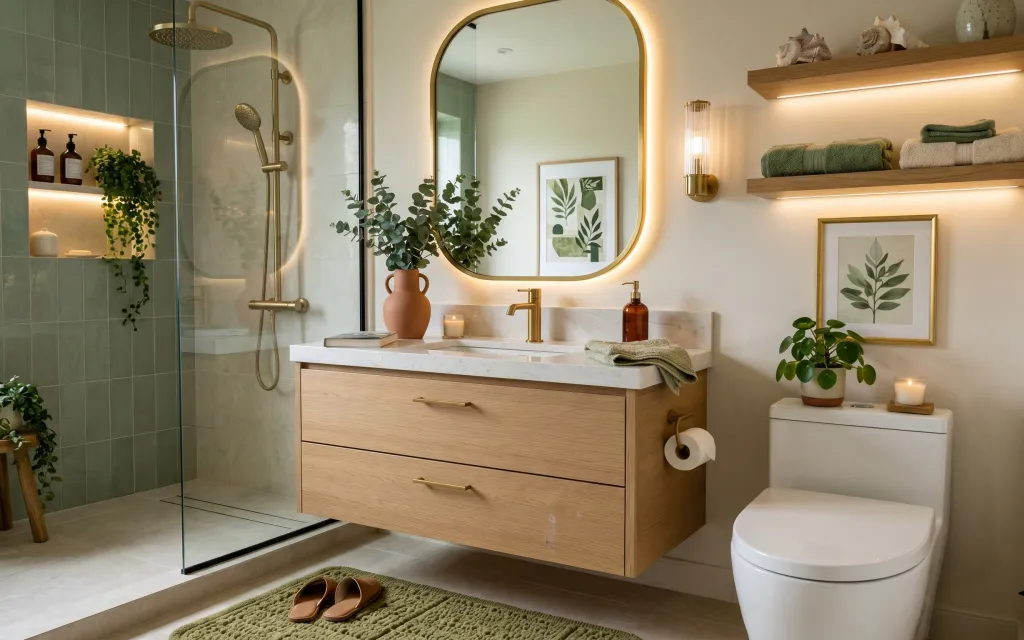
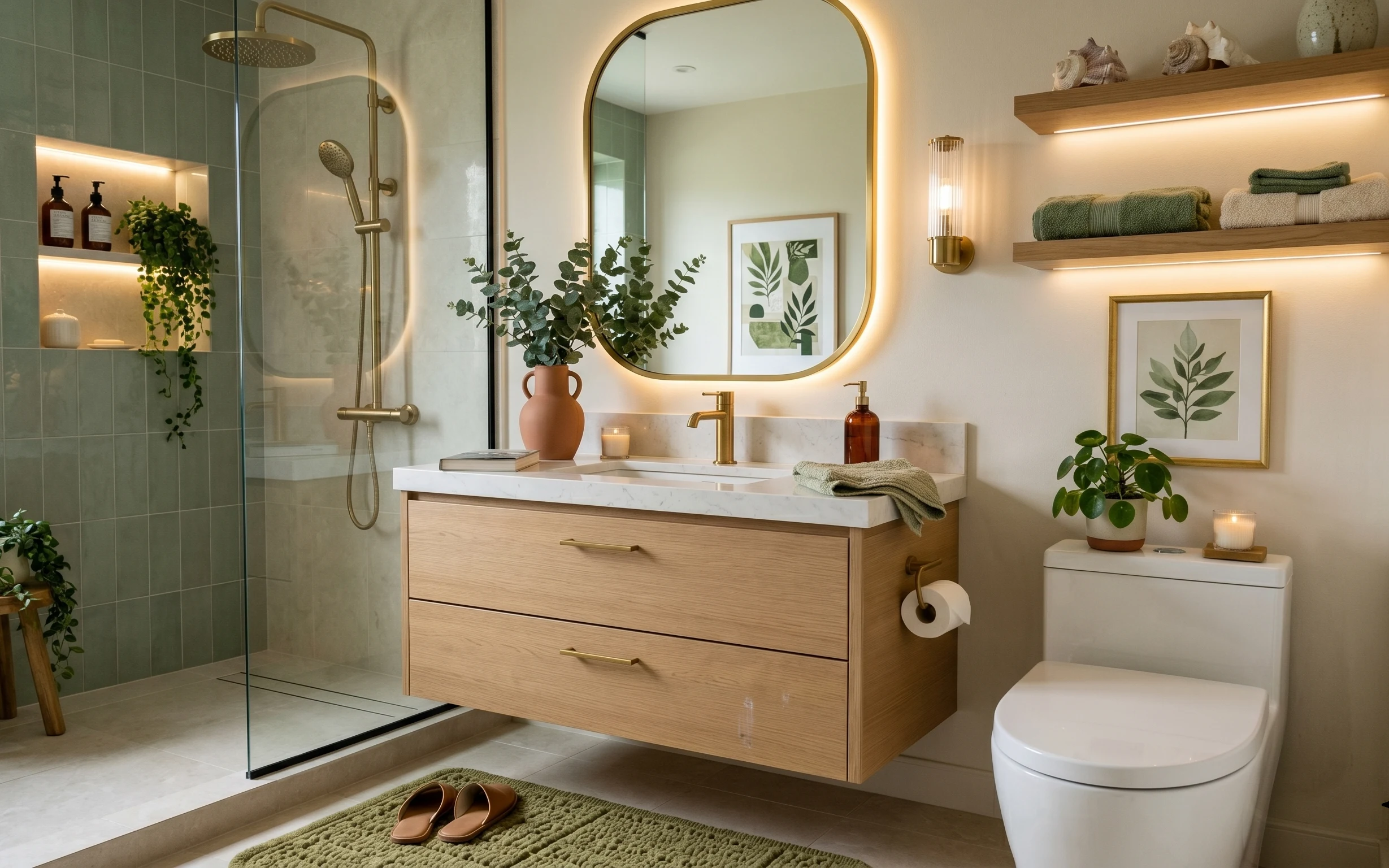
The quickest way to copy this vibe in a renter bathroom is to focus on texture and repetition, not big changes. Notice how the bath mat rug grounds the tile floor, while folded green towels repeat the same muted tone across shelves. The terracotta plant vase and the indoor plant in pots bring the greenery in without needing any permanent hardware. Then the small candle jar adds a warm, dimmer-than-overhead glow that makes the whole corner feel intentional—similar to what you see in japandi bathrooms in Apartment Therapy features.
I used to obsess over “matching” bathroom pieces, and I’d end up buying the same shade in three different fabrics that didn’t actually feel cohesive. What changed my mind was building a palette: one dominant green, one warm neutral (terracotta), and one brass-adjacent metal cue. Once I did that, the framed botanical artwork and candles stopped looking like decorations and started looking like a system.
Layer 1 — bath mat rug ($80) jute-and-cotton texture for the first step
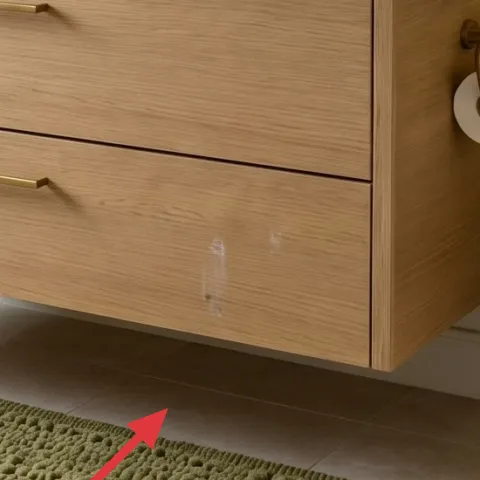
A bath mat rug is the anchor here because it softens the tile floor visually and physically—your feet land on something warm-toned before anything else. Aim for a low-profile, textured weave in a muted olive or sage direction, even if it’s slightly greener than you think you need. The trade-off is that a textured rug needs occasional shaking or quick vacuuming, but it’s still a renter win because it rolls up and disappears at move-out. This is also easier than trying to cover up tile with any permanent solution.
Pick a mat that feels thicker than “doormats”
Bathrooms show texture mistakes fast—choose a rug with visible fibers so the corner reads cozy in daylight and under candlelight.
Layer 2 — folded green towels ($40) stack height that makes the shelves look styled
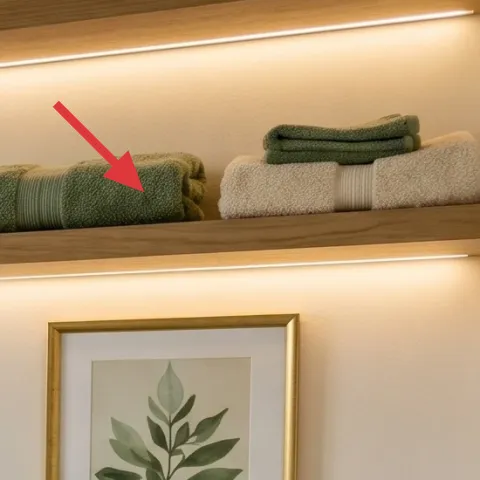
These folded green towels matter because they turn a storage shelf into a visual surface. Copy the scale: fold them into compact rectangles and stack them so the top towel sits slightly higher than the lower one—just like in the photo. The muted green keeps the room calm next to warm white walls, while the folded shape gives structure (and saves counter space). If you buy only one color, this is the one to get right. The trade-off is laundry timing: towels look best when they’re crisp and not rumpled.
Match the green, not the fabric weight
A slightly different towel thickness is fine—what you’re matching is the tone family (sage/olive), so the shelf stays cohesive.
Layer 3 — terracotta plant vase ($25) warm clay that balances the brass
A terracotta plant vase gives you instant warmth against the white marble-style countertop and the brass details. In the hero, the vase shape is classic—tall and slightly rounded—so the greenery looks fuller without sprawling. Choose a medium-size clay or clay-tone container, then style with a few sprigs so the leaves rise above the rim. The trade-off is that terracotta can dry out faster than plastic pots, so you’ll water a touch more often. Still, this is an easy swap: it’s decor, not a fixture, and it’s the first thing to re-pack when the lease ends.
Avoid super-slick “fake clay” finishes
If the surface looks too glossy, it can fight the warm, matte look of the rest of the corner.
Layer 4 — indoor plant in pot on floor ($40) one grounded pot to keep the room from feeling flat
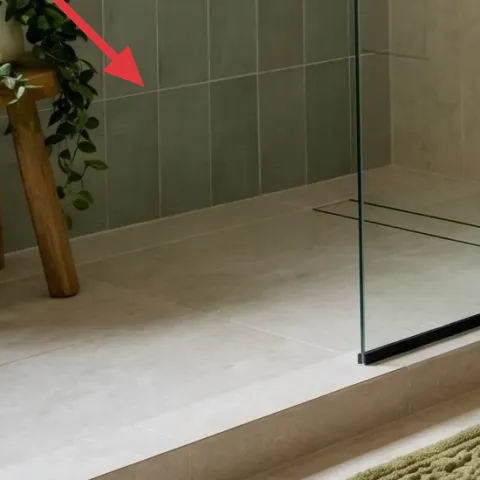
An indoor plant in a pot on the floor pulls the design down to ground level, which makes shelves and art feel less “floating.” The hero uses leafy, branching greens that read airy in front of tile—pick something with natural texture rather than a perfect, uniform ball. The trade-off is space: a bigger plant takes a little more room near the shower door area, so measure the path where you walk. If your bathroom is narrow, keep the pot slightly closer to the wall so you don’t create a snag zone.
Use a saucer under the pot
Even a healthy plant can drip—add a simple tray so the tile stays spotless.
Layer 5 — small candle jar ($35) DIY candle pour for the warmest glow
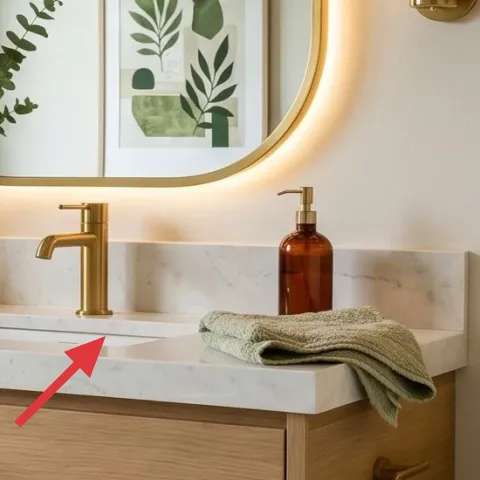
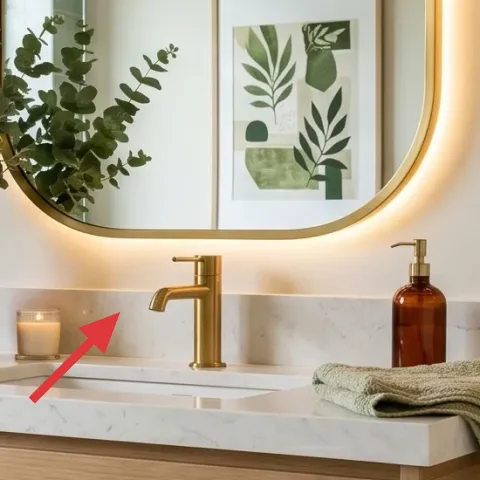
Small candle jars are what turn a clean, bright bathroom into something that feels lived-in after dark. This layer works because the flame sits at countertop height and creates a soft halo effect against the white wall and marble-style surface. For the photo’s look, choose a jar that’s clear or amber-tinted and keep the candle portion visible—not hidden in a deep container. The trade-off: candles are a short-term mood tool, so they’re best for evenings rather than all-day lighting.
Make it instead of buying it
Make a small candle jar using a simple pour so you can match the warm tone and scent strength to your bathroom’s mood.
Materials
- Wax (soy or paraffin), ~1 lb — craft store — $12
- Wick + wick tab — craft store — $8
- Candle jar (reuse a clean jar) — home storage/secondhand — $6
- Optional: fragrance oil (if using) — craft store — $0
- Optional: wick centering tool — home — $0
Steps
- Wipe and dry the candle jar; set a wick centered in the jar.
- Measure wax by weight for the jar size and melt slowly in a double boiler.
- Stir gently until fully liquefied, then remove from heat.
- Pour wax into the jar, keeping the wick straight.
- Let the candle cool undisturbed until fully set.
- Trim the wick to about 1/4 inch.
- Burn a test candle to check melt pool and scent throw.
- Place the finished jar on the vanity shelf for the evening glow.
Total DIY cost: $26 — saves about $9 over buying.
Layer 6 — decorative candles on shelf ($20) a second glow source for balance
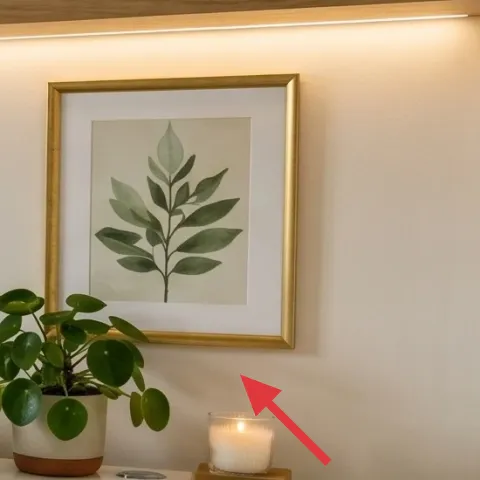
This layer adds a second candle point so the corner doesn’t rely on one flame. In the photo, there’s a candle placed higher on the shelf near the toilet area, which visually “echoes” the vanity candle and makes the room feel evenly lit. Choose a candle jar in the same tone family (warm glass or neutral) so it reads coordinated instead of random. The trade-off is that two candles mean more managing—use them when you want atmosphere and extinguish when leaving. A renter-friendly approach is to keep both candles portable and replace them seasonally.
Vary height, not color
Same warm palette, different placement keeps the look intentional.
Layer 7 — framed botanical artwork ($25) a single botanical frame to set the palette
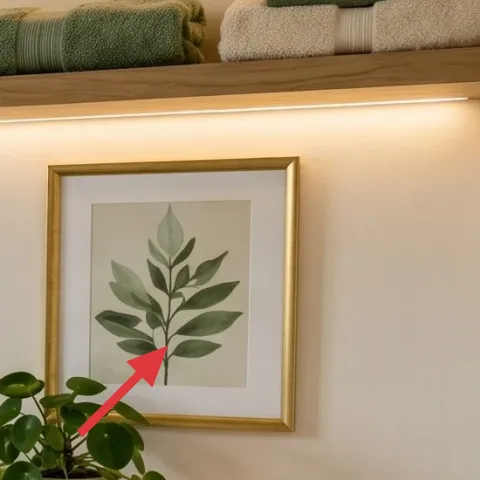
One framed botanical artwork is enough to make the whole bathroom feel curated. The hero uses botanical prints with green leaf shapes that echo the towels and the indoor plants, so everything reads like the same palette—sage and warm neutrals. Pick a frame that’s easy to hang with Command hooks (or just swap in existing hanging points your landlord already has). The trade-off is spacing: keep the artwork at eye level so it doesn’t feel too high near the arched mirror. If you want a tighter look, choose one print rather than several competing prints.
Choose a frame with a warm metal tone
Warm metals sit better next to brass fixtures than cool, silvery frames.
The cost, layer by layer
| Layer | Item | Cost |
|---|---|---|
| 1 | Bath mat rug | $80 |
| 2 | Folded green towels | $40 |
| 3 | Terracotta plant vase | $25 |
| 4 | Indoor plant in pot on floor | $40 |
| 5 | Small candle jar (DIY equivalent) | $35 |
| 6 | Decorative candles on shelf | $20 |
| 7 | Framed botanical artwork | $25 |
| Total | $265 | |
If you want a cheaper variant, prioritize the bath mat rug and towels, then pick one plant and one candle. Replace framed botanical artwork with a smaller print and reuse an old jar for candlelight. That trims the cost fast while keeping the sage-and-wood story.
What worked, what didn't (across the whole room)
The overall verdict: warm japandi styling works best in bathrooms when it’s built from repeatable choices—green textiles, earthy terracotta, and candlelight at multiple heights. The botanical prints tie the palette together so the plants and towels don’t feel random. Where it can fall apart is in overbuying: too many similar items create visual noise.
What worked
- The bath mat rug grounds the look and makes tile feel less stark in the morning.
- Folded green towels add structure on shelves without taking up counter space.
- The terracotta plant vase adds warmth that complements brass tones around the vanity.
- Multiple candle placements keep the glow soft across both vanity and toilet zones.
- Framed botanical artwork repeats the leaf shapes found in the plants and towels.
- The floor-standing indoor plant adds depth so the corner doesn’t feel flat.
What didn't
- Too many matching candle jars can look cluttered if they’re all the same height.
- Light-green towels look washed out when candlelight is the main evening light.
- Plants placed too close to the shower area can collect splashes, so spacing matters.
- Framed prints that are hung too high can fight the arched mirror’s curve visually.
- Over-textured bath mats can feel busy if the rest of the palette isn’t restrained.
What we'd skip if we did it again
Skip buying a full “bathroom set” of matching containers. The photo works because each object has a role—textile softness, plant depth, framed botanicals, and candle glow—so mixing within the same green-and-warm palette reads calmer than a manufactured set.
Skip adding more than one floor plant if the bathroom is small. One indoor plant in a pot on the floor gives you that natural texture, while extra plants start competing with the shelves and framed botanical artwork.
Skip choosing a candle scent that’s too strong for a small, humid room. Even if the jar looks perfect, heavy fragrance can feel overpowering; pick a gentle scent strength or go unscented so the flame remains the main mood.
Frequently asked
How long does this bathroom refresh take?
Plan on about 2–3 hours total. The bath mat rug placement is fast, towels take only minutes, and plants plus candle jars are a quick styling session. The only slower part is making (or setting up) the DIY candle pour, which includes melting and cooling time. If you already own a candle jar, the DIY step is even quicker.
Will this work in a rental if I can’t change fixtures?
Yes—this look is built around renter-friendly layers: textiles, freestanding decor, candles, plants, and framed botanical artwork. No walls get painted, no permanent fixtures are swapped, and nothing requires drilling. Even if you can’t add shelves, you can still rest candles and styling objects on existing ledges or shelf surfaces.
What if my bathroom is smaller than the photo?
Reduce the number of “glow points.” Keep the bath mat rug and folded green towels, then choose either the vanity candle jar or the second shelf candle—skip one. Use a smaller framed botanical artwork and one indoor plant in a pot. The goal is repetition of the palette, not filling every surface.
What if my bathroom is larger and feels empty?
Add one more of the same categories rather than new styles: another framed botanical print (same frame tone), or a taller indoor plant with branching leaves. Keep candles at two heights, but avoid stacking too many small jars. Consistency in green and terracotta is what makes the larger space feel composed.
Where should I shop for these items without overpaying?
Rugs, candles, and towels are easiest to find at department home sections or big-box stores during seasonal resets. For indoor plants, check local nurseries for healthy leaf texture—this matters more than the pot. Framed botanical artwork is often cheaper secondhand, then upgraded with a matching frame finish if needed.
What’s the biggest mistake renters make with bathroom decor?
Using too many unrelated greens. In a small room, even slight undertone differences can look messy. Stick to one sage/olive family for folded green towels and botanical art, then support it with warm neutrals like terracotta and brass-adjacent tones. If the palette is consistent, the individual objects can vary.
More in Bathroom
Sage-and-wood bathroom refresh, $300
A renter-friendly bathroom vanity corner refresh for $300 total, built from 7 no-drill swaps. The look leans japandi: a soft bath mat rug, …
Warm marble-and-brass bathroom refresh, $800
A warm marble-and-brass bathroom refresh on a weekend budget ($800). Swap in a softer bath rug, sharpen the mirror and lighting, and add a …
5 weekend swaps for a spa-like bathroom vanity wall, $1000
A spa-like bathroom vanity wall refresh on a $1000 weekend budget—starting with a wood vanity, oval mirror, and floating shelves. The resul…