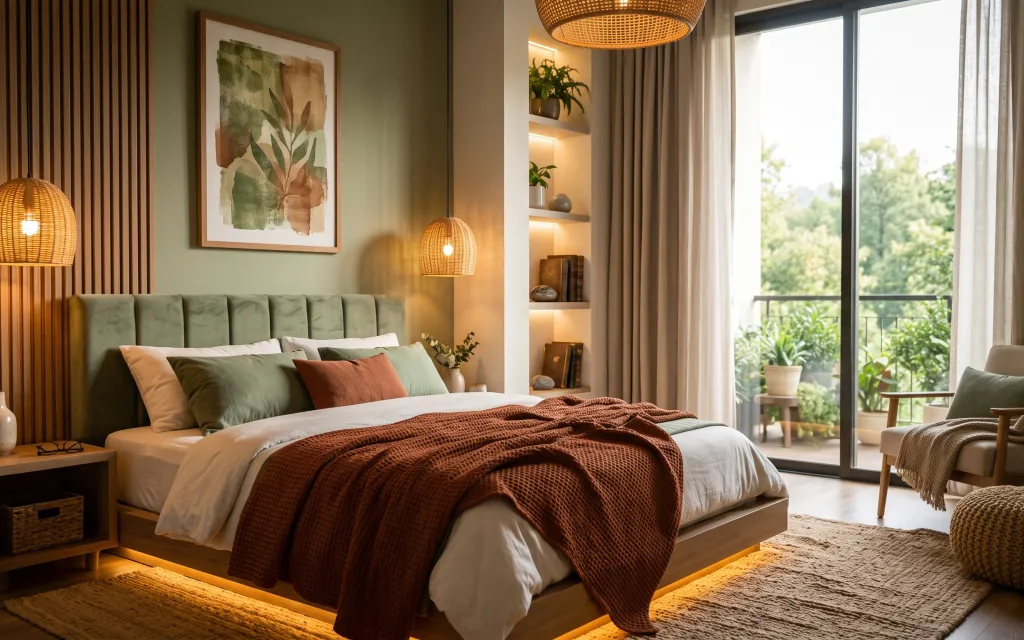
- Best for
- Making a bed-and-window zone feel intentional
- Time
- 4–6 hours
- Total cost
- $740 (under $800 budget)
- Difficulty
- Confident DIY
Why olive-and-rust texture is the bedroom of 2026
In this bedroom, the colors are doing real work: olive-green pillows, white bedding, and a rust throw all read as one palette when the light hits them. The textures are the second driver—woven lamp shades, curtain fabric that blurs the daylight, and a low rug that makes the floor feel “finished.” This is achievable for US homeowners because none of the choices require demolition, and you can pick impact first: floor + window framing + one warm light source. Even the shelf vignette looks curated without going full showroom.
I used to rush straight to wall art, convinced it would “complete” everything. Then I watched my own room look flat every morning until I changed the window treatment and softened the floor. Once the curtains stopped blasting glare and the rug anchored the bed zone, the whole palette finally clicked. The takeaway: start with the big surfaces, then add the details.
Layer 1 — Area rug ($200) anchors the bed zone
The rug under the bed matters because it turns “furniture on hardwood” into a defined landing. In the photo, it’s a warm neutral with a woven look, which helps the olive and rust bedding feel richer without getting louder. If you try to skip the rug and rely only on pillows and throws, you end up with a bedroom that feels visually unfinished—especially when daylight changes during the day. The trade-off is size: a bigger rug is more money, but it’s also what makes the bed and chair feel like part of one scene.
Choose rug edges that sit under the bed line
When the rug tucks under the front of the bed, the room reads instantly more intentional.
Layer 2 — Curtain panels ($80) soften the window light
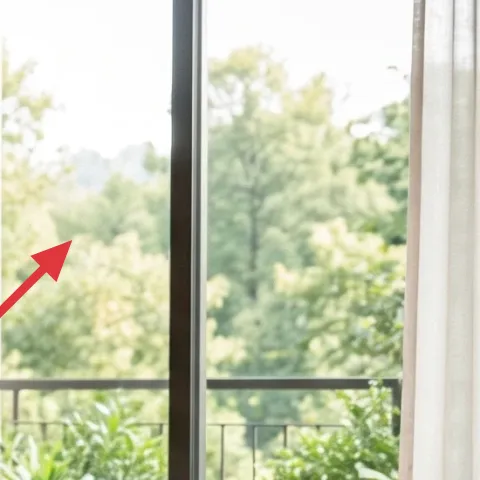
These curtain panels frame the sliding door and pull the eye upward, which is why the room feels calmer than a bare window setup. The fabric drape is key: it creates a gentle blur that makes warm lamp light look even warmer. The “obvious alternative” is lighter, sheerer curtains, but those can make the daylight look harsh and highlight every bright patch on the bed. Curtains cost less than most furniture swaps and they change the whole mood daily—your room will look different in the morning versus evening without you doing anything.
Hang for height, not just coverage
Mounting curtains higher than the window trim makes the ceiling feel taller and the bed wall feel more finished.
Layer 3 — Woven table lamp ($60) adds warm glow at eye level
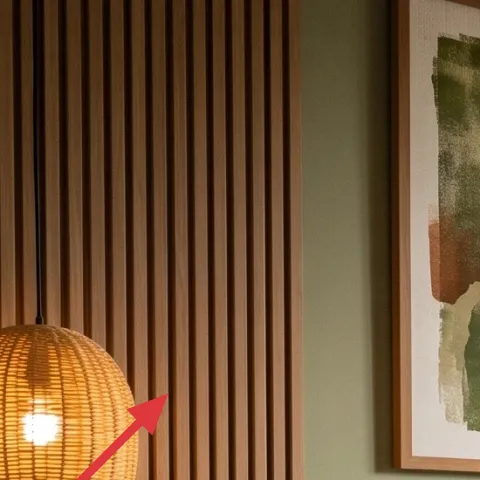
The woven table lamp on the left brings warmth without fighting the olive tones. Because the shade texture is visible, it diffuses light into soft, dotted highlights instead of a flat beam. That’s a better move than choosing a shiny metal shade, which can reflect daylight sharply next to curtains. The pendant overhead is already contributing, but the bedside lamp gives you control—turn it on at night, and the bed area becomes the “hangout” zone. Trade-off: woven shades need a little dusting attention, but it’s worth it for that gentle glow.
Use the same warm bulb temperature in both lamps
Matching bulb warmth keeps the room’s color palette consistent from dusk to bedtime.
Layer 4 — Framed botanical wall art ($80) pulls the plant theme onto the wall
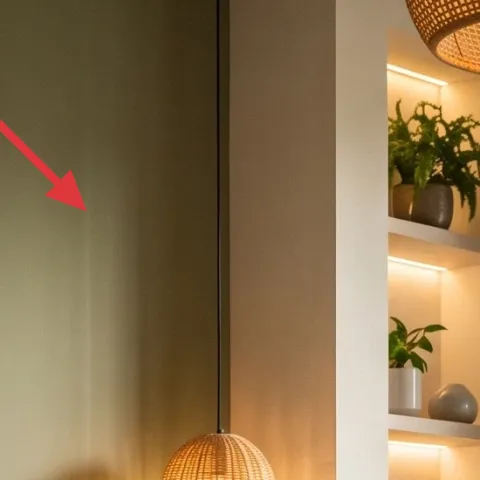
The framed botanical print works because it echoes the room’s real greenery, but in a calmer, graphic way than a live plant. In the photo, the artwork sits above the bed wall and balances the horizontal lines of bedding and rug with a vertical, centered composition. The alternative—skipping art and leaning only on shelves—can make the bed wall feel “empty,” especially in daylight when the lamp glow fades. This choice also keeps the style coherent: earthy leaves + neutral background match the woven and curtain textures.
Match the frame finish to your warm wood tones
Warm wood and light metal frames tend to blend better than cool chrome in rooms like this.
Layer 5 — Floating wall shelves ($180) turns storage into styling

Those floating shelves do two jobs at once: they store books and display small plants, and they add a layered backdrop near the window. Notice how the styling isn’t perfectly symmetrical—books stack at angles and the plant brings a soft organic shape—so the wall feels collected rather than staged. The obvious alternative is a single closed cabinet, but that usually reads heavier and hides the warm details you want to see. The trade-off is maintenance: shelves collect dust faster than you’d expect, so plan on a quick wipe when you change seasonal decor.
Don’t overload every shelf level
If you fill the shelves completely, the room loses the calm, breathable spacing that makes the palette work.
Layer 6 — Wooden bedside table ($80) gets DIY-quickly upgraded
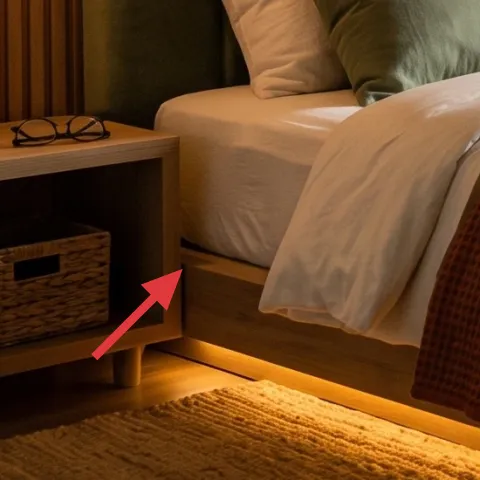
This bedside table is doing more than holding a lamp—it sets the warm wood note that ties together the woven lighting, the shelf wood, and the rug’s earthy tone. Instead of buying a new side table (the more obvious option), a paint refresh lets you keep the scale and placement you already have. The best part of a color update is how it affects everything nearby: when the wood shifts warmer or more uniform, the bedding colors stop looking “separate.” The trade-off is prep time, but it’s the kind of prep that saves you from uneven coverage later.
Make it instead of buying it
Paint your wooden bedside table in a warm, neutral tone so it visually matches the room’s woven light and earthy palette.
Materials
- Sandpaper (120 and 220 grit) — assorted sheets — $12
- Bonding primer — 1 quart — store — $20
- Interior paint (semi-gloss or satin) — 1 quart — store — $20
- Paintbrush + small foam roller — set — store — $10
- Clean tack cloth — 1 pack — store — $8
Steps
- Lightly scuff-sand the tabletop and all edges until the shine dulls.
- Wipe dust thoroughly with a tack cloth.
- Apply bonding primer in thin, even coats and let it dry fully.
- Sand lightly with 220 grit to smooth any raised grain.
- Apply your first paint coat and allow full drying time.
- Apply a second coat for solid coverage and consistent color.
- Touch up edges and corners with a brush to keep lines crisp.
- Let the table cure before loading heavy items (follow paint can directions).
Total DIY cost: $70 — saves about $10 over buying.
Layer 7 — Throw blanket ($60) adds the rust color story
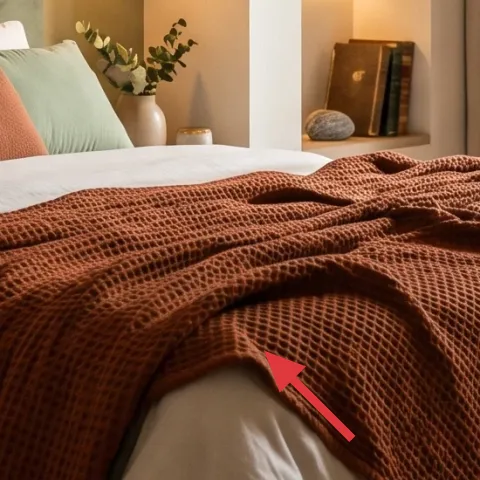
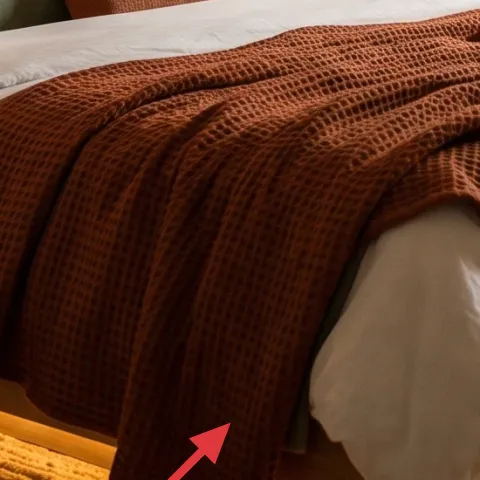
The rust throw is the room’s color anchor, because it sits closest to where you look when you’re in bed or on the chair by the window. The knit texture also ties directly to the woven lamps—both are tactile, which keeps the bedroom from feeling flat or too “print-only.” If you skip this and only keep neutral bedding, you lose the warm contrast that makes olive feel intentional instead of accidental. The trade-off is choosing the right weight: a thin blanket can look skimpy; a heavier knit creates that cozy drape without needing a whole bedding overhaul.
Drape it so it frames the bed edge
Let the throw fall over the side in a controlled fold, so it looks styled, not just tossed.
The cost, layer by layer
| Layer | Item | Cost |
|---|---|---|
| 1 | Area rug 5×7 (warm neutral) | $200 |
| 2 | Curtain panel pair (84-inch length) | $80 |
| 3 | Woven table lamp | $60 |
| 4 | Framed botanical wall art (16×20) | $80 |
| 5 | Floating wall shelves set (with brackets) | $180 |
| 6 | Wooden bedside table (paint-ready) | $80 |
| 7 | Waffle-knit throw blanket | $60 |
| Total | $740 | |
If you want a cheaper variant, prioritize the rug, curtains, and one woven lamp first—those are the biggest visual changes. Then buy framed art secondhand and paint your bedside table to match the palette. You can keep shelves minimal: one plant, one stack of books, and one small vase.
What worked, what didn't (across the whole room)
The room reads cohesive because warm lighting, woven textures, and earthy color accents all show up at multiple heights. The window framing is a big reason it feels calm, and the bed wall doesn’t look blank thanks to the framed botanical print.
What worked
- The rug grounds the bed zone so the room doesn’t feel like “furniture on hardwood.”
- Curtains soften daylight and make the warm lamp glow feel intentional instead of harsh.
- Woven lamp shades repeat texture already present in the bedding throw.
- Framed botanical art connects the shelf plants to the bed wall in a calm way.
- Floating shelves create a styled backdrop without adding bulky furniture.
- Rust throw color gives contrast that makes olive tones feel layered.
What didn't
- Too-sheer curtains would likely make the window highlights sharper against white bedding.
- Overfilling shelves would flatten the spacing and reduce that breathable feel.
- A cooler wood tone at the bedside could fight the warm woven lighting.
- Choosing a thin throw blanket would look less intentional over the bed edge.
What we'd skip if we did it again
Skip swapping the bed first. In a room like this, the bed is already large enough that other surface changes—rug, curtains, and wall art—move the mood faster without getting stuck with a wrong-scale replacement.
Skip the “matching set” approach for lighting. Even if the room already has a pendant, using one woven bedside lamp and keeping it from perfectly matching everything else adds texture depth.
Skip adding extra decor before the big surfaces are right. If the rug and curtains don’t read warm and grounded, shelves and small items can look like they’re trying to fix what the light and foundation already missed.
Frequently asked
How long does this bedroom refresh take on a weekend?
Most of the time goes to the “big surface” installs: curtains (measuring and mounting) and any shelf hardware work. If you’re painting a bedside table for the DIY layer, plan for drying and light cure time, which is why the project lands around 4–6 hours spread across a day and a second day for paint curing. Ordering and waiting for deliveries can add extra calendar time.
What if my place is a rental—can I still get this look?
You can keep the overall palette and layout, but choose renter-safe methods for anything structural. For curtains, a tension rod or an over-window rod can work depending on your setup. For wall items like shelves or art placement, use removable hanging systems where possible. The “system” here is repeatable: rug first, curtains second, then warm woven lighting and one botanical art piece.
My bedroom is smaller. What should I scale down?
In small rooms, reduce the rug size only if you can still fit it under the front edge of the bed. Keep the curtain width generous, because height and drape matter more than sheer coverage. For shelves, use fewer items: one plant, one book stack, and one small vase. The goal is controlled negative space so the palette doesn’t feel crowded.
Where should I shop for the rug and lamps without overspending?
Start with the rug in large retailers or discount home sites for better sizing, then shop lamps for woven shades on home lighting stores and marketplaces where you can compare finishes. Woven lamps are the texture anchor, so prioritize the shade material over brand. If you’re trying to stay under budget, look for framed botanical art on resale sites and repaint your bedside table instead of replacing it.
What’s the biggest mistake people make with earthy bedroom styling?
They add too many different browns and greens at once. This room works because the palette repeats: olive appears in bedding, rust shows up in the throw, and warm wood shows up in the bedside table and shelves. Stick to one “green,” one “rust,” and two neutrals—then repeat texture (woven + knit + curtain drape).
Can I swap the botanical art for something else?
Yes, as long as the replacement has the same job: it should echo the room’s natural theme and keep the wall visually calm above the bed. Think botanical-inspired prints, abstract leaf shapes, or warm-toned neutral art. Avoid high-contrast pieces with busy patterns if you already plan to style shelves, because the bed wall and shelf wall will compete.
More in Bedroom
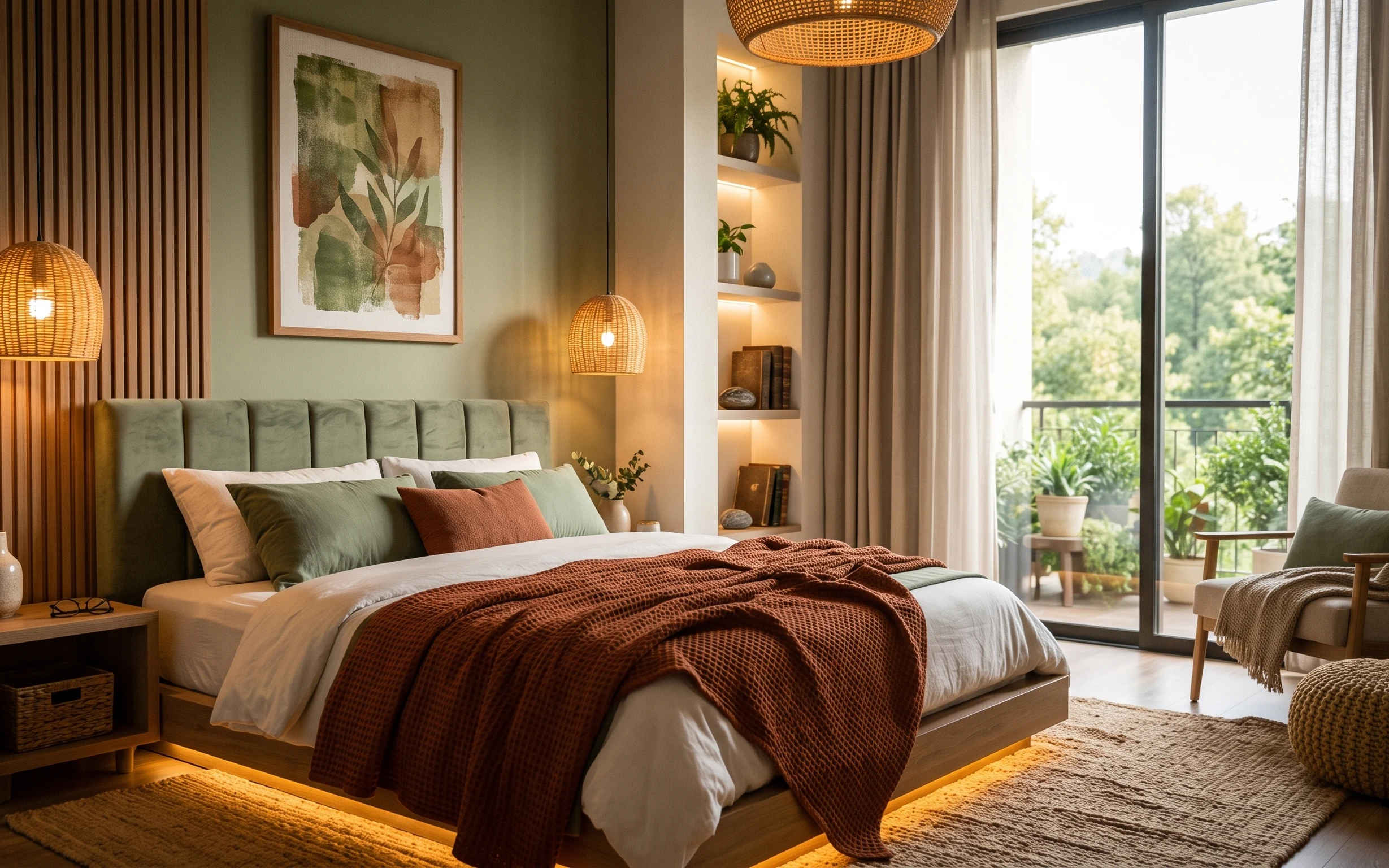
How to refresh a bedroom for under $800
A warm, earthy bedroom refresh under $800: add a grounded rug, soften window light with curtains, and build a calm shelf vignette. This loo…
7 renter swaps for a warm sage bedroom suite, $400
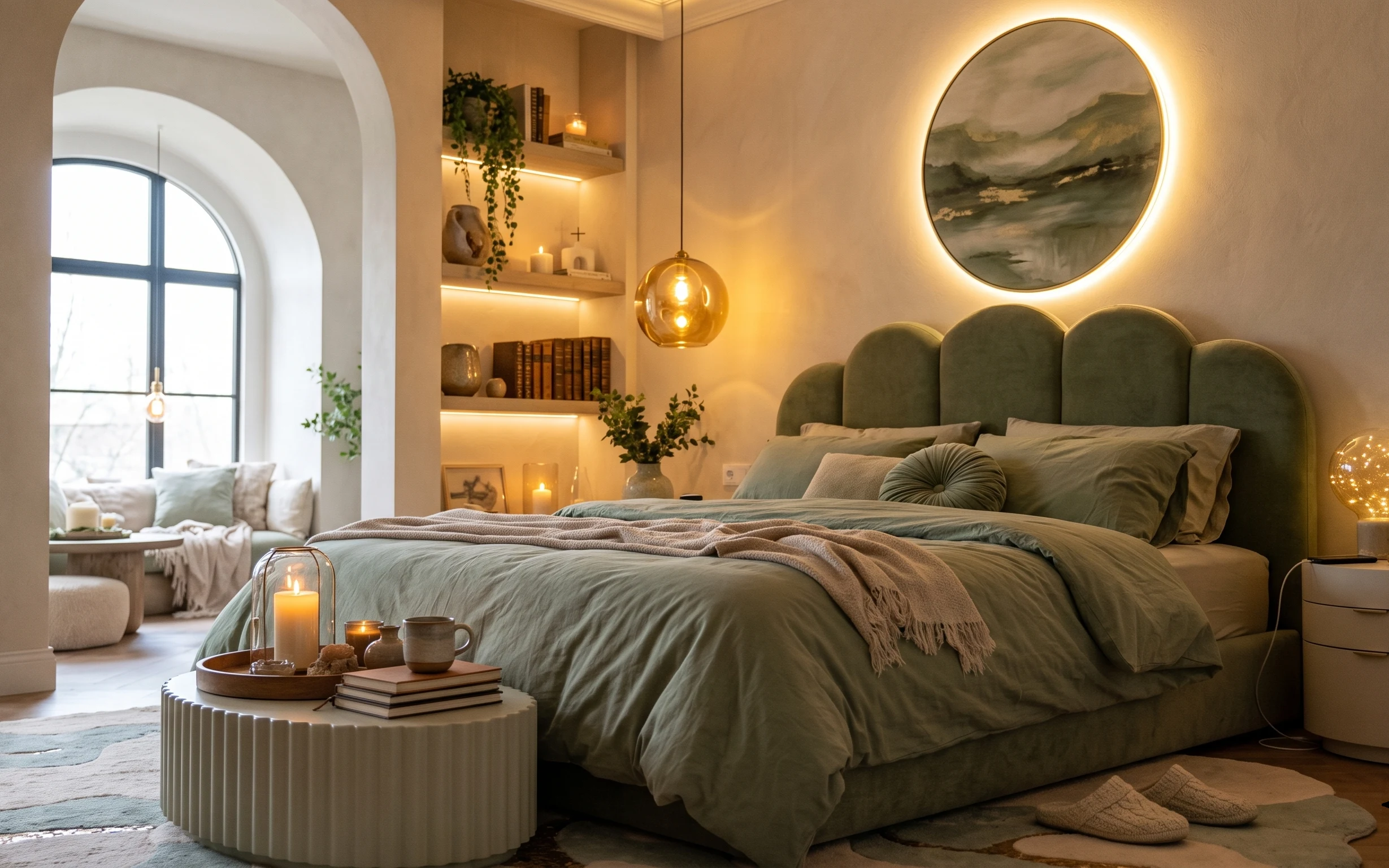
A warm sage bedroom suite with a round landscape artwork and globe lighting—rebuilt with renter-friendly swaps for $400. You’ll copy the la…
7 renter-friendly swaps for a $600 bed nook refresh
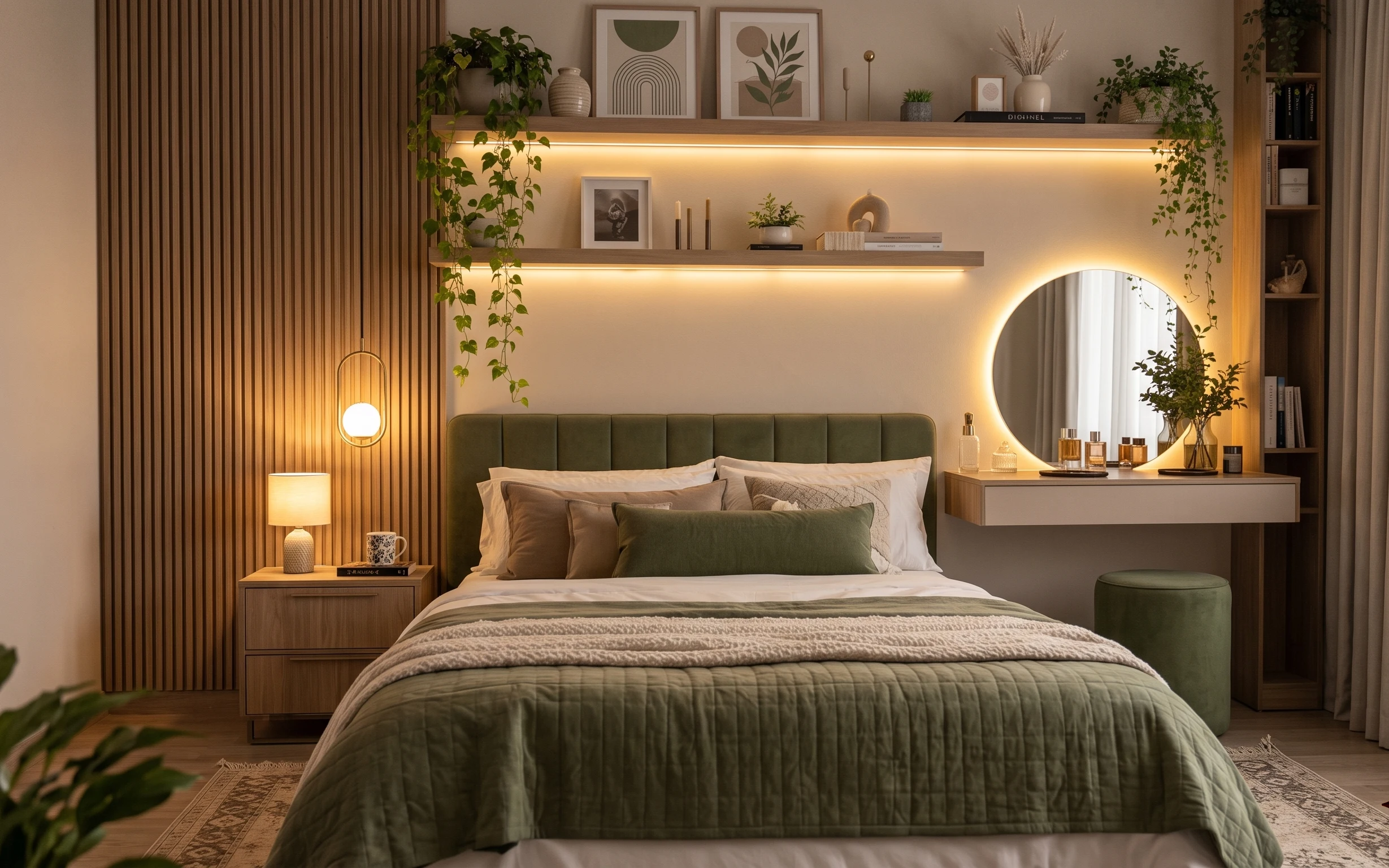
A bed-nook refresh in warm beige and olive green—built for renters with no-drill updates. This look comes together with seven budget-friend…