- Best for
- Bedrooms with lots of greenery and warm wood
- Cost
- About $500
- Difficulty
- Easy (textiles + plug-in lighting)
- Time
- 3–5 hours plus dyeing/drying
Why warm wood-and-green decor is the plant-filled bedroom of 2026
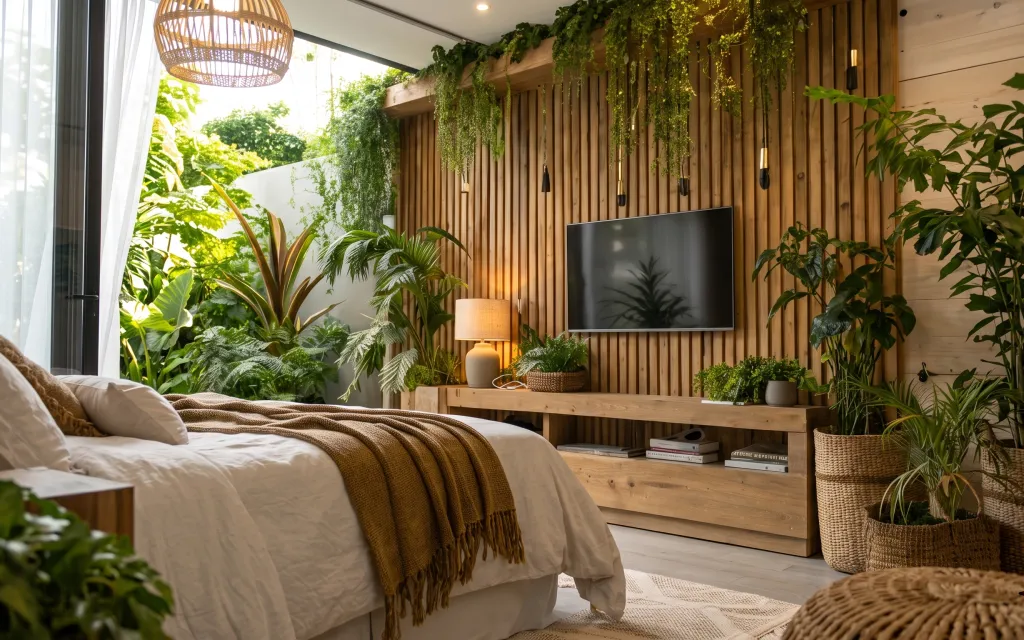
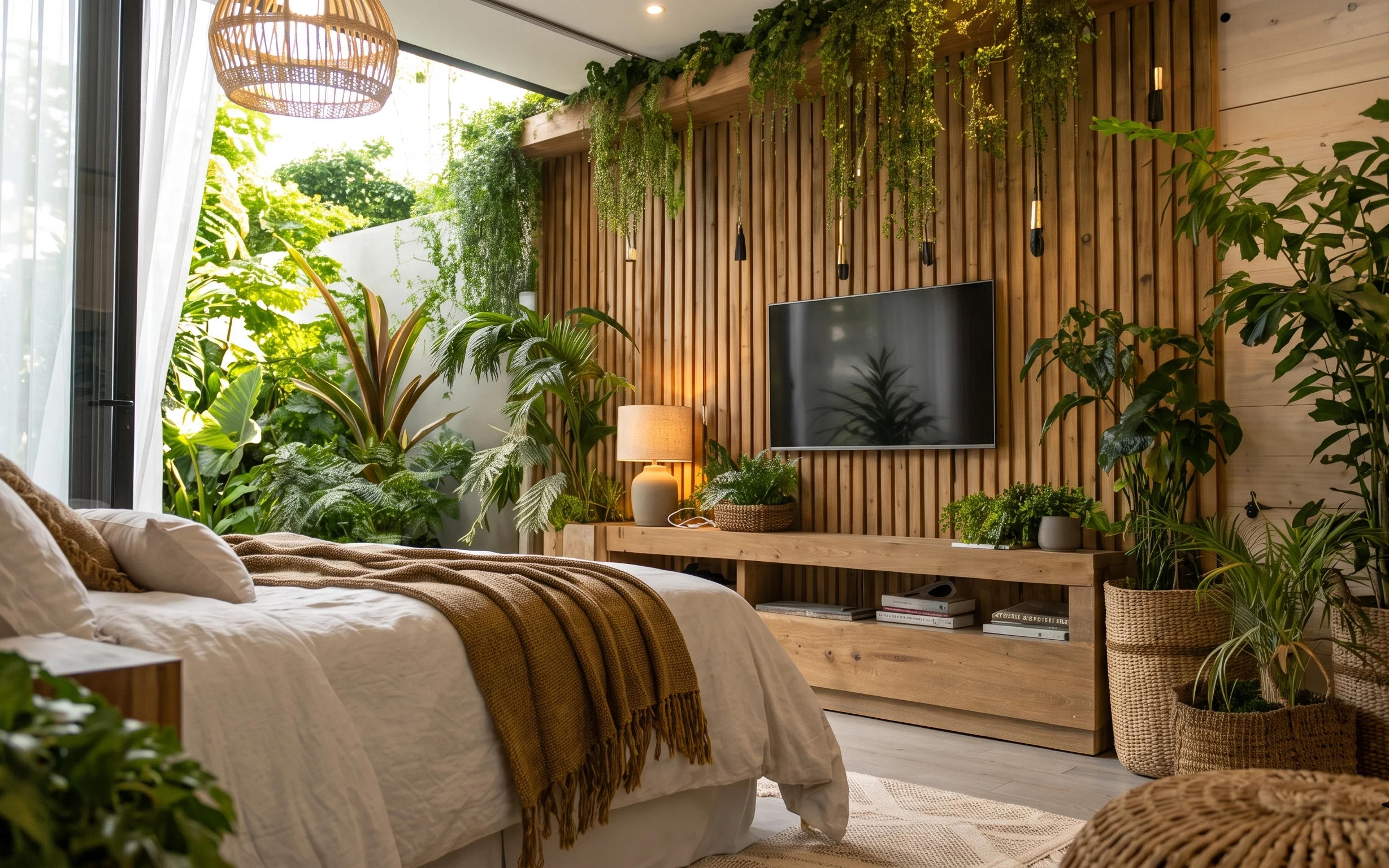
That layered greenery against the light wood slat wall is the reason this bedroom feels so calm and intentional. In the photo you can see three texture anchors—white duvet cotton, a mustard knit throw, and a woven rug underfoot—then the warmth comes from soft, shaded lighting. Even the plants read as styling objects: palms and ferns are placed at different heights so your eyes keep moving. For renters, this works because every layer here is either a swap-out textile or a plug-in piece that can be packed away without landlord approval.
I used to chase “statement” decor by buying one big thing—usually a heavier lamp or a darker bedding set—then wondering why the room still looked unfinished. What clicked for me was repeating warmth in small doses: a knit throw in one accent color plus one woven basket that echoes the natural tones. That’s how the bedroom stays airy while still feeling dressed.
Layer 1 — light jute-look area rug ($120) Hides daily grit and softens the whole bed zone
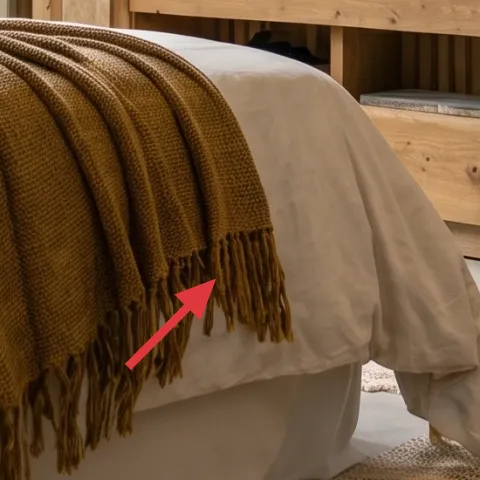
A light jute-look area rug under the bed does two jobs at once: it makes the floor feel finished and it gives the greenery room to look fresh instead of harsh. In this photo, the rug’s pale tone keeps the palette airy against the cream bedding and light wood. The trade-off with going light is that it shows some dust sooner than a dark rug, so a quick vacuum pass matters. The obvious alternative is a darker rug, but that can make the bed area feel heavier and less bright when you already have a lot of plant volume.
Pick a rug size that reaches the “walk zone”
If you can, get enough width that the front bed leg area isn’t sitting on bare floor. It visually anchors the plants and bedding together.
Layer 2 — white duvet cover ($60) Makes the greenery look brighter instead of busy
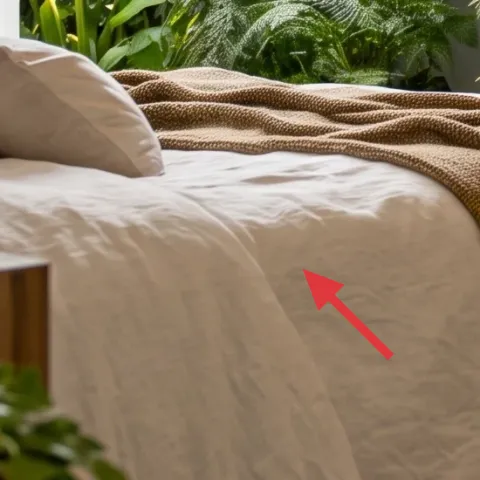
A white duvet cover is the clean canvas here, and the photo proves it: the plants read as color and shape, while the bedding keeps the room calm. The texture matters too—cotton with a soft drape shows off the throw blanket without turning everything into one flat beige blob. The choice is renter-friendly because you’re not touching the wall or fixtures, just swapping a textile that packs away. If you go for a patterned duvet instead, the room can start to feel “loud,” especially with the wood slat wall and vertical plant greenery already doing a lot visually.
Let the duvet be plain, then add contrast through throws
In this look, the mustard throw is the color moment. Keeping the duvet solid prevents a color fight.
Layer 3 — dyed pillow covers in cream ($45) Echoes the mustard throw without adding more clutter
Make it instead of buying it
Dyed pillow covers turn plain cream into a coordinated accent that matches the mustard throw, using fabric dye on cotton covers you can remove at move-out.
Materials
- Cotton pillow covers (2) — 20 in total — fabric store — $20
- Fabric dye (warm brown/mustard tone) — 1 kit — craft store — $12
- Salt for dye setting — 1 small box — grocery/pharmacy — $5
- Gloves — 1 pair — hardware/drugstore — $3
Steps
- Pre-wash the covers to remove sizing.
- Heat water in a non-reactive bucket and dissolve dye powder fully.
- Stir in salt according to the dye kit directions.
- Submerge covers and keep them moving so color takes evenly.
- Let the dye sit for the time listed on the kit for a medium tone.
- Rinse in cool water until it runs clearer.
- Wring gently and dry according to fabric instructions.
- Wash once more separately before styling.
Total DIY cost: $40 — saves about $5 over buying.
Layer 4 — mustard knit throw blanket ($45) Pulls the palette warm, not beige
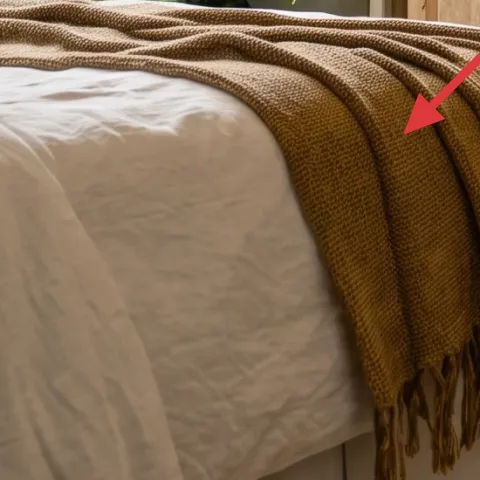
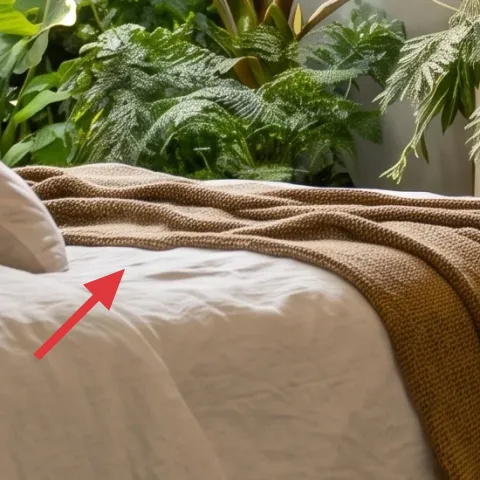
The mustard knit throw is a small accent that changes the entire temperature of the room. In the photo it sits draped across the bed, and the chunky knit texture adds depth against the smooth duvet fabric. That contrast is what keeps the look from feeling too “matchy” with the warm wood slats. The trade-off is that knit throws shed a bit more than tightly woven fabrics, so brushing and gentle washing matters. If the alternative is a solid satin throw, you’d lose the cozy texture contrast that makes the plants feel integrated rather than pasted on.
Don’t pick a mustard that’s too neon
Too-saturated yellows fight green foliage. Aim for a softened mustard-brown so it reads warm, not loud.
Layer 5 — plug-in rattan pendant lamp ($120) Adds glow and a natural repeat above the plants
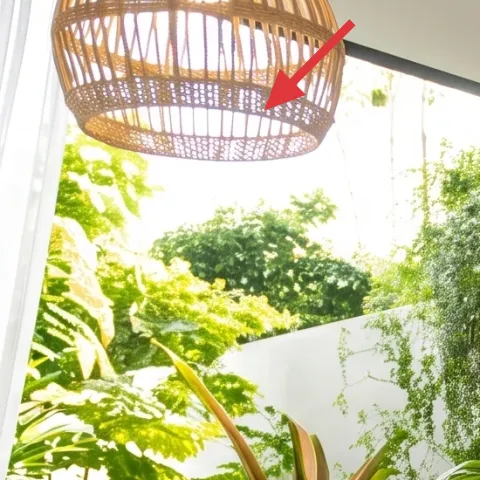
The rattan pendant’s woven pattern does more than light the room—it repeats the natural materials already present in the wood wall and woven baskets. In the photo, the lamp casts a warm pool that makes the greenery look richer and the bedding feel inviting. Because this is plug-in (or can be done with a plug-in-ready fixture), it’s renter-safe and packable. The alternative is a basic white globe lamp, but that would flatten the room and make the plants feel like they’re living in a separate zone.
Match warmth to the room’s wood
If the wood tones are honey, choose a warmer bulb so your greens don’t go gray.
Layer 6 — plug-in table lamp with white ceramic base ($55) Keeps evenings soft without hardwired changes
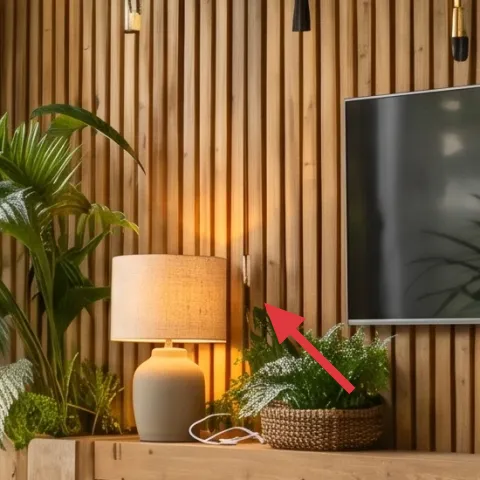
A plug-in table lamp gives you a second light height, which is what stops a plant-heavy room from feeling flat. This one has a white ceramic base and a light shade, so the glow stays gentle over the bed and console zone. The trade-off with table lamps is workspace coordination—you want the base to feel stable on the console surface without blocking decor. The obvious alternative would be using only the pendant light overhead, but that often leaves shadows near the bed where you actually notice them.
Use the lamp to “spotlight” one plant cluster
In this setup, the console plants sit in the lamp’s reach, which makes the wall feel curated, not crowded.
Layer 7 — woven basket plant planter on floor ($40) Creates a natural, move-friendly container
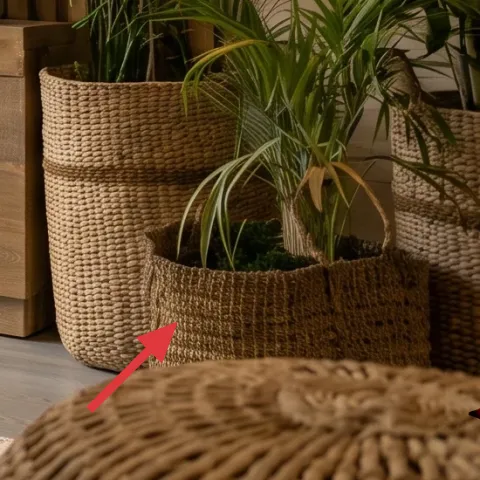
One woven basket planter anchors the right side of the room and makes the plant styling feel intentional instead of accidental. In the photo it works because it echoes the room’s natural fibers (and it doesn’t compete with the vertical wall greenery). A basket also offers practical value: it can hide a grow pot and create breathing space visually. The trade-off is that woven containers can collect dust at the bottom, so a quick shake and spot clean are part of the routine. If you switch to a plastic pot, you’d lose that tactile, warm look that ties the bedding and wood tones together.
Keep one “container texture” consistent
If the floor basket is woven, repeat woven once more nearby (like a small console basket or tray).
The cost, layer by layer
| Layer | Item | Cost |
|---|---|---|
| 1 | Light jute-look area rug | $120 |
| 2 | White duvet cover | $60 |
| 3 | Dyed pillow covers in cream (DIY) | $45 |
| 4 | Mustard knit throw blanket | $45 |
| 5 | Plug-in rattan pendant lamp | $120 |
| 6 | Plug-in table lamp with white ceramic base | $55 |
| 7 | Woven basket plant planter on floor | $40 |
| Total | $485 | |
A cheaper variant keeps everything renter-safe but dials down one “big ticket” lighting swap—use a single plug-in table lamp and choose a $80 rug instead. The look still reads as warm and layered because textiles and container textures do most of the work.
What worked, what didn't (across the whole room)
The room’s success comes from repeating natural textures at multiple heights: rug underfoot, knit blanket on the bed, and warm plug-in lighting above. The other win is contrast—white bedding and light surfaces keep the wall greenery from taking over.
What worked
- The light rug grounds the bed area while keeping the plant wall feeling bright.
- White duvet cotton creates contrast so greens read as color, not clutter.
- Mustard knit texture adds warmth without darkening the whole palette.
- Plug-in lighting at two heights keeps evenings soft instead of shadowy.
- Woven basket containers repeat natural fibers and make the styling feel intentional.
- Layering textiles creates depth even when the wall has a lot going on.
What didn't
- A single light source would leave shadows near the bed, making the plants look less curated.
- Skipping a texture accent like the knit throw makes the bed zone feel too smooth.
- Too-bright yellow pillows would fight the greens and push the palette into “loud.”
- Using only plain containers would make the plant styling look temporary instead of styled.
- Going too dark on the rug would weigh down a room with a lot of vertical greenery.
What we'd skip if we did it again
Skip a full bed set with heavy matching colors. When the wall has that much vertical greenery, the bedding needs to stay mostly quiet—then let one accent (like mustard) carry the warmth.
Skip replacing lighting with another overhead-only option. Two light heights are what keep the bed zone flattering and prevent shadows around the console and plants.
Skip plastic plant pots in the open. Even one woven basket planter adds texture and makes the whole biophilic setup look collected instead of temporary.
Frequently asked
How long does this bedroom refresh take?
For most renters, the textile swaps (duvet, pillows, throw) and the rug placement take about 1–2 hours total. Adding plug-in lamps is usually another 30–60 minutes. The only “slow” part is dyeing pillow covers—rinsing and drying adds passive time, so plan a half-day to a full day depending on drying speed.
Is this renter-safe with no drilling?
Yes. The look relies on renter-swappable textiles (rug, duvet cover, throw, pillow covers) and plug-in lighting. The woven basket planter and plant containers are also move-friendly. You’re not changing any walls, ceiling fixtures, built-ins, or landlord-installed hardware.
What if my room is smaller than this one?
Keep the palette the same but reduce scale: choose a rug size that still reaches under the front of the bed, and limit pillow count to two covers plus the throw. Use one pendant-style rattan lamp OR one table lamp, not both, so the room doesn’t feel over-lit.
What if my room is bigger and feels empty?
Add coverage with height and texture rather than more colors. Increase plant volume by adding one more plant at a different height, and consider a larger rug so it extends farther beyond the bed edges. Keep the bedding neutral and let the throw and lamps do the “color work.”
Where can I shop for the most similar pieces on a budget?
Rug, duvet covers, and throw blankets are usually easiest to find at big-box bedding retailers and home departments. Plug-in table lamps and rattan-style pendant lamps often show up at lighting shops and home marketplaces. For dyeing pillow covers, a craft store fabric-dye kit is the most straightforward route.
What’s the biggest mistake people make with this plant-and-wood look?
Over-coloring the bedding. When the wall already has lots of green texture and the wood slats add warmth, bright accents can start competing. Keep the duvet white, use one knit throw color (mustard-brown works well), and coordinate pillow covers to that throw tone.
More in Bedroom
How to style a plant-filled bedroom for $500 with no-drill swaps
A plant-filled bedroom look for $500: swap in a light rug, a white duvet, dyed pillow covers, a mustard throw, and add plug-in lighting. Fi…
7 renter swaps for a $600 bed nook
A warm, boho bed nook refresh for renters with a $600 total budget. Focuses on a jute rug, oval mirror, and sage textiles plus plants—no dr…
Warm brass-and-cream bedroom refresh, $800
A warm modern bedroom refresh for $800 that makes your bed feel styled, not accidental. This weekend plan focuses on a softer rug layer, ai…