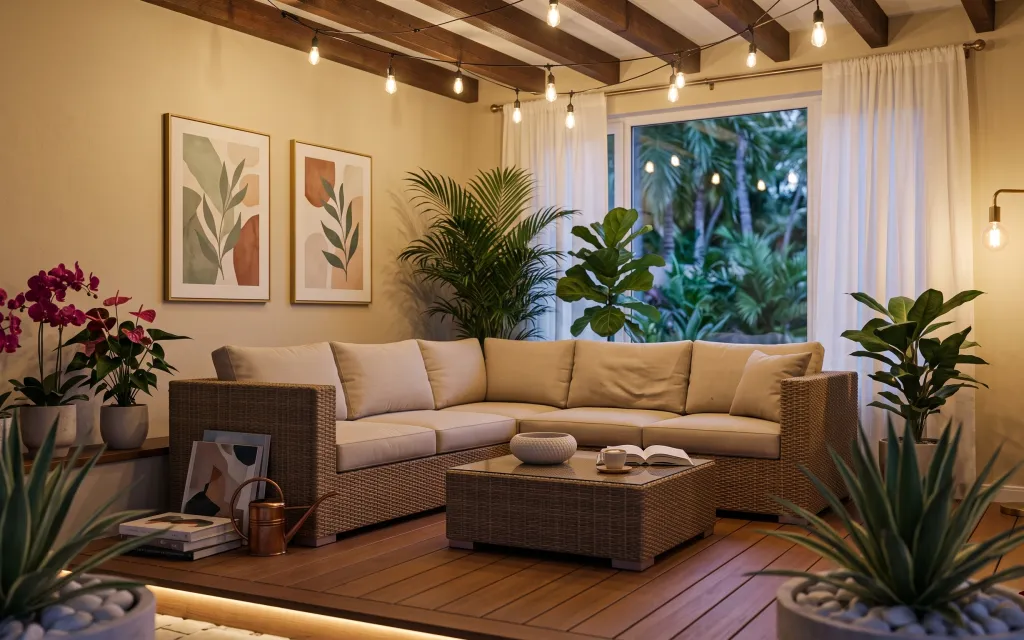
- Best for
- Warm, renter-friendly living room glow
- Cost
- $485 total (budget ceiling $500)
- Difficulty
- Easy—mostly textiles, frames, and plug-in lighting
- Time
- About a day for shopping + styling
Why warm rattan-and-olive sofa lounge is the move-friendly nook of 2026
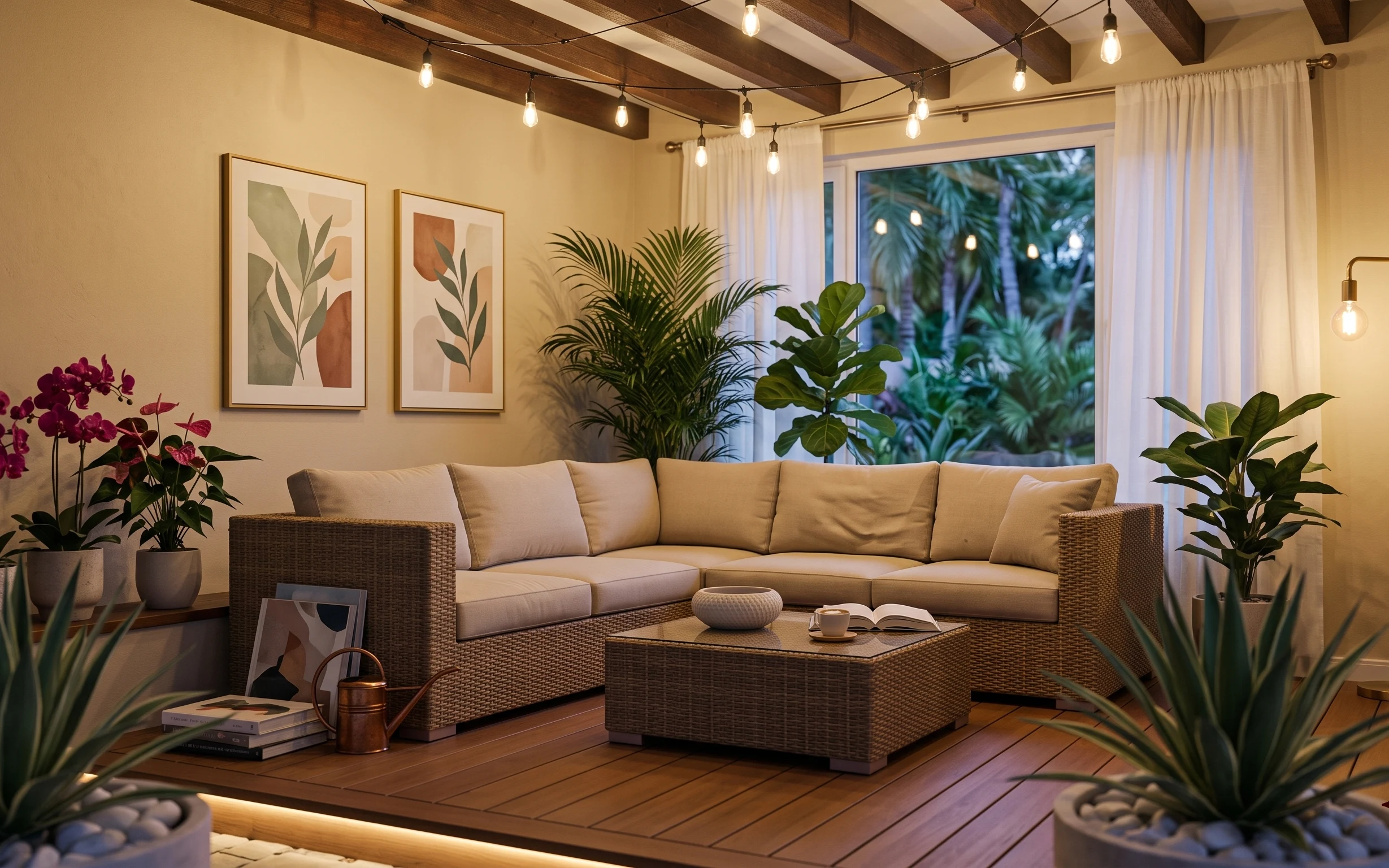
The first thing I notice in this space is how many “soft surfaces” it has: light beige cushions, sheer white curtains, and the woven texture of a wicker coffee table. Then the wall gets calm with two framed botanical prints, while the plants bring the tropical green back into the room. I’ve seen this exact balance in Scandinavian rental styling and in breezy coastal magazines: keep the palette neutral, and let texture + one plant moment do the talking. For renters, it’s doable because you can swap textiles, add plug-in lighting, and hang art without touching walls.
I used to overdo lighting when I moved in—like, more bulbs meant more style. But at some point I realized my rooms looked harsh when everything glowed from the same height. The change here is simple: string lights in the ceiling line for atmosphere, plus a brass floor lamp for a focused warm pool. That mix makes the whole sofa area feel intentional, even when the rest of the apartment is still “temporary.”
Layer 1 — throw pillow covers (dyed) ($30) softens the sofa’s neutral base
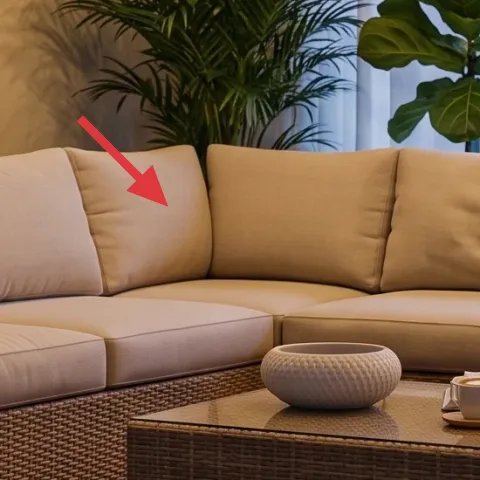
These throw pillow covers sit across the center cushions and instantly make the sofa feel finished instead of “just functional seating.” Dye is a smart renter move because it changes the fabric color without replacing anything you can’t take with you. The trade-off is that you’ll want to test dye on a small patch first so the tone reads the way you expect in warm evening light. I like this option more than buying a new patterned pillow set because it keeps the palette cohesive with the framed botanicals and the olive-green plants.
Make it instead of buying it
Dyed pillow covers give the sofa a warm, plant-friendly tint while staying fully removable at move-out.
Materials
- Cotton pillow covers (2) — 20×20 in — fabric store — $12
- Fabric dye (olive/green family) — 1 kit — craft store — $8
- Salt — 1 small box — grocery store — $4
Steps
- Pre-wash the covers so dye grabs evenly.
- Measure water and mix dye per the kit instructions.
- Dampen covers (if your kit calls for it) for more even color.
- Stir in salt and keep dye bath consistent as you soak.
- Soak covers for the target shade time, checking midway.
- Rinse in cool water until it runs mostly clear.
- Wash once separately to remove excess dye.
- Dry fully, then insert into pillows.
Total DIY cost: $24 — saves about $6 over buying.
Layering for depth
Use two dyed covers plus the existing cream cushions—depth comes from tones, not from adding more patterns.
Layer 2 — sheer white curtain panels ($80) softens the window edge
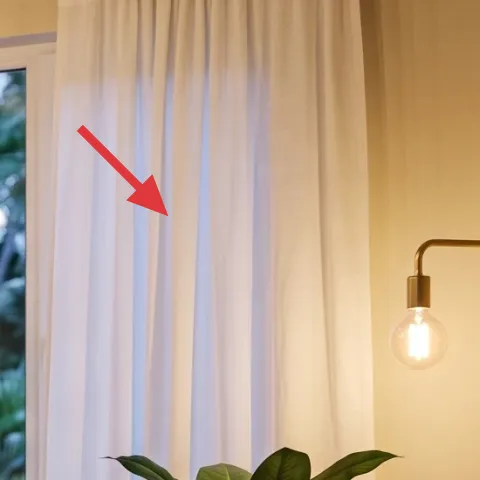
These sheer white curtain panels frame the window and add that “light curtain” look that makes tropical plants feel airy instead of heavy. In a sofa lounge, sheers also help the lighting: string bulbs and a floor lamp bounce through the fabric and look warmer, not stark. The trade-off is privacy—sheers alone won’t block everything at night—so you’re choosing atmosphere over full coverage. This is better than swapping to opaque curtains if the goal is that diffuse glow across the seating area.
Why sheers work with botanicals
The prints and plants already bring visual detail; sheers keep the background from competing.
Layer 3 — framed botanical art print ($80) anchors the left wall with a repeatable motif
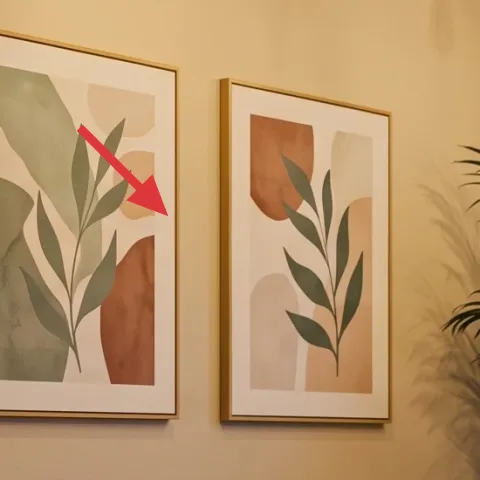
The two framed botanical art prints create a vertical rhythm beside the sofa, so your eye has a stopping point before it drifts toward the window plants. Picking botanical art is an easy way to echo the real foliage without copying every leaf shape. The trade-off is that you need spacing that feels balanced—too tight and the room looks busy, too far and it feels unfinished. I’d rather buy one solid framed print and repeat it later than chase a mismatched set, because consistency is what makes the lounge feel styled.
Hang height matters
Aim for the print centers around eye level so the sofa-and-curtain line stays proportional.
Layer 4 — brass floor lamp with clear bulb ($60) creates a warm pool near the right plant
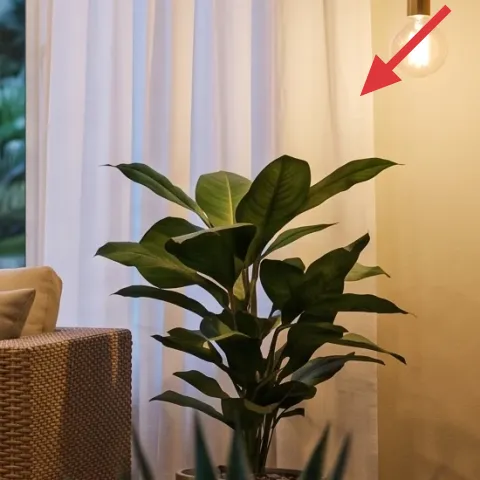
This brass floor lamp sits on the right side and gives you focused, warm light that “reads” the plants even when the overhead string lights are subtle. Brass also plays nicely with rattan because both materials show warm undertones. The trade-off is that a floor lamp can look accidental if the shade is too small—so choose a lamp with a visible bulb and a stable base footprint. I’m choosing this over a table lamp because it brings light to a taller height, which makes the sofa lounge feel layered instead of flat.
Watch the bulb color
Use warm bulbs (not daylight) so the brass doesn’t swing yellow against the plant greens.
Layer 5 — ceiling string lights with visible bulbs ($15) adds soft atmosphere overhead
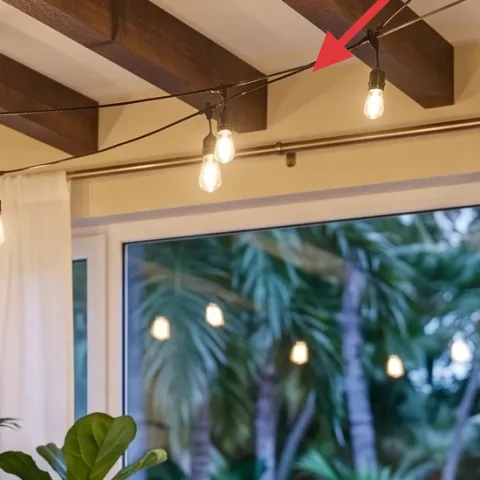
The ceiling string lights give that gentle evening glow that makes the whole sofa lounge feel intentional, not “just decorated.” Because the bulbs are visible, they look decorative even when you’re not actively using the lamp. The trade-off is that string lights are easiest when you have a beam or a place to anchor the line—otherwise you’ll end up with droop. If that’s a concern in a rental, position the string line so it spans a consistent path across the ceiling beams for a cleaner, more even fall of light.
Use them like jewelry
Keep the strands relatively tight so you get glow without turning the ceiling into a distraction.
Layer 6 — medium potted leafy plant ($40) brings in the tropical green without renovation
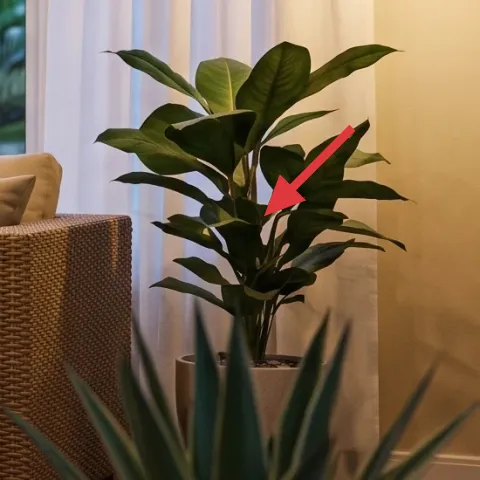
The medium potted leafy plant on the right side adds movement and height, filling the space between the lamp and the seating. In rooms like this, one strong plant moment does more than lots of small decor pieces because it scales like furniture. The trade-off is maintenance—plants that grow fast can need rotation for even light exposure. I’d still pick a single medium plant over extra tabletop candles because foliage adds texture you can’t fake with small objects.
Place for sightlines
Put the plant where it lines up with the sofa cushions, so the whole lounge reads cohesive from the doorway.
Layer 7 — wicker coffee table ($180) makes the center feel grounded
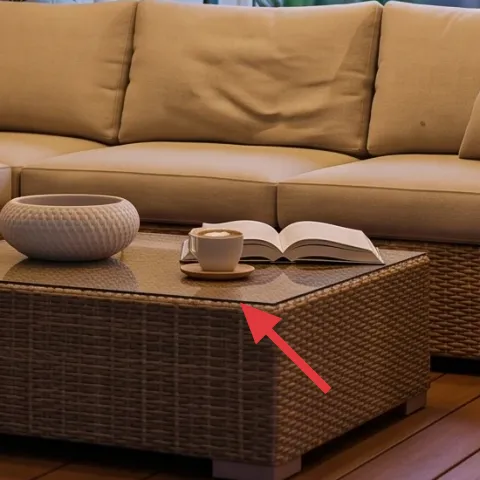
The wicker coffee table is the visual “base” under the open book and candle, tying the sofa’s woven texture to the rest of the lounge. A natural-toned tabletop also keeps the palette warm, which matters in evening light when creams can otherwise look gray. The trade-off is that wicker can be more vulnerable to spills, so plan to use coasters and keep a light wipe routine. I like this piece more than a metal coffee table here because metal can feel too cold next to curtains and botanical art.
Style it simply
One book + one candle + one small glass reads calmer than clutter, especially with plants nearby.
The cost, layer by layer
| Layer | Item | Cost |
|---|---|---|
| 1 | Throw pillow covers (dyed) | $30 |
| 2 | Sheer white curtain panels (pair) | $80 |
| 3 | Framed botanical art print | $80 |
| 4 | Brass floor lamp with clear bulb | $60 |
| 5 | Ceiling string lights (set) | $15 |
| 6 | Medium potted leafy plant | $40 |
| 7 | Wicker coffee table | $180 |
| Total | $485 | |
If a wicker coffee table is out of reach, look for a light rattan-look coffee table or a budget-friendly plastic-free woven-style top at thrift and consignment. Even swapping the table first can help the sofa lounge feel grounded while you hunt for the exact finish later.
What worked, what didn't (across the whole room)
This lounge works because it balances neutral textures with one repeating botanical motif, then adds warm light at multiple heights. The result is cohesive without needing major changes. The only moments that need discipline are plant placement and lighting brightness, since both can tip the room into clutter or harshness fast.
What worked
- Sheer white curtain panels soften the window line and make the string lights feel gentler.
- Two framed botanical art prints create a repeatable motif that matches the real foliage.
- Throw pillow covers in a warm dyed tone keep the sofa looking finished, not temporary.
- The brass floor lamp adds a focused warm pool near the right plant for depth.
- Ceiling string lights add evening atmosphere without taking up floor space.
- A wicker coffee table ties the woven textures together around the center.
What didn't
- When the bulb color is too cool, brass reads yellow and the plant greens look dull.
- If you add too many small objects to the coffee table, the botanical-heavy room feels busy.
- Placing the medium plant too far from the sofa breaks the sightline and makes the lounge look split.
- If curtains are too short, the window looks unfinished and the lighting glow drops.
What we'd skip if we did it again
Skip opaque “hotel blackout” curtains if the goal is a warm tropical feel. Sheers are the difference between plants looking leafy and plants looking stuck behind a wall. With sheers, evening light from the floor lamp and string bulbs becomes part of the design instead of fighting it.
Skip extra matching decor just because the room has multiple botanicals already. The framed prints and the tall plants are enough repetition. Adding more candles, extra trays, or too many small vases tends to compete with the sofa cushions and makes styling look accidental.
Skip cool-temperature bulbs or daylight bulbs in the brass floor lamp. Brass plus cool light can pull the palette toward harsh yellow, which makes the cream textiles look gray. Warm bulbs keep everything—curtains, wicker textures, and foliage—reading cohesive.
Frequently asked
Is this renter-friendly if my lease doesn’t allow ceiling string lights?
Yes—string lights are the most “situational” piece. The cleaner approach is to route the strands along an existing beam path and use only removable hanging methods for anything you need to secure. If the ceiling setup isn’t possible, swap the string lights layer for more plug-in warm table lighting and keep the rest of the palette (sheers, botanicals, dyed pillow covers).
How long does the dyed pillow cover DIY take?
Plan a half-day to a full day, mainly because you’re pre-washing and waiting for dye to set and then rinsing thoroughly. The styling part takes five minutes once the covers are dry and you insert them into your pillows. The result is worth it if you want a specific olive-to-warm neutral tone that matches your framed art and plants.
What if my sofa lounge is smaller than this one?
Go for fewer large pieces and keep the same “system.” Use sheer white curtain panels, one framed botanical print (or a pair) at a taller height, and choose a smaller medium plant with the same height idea. For the coffee table, prioritize a woven or warm-toned top so the lounge stays grounded even in a tighter footprint.
What if my space is bigger—should I add more items?
Bigger rooms can handle more of the same categories, but keep repetition consistent. Add length to curtains, scale up the medium potted plant to be taller, and consider a larger wicker-style coffee table. Avoid mixing too many different textures at once; rattan + botanicals + warm light should stay the dominant combination.
Where can I shop for the framed botanical art without overpaying?
Start with local thrift shops, estate sales, and online marketplaces for frames, then pair them with affordable botanical prints. The key is frame color and mat tone—warm wood or simple gold reads best with rattan. When you match frame finishes, you can treat the art like a system instead of hunting for one perfect design.
What’s the biggest styling mistake in a sofa lounge like this?
Overcluttering the coffee table while also adding too many small decor pieces around the plants. This room style relies on texture (wicker, cushions, sheers) and one repeating botanical motif. Keep the center vignette minimal—one book, one candle, and a small glass—so the plants and framed art stay in charge.
More in Living Room
Tropical no-drill sofa lounge refresh, $500
A renter-friendly way to build a warm, tropical sofa lounge using seven no-drill upgrades, all removable at move-out. With a $500 budget ce…
Candlelit living room for $500
A candlelit living room refresh on an impermanent/shared-house timeline, built from 7 move-ready swaps. The look uses a warm rug, soft pill…
What $800 buys: a plant-filled living room refresh with 7 weekend swaps
Turn a plain sofa corner into a warm, plant-filled hangout with curtains, layered lighting, and framed botanicals. This $800 refresh focuse…