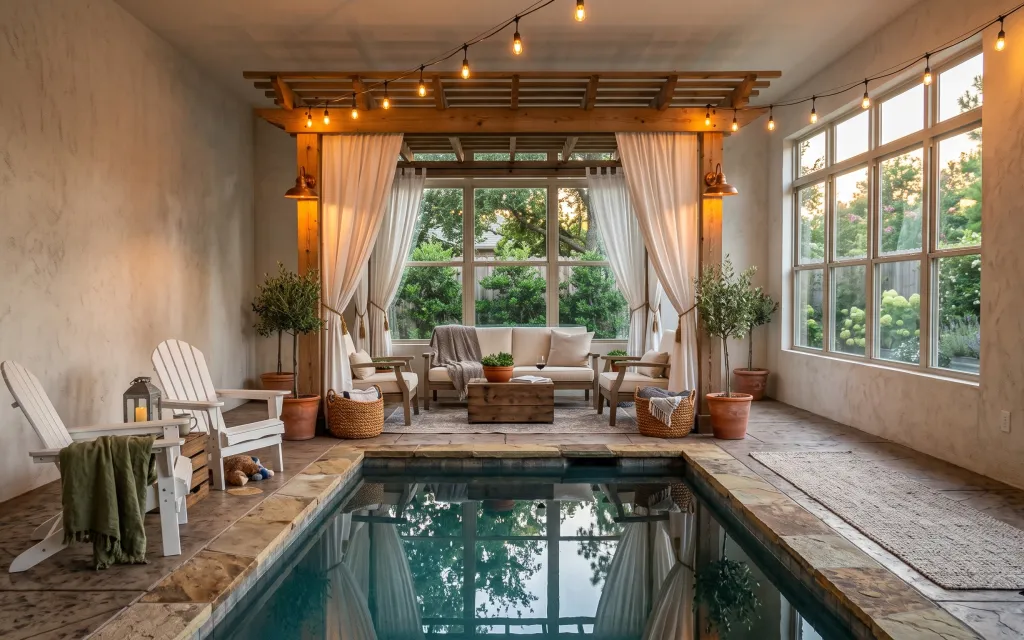
- Best for
- evening hangouts and daytime reading
- Weatherproof
- use outdoor-rated fabrics and sealed pots
- Difficulty
- Easy weekend refresh
- Cost
- about $800
Why the linen-curtain and warm-string lighting pairing is the poolside sitting room of 2026
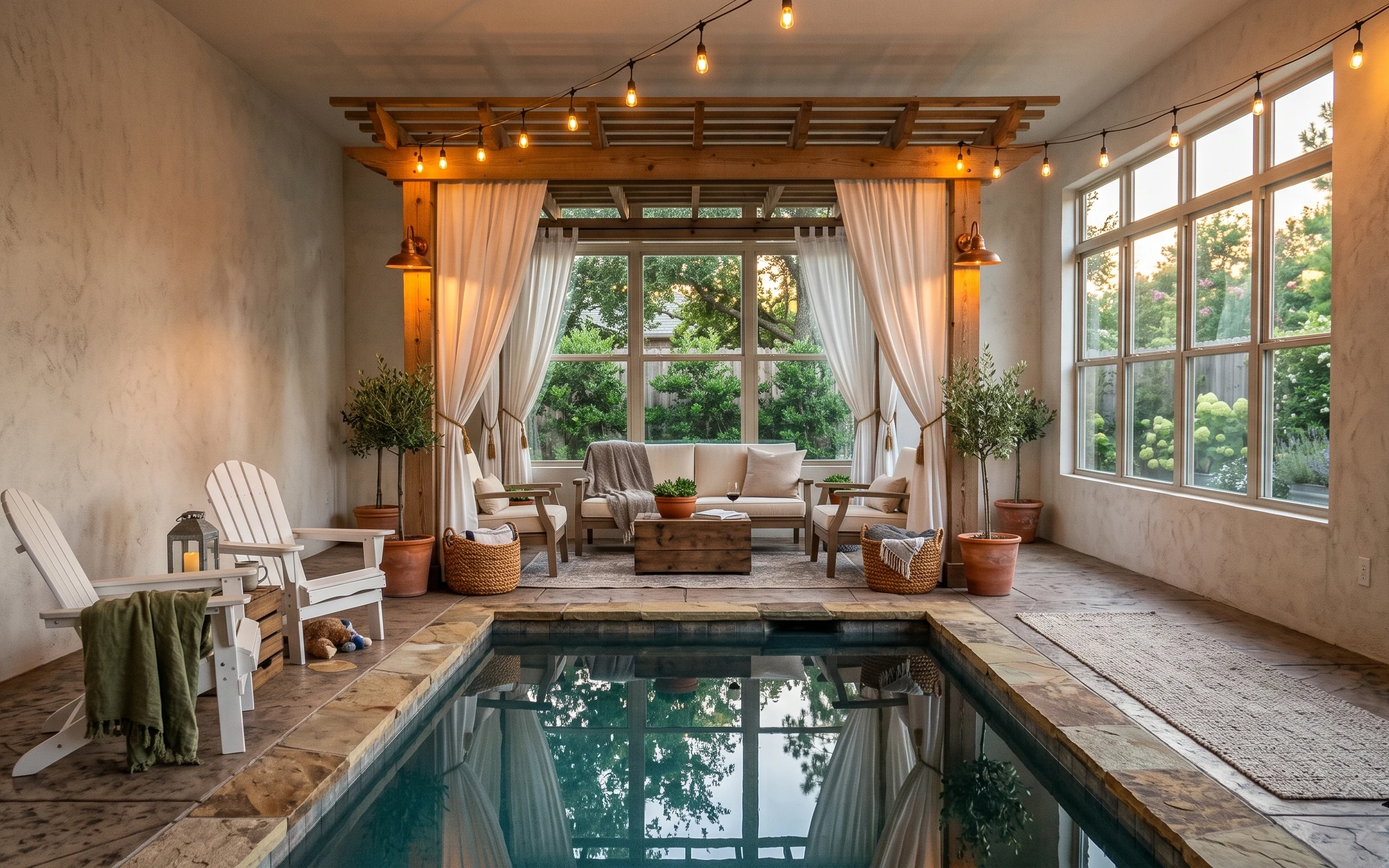
The windows and wood ceiling make this space feel like a cottage you could vacation in year-round. The key is adding softness at human scale: a cream rug under the seating, light curtain panels framing the window bay, and layered textiles like a gray throw on the sofa. The warm-toned string lights bring the same golden color across the ceiling beams, so everything reads intentional instead of “piecemeal.” For homeowners working on a weekend, these are straightforward swaps that change how the room holds the eye—fast.
I kept trying to “match” everything when I first did a sitting area like this, like the rug had to mirror the curtains. What finally clicked was contrast and placement: curtains soften the vertical lines, while the rug anchors the seating horizontally. That’s why the rug goes down first, then the curtains, then the warm bulbs. The end result feels calm even with plants and a lot of glass.
Layer 1 — cream floor rug ($200) Grounding under the seating
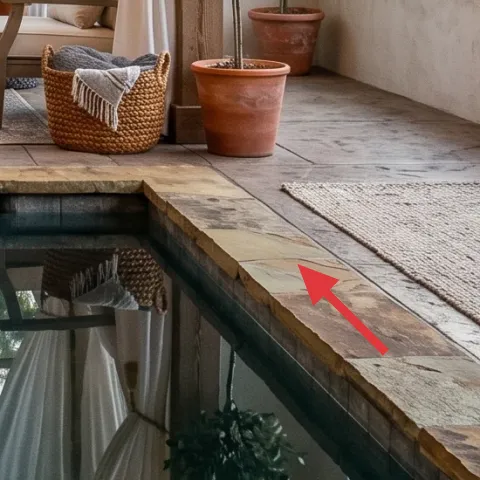
A cream floor rug gives the poolside seating area a real stopping point, especially because stone tile can look a little echo-y. In the photo, the sofa and chairs sit in the rug’s orbit, and that helps the whole zone feel like one “room” even with all the windows. The obvious alternative is skipping a large rug and leaning on smaller mats, but then your eye bounces between tile and furniture legs. A 5×7–ish or larger rug size is the move here: it stays wide enough for at least the front chair legs to land on it.
Let the rug reach beyond the sofa front
If the rug stops too early, the seating reads floating. Aim for the rug to extend under the front half of the armchairs so everything feels seated, not perched.
Layer 2 — light curtain panels ($80) Softening the window bay
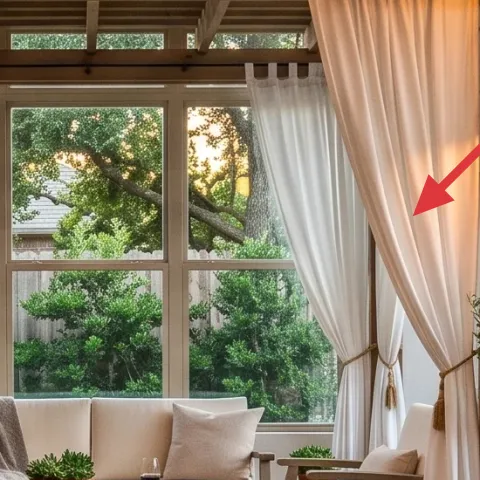
These light curtain panels do more than look pretty—they break up the hard grid of windows with a gentle vertical line. They also frame the view, so the green outdoors becomes part of the palette instead of competing with your furniture. If you choose blinds or leave the bay bare, the light can feel sharp and the room can look unfinished at seating height. The trade-off is that curtains need space to drape well, but that’s already built into how this bay is laid out. Fresh curtain panels in a similar creamy white also keep the whole room from leaning yellow.
Keep the color in the same family as the walls
Because the plaster walls are off-white, curtains that pull too bright white will look like a mismatch under warm bulbs.
Layer 3 — string lights with warm bulbs ($25) Unifying the ceiling glow
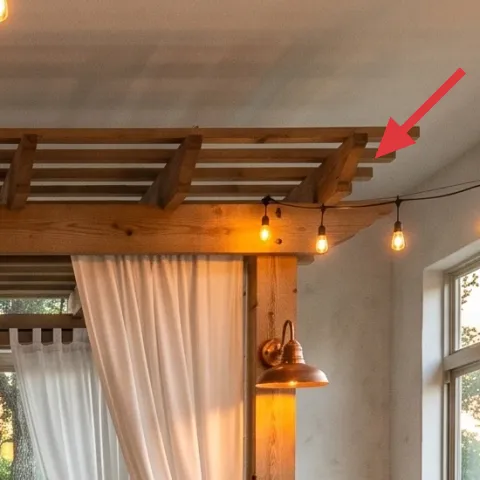
String lights with exposed warm bulbs repeat the same amber tone you see from the copper pendant and outdoor daylight, so the room feels tied together. Hanging the lights along the existing ceiling line is a small decision that changes everything at dusk, because you get warm light above the sofa and chairs—not just at floor level. The alternative is adding one more lamp, but you’d end up with uneven brightness and shadows across the stone floor. This approach keeps the lighting “horizontal,” matching how you sit, talk, and look out the windows.
Stagger bulb height for a softer look
Even spacing can feel too perfect; a few inches of variation makes the glow look more like an outdoor lantern string.
Layer 4 — wood coffee table ($120) Creating a place for the small moments
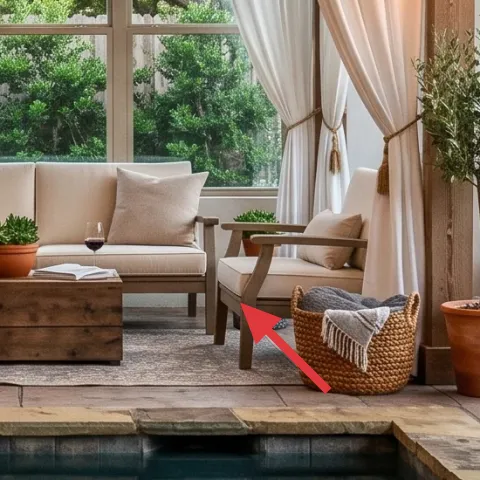
The wood coffee table is doing quiet work: it gives the gray throw, the small plant, and the little tray objects a home at center-of-sitting height. That’s why it feels more intentional than a random side table—the tabletop reads as the “surface” for the room’s rituals. The obvious alternative is using a metal table or an extra end table, but those materials can look too light or too industrial against warm wood beams and plaster. The trade-off with wood is keeping it wiped down and protected from damp air, but the texture payoff is worth it here.
Match table tone to the ceiling beams
Because the beams are warm wood, a similar undertone keeps the seating area from turning cool.
Layer 5 — gray throw blanket on sofa ($25) Adding texture without pattern chaos
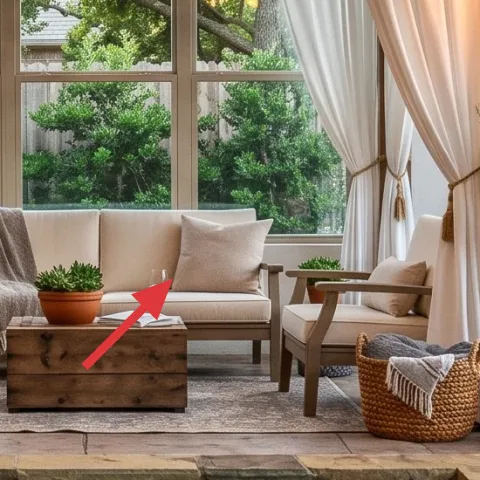
A gray throw blanket on the sofa adds a second neutral that’s distinct from cream curtains and the rug, which stops the whole room from reading one note. The important part is texture: even when the color is muted, the woven look creates shadows and depth, especially under the warm bulbs. If the sofa were styled with only pillows, the space would feel flatter and more decorative than livable. The gray also plays nicely with the stone floor, so the eye can travel from rug to furniture without color whiplash. Keep the throw loosely draped—too tight looks like an accident you forgot to fix.
Don’t over-layer with too many fabrics
There are already curtains, rug texture, and multiple plants. Two or three fabric textures max keep the room from getting busy.
Layer 6 — terracotta plant pots ($45) Repeating the earthy note
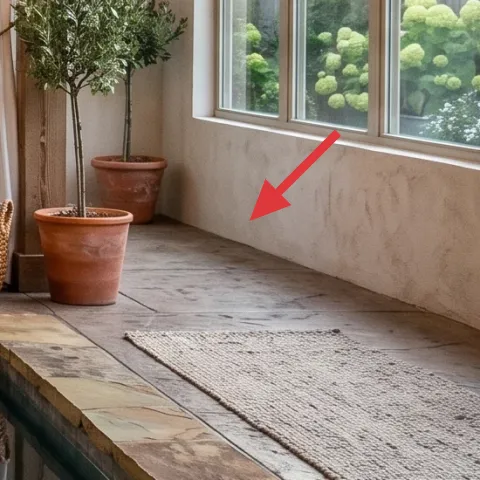
Terracotta plant pots repeat an earthy color that belongs in both daylight and warm artificial light, and they also echo the warm wood in the ceiling. In this scene, the pots sit at the edges of the seating zone, which makes them feel like part of the room’s structure instead of scattered decor. You could replace them with matching plastic planters, but the texture difference is why the current look feels grounded. The trade-off is that terracotta can vary a bit in tone, so it helps to bring them closer together—either by selecting a consistent set or giving them a quick color refresh.
Group plants by height, not just color
One taller plant plus a mid-height planter around the seating frame the bay without blocking the view.
Layer 7 — white outdoor sofa ($300) Anchoring the seating zone
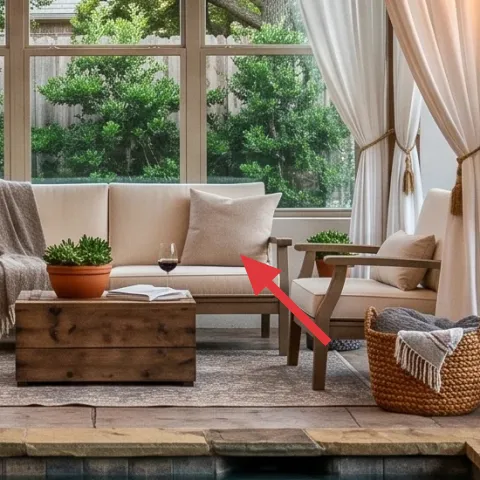
The white outdoor sofa is the visual anchor because it reads clean against the off-white plaster and the greenery beyond the windows. It also makes the rug look brighter and gives the gray throw a clear “home base.” The temptation is to swap to a darker sofa for contrast, but that often turns warm, window-heavy spaces into something heavier than intended. With a light sofa, the room stays airy, and the rest of the palette—warm bulbs, wood table, terracotta planters—does the work of adding warmth. Choose outdoor-grade fabric if this is a true outdoor-or-damp area, so the fibers handle humidity.
Leave breathing room around the arms
If you pack chairs too close, curtains and plant lines get visually crowded, even if the room still “fits” furniture.
The cost, layer by layer
| Layer | Item | Cost |
|---|---|---|
| 1 | Cream area rug 8×10 | $200 |
| 2 | Curtain panel pair (84") | $80 |
| 3 | String lights (set) | $25 |
| 4 | Coffee table (wood) | $120 |
| 5 | Throw blanket (gray) | $25 |
| 6 | Planter/pot (medium, terracotta set) | $45 |
| 7 | Outdoor sofa (white) | $300 |
| Total | $795 | |
If the full rug is too much, start with a smaller 5×7 rug and pad the edges with a second textured mat under the armchairs. The goal is the same: keep at least the front chair legs from hovering over tile.
What worked, what didn't (across the whole room)
The wins here are structural: the rug anchors the seating, and the curtains soften the window grid. Warm lighting then unifies everything at night, while the terracotta planters keep the palette earthy. The gray throw adds texture without introducing new pattern noise.
What worked
- The cream rug makes the seating area feel like a zone, not just furniture against tile.
- Curtain panels soften the window grid so the view and the interiors share the same rhythm.
- Warm string lights repeat the amber tone of copper lighting and daylight.
- The wood coffee table creates a natural center point for small decor and a plant.
- A gray throw adds depth while staying neutral beside cream curtains and a light sofa.
- Terracotta planters keep the palette grounded and help the greenery look intentional.
What didn't
- Too many separate mats can fragment the seating zone and make the room feel busy.
- Using curtains that are too bright white can fight warm bulb lighting and look “stuck on.”
- Adding extra floor lamps tends to create hard shadows on the stone.
- Over-styling the coffee table turns the center surface into clutter instead of a pause point.
- Switching the sofa to a dark color would make the window-heavy space feel heavier.
What we'd skip if we did it again
Skip a bunch of small throw pillows in different patterns. With curtains, a large rug, and greenery, the room already has enough visual texture. Two pillow covers and one throw is usually the sweet spot for this kind of window-heavy poolside setting.
Skip leaving the window bay unframed. Even if the curtains seem like a “nice-to-have,” they change how the whole room reads at eye level. Bare windows make the seating feel like an accidental placement, not a designed lounge.
Skip going too cool on the planters. Terra-cotta’s warm undertone is the color bridge between the wood beams and the warm string lights. If the pots skew gray or blue, the palette breaks and the greenery looks less cohesive.
Frequently asked
How long does this poolside refresh usually take on a weekend?
With measurements done ahead of time, most of the time goes into the rug placement, curtain hanging, and styling the sofa. Expect roughly 4–6 hours for a calm, “finished” look—plus an extra hour if you’re adjusting curtain height or spacing so panels fall evenly at the window sides.
What if this is a rental—can I still do the curtains and lighting?
If you’re renting, the easiest win is swapping lighting and adding a rug, since both are non-destructive. For curtains, tension-style rods or a properly installed curtain rod that matches the landlord rules can work. For string lights, use outdoor-safe cords and keep plugs accessible for quick removal at move-out.
My room is smaller—should the rug and curtains scale down?
Yes. For a smaller poolside sitting area, choose a rug size that still fits under the front legs of the seating, even if it’s not as wide as the photo. Curtain panels can be narrower too—just keep the drape length and soft folds. The goal is the same: soften the visual grid without trapping the seating zone.
How can I shop for the “right” look without copying everything exactly?
Search for three keywords: cream rug, light curtain panels, and warm-string bulbs. Then match the undertone: choose curtain cream that looks off-white next to plaster and pick a sofa fabric that reads durable outdoors. The coffee table can be any warm wood with a similar height, and the planters should stay terracotta or close.
What’s the biggest mistake people make in window-heavy poolside rooms?
They under-anchor the seating. When the rug is too small or absent, chairs sit on the tile like separate islands, and the space reads unfinished. The second common miss is adding too many fabrics at once—curtains, rugs, throws, pillows, and multiple mats can quickly overwhelm.
Can I use a different color palette if I don’t want terracotta?
Terracotta is doing palette work here—bridging warm wood and warm bulbs. If you skip it, replace with another warm earth tone like clay, sand, or a natural basket weave planter look. Keep the rest neutral (cream/white curtains, light sofa, gray throw) so the room stays cohesive instead of drifting into cool contrasts.
More in Outdoor & Patio
Warm curtain-and-light string refresh for a $800 poolside sitting room
A $800 weekend plan to make a poolside sitting room feel cohesive: swap in a large rug, add curtain panels, and style the sofa with warm li…
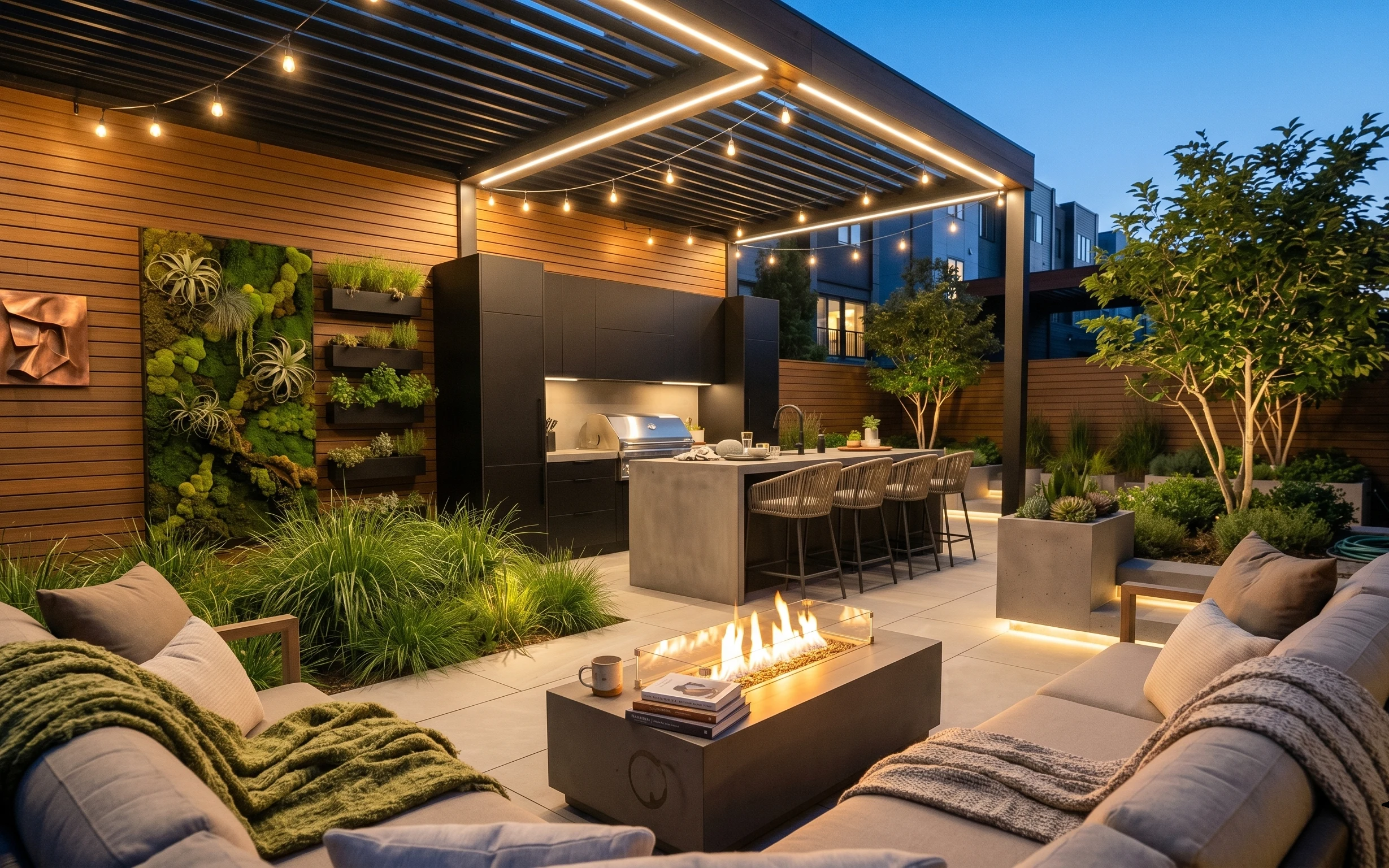
7 renter-friendly patio swaps for a $400 glow
A warm, modern patio lounge refresh on a $400 budget using no-drill swaps that pack up for your next lease. The key result: instant evening…
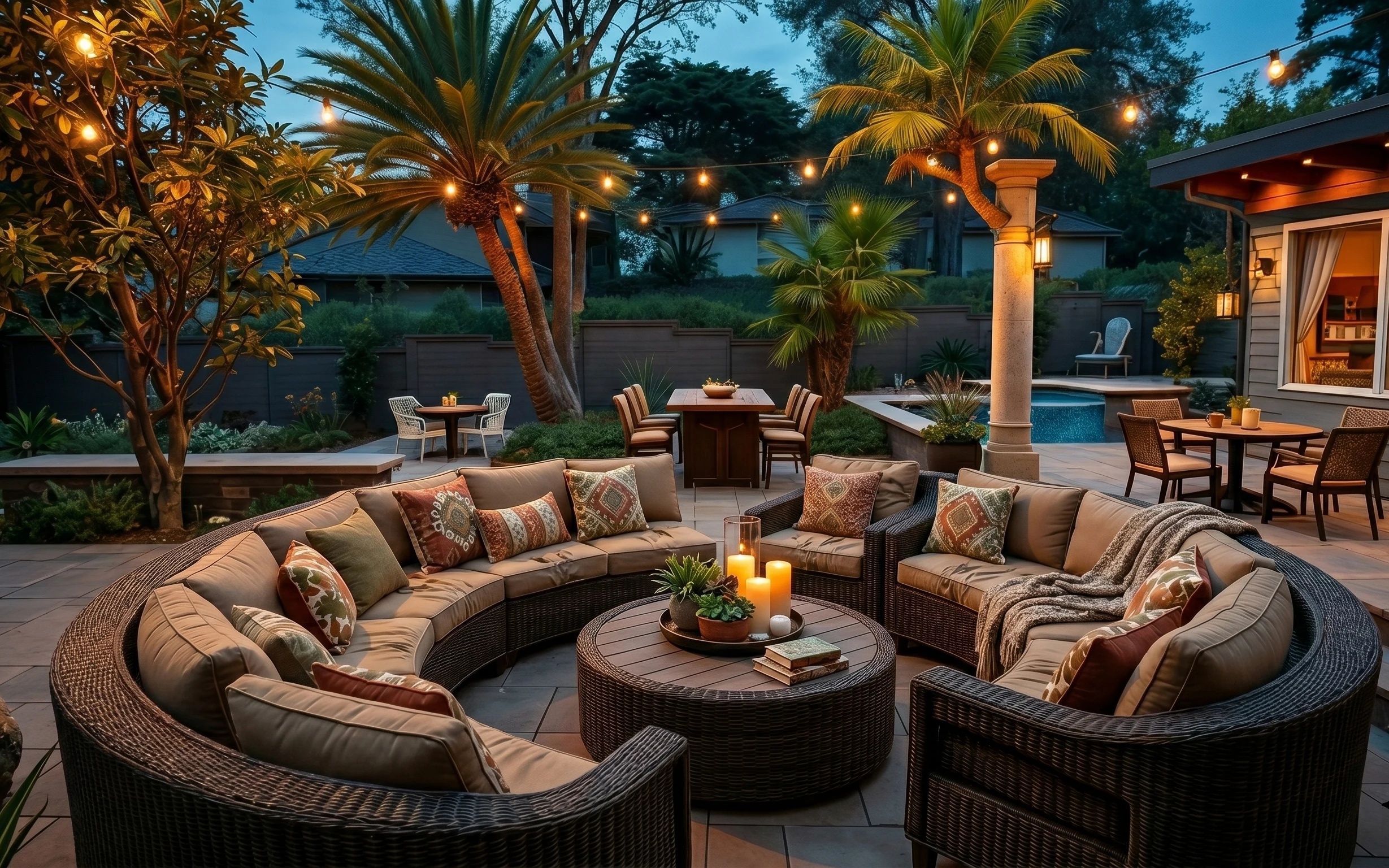
A candle-and-wicker patio lounge setup for $400
Budget-friendly renter refresh for an outdoor patio lounge: add an outdoor rug, string lights, throw pillows, and a round wicker coffee tab…