- Best for
- Move-ready focal points
- Time
- 2–4 hours for the full refresh
- Total cost
- $277 total
- Renter-safe
- Yes (no drilling, packable swaps)
Why warm oak-and-cream bedroom is the move-friendly sleep setup of 2026
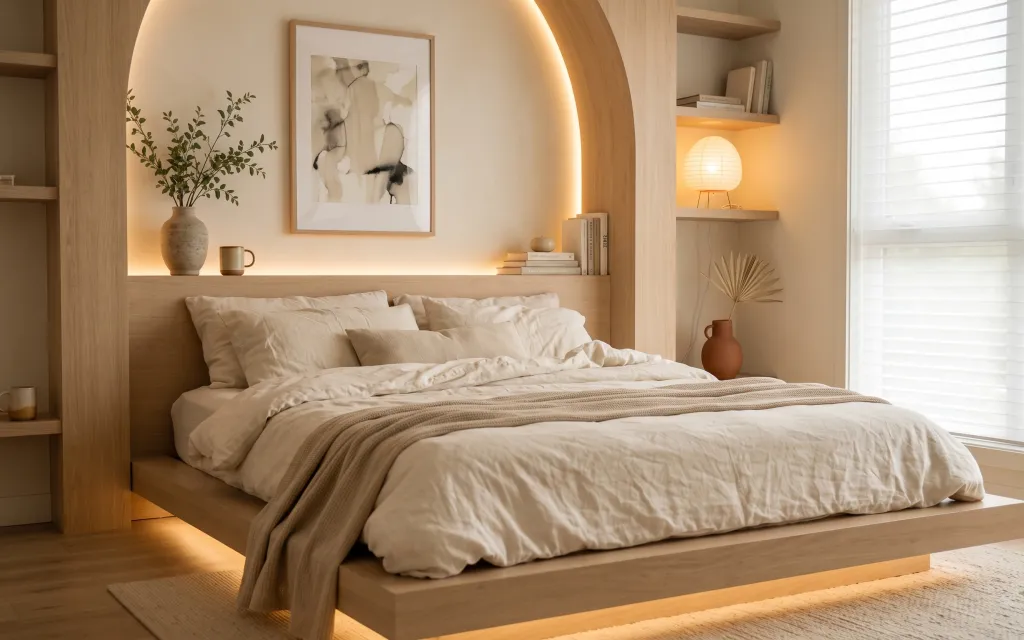
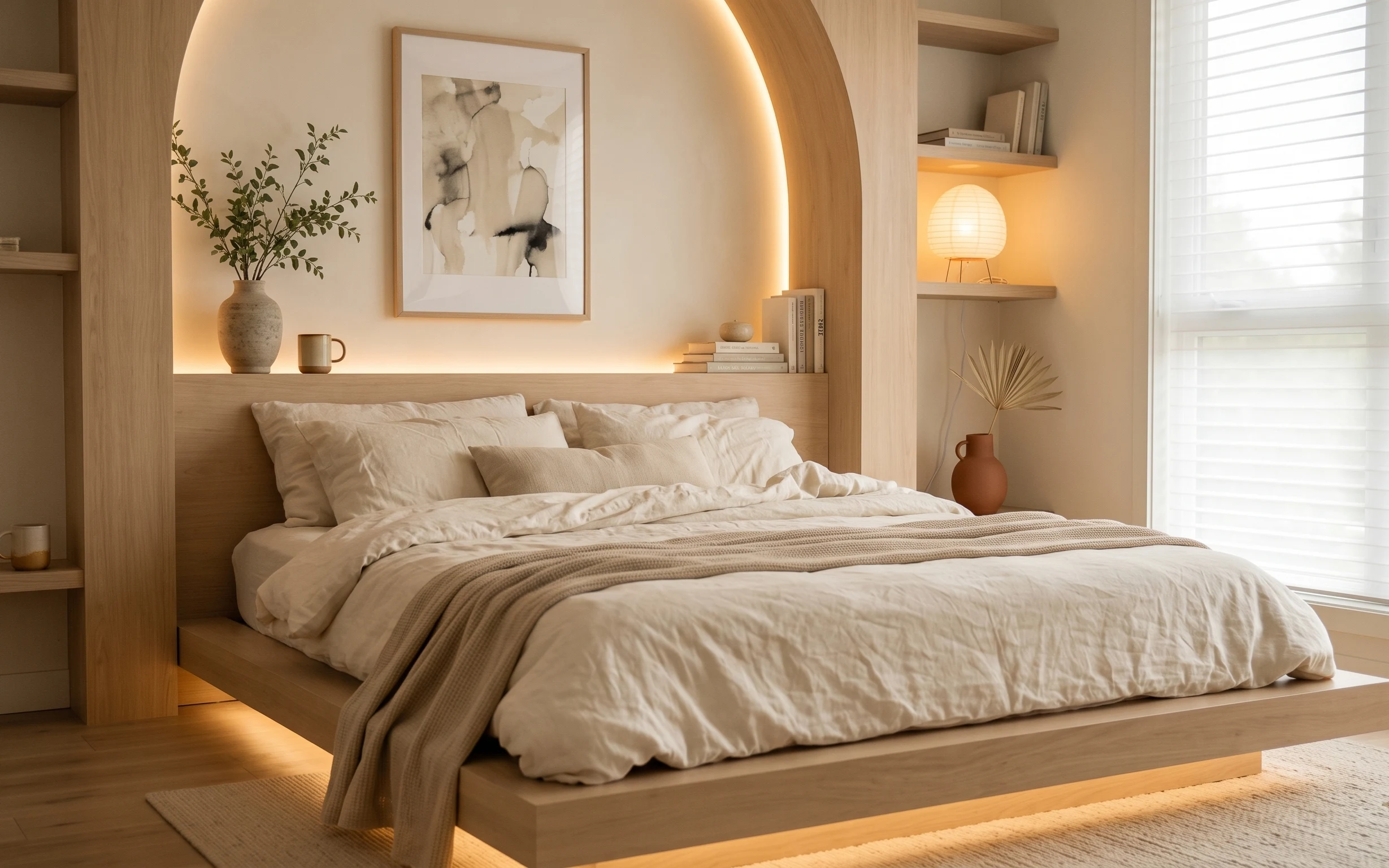
This look is all about contrast: soft white bedding, a tan knit throw, and that warm wood backdrop that makes everything feel intentional. In the photo you can spot three tactile materials—knit texture in the blanket and rug, matte ceramic in the mug and vase, and the crisp edge of framed art. The lamp shade also matters, because its warm glow gives the whole setup that “evening light” feeling. For shared-housing renters, the best part is that none of this depends on permanent installs—every piece can go into a box when your lease ends.
I used to overbuild bedroom styling in my head: more shelves, more hardware, “just one little fix.” Then I got burned when I moved and realized the stuff that felt effortless in the moment didn’t pack well. What changed my mind was leaning into soft goods plus plug-in lighting, and treating the framed print like a swappable “mood board” item. This setup is the same idea—warm, calm, and easy to take with you.
Layer 1 — tan knit throw blanket ($30) draped for texture on the bed edge
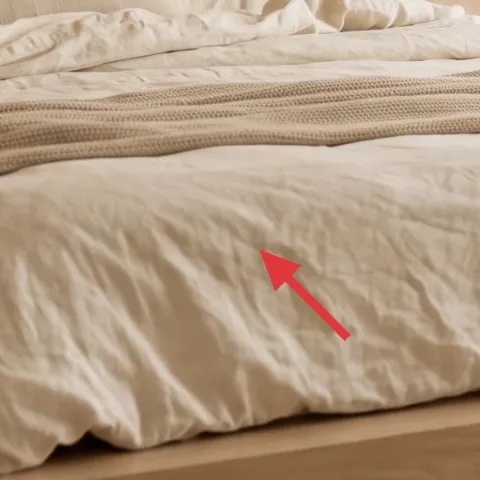
A tan knit throw folded over the front edge of the bed adds texture where your eye lands first, especially against the white bedding. The waffle/knit surface reads cozy without needing more colors, and it also hides small wrinkles from everyday use (which is real life). An obvious alternative is a thicker coverlet, but that takes up more space in a moving box and looks bulky when the bed is already visually dominant. This throw keeps the silhouette light and packs flat, while still giving you that layered “I thought about it” finish.
Layer it the same way every time
Fold the throw in one consistent direction so the texture line looks deliberate, not accidental.
Layer 2 — beige knit area rug ($80) grounds the bed in one soft rectangle
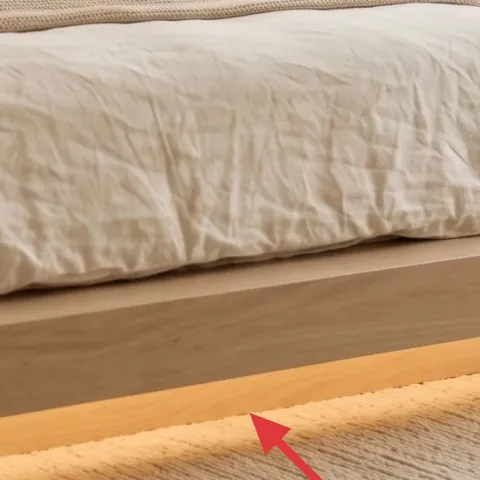
The beige knit rug does two jobs: it makes the floor feel warmer underfoot, and it visually anchors the bed so the room reads calmer. In the hero photo, the rug sits close to the bed’s front zone, which helps the space feel “finished” without adding another piece of furniture. A flatweave rug would also work, but it can look slightly formal and show footprints faster. This knit texture pairs naturally with the knit throw and keeps the whole palette quiet—perfect for shared housing where you want one cohesive look that still fits in boxes.
Pick the rug by where you step daily
If you walk across the same strip every morning, prioritize that area so the texture is the first thing you feel.
Layer 3 — plug-in table lamp with white fabric shade ($40) creates the warm evening glow
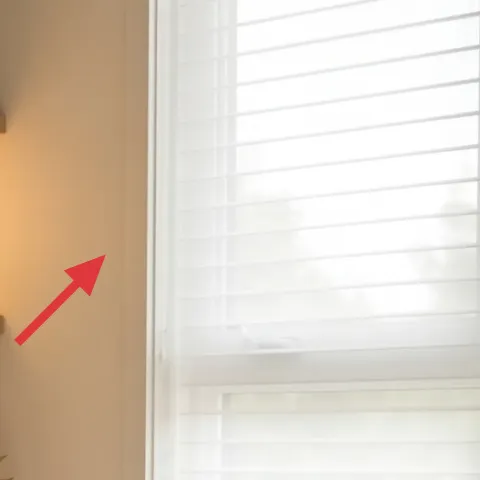
That plug-in table lamp with a white fabric shade turns the room from “daytime clean” to “nighttime soft” in a way you can’t get from ceiling light. The shade diffuses, so the glow doesn’t feel harsh, and it warms up the cream-and-oak palette already in the photo. The trade-off with bulbs is that you’ll be tempted to go brighter; resist it and keep the lamp as the accent, not the main light source. This is also the most move-friendly lighting choice—grab it, unplug it, pack it, repeat.
Don’t size the shade too small
A tiny shade makes the glow look spotty, especially next to a built-in wood backdrop.
Layer 4 — framed abstract art print (marble-like) ($80) one-swap focal point for the whole mood
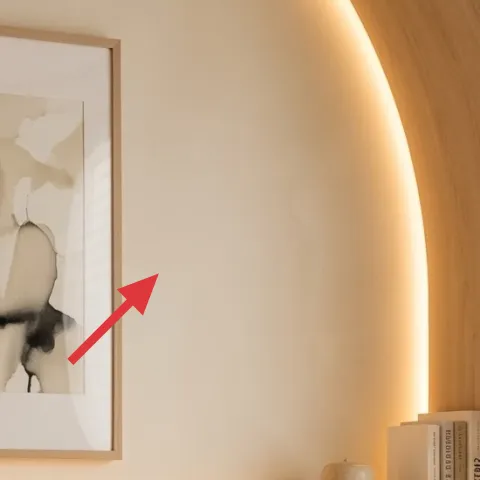
The framed abstract print is the visual “anchor” above the bed—quiet, graphic, and neutral enough to work with changing pillows later. The hero’s print has black-and-white contrast with soft gray movement, which mirrors the lamp glow and keeps the room from feeling flat. Buying a matching set of prints is the obvious alternative, but a single focal frame is easier to pack and easier to update when you move. Here the frame is part of the look; the art inside is where you can DIY and rotate your vibe.
Make it instead of buying it
DIY a marble-like abstract on cardstock, then place it inside the existing frame (no wall mounting needed) so the focal point changes with every lease.
Materials
- Cardstock sheet — 1 — craft store — $5
- Watercolor paint set — 1 small set — art store — $12
- Round paintbrush (size 6–8) — 1 — art store — $6
- Graphite pencil — 1 — craft store — $4
- Painter’s tape — 1 roll — hardware store — $3
Steps
- Mask a border with painter’s tape so the edges stay clean.
- Lightly sketch a few “veins” with a graphite pencil where the contrast will go.
- Wet the background lightly, then drop in gray watercolor for soft marble patches.
- While it’s still damp, add darker strokes (charcoal-gray) for the bolder movement.
- Let the paper dry fully so the colors don’t smear when you add detail.
- Re-wet only the specific areas where you want sharper edges, then add thin vein lines.
- Let it dry again completely.
- Pop it into the frame after it’s fully dry, then stand back at bed height to check balance.
Total DIY cost: $30 — saves about $50 over buying.
Match the contrast, not the exact pattern
Keep black marks limited to a few veins so the print stays calm next to white bedding.
Layer 5 — tall vase with leafy branches ($20) adds vertical softness without taking floor space
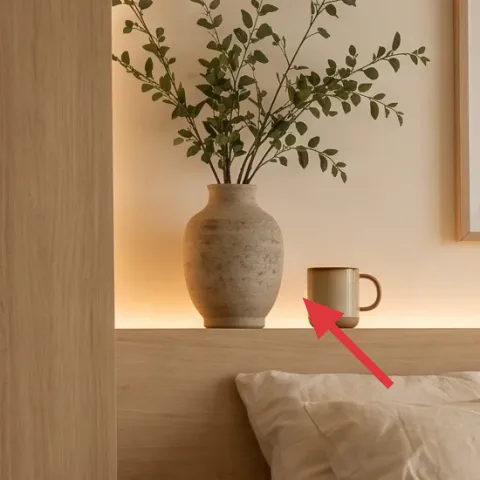
The tall vase with leafy branches gives the room that “collected” feeling while still staying minimal. Its shape pulls your eye up, which is especially helpful in bedrooms where the bed is wide and takes over the visual weight of the wall. An easy alternative is a shorter bud vase, but it can feel visually cramped against the bed wall. This vase-and-branch silhouette also packs better than bulky decor because you can separate stems, wrap them, and store the vase safely. The color reads warm and earthy, so it doesn’t fight the oak tones.
Use stems you can reuse
If you’re switching seasons, choose branches that look good both fresh and dried.
Layer 6 — decorative ceramic mug on shelf ($15) one small object that looks styled, not cluttered
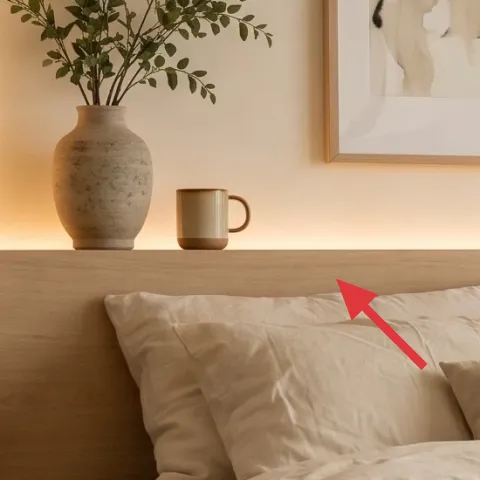
That small ceramic mug on the shelf works because it’s both decorative and believable. It tells the story of “someone lives here,” which is what makes this kind of styling feel calm instead of costume-like. A heavier tray-and-knickknack approach would also look styled, but it’s harder to keep tidy and much slower to repack during a move. This layer is simple: one ceramic piece near the lamp and art keeps the shelf reading intentional. The trade-off is that you have to resist adding more objects once the mug is in place.
Keep shelf styling to a set number
One mug plus one vase is enough; add only if it still reads balanced at a glance.
Layer 7 — white cushion pillow ($12) makes the bed look “ready” even on messy mornings
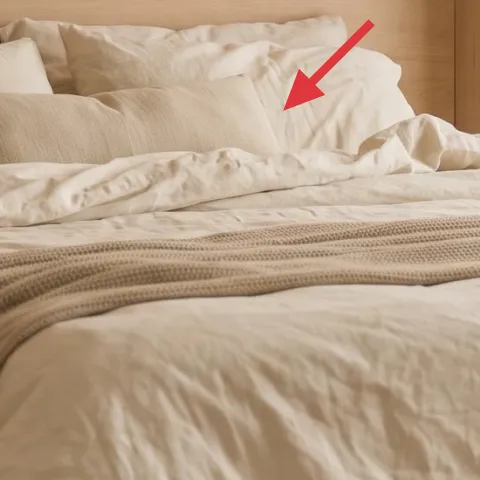
A white cushion pillow—especially one that matches the bedding’s fabric feel—keeps the bed looking crisp and inviting without changing the palette. In the hero, the pillows create soft volume behind the throw, so the whole bed reads layered rather than flat. The most tempting alternative is adding more accent pillows in multiple colors, but that’s harder to carry across moves and can make the room feel busy fast. Instead, stick with one or two white cushions so everything stays coherent with the lamp glow and the marble-like art print.
Don’t choose a pillow cover that pills fast
Look for a cover fabric that holds shape so it still looks clean after week-to-week use.
The cost, layer by layer
| Layer | Item | Cost |
|---|---|---|
| 1 | tan knit throw blanket draped on bed | $30 |
| 2 | beige knit area rug | $80 |
| 3 | plug-in table lamp with white fabric shade | $40 |
| 4 | framed abstract art print (marble-like) (DIY swap inside existing frame) | $80 |
| 5 | tall vase with leafy branches | $20 |
| 6 | decorative ceramic mug on shelf | $15 |
| 7 | white cushion pillow | $12 |
| Total | $277 | |
If the budget needs to tighten, swap the rug for a smaller size or a cheaper knit look (same warm beige family) and keep the lamp + framed print—those two do the most visual work per dollar.
What worked, what didn't (across the whole room)
This room’s best quality is how the warm lighting and soft textiles do the heavy lifting, so nothing feels harsh or overly styled. The biggest improvement comes from treating the framed art as the mood anchor and keeping shelf decor to one or two objects.
What worked
- The tan knit throw adds texture that reads layered without adding extra furniture pieces.
- The beige knit rug anchors the bed zone and makes the floor feel warmer immediately.
- The plug-in lamp’s white fabric shade softens contrast and warms the whole palette after dark.
- The marble-like framed print gives a calm focal point that works with changing pillows later.
- One tall vase with leafy branches adds vertical interest without crowding the walkway.
- The small ceramic mug makes the shelf look used-in instead of staged.
What didn't
- Over-adding accents on the shelf makes the whole look feel busy against the quiet bedding.
- A lamp that’s too bright can wash out the warm tones and flatten the art print contrast.
- Choosing a rug that’s too gray can fight the oak and make the room feel cooler than intended.
- Pushing too many non-white pillows can disrupt the clean “marble + cream” rhythm.
What we'd skip if we did it again
Skip building a full matching “bedroom set” with multiple hard pieces. In shared housing, coordinated furniture is hard to rehome, and it crowds the move box. Textiles and one plug-in lamp get you the same finished look with fewer packing headaches.
Skip adding more framed art right away. One focal frame works because it keeps the wall calm next to the bed. If the print feels too plain, swap the paper inside the frame later instead of expanding into a multi-frame moment.
Skip heavy decor you can’t separate. In this style, the vase and branches are flexible—stems can be wrapped and stored, and the vase can move safely. Bulky arrangements tend to break or force awkward packing, especially when you’re moving on a tight schedule.
Frequently asked
How long does this kind of bedroom refresh usually take?
Plan for about 2 to 4 hours total. The textiles and rug are quick because they’re just swapping positions. The framed art is the slow part only if the DIY print is new—once the painting dries, you just slide it into the frame. Lighting is also fast: unplug, place, and test the glow direction.
Is this renter-friendly if the room has built-ins and I can’t change the wall?
That’s the point of the look. The warm wood backdrop and framed art placement do most of the design work, while everything you’re adding is soft goods, freestanding objects, and one plug-in lamp. There’s no need to drill into shelves or swap fixed fixtures—so the refresh doesn’t break when you move.
What if my bedroom is smaller than this photo?
Keep the rug, but consider sizing it so it still reaches the bed’s front edge without overextending into walk space. Stick to one focal framed print and limit shelf styling to one or two ceramics. If storage is tight, choose a throw that folds down smaller rather than a bulky blanket.
What if my bedroom is bigger—how do I scale this style up?
Increase the rug size first so the bed zone feels grounded, then let the lamp become the light “center” by choosing a shade that’s proportionate to the bedside surface. For wall art, prioritize one slightly larger framed print over adding many small frames, so the wall stays calm and cohesive.
Where should I shop for these pieces without blowing the budget?
Textiles and decor are easiest to source from home goods stores, thrift shops for ceramic pieces, and online marketplaces for lamp shades and knit throws. For the framed print, thrift the frame if you don’t already have one, or DIY the paper insert and reuse the frame you like. A single good lamp also reduces the need for multiple light sources.
What’s the biggest mistake people make in a bedroom like this?
Most people try to “style” with too many accents at once. That turns a calm, warm setup into visual clutter, especially against white bedding and a high-contrast print. Keep shelf decor to a small set, choose one consistent pillow color family, and let the lamp + art do the heavy lifting.
More in Bedroom
What $300 buys: a move-ready bedroom refresh
A warm, japandi-leaning bedroom refresh built from 7 no-drill, packable swaps—focused on layering textiles, adding one plug-in lamp, and sw…
What $300 buys: a bed-and-vanity nook refresh
A bed-and-vanity nook refresh for shared housing that stays move-friendly. This $300 plan leans on warm textiles, a rug anchor, and no-dril…
Under $500: warm lamp-lit bedroom refresh for shared housing
Warm lamp-lit bedroom refresh designed for shared housing—no drilling, everything packs up. This $500 plan uses 7 swap-in layers, including…