- Best for
- soft, move-friendly bedroom styling
- Time
- about 2–3 hours
- Total cost
- $465 total
- Renter-safe
- no drilling, lightweight swaps
Why warm lamp-lit neutrals are the bedroom of 2026
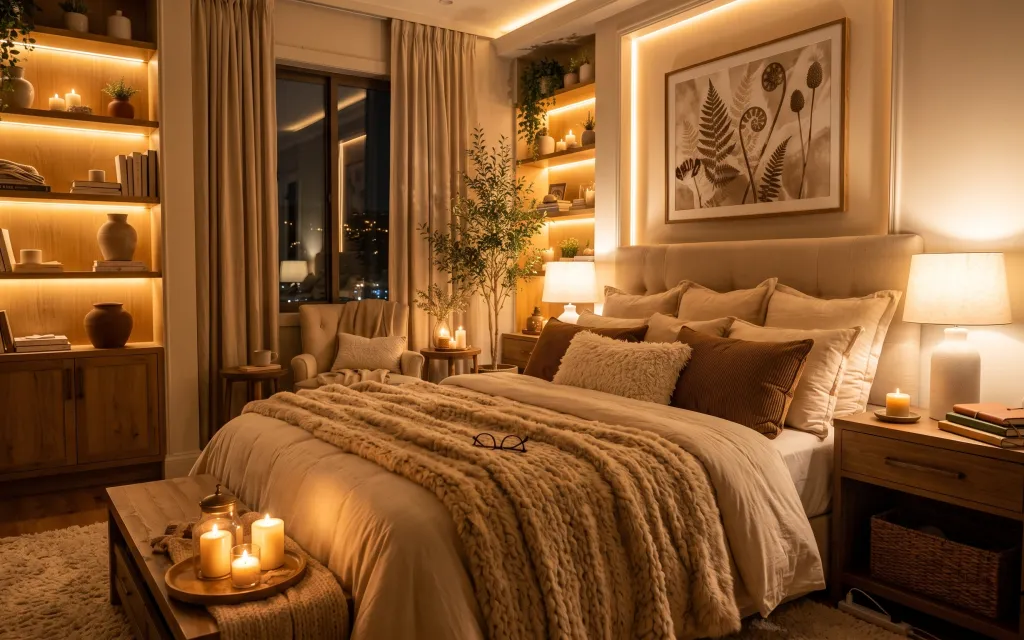
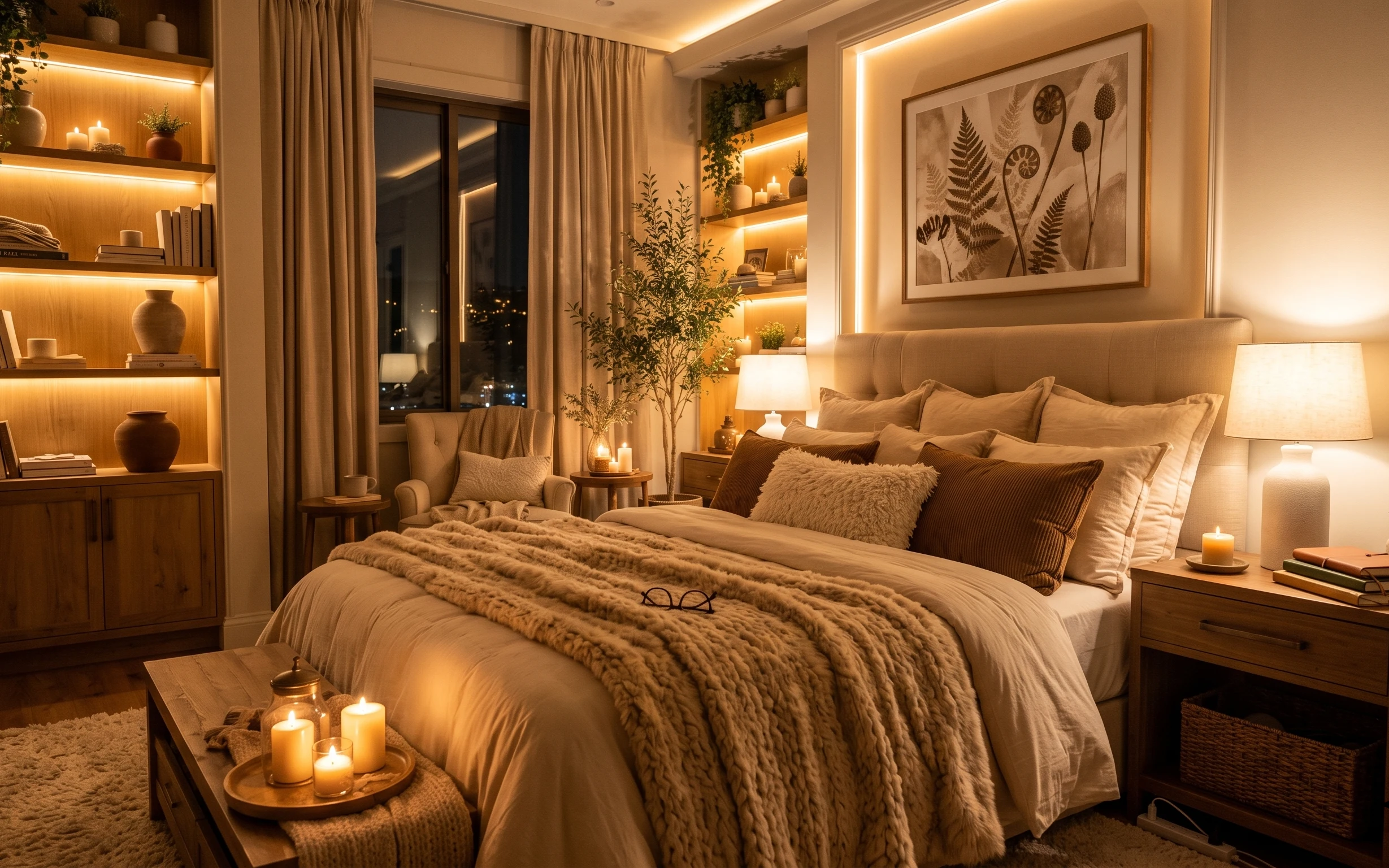
The first thing this room gets right is texture: cream rug pile, fuzzy knit throws, and soft brown curtains all calm the space down. The second is light—warm lamp glow + candlelight makes the shelving feel intentional instead of leftover. On the wall, the framed botanical print anchors the chaos of plants and books with a clean, repeatable shape. None of it is precious. For shared housing, the goal is to build an “I can pack this” look, not a permanent install you’ll dread carrying to the next place.
I used to overbuy décor when I moved—bigger lamp, heavier frame, “just one more” thing. Then I hauled it all into a studio where everything looked cluttered in the first week. What I changed: I now chase lighting warmth and textile layering first, because those move with you and still look good in a smaller footprint. This kind of warm neutral setup is the lesson I keep repeating for my own moves.
Layer 1 — cream rug ($100) Soft underfoot, low-risk to move
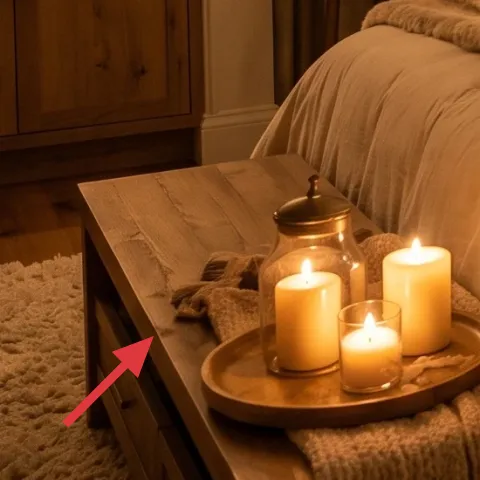
A cream rug is what makes this bed area feel finished instead of temporary. In the photo it shows up as a warm base layer across the floor, so the rest of the styling (candles, throws, plants) doesn’t fight with bare boards. I’d pick a rug with a similar creamy tone because it keeps your nighttime light looking golden rather than gray. The trade-off is that light rugs can show wear—so the win here is choosing a pile that still hides everyday scuffs. A rug also bundles well for moves: fold carefully, keep it in a flat cover, and it’s gone in minutes.
Choose a cream that reads warm, not stark
In warm lighting, “cool white” rugs can look dingy fast. Look for cream with a hint of beige so it stays flattering.
Layer 2 — plug-in table lamp on nightstand ($60) One warm pool of light
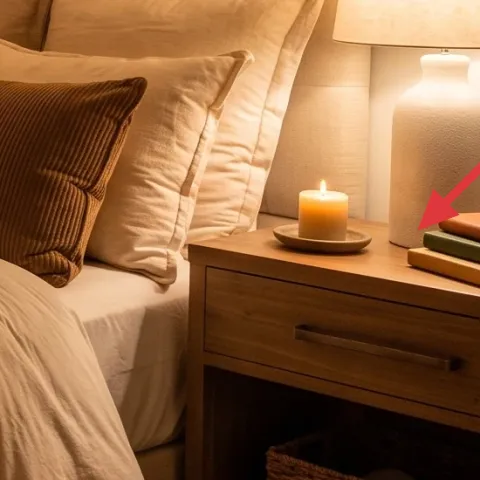
This plug-in lamp does more work than its size suggests. Its shade creates a controlled glow on the right side, which is why the throw blanket and pillows look plush instead of flat. Overhead lighting is usually too clinical for shared spaces, so adding one independent light source is an easy way to make the room feel “yours” even if the walls aren’t. I would not chase a matching lamp set; one well-placed lamp is enough because candles cover the rest of the atmosphere. The trade-off: you’ll rely on lamp light more at night, so pick a bulb color that stays warm.
Placement matters more than wattage
Set the lamp so it lights the bed surface, not just the nightstand front edge.
Layer 3 — framed botanical wall art print ($80) Sets the pattern scale
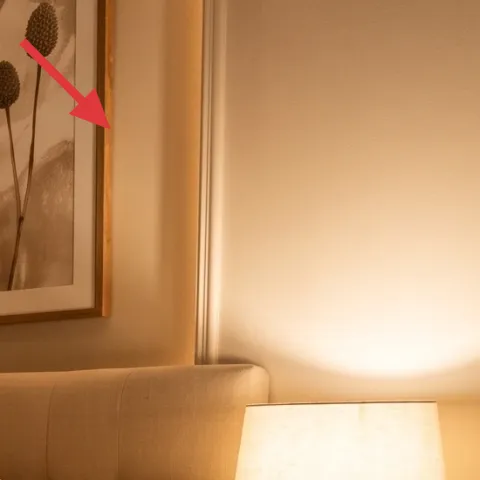
The framed botanical print is the room’s visual “breather.” With lots of organic shapes already happening—plants, pillows, curtain folds—it gives you a repeatable motif that doesn’t require changing every season. For a move-friendly refresh, a single framed print is far easier than assembling a whole gallery wall. Keep the frame size in the same neighborhood as this photo: big enough to anchor the bed zone, small enough to carry without calling two friends. The trade-off is that wall art is the first thing you’ll second-guess when you move—so choose one you still like when you’re not standing in the same warm lamp glow.
Skip anything you can’t rehang safely
If your rental wall is plaster or textured, avoid adhesive that tears paint. Use removable hooks or a hanging method that won’t leave residue.
Layer 4 — brown curtains ($60) Softens the whole bed zone
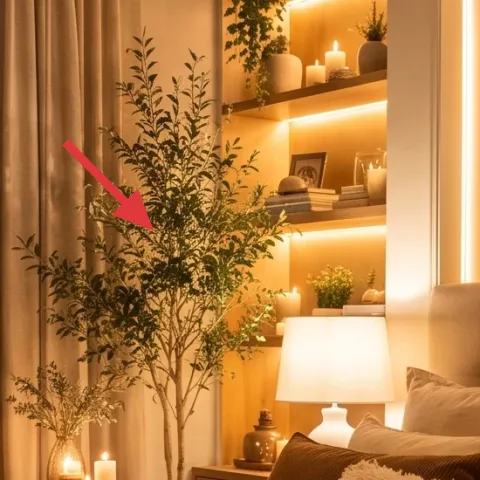
Brown curtains add movement and depth without adding clutter. They also make the room feel more layered than “just furniture,” because you get vertical softness behind the bed area. I’m drawn to this warm brown tone: it echoes the throw blanket and keeps everything cohesive even when your plant sizes don’t match. The decision here is length and pooling—too-short curtains can look like a window topper instead of a design element. The trade-off is storage weight: curtains fold bigger than pillows, but they’re still lightweight and pack flat. That’s exactly what you want for shared housing.
Go for full folds, not thin sheers
Heavier curtain fabric reads richer and helps balance the warm lamp light against the darker corners.
Layer 5 — potted plant in the corner ($30) Adds height without extra furniture
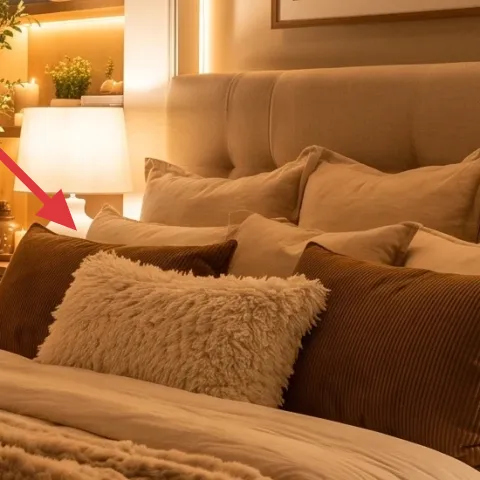
The potted plant in the corner is doing two jobs: it brings height to the bed zone and it makes the shelves feel intentional rather than staged. Because plants are living objects, they’re also easy to keep “yours” across moves—roots travel with you, and you can re-place to match a new layout. I like that the leaves here create a soft silhouette that works with curtains and the botanical print instead of clashing. The trade-off is upkeep: plants need light and watering, and a neglected plant shows up fast in photos. Still, for shared housing, it’s a better recurring purchase than another décor piece you’ll outgrow.
Match plant height to your wall framing
If your next room has a higher window, you’ll likely want a slightly taller plant for the same balance.
Layer 6 — candles on tray ($35) Candlelight that packs
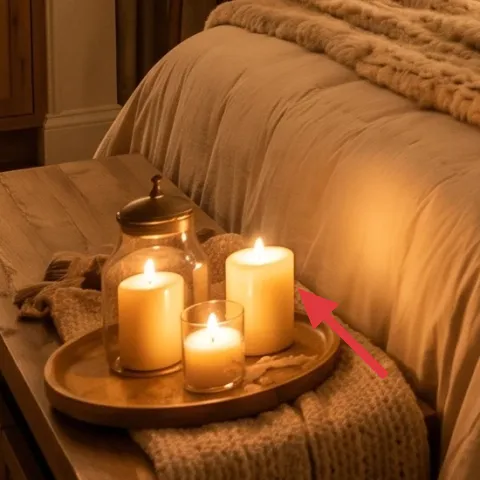
Candles are the fastest way to make a bedroom feel “done” without permanent changes. In this setup, the tray groups multiple candles into one visual moment, so you don’t have to decorate every surface to get impact. I’d choose simple white or cream candles because they match the warm neutrals and keep the botanical/pillow palette from feeling busy. The trade-off is safety and burn time: candles require attention and you’ll need to decide how many hours you want them on before turning in. The good news is that you can pack them in a box and swap the tray styling later.
Don’t rely on candles as the only light
Use them for atmosphere, not the whole lighting plan—your plug-in lamp keeps the room practical at night.
Layer 7 — cream throw blanket ($100) The cozy texture layer
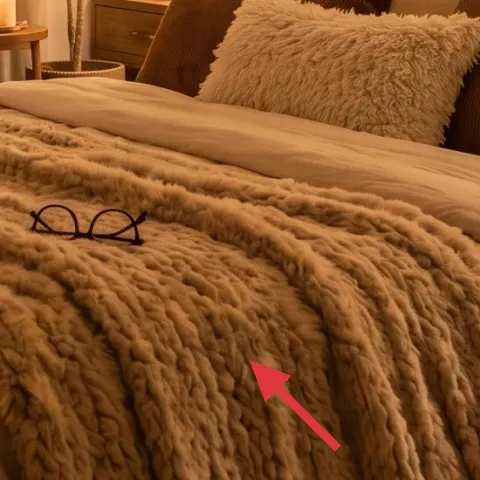
A cream throw blanket is the unglamorous hero of this look. It ties the palette together (rug, pillows, lamp glow) and adds a bulky texture that reads rich even when the room is minimalist. The key is how it sits: draped in a way that shows texture, not folded so tightly that it disappears into the bedding. Swapping this is also the easiest path for shared housing—throws are light, they roll, and they fit in any moving box. I wouldn’t spend on matching bedding sets; texture variation does the work for you. The trade-off is that knit throws can shed a little at first, so plan for a quick shake-out.
Layer textures, not just colors
Pair a knit throw with smooth pillow covers to keep the bed from looking flat.
The cost, layer by layer
| Layer | Item | Cost |
|---|---|---|
| 1 | Cream rug | $100 |
| 2 | Plug-in table lamp | $60 |
| 3 | Framed botanical wall art print | $80 |
| 4 | Curtain panel pair | $60 |
| 5 | Indoor plant in a pot | $30 |
| 6 | Candles on tray (set) | $35 |
| 7 | Cream throw blanket | $100 |
| Total | $465 | |
For a cheaper version, prioritize the rug and curtains first, then scale back the framed botanical print size and choose fewer candles. A single plant in the corner can replace extra shelf greenery, and a less expensive knit throw still gives the same tactile, layered feel.
What worked, what didn't (across the whole room)
The overall verdict: warm lighting + layered textiles make the room feel deliberate even when everything is moveable. The botanical print and curtain color also keep the palette calm instead of scattered.
What worked
- The cream rug creates a warm base so pillows and candles don’t look like separate accessories.
- The plug-in lamp adds a controlled warm pool of light, keeping shadows soft over the bed.
- The framed botanical print gives an intentional pattern scale against organic plants and curtain folds.
- Brown curtains add height and softness, making the bed zone feel layered rather than “placed.”
- The potted plant in the corner adds vertical interest without buying extra furniture.
- Candles grouped on one tray make atmosphere look planned instead of random.
What didn't
- Too many candle moments scattered across surfaces would make the bed area feel cluttered fast.
- If the rug is too cool-toned, the warm lamp light can make it look slightly gray.
- Choosing a framed print that’s too small leaves the wall feeling unfinished behind the bed zone.
- Short curtains can read like window styling instead of a design layer for the whole bed area.
What we'd skip if we did it again
Skip a full matching set approach (bedside pieces, tray items, and throw blankets that all come from the same collection). In this photo, mixing textures and shapes feels more real, and it’s also easier to replace one item at a time during a move.
Skip hard-to-transport décor that’s heavy or awkwardly shaped. Shared housing is all about quick packing, so choose lightweight items that fold, stack, or come in small boxes.
Skip wall arrangements that require constant re-hanging. A single framed botanical print and a consistent curtain choice are repeatable across neighborhoods and lease changes, which keeps the room from turning into a stressful renovation every year.
Frequently asked
How long does this bedroom refresh take?
Plan for about 2–3 hours total. Rugs and curtains take the longest because they need positioning and folding/stacking. Wall art placement is quick, especially if you’re using removable hooks and you already know the height you like. Candles are just the final layer—set them up once lighting is in place so you don’t over-style.
Is this doable if I rent or share a room?
Yes—this look is built from items that don’t require permanent changes. Stick to textiles (rug, curtains, throws, pillows) and plug-in lighting, then add one framed botanical print so the wall feels intentional. Plants and candles work even in shared layouts because they can move with you and you can scale them up or down depending on your next room.
What if my bedroom is smaller or bigger than the photo?
If your room is smaller, keep the palette and reduce volume: a narrower rug, fewer pillows, and a single plant. If it’s bigger, you can go wider on curtains and choose a slightly larger framed print to keep the wall balanced behind the bed zone. The core rule is the same: warm lighting plus layered textures beats buying more furniture.
Where should I shop for these exact pieces?
For rugs and curtains, look at mid-range home stores or big-box retailers that offer easy returns. For the framed botanical print, choose a 16×20-ish size style that matches the palette (sage/green line art on cream background). For the plug-in lamp, focus on a warm bulb option so the room reads golden like the photo.
What’s the biggest mistake people make in warm neutral bedrooms?
They buy all their neutrals in cool tones. Creams and browns should feel warm together under lamp light, or the room can start looking slightly gray and flat. Another common miss is hanging wall art too high or too small; the frame should anchor the bed zone, not float above it.
Do I need the same candle count to get the look?
No. The trick is grouping: use a tray to cluster the candles so it reads as one styling decision. If you prefer fewer candles, use one larger candle or two medium ones. If you want more, keep the size consistent so the glow doesn’t feel chaotic.
More in Bedroom
Under $500: warm lamp-lit bedroom refresh for shared housing
Warm lamp-lit bedroom refresh designed for shared housing—no drilling, everything packs up. This $500 plan uses 7 swap-in layers, including…
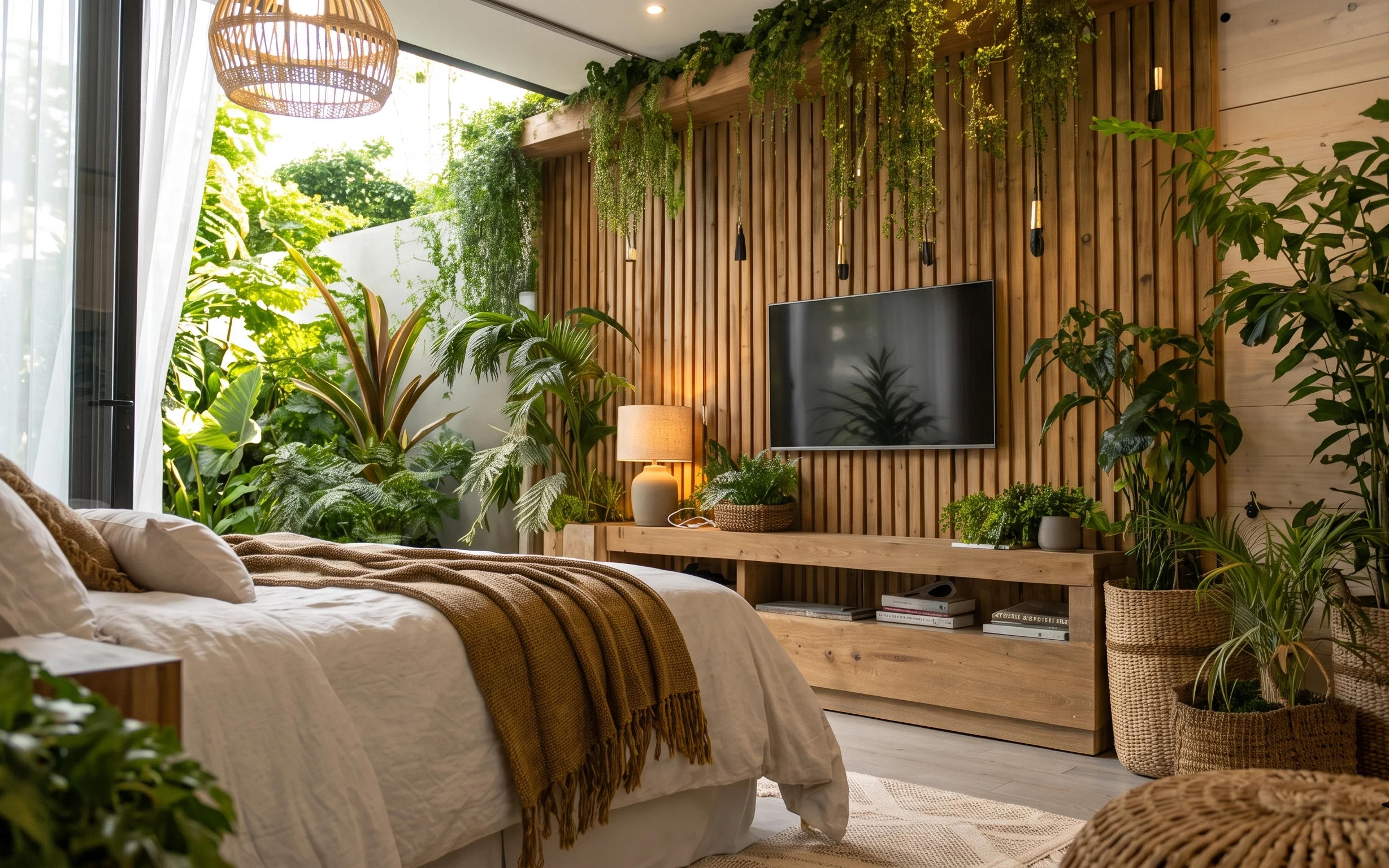
How to style a plant-filled bedroom for $500 with no-drill swaps
A plant-filled bedroom look for $500: swap in a light rug, a white duvet, dyed pillow covers, a mustard throw, and add plug-in lighting. Fi…
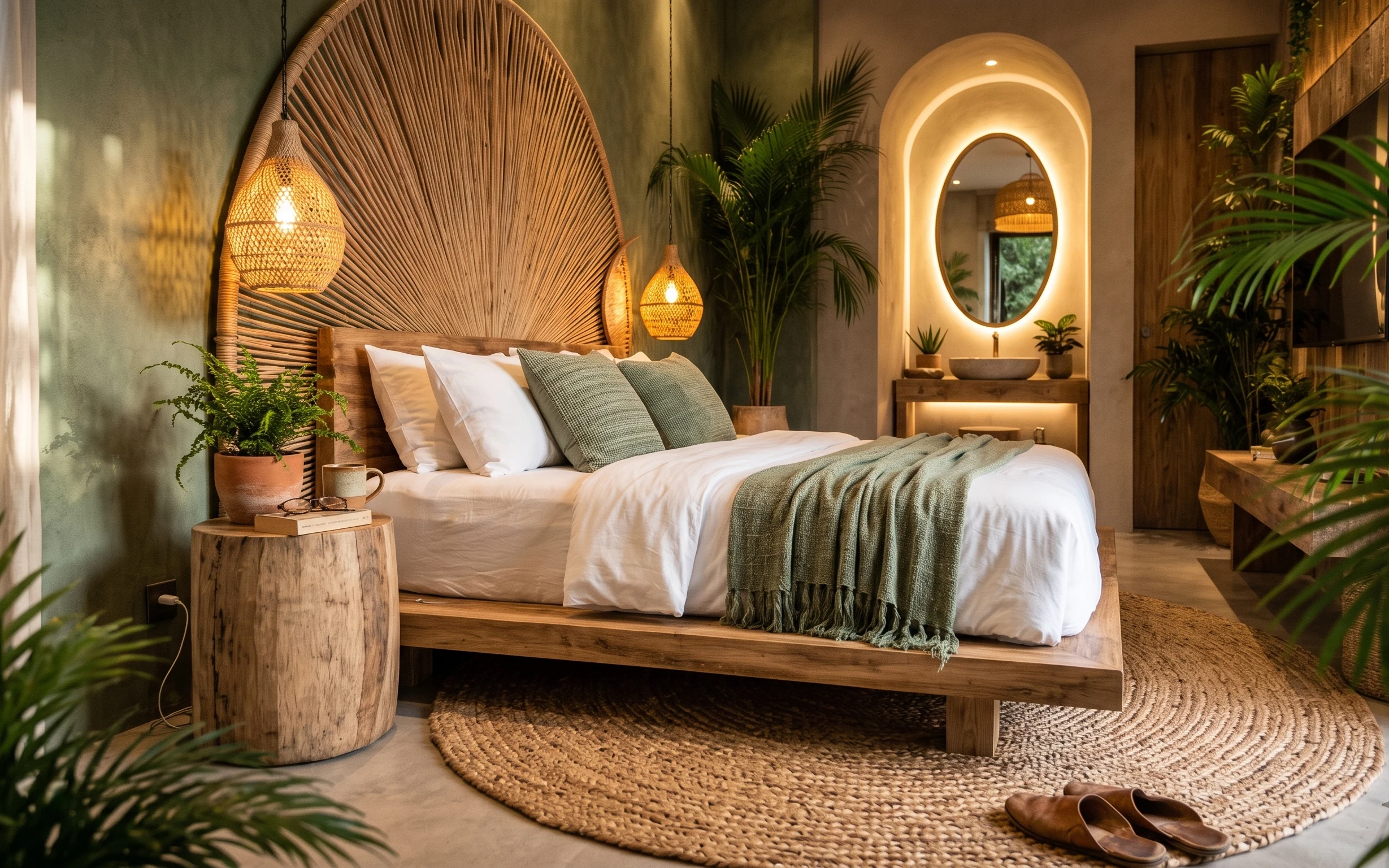
7 renter swaps for a $600 bed nook
A warm, boho bed nook refresh for renters with a $600 total budget. Focuses on a jute rug, oval mirror, and sage textiles plus plants—no dr…