- Best for
- green sofa corners
- Cost
- $580 (about $600 total with a buffer)
- Difficulty
- easy swaps
- Time
- 1 weekend
Why sage-green calm is the green sofa corner of 2026
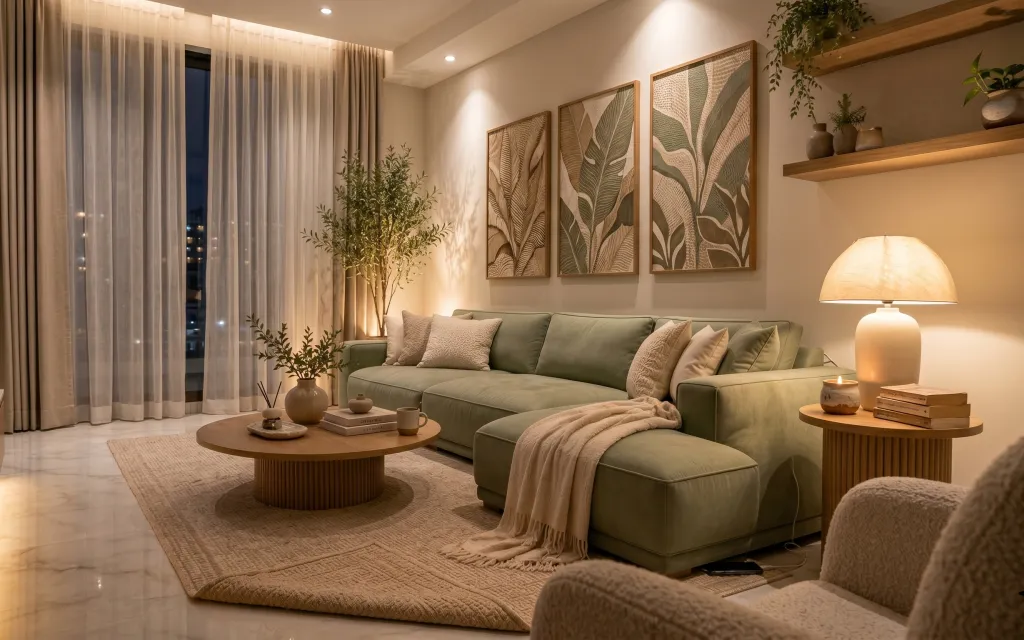
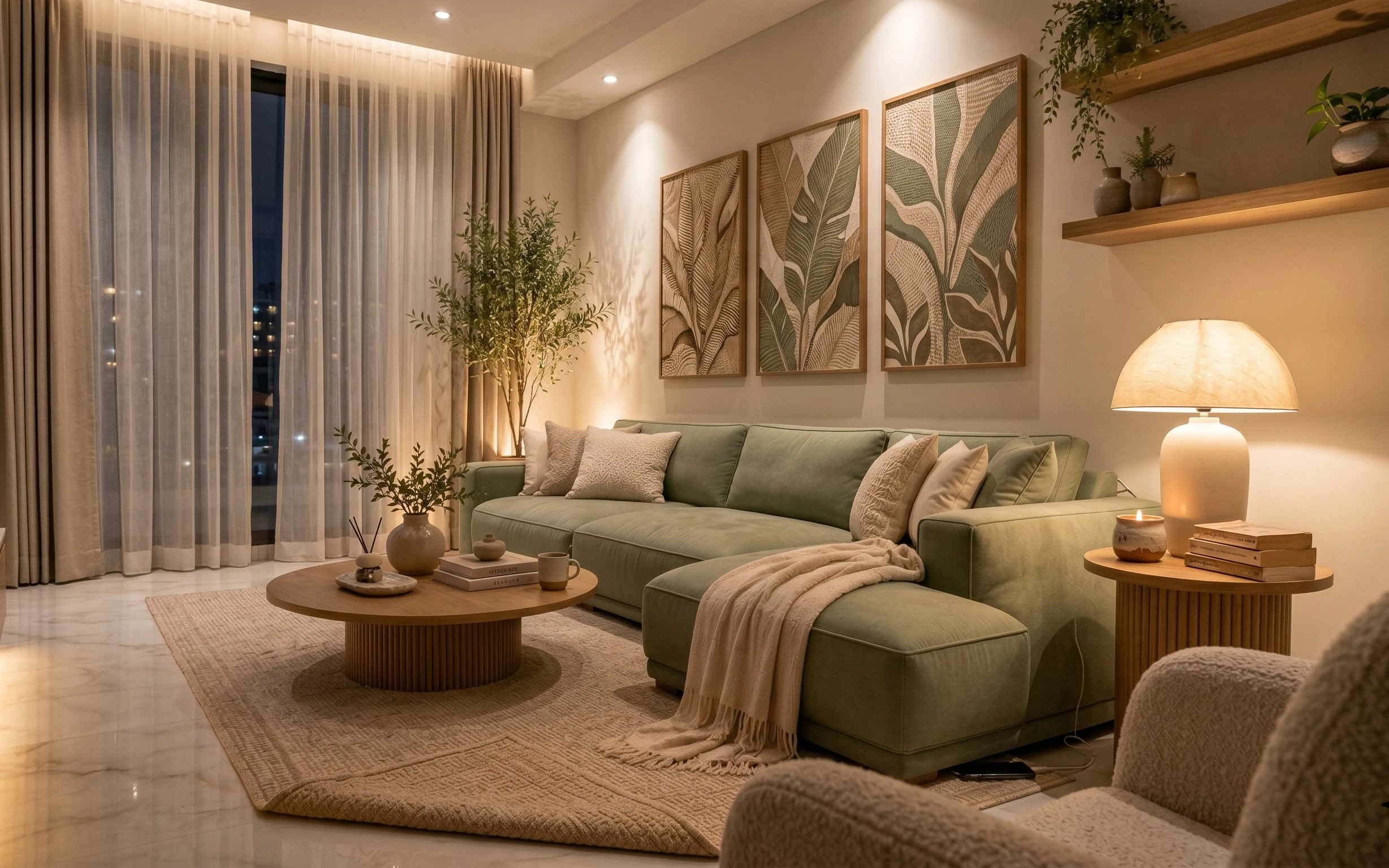
Start with the foundation: a beige textured area rug anchors the whole “japandi” feel and softens the glossy tile floor. The taupe/greige drapes add height and a gentle shadow line, especially where window light spills in. On the wall, three framed botanical leaf prints bring that layered, nature-mindset without needing any wall work. I also love how the plug-in table lamp creates warm pools of light that make the green upholstery read calmer, not cooler—perfect for renters who want impact fast.
I used to overdo it with matching sets—same fabric tone, same frame style, everything in a neat grid. In a recent living room refresh, that made the room feel like a showroom instead of lived-in. What changed my mind was simplifying the palette (sage, warm beige, taupe) and then adding one imperfect texture at a time: the rug’s woven relief, the lamp’s drum shade, and the soft candle glow. This version still looks curated, but it feels easier to live with.
Layer 1 — area rug 5×7, beige textured ($200) A grounded base under a high-gloss floor
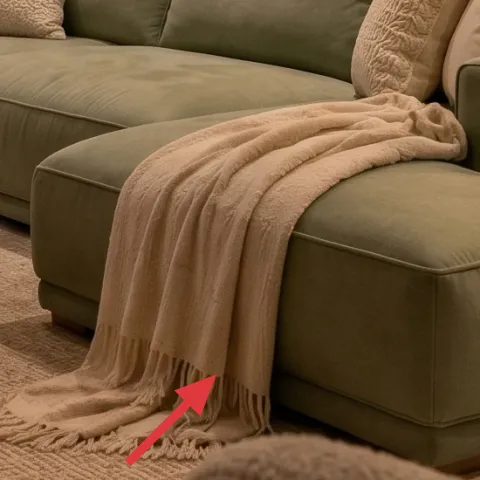
This beige textured area rug sits under the coffee table and extends far enough to unify the sofa zone with the ottoman. The relief matters: it hides everyday footprints and makes the whole corner feel warmer against the shiny tile. The obvious alternative is a flat-weave rug, but it can look too thin next to a chunky sofa and chunky wood side table. A thicker woven texture gives you that calm, tactile “japandi” read without needing to change any fixed surfaces. Bonus: when the lease ends, this rolls up and goes.
Layer the rug edges
Let the rug run far enough beneath the seating that the sofa and ottoman don’t look like they’re floating.
Layer 2 — draped curtains in taupe/greige (panel pair) ($60) Height that frames the light
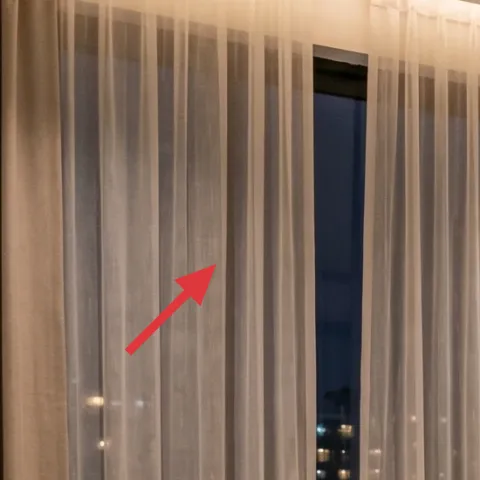
The taupe/greige drapes are doing more than covering glass—they visually raise the ceiling line and soften the room’s contrast. They fall in long, even folds, which keeps the green sofa from feeling too heavy. For renters, the play is using curtains you can hang without drilling and then take down cleanly: choose fabric that feels substantial but still drapes. The alternative is short curtains that land mid-window; that usually makes the room look smaller and boxier. These also help evening light look gentler, which matches the lamp warmth.
Keep the tone slightly warmer
If your sofa reads cool-toned, taupe/greige curtains prevent the whole palette from turning grey.
Layer 3 — set of three framed botanical leaf prints ($180) A botanical triptych that matches the sofa’s shape
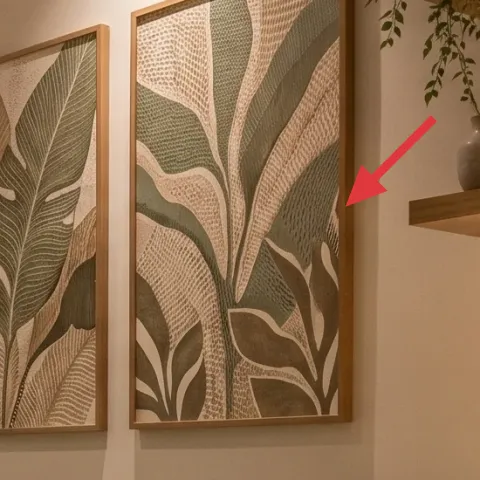
Three framed botanical leaf prints—each with a different leaf orientation—create a “movement” effect behind the sofa corner. Because they’re vertical and grouped, they balance the horizontal lines of the coffee table and the sweep of the sofa. The key choice is scale: these feel like mid-size wall art, not tiny prints that get lost in the space. The obvious alternative is one large print, but with a multi-piece wall like this, three coordinated frames add rhythm without demanding a gallery-wall wall setup. Hang them with removable methods so the look can go back to blank when you move.
Don’t pick frames that look too glossy
Shiny frames can glare in lamp light and make the botanical detail feel harsh.
Layer 4 — plug-in table lamp with beige drum shade ($60) Warm light that makes sage feel cozy
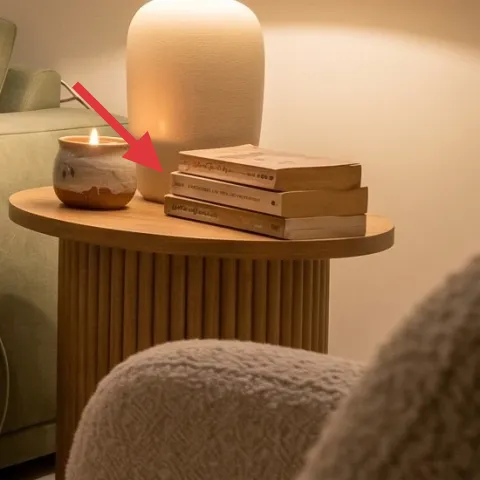
The plug-in table lamp with a beige drum shade sits on the wood side table and gives the whole corner that soft, warm glow after dark. I like this shade shape because it spreads light evenly across the sofa and rug, rather than creating a single harsh spotlight. The trade-off is that a very bright bulb can flatten the mood, so choose a warm temperature and let the shade do the diffusion. Replacing fixed lighting isn’t an option for renters anyway, so a plug-in lamp is the cleanest path to ambiance. This one also visually links to the warm beige tones in the rug and drapes.
Match light warmth to the rug
Warm bulbs make beige textures look richer and keep the room from feeling blue-toned.
Layer 5 — table candle in ceramic holder ($15) A small ritual detail on the coffee table
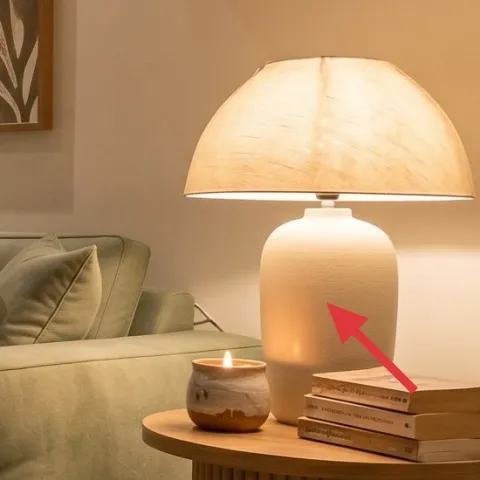
The ceramic candle holder on the coffee table adds a focal “pause” in the middle of the corner styling. Because it’s small, it doesn’t compete with the framed botanicals, and it naturally pulls your eye to the center of the rug. Choosing a ceramic holder matters: it reads grounded next to the wood side table ridges and the tactile rug fibers. An obvious alternative is adding another vase, but a candle gives you both texture and atmosphere. The practical renter benefit is that candle styling is easy to swap seasonally, and the whole setup comes with you when you move.
Use it for height, not just scent
Group the candle with one shorter object so the table doesn’t look top-heavy.
Layer 6 — decorative tray on the coffee table ($35) Keeps small objects looking intentional
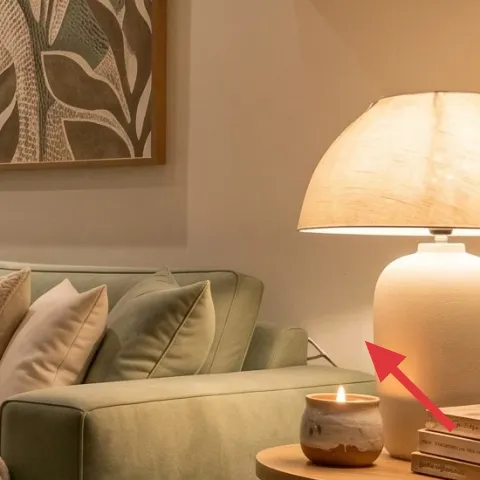
This decorative tray organizes the coffee table vignette—candle, little ceramics, and the small plant—so it reads as one curated “moment” instead of loose items. The tray’s rounded shape also softens the geometry of the round coffee table and the linear wall art frames. The obvious alternative is styling without a tray, but that usually turns into visual clutter fast, especially in a renter where there’s less wall storage. A tray is also an easy swap: change the objects inside, not the tray itself. That’s how this kind of japandi look stays fresh while staying move-friendly.
Group by one repeated material
If you use ceramic in the vase, repeat ceramic in the tray objects for cohesion.
Layer 7 — foraged dried floral arrangement in ceramic vase ($30) Low-maintenance “green” without watering
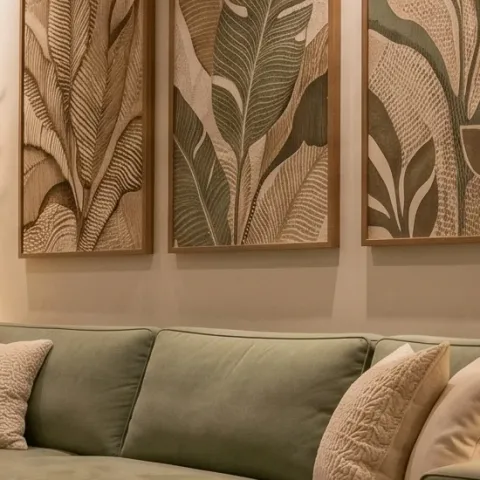
A foraged dried floral arrangement tucked into the ceramic vase near the sofa brings movement to the corner without the ongoing work of watering. It also echoes the leaf theme of the framed botanical prints, so the room feels designed rather than accidental. The big choice here is “dried” rather than fresh: dried stems last longer, and their muted color keeps the sage-green palette calm. The trade-off is that dried arrangements need a light hand for dusting, and they don’t bounce back after a bad day. Still, it’s the most renter-friendly way to keep that biophilic softness when your schedule changes.
Bundle stems tightly before placing
A neat bundle makes the vase look full, even when stems are lightweight.
The cost, layer by layer
| Layer | Item | Cost |
|---|---|---|
| 1 | area rug 5×7, beige textured | $200 |
| 2 | draped curtains in taupe/greige (panel pair) | $60 |
| 3 | set of three framed botanical leaf prints | $180 |
| 4 | plug-in table lamp with beige drum shade | $60 |
| 5 | table candle in ceramic holder | $15 |
| 6 | decorative tray on the coffee table | $35 |
| 7 | foraged dried floral arrangement in ceramic vase (DIY equivalent) | $30 |
| Total | $580 | |
Cheaper variant: swap the framed set for a single 24×36” botanical print, choose a thinner rug (still textured), and use one curtain panel per side instead of a full pair. Keep the plug-in lamp and tray so the corner stays styled.
What worked, what didn't (across the whole room)
The biggest win is how the palette stays consistent while the textures do the talking: rug fiber, curtain drape, and matte ceramic. Layering warm light from the plug-in lamp also keeps the sage upholstery from reading flat. The only part that can miss is wall art placement—off-center grouping makes the botanical triptych feel “accidental” instead of intentional.
What worked
- The beige textured rug anchors the seating and makes the glossy tile feel softer.
- Taupe/greige curtains add ceiling height through long folds, not just coverage.
- Three framed botanical leaf prints create rhythm that matches the sofa’s curved shape.
- The plug-in table lamp warms up sage green for a calmer, less grey-toned look.
- The decorative tray makes small objects feel collected, not cluttered.
- A ceramic candle holder adds a natural focal point without competing with wall art.
What didn't
- If the curtain color pulls too grey, the sofa can look colder than it should.
- Using tiny frames behind a large sofa reads busy and breaks the clean vertical lines.
- A bright bulb can overpower the shade and wash out the texture in the rug.
- Skipping a tray makes the coffee table look like it’s waiting for a “real” centerpiece.
What we'd skip if we did it again
Skip matching sets that force the same tone everywhere. Instead, keep the palette tight (sage, warm beige, taupe) and let texture do the matching so the corner still feels lived-in.
Skip replacing fixed lighting. A plug-in lamp gets you the warm mood at renter level, and you can swap bulbs or shades later without dealing with landlord fixtures.
Skip overstuffed table styling. One tray, one candle, and one small plant is enough—anything beyond that turns the look into clutter faster than it adds charm.
Frequently asked
How long does this refresh take for a renter?
Most pieces are “swap and style.” Plan about 2–4 hours for rug placement and curtain hanging, plus another 2–3 hours for arranging the framed botanicals and tabletop items. The only slower part is getting curtain height and frame spacing right—do a quick mock layout first.
What makes framed botanicals work in a rental?
Scale and placement do the heavy lifting. A triptych format (three coordinated frames) fills the wall behind a sofa without needing an expensive gallery setup. Use removable hanging methods and measure so the frames stay centered on move-out targets—then keep a simple swap plan if your next apartment has a different wall.
Can I make this work in a smaller living room?
Yes—keep the palette, but reduce one “bulk” element. Use a smaller 5×7 rug if needed, and choose curtains that still reach near the ceiling so the room looks taller. For the wall, reduce to two botanical frames instead of three, keeping the vertical rhythm.
What if my room is larger than this one?
Lean into bigger scale where it matters: extend the rug so it reaches under the front legs of the sofa, and consider curtain panels that fully cover the window area with extra fabric for pooling. If your wall is wider, add spacing between the three framed prints rather than shrinking the frames.
Where should I shop for the easiest renter swaps?
Start with textiles—rug and curtains—because they set the whole mood. For wall art, look for framed botanical prints sold as a set so the colors match immediately. Then finish with a plug-in table lamp and a simple ceramic tray; those last pieces are what make the vignette look deliberate.
What’s the biggest mistake people make with this look?
Choosing the wrong curtain undertone. If the drapes lean too cool/grey, the sage upholstery can look washed out under warm lamps. The fix is simple: pick taupe/greige curtains with warmth and check them against daylight and lamp light before committing.
More in Living Room
5 renter-friendly swaps for a green sofa corner for $600
A green sofa corner gets calm, japandi energy with no-drill swaps. For about $600, this refresh adds a textured rug, taupe drapes, framed b…
7 no-drill swaps for a $300 sofa seating area
A warm japandi sofa seating area refresh for renters using no-drill swaps, soft textiles, and plug-in lighting for about $300. The result: …
7 renter-friendly no-drill swaps for a $500 sofa corner refresh
A renter-friendly sofa corner refresh for under $500: warm lighting, two pillow colors, a framed botanical print, and a plant that makes th…