- Best for
- renter-friendly sofa corners
- Cost
- under $500
- Difficulty
- easy (no-drill)
- Time
- about 2–3 hours
Why warm beige-and-burgundy sofa corner is the move-friendly nook of 2026
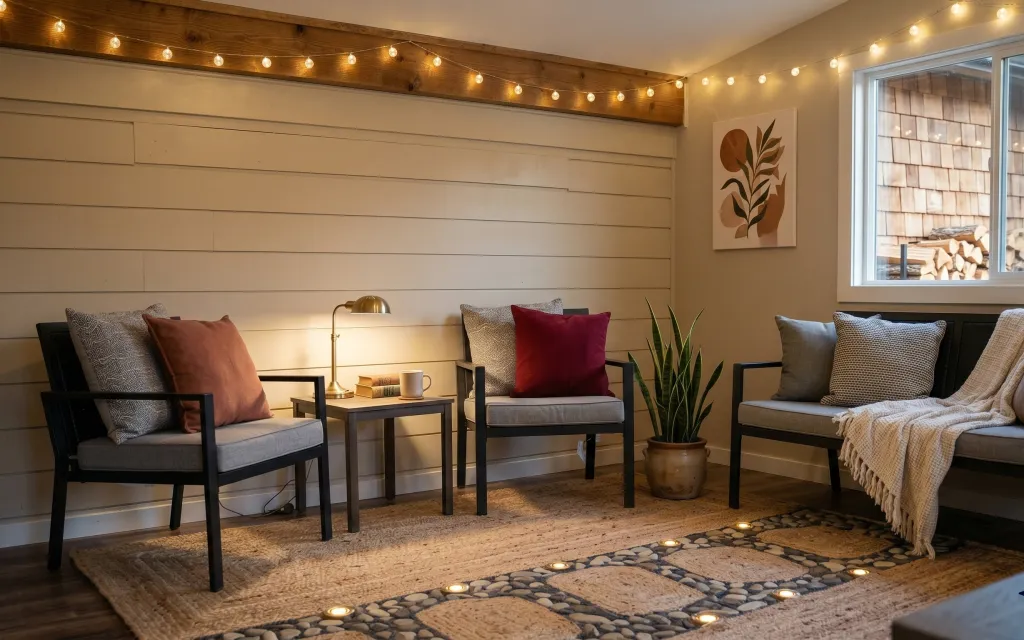
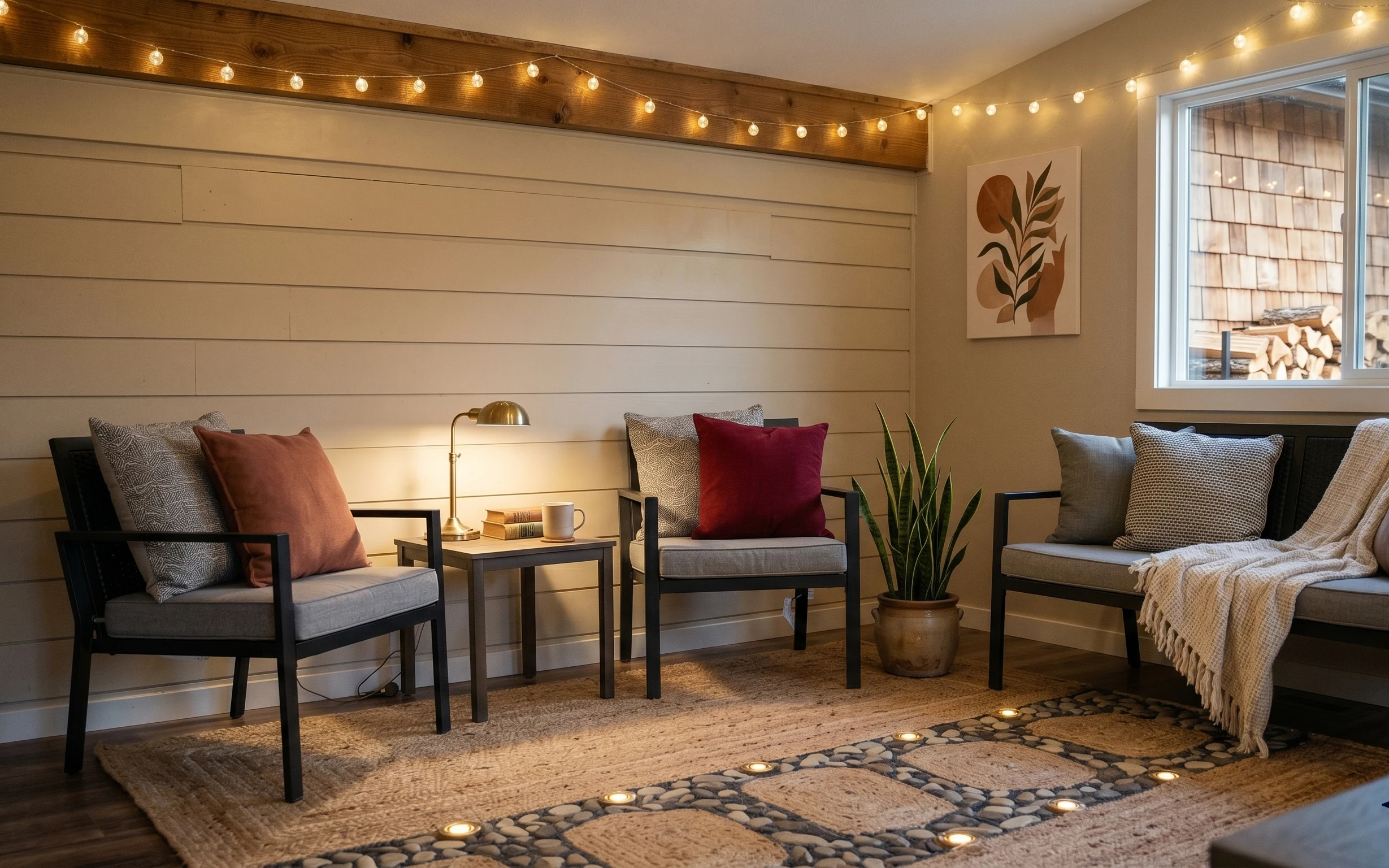
Start with the ceiling-level glow: those string lights make the whole seating area read “intentional” even when the shiplap wall stays exactly as-is. Then add texture at couch height with two throw pillows—one burgundy and one black-and-white pattern—so the palette doesn’t feel flat. A brass dome table lamp brings warm, focused light for evenings, and the framed botanical artwork adds a natural motif without needing wall repairs. For softness underfoot, the pebble-bordered area rug anchors the corner and hides daily scuffs in the traffic zone.
I once tried to match pillows by only picking two colors, and the room still looked unfinished—like it was missing “one more layer of decisions.” In this photo, the difference is the pattern and the glow working together: the lamp warms everything while the pillows add contrast. Once I stopped thinking in single items and started thinking in heights (floor rug, seating pillows, lamp light, wall art), the look clicked fast.
Layer 1 — string lights ($15) low-glow warmth along the beam
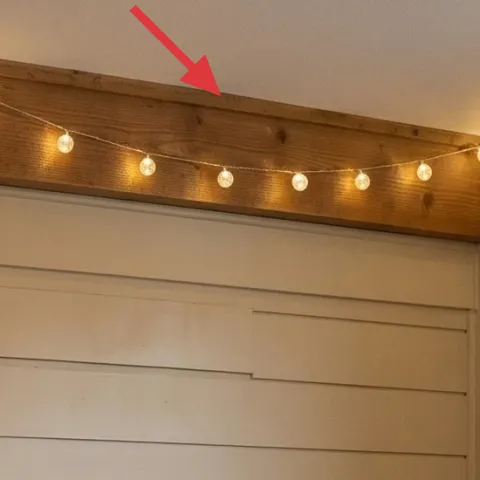
The string lights sit along the wood ceiling beam and give the room its warm, low-glow mood without any hardwiring. In a rented space, that matters: you’re adding atmosphere you can unplug and pack away at the end of your lease. This setup is also visually forgiving—tiny bulbs scatter light across the shiplap wall and help the corner feel less “boxy,” especially in the evening. The trade-off is practical: keep the plug location in mind so the cord isn’t stretched across walkways.
Run the cord cleanly
Tuck slack behind the sofa/side table line so the lights look continuous instead of “dribbled.”
Layer 2 — burgundy throw pillow ($18) a bold color note on the sofa
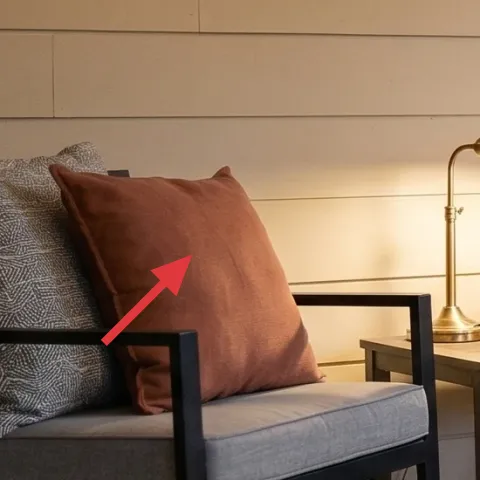
The burgundy pillow is the color anchor in the center of the seating arrangement, sitting behind the other cushions so it reads clearly from across the room. Adding one rich color is easier than trying to recolor the whole wall, and it keeps the palette cohesive against the warm beige backdrop. The fabric looks substantial, which is why it holds shape instead of collapsing. If the obvious alternative is sticking to neutrals only, this pillow adds contrast without making the corner feel themed or costume-like.
Keep the undertone warm
Burgundy with a brown base plays nicely with walnut tones and brass lighting.
Layer 3 — black-and-white textured throw pillow ($18) pattern contrast for depth
The black-and-white textured pillow adds contrast and visual “grain” near the left armchair, balancing the solid burgundy color. That texture is doing two jobs: it breaks up the smooth shiplap lines and it prevents the rug and floor from reading too heavy in one direction. This choice works over a plain pillow because your eye has something to land on during the day, not just after lights are on. Trade-off: patterned pillows show lint more than solid ones, so plan for a quick lint roll now and then.
Mix texture before you mix more colors
Choose one patterned pillow when the rest of the palette is warm neutral.
Layer 4 — brass table lamp with dome shade ($60) focused warm light at side-table height
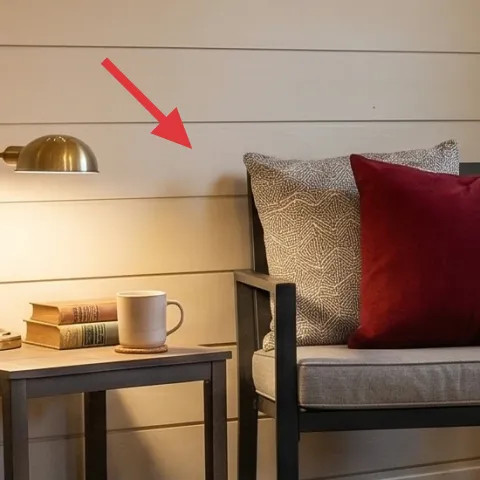
The brass dome lamp turns the side table into a lighting station—warm, directional, and flattering on the shiplap wall. Positioned at table height, it also adds a vertical layer that string lights alone can’t do. For renter-friendly styling, plug-in lamps are the best kind of “permissionless change”: they move with you and you can switch bulbs for mood (warmer bulbs keep the room consistent). Compared with a cheaper plastic lamp, the brass finish reads more intentional and matches the room’s earthy metals and wood tone.
Mind the bulb warmth
If the bulb runs cool/blue, it can fight the beige wall and make the brass look dull.
Layer 5 — pressed flower frame ($80) botanical shape without wall changes
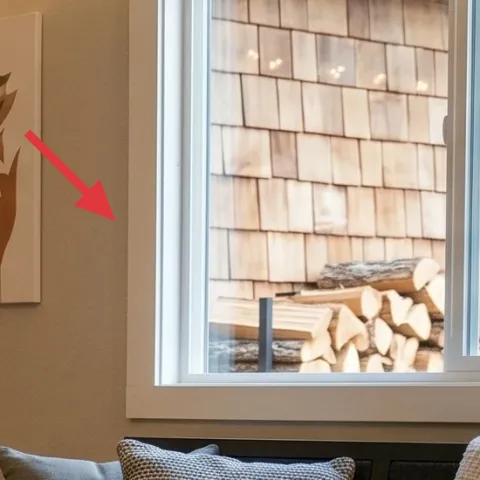
A framed botanical illustration hangs above the window line, and it’s doing subtle work: it adds an organic silhouette that echoes the greenery in the planter. For renters, framed art is one of the easiest “big impact” layers because it can come down cleanly. The leaf shapes also soften the geometry of the wood beam and window frames, which helps the corner feel curated instead of random. This DIY-friendly approach keeps the vibe close to the photo while avoiding any wall paint or landlord fixture swaps.
Make it instead of buying it
DIY a pressed-flower style framed print that matches the botanical shapes in the photo—so the look stays renter-safe and packable.
Materials
- Pressed botanical specimens (mixed leaves/flowers) — assortment — craft store — $6
- Thin white cardstock (for backing) — 8.5×11 sheet — office supply — $10
- Simple ready-made frame with glass — 8×10 — discount store — $28
- Craft glue stick / glue dots — small pack — craft store — $11
- Archival clear tape or mounting tabs — small roll — craft store — $25
Steps
- Pick 3–5 botanicals with different leaf shapes so the composition reads like branches.
- Lightly arrange specimens on the cardstock backing, moving them until the silhouette feels balanced.
- Press down to re-check spacing, then remove one piece at a time.
- Apply a small amount of glue dots to the back of each specimen.
- Place each specimen back onto the cardstock and hold for 30–60 seconds.
- Trim any stray edges of tape so nothing shows through the glass.
- Clean the glass with a microfiber cloth so the botanicals look crisp.
- Assemble the frame and tighten evenly.
- Let the glue set fully before handling (check the glue label for timing).
- Stage it upright to confirm the “branch” direction reads correctly.
Layer 6 — tall indoor plant in terracotta planter ($50) a green vertical anchor
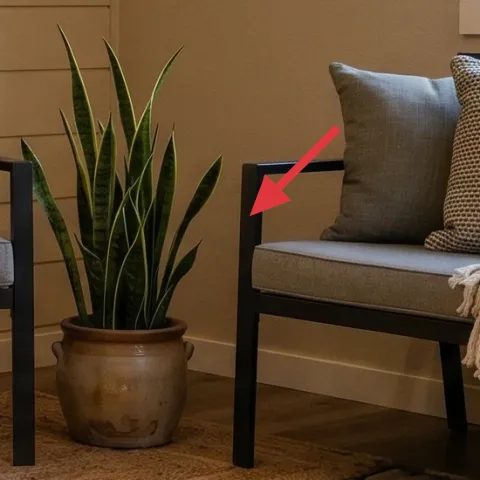
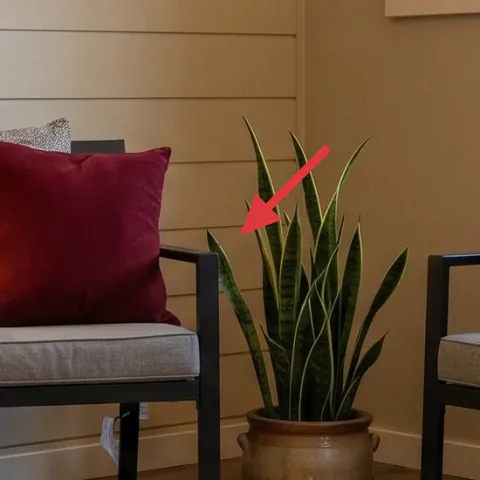
The tall green plant in a terracotta planter creates the vertical “third leg” that keeps the seating corner from looking flat. It sits to the right of the side table, so it also frames the window area and adds life where the wall is otherwise open. The terracotta tone ties into the warm wood and brass, and it looks at home next to the rug’s earthy greys. Compared with a small desk plant, the height makes the corner feel styled at a glance—and it’s easier to match the scale of the furniture.
Choose height over volume
Look for a plant that rises above the pillow line so it reads immediately.
Layer 7 — area rug with pebble border ($200) grounds the whole sofa corner
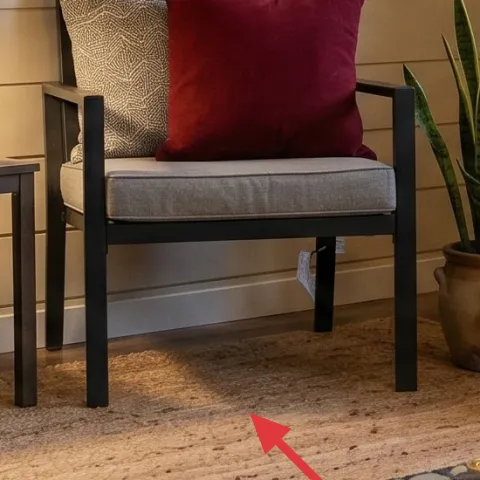
The pebble-bordered rug anchors the seating area and gives the room its grounded, tactile base. Its pattern also helps hide everyday marks—small scuffs blend in with the stone-like motif—so it stays looking “styled” longer than a solid light rug. The size matters: it should reach under the front legs/edges of the seating so the corner feels connected rather than floating. If the alternative is skipping the rug because the floor is warm-toned, the room ends up reading unfinished, especially with rugs pulled too far out of frame.
Let the pattern touch the furniture edges
Rug borders that sit under seating create a clear visual boundary for the corner.
The cost, layer by layer
| Layer | Item | Cost |
|---|---|---|
| 1 | String lights (set) | $15 |
| 2 | Burgundy throw pillow cover | $18 |
| 3 | Black-and-white textured throw pillow cover | $18 |
| 4 | Plug-in brass table lamp with dome shade | $60 |
| 5 | Pressed flower frame (botanical wall art) | $80 |
| 6 | Tall indoor plant in terracotta planter | $50 |
| 7 | Area rug 8×10 with pebble border | $200 |
| Total | $441 | |
If a full 8×10 rug feels like too much, choose a 5×7 area rug (often $80–$200) and keep it tightly centered under the sofa/front chair edges for the same anchored effect.
What worked, what didn't (across the whole room)
The overall recipe works because the corner has height (lamp + plant), softness (rug + pillows), and warm light (string lights) in the right proportions. The result reads intentional without needing any wall work or fixture swaps.
What worked
- String lights add a warm ceiling-level glow that makes the shiplap wall feel curated.
- Two pillow covers add both color (burgundy) and contrast (black-and-white texture) at seating height.
- The brass dome lamp creates focused light for evenings without needing hardwired fixtures.
- The framed botanical artwork brings organic shapes that echo the plant and soften the geometry.
- The tall plant anchors the right side so the sofa corner doesn’t feel flat.
- The pebble-bordered rug hides everyday marks while tying together warm wood, brass, and neutral tones.
What didn't
- Too many neutrals at once makes the corner feel quiet—pattern and one deep color fix that.
- Skipping the lamp leaves the corner lit only from above, which flattens texture in the pillows.
- Choosing a small rug tends to make the seating float; the border needs to sit under the furniture front.
- A cool-toned bulb can dull brass and make the beige wall look gray.
- Using only one pillow color looks unfinished, even if the rug is bold.
What we'd skip if we did it again
Skip replacing the landlord-installed lighting or trying to hardwire anything. Plug-in lamps and string lights get the same warm glow with zero wall commitment, and they pack up at move-out.
Skip “matching set” decor—especially pillows bought from the same collection. One repeat can look tidy but flat; better to pick two pillow covers with different textures or patterns.
Skip a rug that doesn’t reach under the front edges of the sofa/chairs. Even a beautiful rug looks random if it’s too small; anchoring is what makes the whole corner feel styled.
Frequently asked
How long does this sofa corner refresh take?
Plan for about 2–3 hours total. The fastest part is styling: swapping pillow covers, centering the rug, and placing the plant. Hanging framed art can add time depending on how quickly you align it on the wall. If string lights need a little cord management, budget another 15–30 minutes so the beam line looks intentional.
Is this renter-safe if I’m not allowed to drill?
Yes—this approach avoids drilling and permanent fixtures. The heavy visual lifts come from plug-in lighting (the brass dome lamp and string lights), removable textiles (pillows and throw), and wall art that can be mounted with renter-safe methods. The only “fix” needed is measuring and staging for spacing so items look straight and balanced.
What if my room is smaller than the photo?
In a smaller room, keep the same height layering but reduce footprint: choose a smaller rug (like a 5×7) and keep the plant slightly slimmer while still rising above the pillow line. With pillows, use the same idea—one deep color and one patterned texture—so you keep contrast without crowding the seating.
What if my room is larger or has a higher ceiling?
Go up in scale on the rug and add a slightly longer strand of string lights so the glow stretches across a broader beam line. For the framed botanical artwork, consider a slightly larger frame so it doesn’t look lost on a tall wall. Keep the lamp and plant in the same relative positions so the corner still reads “anchored.”
Where should I shop for these items without overpaying?
Pillow covers and plug-in lamps often show up at discounts in big-box home retailers and seasonal sales. String lights and indoor planters are easy to find online, and buying a solid lamp base beats hunting for a “perfect” niche shade at full price. For the framed botanical look, search for art prints in botanical silhouettes and buy a simple frame that matches the metal tone (brass or warm gold).
What’s the biggest mistake people make with a sofa corner?
The most common misstep is treating it like one purchase instead of a layered setup. If there’s no rug anchor, no lamp for eye-level light, and only neutrals on the couch, the corner reads unfinished. Aim for at least three heights: floor (rug), seating (pillows/throw), and eye level (lamp + wall art).
More in Living Room
7 renter-friendly no-drill swaps for a $500 sofa corner refresh
A renter-friendly sofa corner refresh for under $500: warm lighting, two pillow colors, a framed botanical print, and a plant that makes th…
Under $300: move-ready living room refresh with 7 swaps
A boho living room refresh for shared housing that you can pack up in a year or two. With $300 worth of soft-goods swaps and small decor, t…
How to build a renter-friendly living room for under $700
A warm wood-and-olive living room refresh that reads like a design studio—without landlord changes. This $700 renter-friendly plan uses sev…