- Best for
- bed nook color coordination
- Time
- About a weekend
- Total cost
- About $400
- Renter-safe
- Yes (no drilling, mostly textiles)
Why warm neutrals is the bed nook of 2026
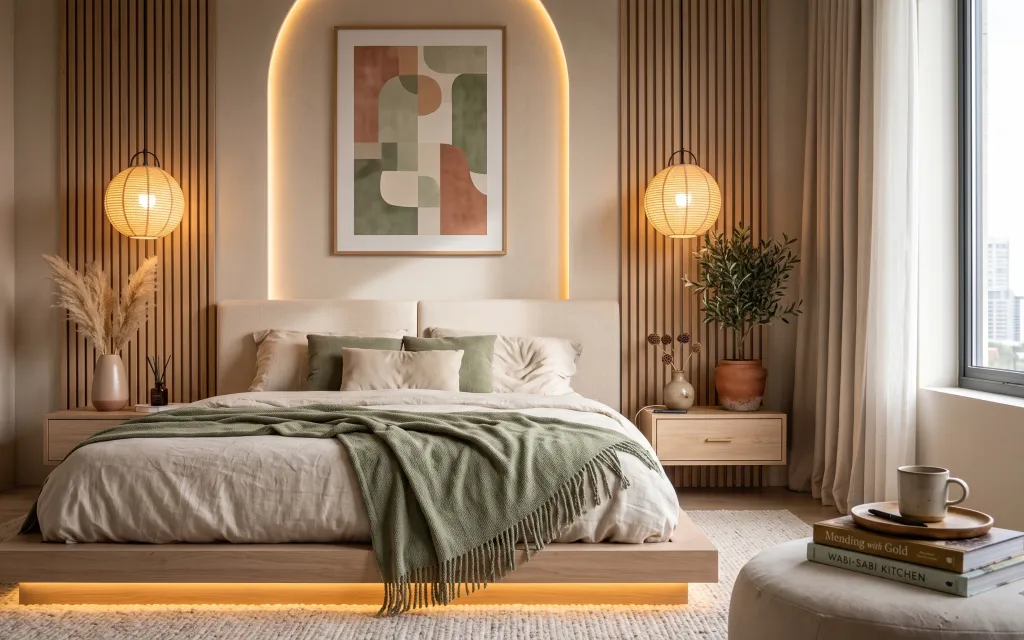
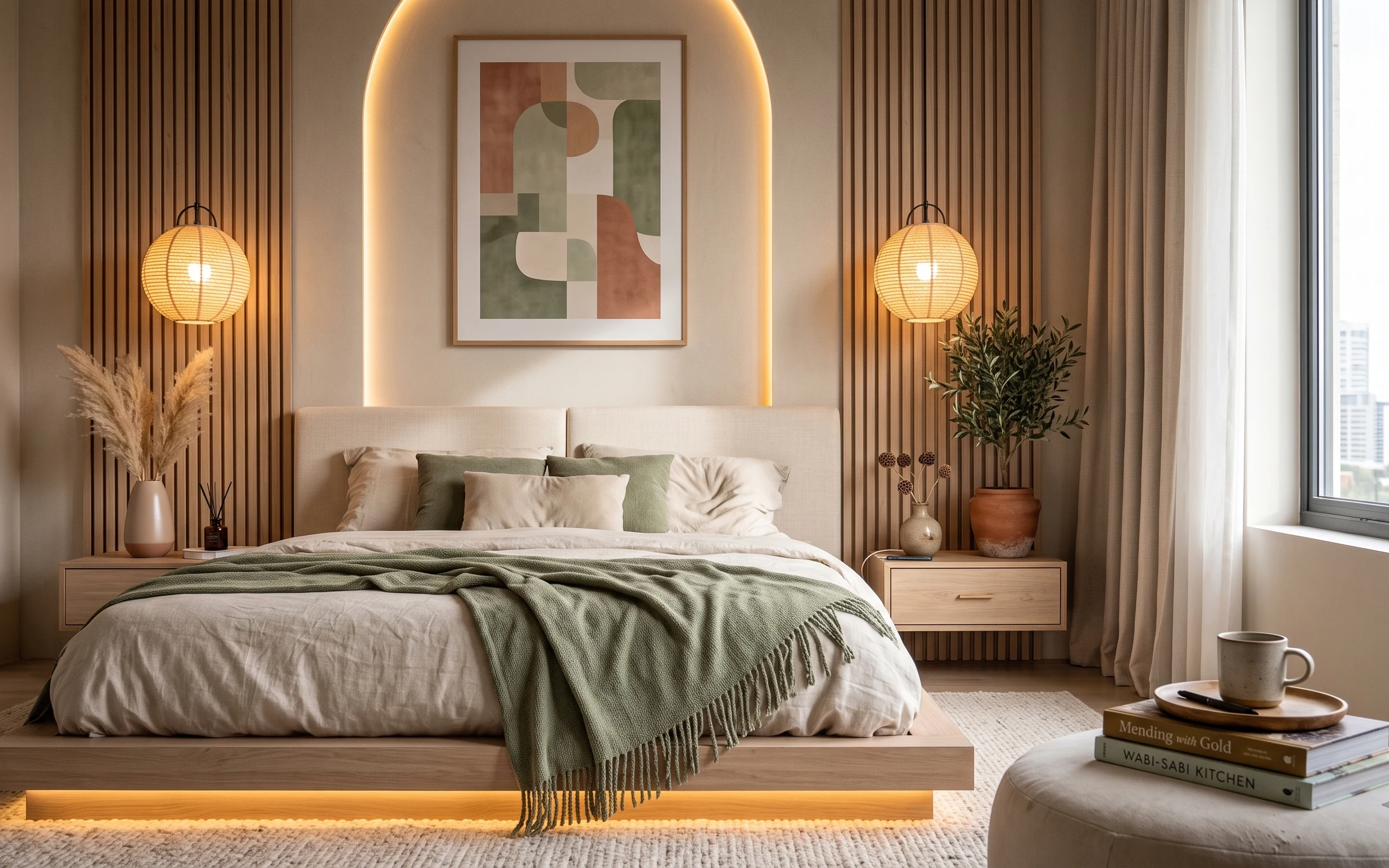
Look closely and it’s not “one magic item” so much as repetition: olive green against creamy whites, softened by a beige rug and full curtains. The framed abstract print acts like a color anchor above the bed, while the globe pendant lamps keep the whole scene glowing rather than harsh. Textures matter here—the knit-like green throw, the smooth white bed cover, and the airy curtain fabric all play off the vertical wood slats behind the bed.
My own mistake in rented spaces has always been going too matchy too quickly. I used to buy matching sets and then wonder why the room felt flat. This time, I copied the same balance as the photo: one bold shade (olive), a quiet base (warm beige), and a couple of tactile interruptions so the bed area feels intentional without needing any permanent changes.
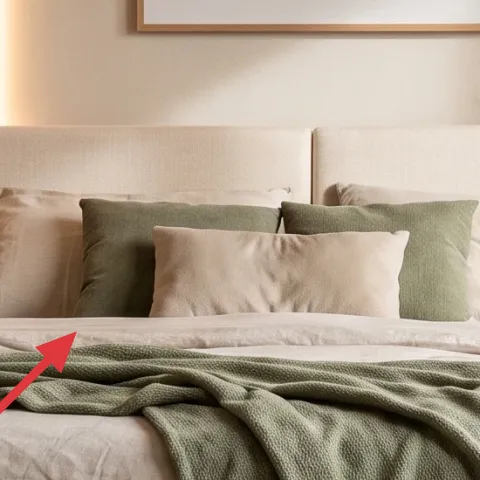
Layer 1 — olive green throw pillow cover ($18) Pillow color echo in the green blanket family
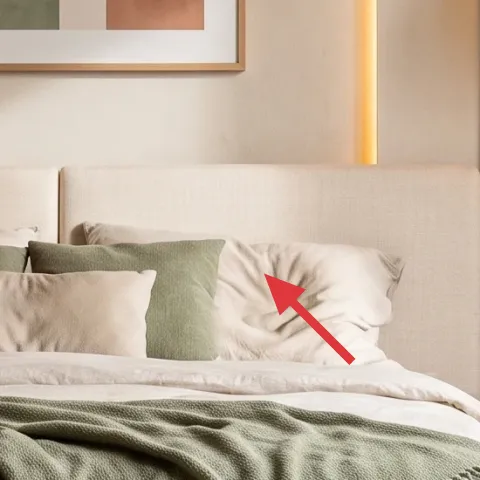
This olive green throw pillow cover is the small color note that makes everything else feel connected. In the photo, the pillow sits right in front of the bed cover and visually “answers” the green throw blanket draped down from the mattress, so the bed reads styled rather than blank. The trade-off versus a plain white-only moment: the olive shade is specific, so it works best when the rest of the palette stays warm and neutral. It’s also an easy renter win because you’re swapping a textile, not touching any landlord-installed fixtures.
Layer by shade, not by pattern
Pick one accent shade (olive here) and repeat it in two textiles so the room stays calm even when the print is abstract.
Layer 2 — green throw blanket ($45) Adds weight and depth without changing the bed frame
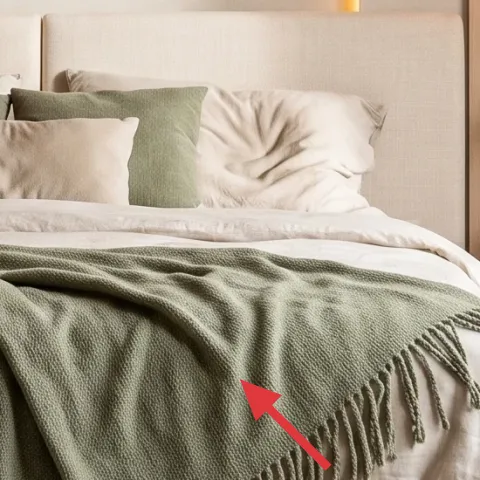
The green throw blanket is the visual “anchor” on the lower half of the bed, where most rooms feel the most empty. The blanket’s heavier knit texture gives the bed a real edge, and the long drape creates that low, cozy line that contrasts with the lighter bed cover. The obvious alternative is another white blanket, but that would erase the movement the photo has. This choice also photographs well with warm lighting, because the olive reads richer under a soft globe lamp glow.
Choose a drape, not a perfect fold
The photo’s blanket falls with a relaxed sweep—use a loose fold so it looks styled, not placed with measuring tape.
Layer 3 — framed abstract print (DIY hand-painted on cardstock) ($60) A custom art anchor that matches the palette
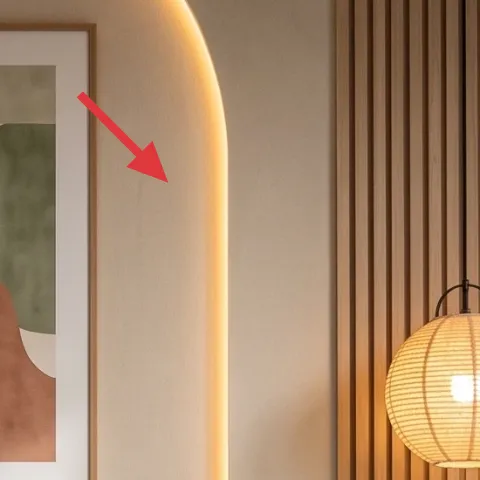
A framed abstract print does more than decorate the wall—it’s what makes the palette feel like a set. In this look, the print pulls in muted cream, warm clay tones, and dusty greens, which is why the pillow and throw don’t feel random. Buying a mass-produced print can work, but the DIY route lets the colors match the textiles exactly, even in a small rental where swapping items is easier than repainting. The key trade-off is time: the payoff is that the art becomes the “why” behind the color coordination.
Make it instead of buying it
Hand-paint an abstract composition on cardstock, then frame it to mirror the warm-beige and olive tones in the room.
Materials
- Cardstock — 1 sheet — craft store — $4
- Acrylic craft paint set — small assortment — craft store — $12
- Small rectangular frame — 1 — thrift store or discount home goods — $18
- Matte finish clear spray (optional) — 1 — craft store — $6
Steps
- Sketch 3–5 simple shapes lightly with a pencil, keeping edges soft and rounded.
- Paint the biggest shape first using warm beige.
- Add olive and muted clay blocks, letting colors overlap in at least two spots.
- Fill the negative space with small off-white rectangles or circles.
- Let the paint dry completely before placing it into the frame.
- Trim or adjust the cardstock so it sits flat behind the frame backing.
Total DIY cost: $40 — saves about $20 over buying.
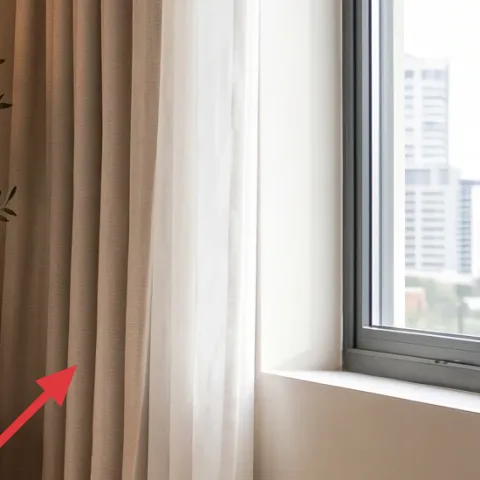
Layer 4 — curtains in beige tones (panel pair) ($80) Filters daylight into a softer, warmer mood
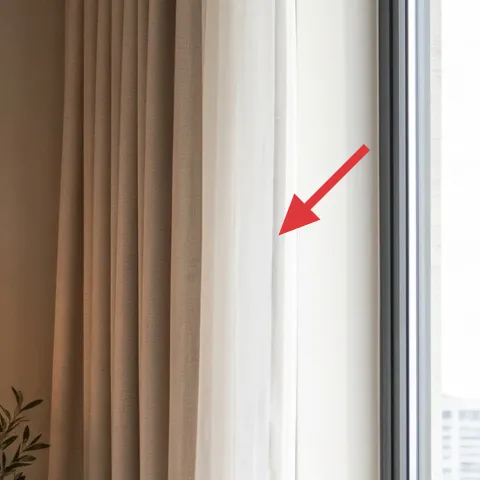
Beige curtains pull the room toward the photo’s warm-minimal feel by softening harsh daylight and giving the windows a finished frame. The key effect is texture and diffusion: even when the lamp glow is on, the curtains keep the background gentle instead of bright and high-contrast. The alternative is either leaving the window bare or using a heavier blackout fabric, which can make the bed nook feel darker than the rest of the palette intends. This layer is also renter-friendly because you can choose panels that hang without wall alterations.
Mind hem width
If the panels look too narrow for the rod, the room won’t get that full, framed look—measure curtain width before buying.
Layer 5 — wood drawer nightstand (one side) ($80) Creates the bed-side symmetry without wall changes
The wood drawer nightstand is part storage, part styling stage, and it’s what makes the bed nook feel “done.” In the photo, the nightstand top supports small objects and keeps the lower half balanced against the pendant lamp glow and the vertical slats behind the bed. The obvious alternative is a floating surface or a stack of books, but drawers give you a place to tuck away everyday clutter so the room stays calm. This works particularly well in rentals because a freestanding nightstand can move with the lease end, unlike built-in shelving.
Style with height, then repeat
Use one tall vase or dried bundle, one mid-height bottle or jar, and one small base object so the corner reads layered.
Layer 6 — terracotta pot with leafy plant ($45) Adds organic movement near the window side
The terracotta pot with the leafy plant brings the “earth” part of japandi into the room, especially on the right side near the window. Terracotta also harmonizes with the warm wood tones, so it doesn’t compete with the olive and cream textiles. The trade-off versus going all-green with a plastic-looking planter: real-looking foliage will need a little ongoing care, but it pays off every day when the lamp glow hits the leaves. Keeping the plant on a visible nightstand area makes the whole bed nook feel lived-in, not staged.
Pick a pot with a matte finish
Matte terracotta reads warmer and less glossy under indoor lighting than shiny ceramic.
Layer 7 — warm-glow globe pendant lamp (plug-in) ($60) A soft light source that flatters the textiles
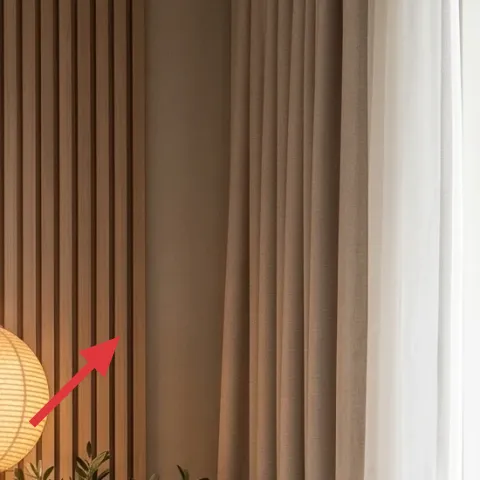
The warm-glow globe pendant lamps are doing a lot of work in the photo. They cast an amber, round pool of light that makes the bed cover and green throw look richer, not pale. The alternative—using only overhead lighting—creates flatter, cooler shadows, especially against the vertical wood slats behind the bed. Choosing a plug-in option keeps this renter-safe, and using it near the bed gives the same “evening glow” feel without changing any hardwired ceiling fixtures. Place it so the bulb sits above eye level when standing to avoid harsh glare.
Match light temperature to your palette
Warm bulbs (around 2700K) keep olive green from turning gray under cooler light.
The cost, layer by layer
| Layer | Item | Cost |
|---|---|---|
| 1 | olive green throw pillow cover | $18 |
| 2 | green throw blanket | $45 |
| 3 | framed abstract print (DIY) | $60 |
| 4 | curtain panel pair in beige tones | $80 |
| 5 | wood drawer nightstand (one side) | $80 |
| 6 | terracotta pot with leafy plant | $45 |
| 7 | warm-glow globe pendant lamp (plug-in) | $60 |
| Total | $388 | |
If the $80 curtains feel like the stretch, swap to a single panel per side first, then add a second set during a later trip. The look still holds because the framed print and olive textile rhythm do most of the visual anchoring.
What worked, what didn't (across the whole room)
The room’s warm consistency comes from repeating olive and cream across textiles, art, and plant styling, then supporting it with glow lighting. The only parts that could easily tip over into “too much” are the window and the bed styling density.
What worked
- Olive pillow and green throw repeat the same accent shade, keeping the bed nook cohesive.
- The framed abstract print pulls muted clay and green tones into the wall palette above the bed.
- Beige curtains soften daylight and make warm lighting look intentional rather than accidental.
- A wood drawer nightstand creates symmetry and gives a place for small objects and plant styling.
- Terracotta + leafy greens add organic motion that contrasts with the vertical slats.
- Warm globe pendant glow flatters textiles so the room reads cozy, not flat.
What didn't
- Starting with all-white textiles would flatten the scene against the wood slat wall behind the bed.
- Using a cool-toned bulb can make olive read dull and slightly gray.
- Too-small curtain panels break the “window frame” effect and make the bed feel pushed inward.
- Skipping the art anchor makes olive styling look decorative instead of coordinated.
What we'd skip if we did it again
Skip buying matchy decorative sets that include every pillow in the same pattern. That approach usually creates visual noise, and the photo’s calm look depends on repeat shade over repeat motif.
Skip going too dark on the window with heavy blackout curtains. In a warm-neutral bed nook, sheer-to-beige fabric keeps the daytime brightness supportive of the olive-and-cream palette.
Skip cool-white light bulbs even if they’re brighter on paper. The globe lamps in the photo work because the warmth deepens the green textiles and makes terracotta look richer.
Frequently asked
How long does this bed-nook refresh take?
Most swaps are textiles and decor placement, so it’s usually a weekend project. Framing and styling the abstract print can take the longest part, especially if you’re DIY-ing it. Hanging curtains and adding a plug-in pendant lamp usually takes 1–2 hours depending on how quickly the hardware goes together. Once everything is in place, the final tweak is object spacing on the nightstands.
Is this doable in a small bedroom where the bed is the whole room?
Yes—just keep the layers vertical and limited. The photo’s success comes from a tall framed print, hanging curtains, and a warm lamp glow that creates height without adding bulky furniture. If the room is very tight, use one nightstand instead of two, and shorten the styling objects so the bed-side surfaces stay visually open.
What if the landlord doesn’t allow anything near the ceiling?
This plan avoids ceiling changes by treating the globe pendant as a plug-in option, so the look can be achieved without replacing hardwired fixtures. Curtains are also the kind of change that typically works with existing window hardware or a tension rod setup. The only “permanent” feel in the photo comes from textiles and the framed art, both of which are removable at move-out.
Where should the olive green show up so it doesn’t feel random?
Aim for two touchpoints max at first: one pillow cover and one larger textile like a throw blanket. Then let the framed abstract print echo the olive through small muted shapes. When olive appears in multiple places, the room reads intentional instead of themed, and the rest of the palette can stay warm and neutral.
What’s the biggest mistake in a warm-neutral bedroom like this?
The most common miss is using cool lighting or cool-toned white textiles that fight the warm wood and terracotta. Warm globe glow matters, and so does selecting bedding in soft off-white rather than icy white. The second big mistake is leaving the wall above the bed too blank—without the framed art anchor, the bed nook can feel incomplete.
More in Bedroom
6 no-drill updates for a bed nook with warm neutrals, $400
A bed nook refresh that reads japandi and warm-minimal: olive pillow, green throw, and a custom framed abstract print—without drilling or p…
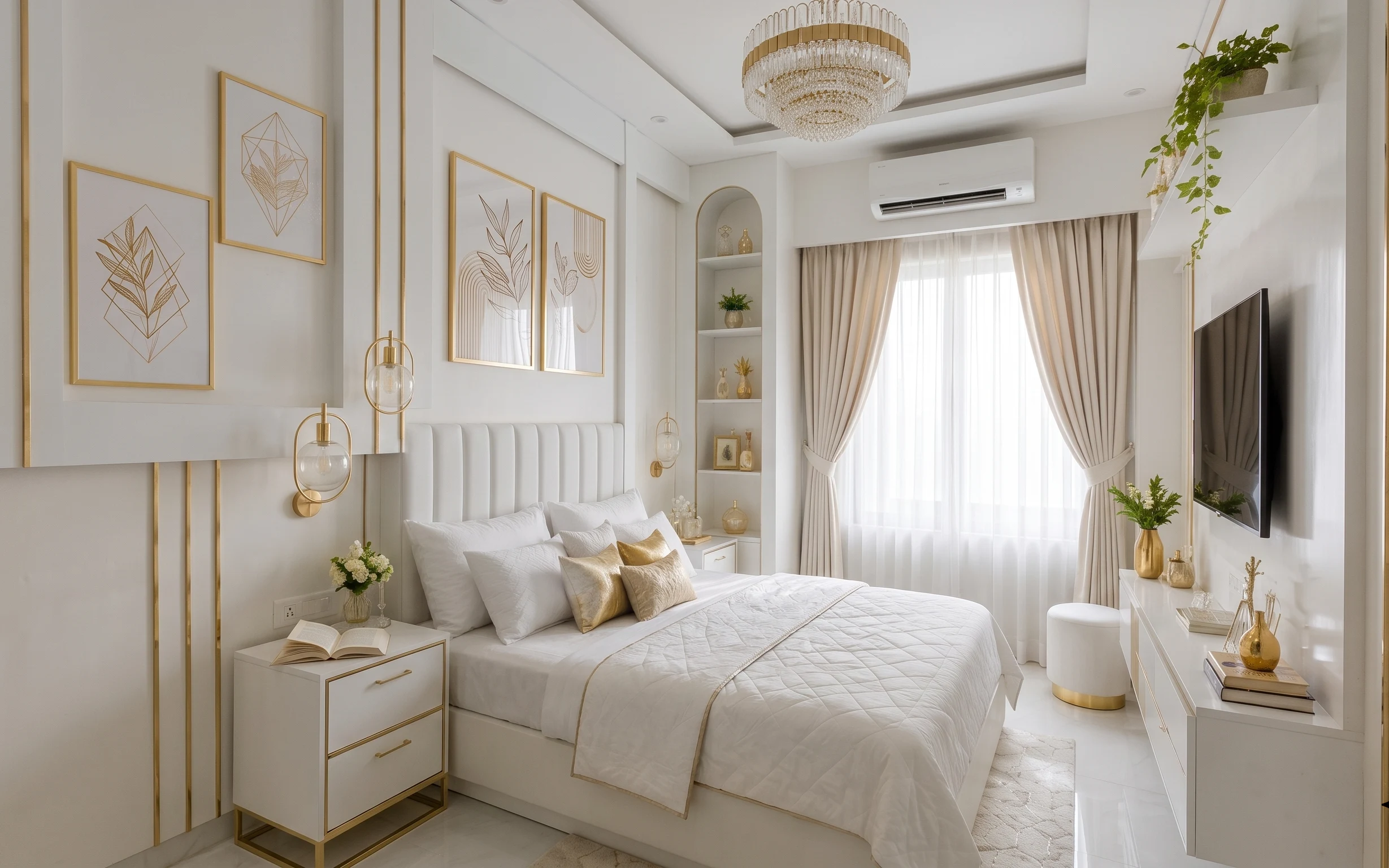
A bed-nook glow-up for $400: no-drill gold-and-cream bedroom styling
A $400 bed-nook refresh that reads bright, elegant, and move-friendly: a jute-style rug, gold-framed botanical prints, and layered white be…
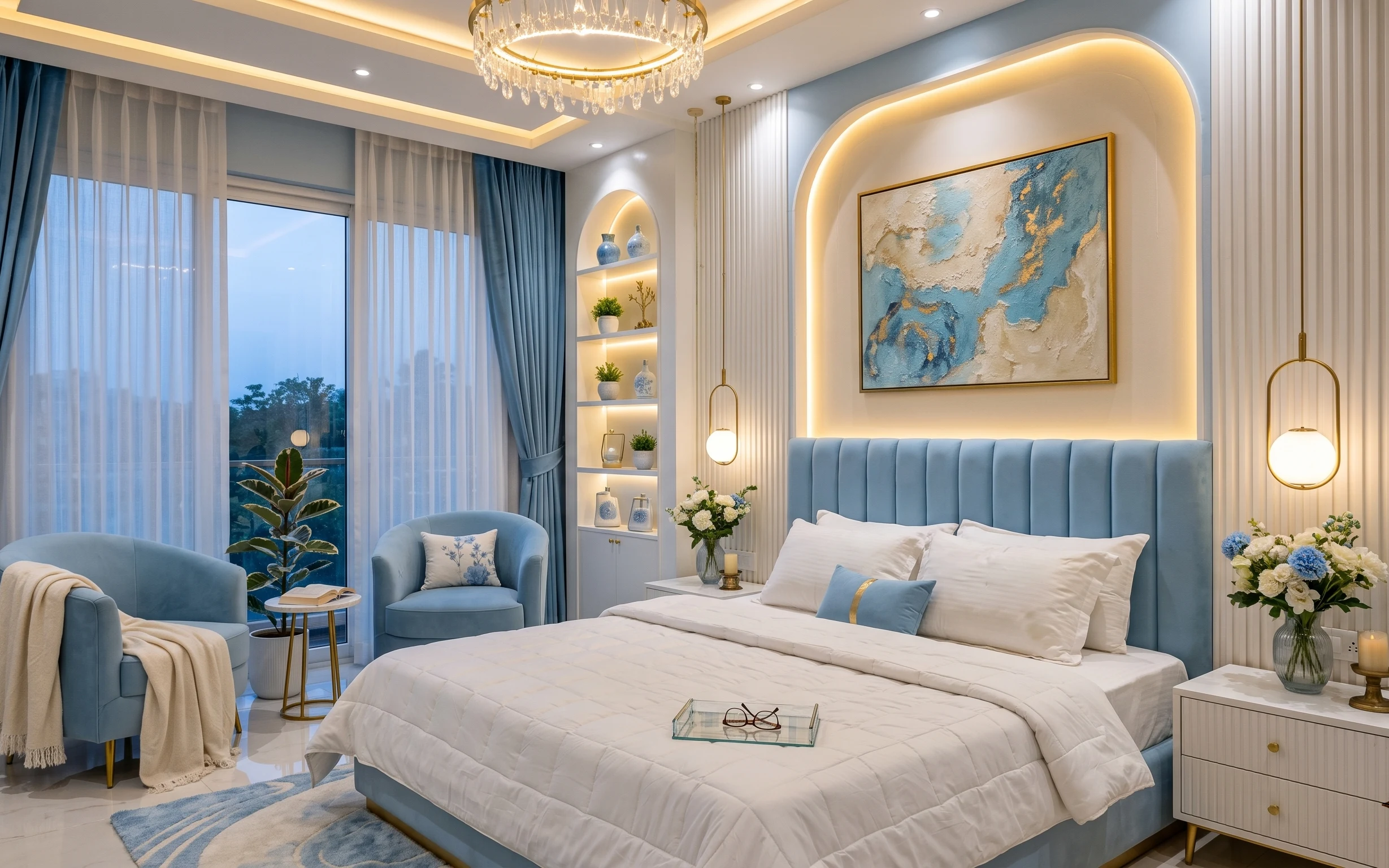
7 upgrades for an upholstered bed nook, for $700
A modern glamour upholstered bed nook refresh: blue curtains, an abstract framed artwork focal point, warm-white paneled walls, and styled …