- Best for
- Soft-goods refresh that packs fast
- Time
- 1 weekend (about 6–8 hours)
- Total cost
- $495
- Renter-safe
- No-drill, no-damage swaps
Why warm wood-and-sage bedroom is the bedroom of 2026
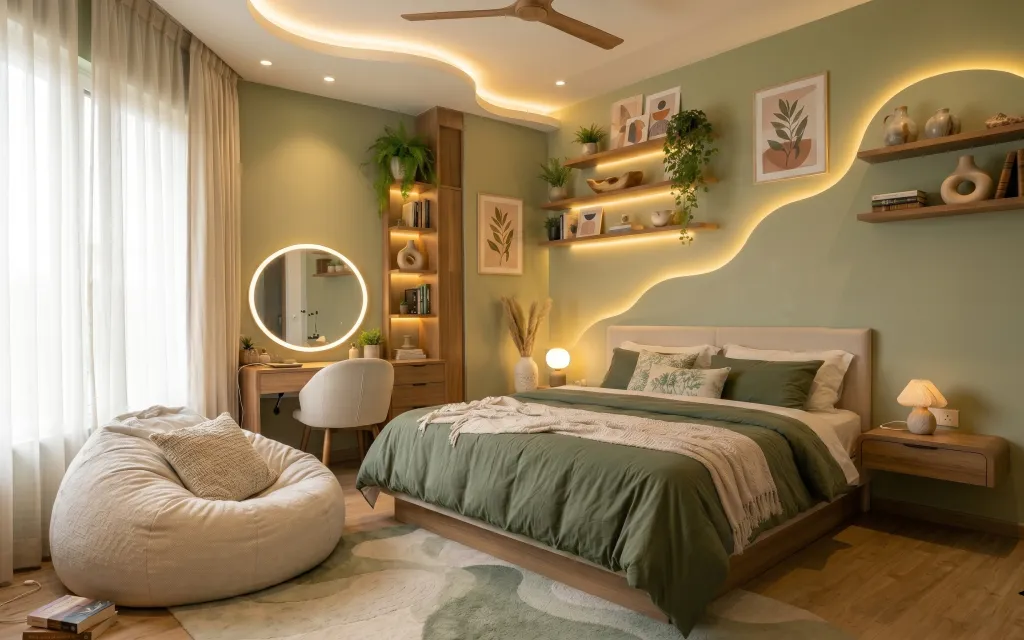
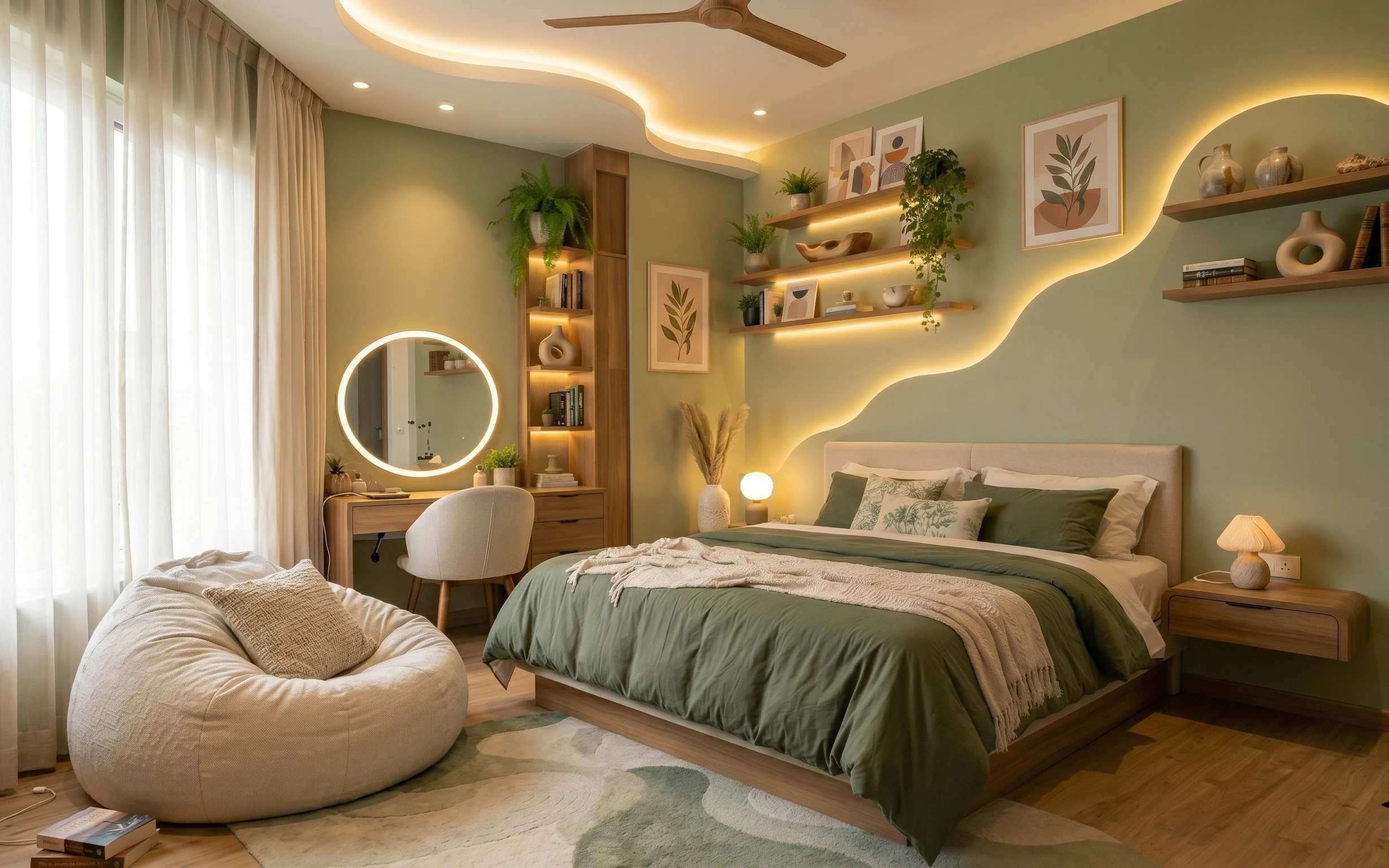
The photo reads like japandi: warm wood, creamy light, and sage green textiles, all softened by sheer curtains. Notice how the light-green rug grounds the bed area, while layered pillows and a knit throw add texture without needing any hard changes. The framed botanical prints keep the room feeling “designed” instead of randomly decorated, and the table lamp adds warmth after dark. For shared-housing setups, this combo works because every piece either clips on, plugs in, or packs flat.
I almost went too literal with the botanical theme—more prints, more plants, more everything. Then I remembered what usually gets lost when you move: the pieces with the most “stuff” (extra frames, extra planters) start to feel like chores. What I’d copy here is the restraint: a couple of framed prints, one meaningful shelf styling moment, and textiles that can travel with you. The glow from a table lamp also makes the whole palette feel cohesive without needing any permanent lighting work.
Layer 1 — light green area rug ($200) Defines the bed zone without wall changes
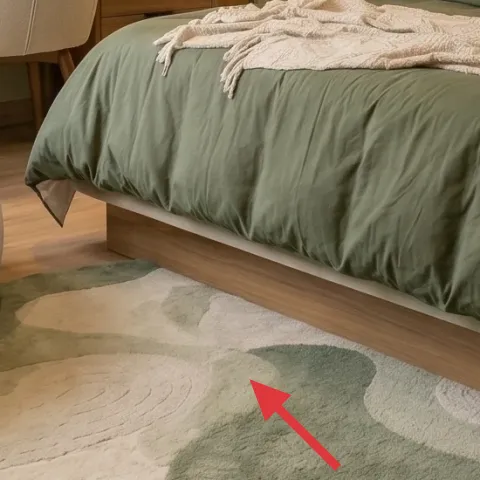
This light green area rug sits under the bed front edge and visually “holds” the bedroom together, even with the room’s built-in lighting glow. A move-friendly rug is worth spending on because you can roll it, wrap it, and re-place it in the next layout. The trade-off: bigger rugs weigh more, so plan to lift and maneuver it with help if needed. Compared with adding more wall decor, a rug changes the whole room instantly while staying removable—no landlord conflict, and no drilling. Pick a shade close to sage so it flatters the duvet color instead of competing.
Choose a shade that matches the duvet undertone
If the duvet reads slightly gray-green, look for a rug that has the same muted undertone.
Layer 2 — off-white sheers curtains ($80) Makes daylight feel softer and taller
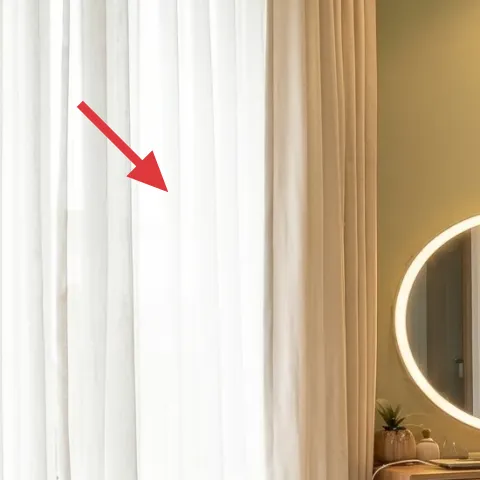
Those off-white sheers frame the left side and pull in light, which matters in shared spaces where you can’t always control window placement or wall color. Sheers are an easy win because they hang without painting or permanent installs, and they pack in a bag without needing disassembly. The trade-off: they won’t block a lot of privacy, so plan to pair them with your existing blinds or use a separate temporary layer if your roommate schedule is different. Compared with buying heavier blackout curtains, this sheer approach keeps the room feeling airy and makes the sage bedding look calmer. Stick to a neutral cream/off-white so botanical art doesn’t look “busy.”
Sheers work best when the rod line stays simple
Keep hardware minimal so the fabric movement becomes the design.
Layer 3 — table lamp on right nightstand ($60) Adds warm, non-hardwired light at night
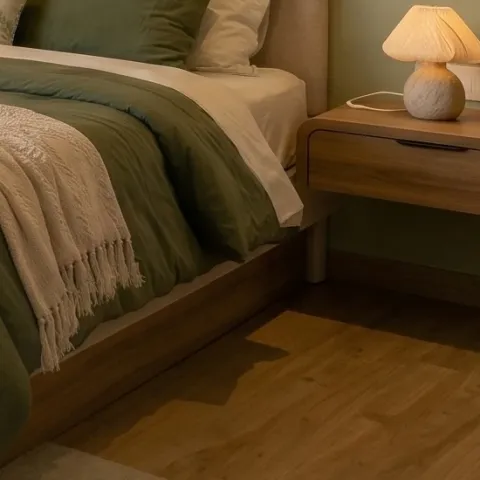
The table lamp on the right nightstand is doing more than “lighting”—it’s adding that warm amber tone that makes sage green feel inviting. A plug-in lamp is renter-safe because you can swap locations without messing with wiring, and you can box the lamp base and shade separately. The trade-off: bulbs matter; a cool bulb will flatten the color palette and make the room feel clinical. Compared with relying on ceiling fixtures, a bedside lamp gives control for reading, winding down, and overnight guests. Use a warm white bulb to keep the glowing feel consistent.
Don’t pick a yellow bulb that looks harsh
If the bulb reads too neon, go down to a softer warm-white and test in the evening.
Layer 4 — wood nightstand top and drawer front ($80) Creates a “staged” surface you can rebuild anywhere
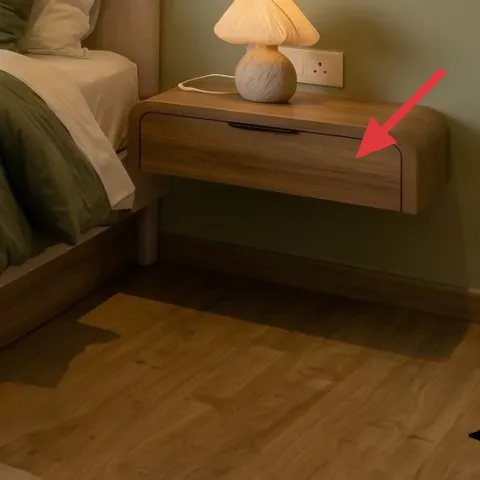
This wooden nightstand anchors the bed side visually and gives you a place for the lamp, a small plant, and a book—without cluttering the floor. For shared housing, a single surface you can keep organized beats spreading your essentials across multiple shelves that end up looking random in photos. The trade-off: nightstands add footprint, so measure your walkway before committing. Compared with floating shelves or wall hooks, a nightstand is easy to pack: drawers close, surfaces wipe clean, and the whole piece travels more predictably. Choose a warm wood tone so it harmonizes with the bed frame palette already in the photo.
Keep the top to 3 items max
Lamp, one small object, one book—anything more turns into “moving clutter.”
Layer 5 — framed botanical print ($25) Gives the room a repeatable theme
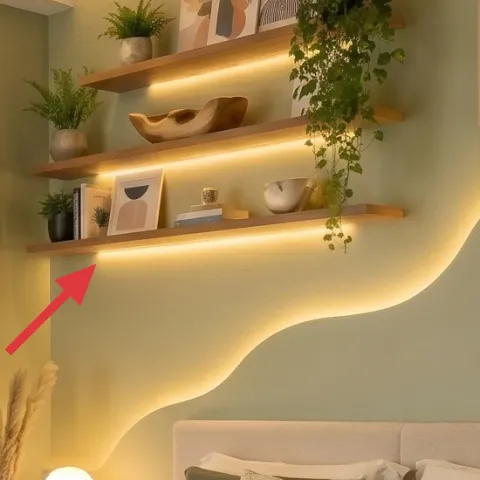
The framed botanical print in the wall cluster ties the palette together with recognizable leaf shapes and muted tones, so the room doesn’t feel like “random plant decor.” Framed art is also inherently move-friendly: you can wrap it in paper and tape corners, and it survives relocations better than fragile wall pieces. The trade-off: art adds weight, so choose frames you can carry without major stress. Compared with buying lots of small prints, a couple of larger framed pieces create a stronger composition with less hassle. Look for botanical line art on light backgrounds so it matches the cream-and-sage vibe.
Match frame color to wood undertones
If your wood furniture reads golden, pick warm-toned frames instead of icy silver.
Layer 6 — decorative ceramic bowl on shelf ($20) Adds an organic accent without fuss
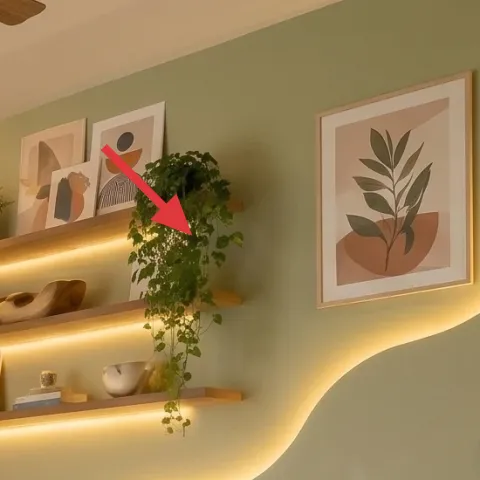
The decorative ceramic bowl on the shelf adds shape and depth in the same family as the vases and planters, but it doesn’t compete with the botanical prints. Ceramic also photographs well in warm light, which matters when your bedroom is the only place that actually feels “yours.” The trade-off: ceramics can chip, so wrap it for moving and keep it in a box with padding. Compared with adding more small decor objects, a single sculptural bowl gives the styling that “settled in” look while staying minimal enough to pack. Choose an off-white or warm beige finish to keep the palette coherent.
Style the bowl with one textured insert
A dried sprig or a small cluster of greenery keeps it intentional without adding clutter.
Layer 7 — dyed leaf-pattern pillow covers ($30) Changes the bed look without touching the bed frame
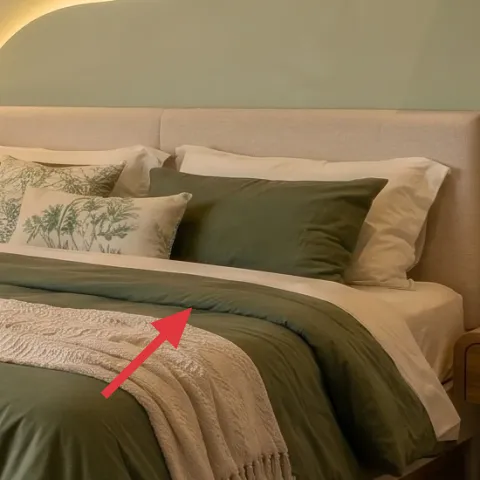
These pillow covers are where the sage-and-cream palette gets personal. Swapping covers is especially smart for shared housing because the “bed” itself is often fixed or too annoying to move; textiles are the fast part. The trade-off: dyes and fabric are never perfectly identical to a store-bought pattern, so accept small variations and aim for a consistent color mood. Compared with buying a whole new duvet set, cover refreshes let you keep your existing bedding and still get a visibly updated look. Tie the color to the rug and duvet so the room reads cohesive from day to night.
Make it instead of buying it
DIY dyed leaf-pattern pillow covers by starting with plain light covers and dyeing to a muted sage tone for a moveable, repeatable refresh.
Materials
- Light pillow covers (2) — 18x18 in — fabric store — $12
- Fabric dye (sage/green) — 1 kit — craft store — $7
- Salt — 1 small box — grocery/discount store — $2
- Gloves — 1 pair — hardware store — $2
- Plastic drop cloth/liners — 1 pack — discount store — $1
Steps
- Pre-wet the pillow covers so the dye grabs evenly.
- Dissolve the dye in hot water (follow the kit’s mix ratio).
- Add salt to the dye bath to help set color.
- Submerge and stir periodically to avoid streaking.
- Rinse until the water runs clearer, then squeeze gently.
- Air-dry fully, then fluff and place on the bed.
Total DIY cost: $24 — saves about $6 over buying.
The cost, layer by layer
| Layer | Item | Cost |
|---|---|---|
| 1 | Light green area rug (5×7) | $200 |
| 2 | Cream/off-white curtain panel pair (84") | $80 |
| 3 | Plug-in table lamp with shade | $60 |
| 4 | Wood nightstand | $80 |
| 5 | Framed botanical print (16×20) | $25 |
| 6 | Decorative ceramic bowl | $20 |
| 7 | Dyed leaf-pattern pillow covers (DIY price equivalent) | $30 |
| Total | $495 | |
If you need a cheaper version, prioritize the rug and curtains, then swap the framed print for a smaller print set and keep the bedside styling to just the plug-in lamp plus one sculptural ceramic item.
What worked, what didn't (across the whole room)
The strongest part of this room is the layering of soft goods: rug, sheers, and pillows all work together before you even look at the decor. The warm table lamp also does a lot of the “finished” work after dark. The only area that can go sideways in real shared housing is over-collecting small shelf items and making every surface look busy.
What worked
- The light-green rug makes the bed area feel intentional without any wall changes.
- Off-white sheers soften daylight and make the room feel taller and more breathable.
- A plug-in bedside lamp adds warm tone and helps sage green read flattering.
- Botanical framed prints give the theme a repeat pattern instead of random plant clutter.
- A small ceramic bowl adds sculptural interest without needing more furniture.
- Changing pillow covers is the easiest way to refresh the look during a move.
What didn't
- When too many shelf objects are added, the room loses the calm japandi spacing.
- If the lamp bulb is too cool, the palette looks flat and less cohesive.
- Bright, high-contrast art can fight the soft rug-and-sheer color story.
- Overstuffed bedside tops create packing mess when it’s time to move.
What we'd skip if we did it again
Skip replacing any large fixed pieces in the bedroom and instead invest in textiles and plug-in lighting. Rugs, sheers, and pillow covers move with you cleanly, while bulky furniture changes are slower and more likely to create “why did we buy this?” regret.
Skip going too heavy on shelf decor. Pick one sculptural ceramic moment and limit it to one plant or dried element so the shelf reads curated, not crowded.
Skip buying art that’s too bold for the palette. Botanical line art on light backgrounds stays flexible across future duvet colors and looks cohesive even when your roommates’ tastes shift.
Frequently asked
How long does this bedroom refresh usually take in shared housing?
Most of the work is swap-and-style time, not construction. Plan about 2 hours for curtains and rug placement, 1 hour for lamp setup, and 1–2 hours for bedside styling and art placement. If you DIY the pillow covers with dye, add another half-day for dyeing and full dry time. Overall, it typically lands around one weekend.
If my lease doesn’t allow changes to curtains or art, what’s the safest version?
Keep everything on the “bring-with-you” side: rug repositioning, lamp choice, and pillow cover styling. You can still get a lot of cohesion by matching pillow cover color to the rug undertone and using the framed botanical print on freestanding display shelves (or on the same wall if your landlord allows temporary hooks). The key is staying removable.
What if my bedroom is smaller than this photo?
Use a smaller rug size that still extends under the bed front, and choose curtains with a lighter, more sheer fabric so they don’t visually shrink the room. Keep bedside styling minimal—lamp plus one small object—so surfaces don’t feel crowded. For wall art, one framed print in the same botanical style will usually read better than multiple prints at small scale.
What if my bedroom is bigger—how do I avoid looking sparse?
Scale up the rug size first so the bed zone feels anchored. Then add a second framed botanical print nearby so the wall area looks intentional. Finally, consider adding a larger ceramic accent on the shelf (still removable) so the palette has one strong sculptural element rather than only textiles.
Where should I shop for these pieces if I want move-friendly options?
For textiles (rug, sheers, pillow covers), look for retailers that sell swatchable neutrals and easy return policies. For plug-in lamps, focus on stores with clear bulb recommendations and replaceable shades. For framed botanical art, choose standard frame sizes so you can swap prints later without buying a whole new frame.
Biggest mistake people make with this bedroom type?
Over-collecting small decor objects. The room’s calm comes from repetition and negative space—rug and sheers do most of the visual work, while art and one ceramic accent provide the theme. If you add too many shelf items, you lose the japandi spacing and the bedroom starts to feel like storage rather than a resting place.
More in Bedroom
Under $500: move-friendly bedroom refresh in warm sage
A move-friendly bedroom refresh built from 7 no-drill swaps and soft-goods upgrades, all achievable for about $500. The look leans japandi …
What $300 buys: a bed nook refresh for rented bedrooms
A renter-friendly bed nook refresh built around warm taupe textiles and a clean lighting setup, all achievable for about $300. The look lea…
Under $500: japandi bedroom refresh with 7 no-drill swaps
A calm japandi bedroom refresh for renters with a neutral rug, olive throw, and swap-in wall art—no painting, no drilling, and everything p…