- Best for
- Shared roommates building a cohesive living room look
- Cost
- $265 total
- Difficulty
- Easy
- Renter-safe
- No-drill swaps that pack up fast
Why this warm-beige and terracotta seating setup is the living room of 2026
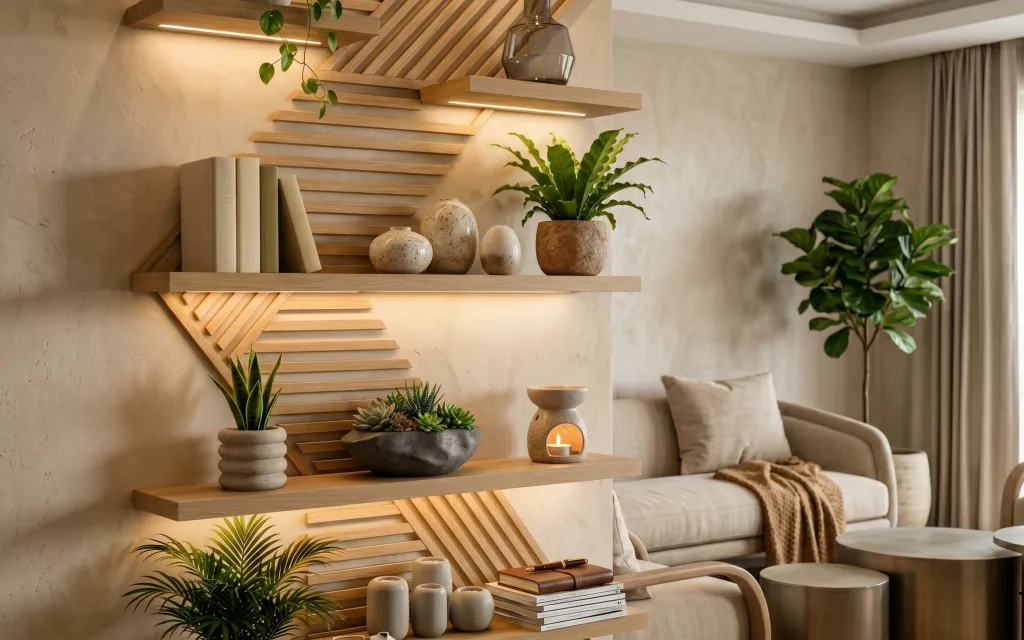
I love how this space mixes soft light with sculptural shapes: the beige throw pillow reads calm, the tan blanket adds texture, and the candle brings that small, controlled glow. The styling leans on natural forms—snake plant edges, a big leafy cluster, and speckled ceramics—so it feels curated without needing hard installs. If you’ve seen similar interiors in Architectural Digest’s “quiet luxury” spreads, it’s the same idea: neutral surfaces plus one botanical focal point. For shared housing, everything here can be packed into a handful of boxes at move-out.
The first time I tried to copy this vibe, I overdid it with too many small objects on the shelves and it looked busy, not intentional. What changed my mind was simplifying to fewer “hero” pieces: one bigger plant, one candle, and then textiles that soften the lines. In other words, it’s not the number of items—it’s spacing, texture, and repetition in warm neutrals.
Layer 1 — throw pillow (beige) on sofa ($40) Copy the softest texture first
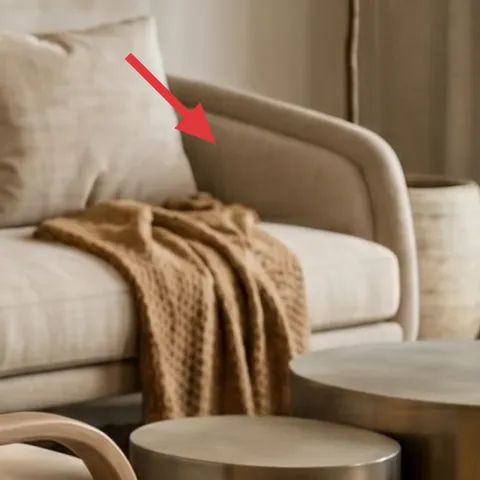
A beige throw pillow is the fastest way to get that calm, warm baseline on a sofa, especially when the rest of the room is staying neutral. In the photo, it sits against the sofa cushions and adds a matte, slightly cozy texture that makes the plant styling feel intentional instead of “stand-alone.” This choice beats chasing a new sofa or trying to change fixed pieces, which you won’t be able to take with you. The trade-off is simple: pillow covers do flatten with time, so plan to refresh the cover or swap it when you move.
Match undertones, not trends
Look for a beige that leans warm (creamy, not gray) so it plays nicely with terracotta and green.
Layer 2 — beige curtain panels at window ($40) Make light feel warmer
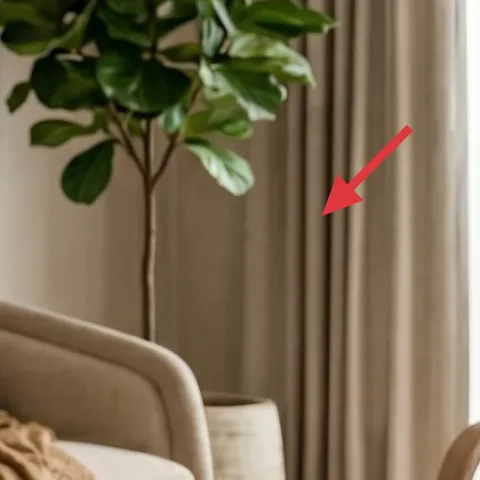
Beige curtain panels do two jobs here: they blur the harshness of daylight into something softer, and they give the room that continuous vertical calm behind all the greenery. Since this look is built on warm modern lines, curtains with a medium drape keep everything from feeling boxy. This is a better move for shared housing than trying to alter wall lighting or fixed features you can’t remove. The trade-off is that you’ll need room to store the fabric folds—so choose panels that can stack without crushing.
Choose clip-on or easy hang
If your window setup allows it, use tension hardware or clip methods so you’re not drilling into anything.
Layer 3 — tan throw blanket draped on sofa ($25) Texture over more stuff
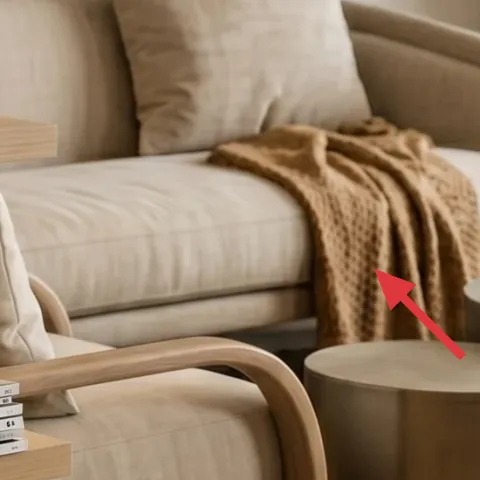
Draping a tan throw blanket over the sofa gives you the layered, lived-in feeling without adding visual clutter. The blanket in the photo reads as a thicker, woven texture that contrasts nicely with smooth pillow covers and the ceramic shapes. This swap is an easier alternative to buying extra decor for the shelf area; fabric adds warmth and movement even if you only style one shelf or side table. The trade-off: throws collect lint if you don’t have a lint roller habit—build that into your weekly routine.
Skip scratchy blends
If the blanket feels itchy in the store, it will feel worse on a sofa arm—pick a softer weave even if it costs a few dollars more.
Layer 4 — candle in small ceramic holder ($15) The tiny glow that makes it feel finished
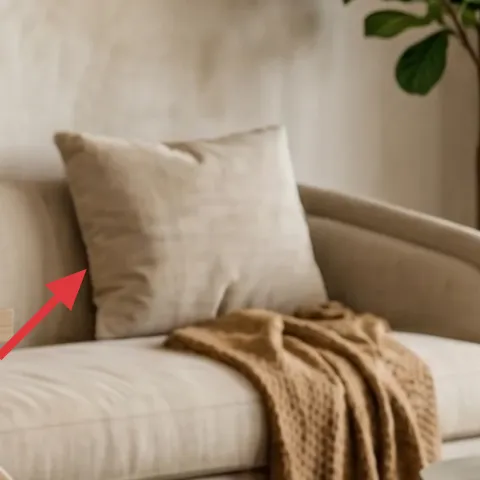
A candle in a small ceramic holder adds “finished” energy in a way plants and textiles can’t, because it creates a warm focal point you can control with one object. In the scene, the candle sits near the center of the lower styling zone, so your eye lands there first. This beats adding more ceramics in a crowded way; a single warm light source pulls the plant-and-textile story together. The trade-off is that you’ll have a consumable—so pick a candle with a burn time that fits how often you actually stay in the room.
Use the same height as your small decor
Place the candle where it matches the visual level of surrounding ceramics so it looks styled, not accidental.
Layer 5 — large leafy potted plant in terracotta-style pot ($70) One living focal point, styled simply
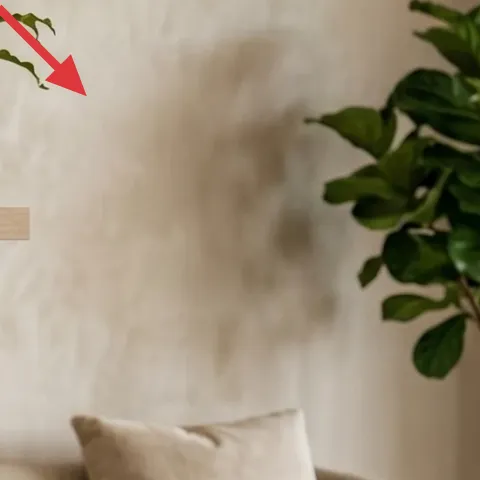
That big leafy plant is the anchor: it brings an obvious green note, adds volume to the composition, and balances the warm wood tones above. The pot shape matters too—something in a terracotta-style hue reads grounded against beige textiles. For shared housing, this layer wins because the plant travels with you, and the pot can be swapped without changing the rest of your setup. The trade-off is placement: it needs a stable spot and enough light, so plan where it will live between moves and don’t rely on the “perfect corner” that turns out too dark.
Make it instead of buying it
This DIY paints a small terracotta planter set so the pot color matches the warm-beige, green-and-terracotta palette without locking you into one store’s ceramic.
Materials
- Terracotta mini planters — set of 3 — craft store — $24
- Acrylic paint (warm terracotta shade) — 1 small bottle — craft store — $10
- Foam paint sponges — 2-pack — craft store — $6
- Paintbrush (detail brush) — 1 — craft store — $6
- Painter’s tape — 1 roll — hardware store — $4
Steps
- Wipe the terracotta planters clean and dry completely.
- Tape off any areas you want to stay natural terracotta.
- Apply the base coat with a foam sponge for an even, matte coverage.
- Let it dry until the surface feels fully set to the touch.
- Add a second coat for deeper color where the planter will catch the light.
- Carefully remove tape and let the paint cure overnight before handling.
Total DIY cost: $50 — saves about $20 over buying.
Layer 6 — stack of books on side table ($15) Give the shelf styling a “resting place”
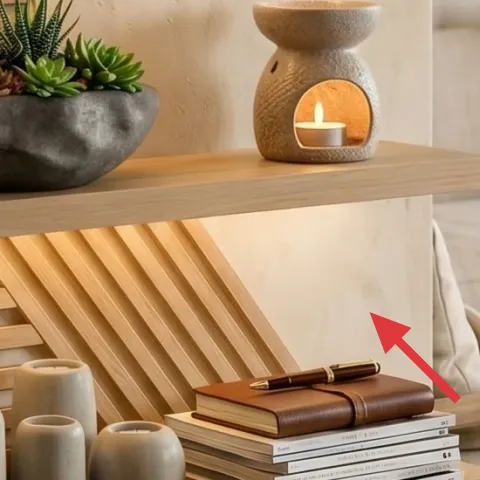
A small stack of books adds visual order, especially in rooms that already have vertical lines from curtains and architecture. In the photo, the books sit low and close to the side styling zone, making the candle-and-ceramic cluster feel intentional instead of random. This is the move-friendly alternative to buying a second small shelf or wall decor you can’t easily take down. The trade-off is that books take up space—keep them in a single stack so you don’t have to store multiple loose spines.
Pick one height, not three
Even stacking is what makes the “warm modern” look read curated.
Layer 7 — small round side table ($60) Create a place for everything to sit
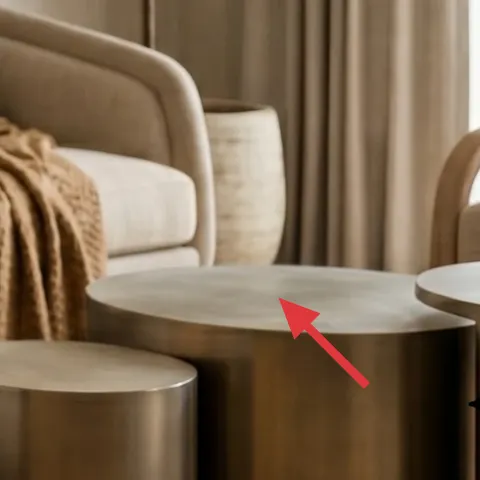
A small round side table gives you that perfect staging area for candle, ceramics, and a book stack without blocking sightlines. In the hero, the round top also softens the room’s geometry; it counters the straight lines of wood and shelf features with a gentler shape. This beats adding another tabletop lamp or extra decor because it actually gives the layout a home base. The trade-off is stability: round tops can wobble on uneven floors, so check level where it will live before you load it up.
Shop for lightweight legs
If you can lift it comfortably alone, you’ll be more willing to style it every day.
The cost, layer by layer
| Layer | Item | Cost |
|---|---|---|
| 1 | Beige throw pillow cover ($40) | $40 |
| 2 | Beige curtain panel pair ($40) | $40 |
| 3 | Tan throw blanket ($25) | $25 |
| 4 | Candle in small ceramic holder ($15) | $15 |
| 5 | Large leafy plant + painted terracotta planter set ($70) | $70 |
| 6 | Stack of books ($15) | $15 |
| 7 | Small round side table ($60) | $60 |
| Total | $265 | |
If your budget needs to dip, the easiest swap is cutting the side table cost first and focusing on the textiles (pillow cover + throw blanket) plus one plant and one candle. Those layers carry the warm-beige look even when the staging surface is simple.
What worked, what didn't (across the whole room)
This refresh works because it focuses on a few high-impact, movable pieces: one warm textile base, one curtain frame for softer light, and one living focal point. The candle and book stack keep the styling from feeling too “decor-only,” like it belongs to real daily use.
What worked
- The beige throw pillow gives an instant neutral anchor that makes the plants look curated, not scattered.
- Curtain panels soften incoming daylight so the whole room reads warm without extra lighting installs.
- The tan throw blanket adds a woven texture that balances smooth ceramics and matte pottery.
- A candle in a small ceramic holder creates a focal point at the same height as decor.
- A single large leafy plant adds volume and green contrast without requiring wall changes.
- The book stack organizes the styling area so objects feel placed, not piled.
What didn't
- Trying to match every ceramic color at once makes the shelf feel busier instead of warmer.
- Using too many small candles or too-tall candle holders overpowers the plant as the anchor.
- Skipping curtains entirely makes the room feel flatter, because the vertical softness disappears.
- Over-stacking books turns the side table into storage instead of styling.
What we'd skip if we did it again
Skip buying extra shelf decor to “fill space.” When you’re working around immovable architecture, it’s the spacing that matters—one plant, one candle, and one organized small stack usually reads better.
Skip hard installs like permanent lighting changes. This look gets its softness from curtains, textiles, and a controlled warm candle moment, so keep the updates reversible.
Skip a second big plant. Two large plants can fight for attention; one living focal point plus a small secondary element (like a book stack) keeps the composition balanced and easier to move.
Frequently asked
How long does it take to style this living room look?
Plan for about 2–3 hours the first day: textiles on the sofa, curtains aligned, plant positioned, then the candle-and-books staging. If you’re also DIY-painting a planter, the styling part is quick, but the paint needs dry and cure time. Once it’s set, daily maintenance is just a quick dust/wipe and a weekly candle check.
Is this renter- or shared-housing friendly if I’m moving in a year?
That’s the whole point of the layers: pillows, throws, curtains, a candle, books, and a side table all pack into a few boxes. The large plant is the heaviest piece, but it still travels with you better than fixed wall changes. You can restyle quickly in the next apartment by repeating the same “one anchor plant + soft textiles” formula.
What if my living room is smaller than the photo?
Choose the same color story, but scale the surface layout: keep just one side table vignette (candle + books) instead of spreading objects. Use narrower curtain panels or hang them to the same height as your window trim to preserve vertical softness. If the sofa is tight, shrink the throw blanket to one arm fold so it doesn’t swallow the seating.
What if my living room is bigger or has more wall space?
Lean into volume: keep the big leafy plant, but allow slightly more curtain width so light remains soft across the whole window. You can also add one extra pillow in a similar warm neutral, staying within the same undertone family. The “skip” is adding five different decor colors—stick to beige, terracotta, and green for consistency.
Where should I shop for the easiest move-friendly versions of these items?
For textiles and curtains, look at home goods brands and big-box retailers that offer straightforward sizes and easy returns. For candles and ceramic holders, any local home store works—choose something that looks good even unlit. Plants are easiest from reputable nurseries with sturdy pots, and books are naturally move-friendly because you can swap titles over time.
What’s the biggest mistake people make copying this look?
Overcrowding the styling zone. People try to match every small ceramic detail and end up with visual noise that fights the plants. Instead, make one hero (the plant), add one glow moment (the candle), and then repeat the warm texture language with pillow and throw. If it still feels busy, remove items before you add replacements.
More in Living Room
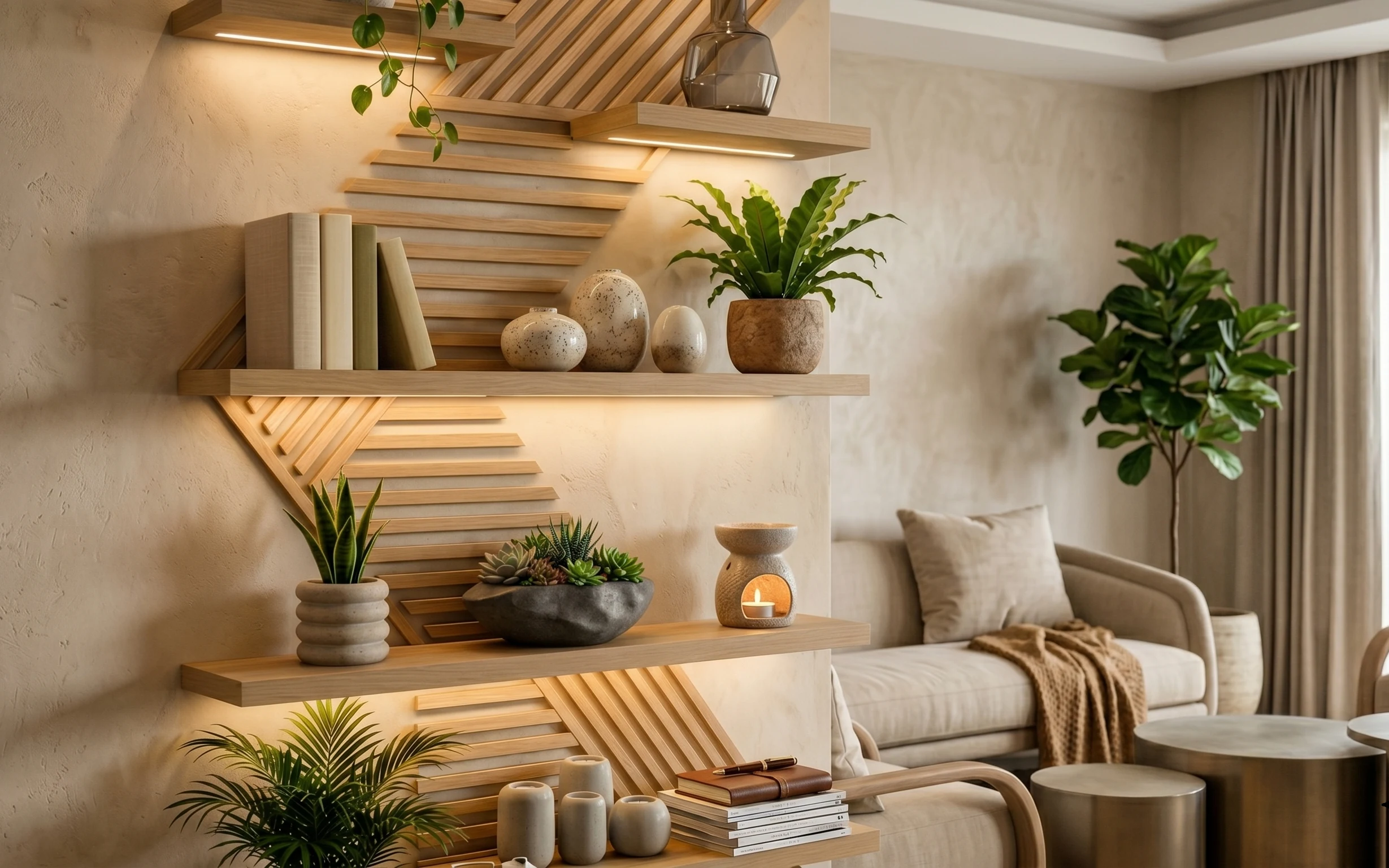
7 no-drill swaps for a $300 living room refresh
A warm-beige and terracotta living room refresh that works for shared housing, with move-friendly swaps. This $300 plan focuses on soft tex…
What $700 buys: a beige-and-wood living area refresh
A beige-and-wood living area refresh for renters, built around a big rug, taller window textiles, and a few easy swaps. This $700 plan keep…
5 renter-friendly ways to refresh a living room corner for $400
A warm modern living room corner with olive, cream, and botanical art—refreshed with move-friendly swaps for $400. Focus: add texture, keep…