- Best for
- Renters who want warm-neutral cohesion fast
- Cost
- About $700 for the full look
- Difficulty
- Easy—mostly textiles and styling
- Time
- A weekend, plus one styling pass
Why beige-and-wood tones are the living area of 2026
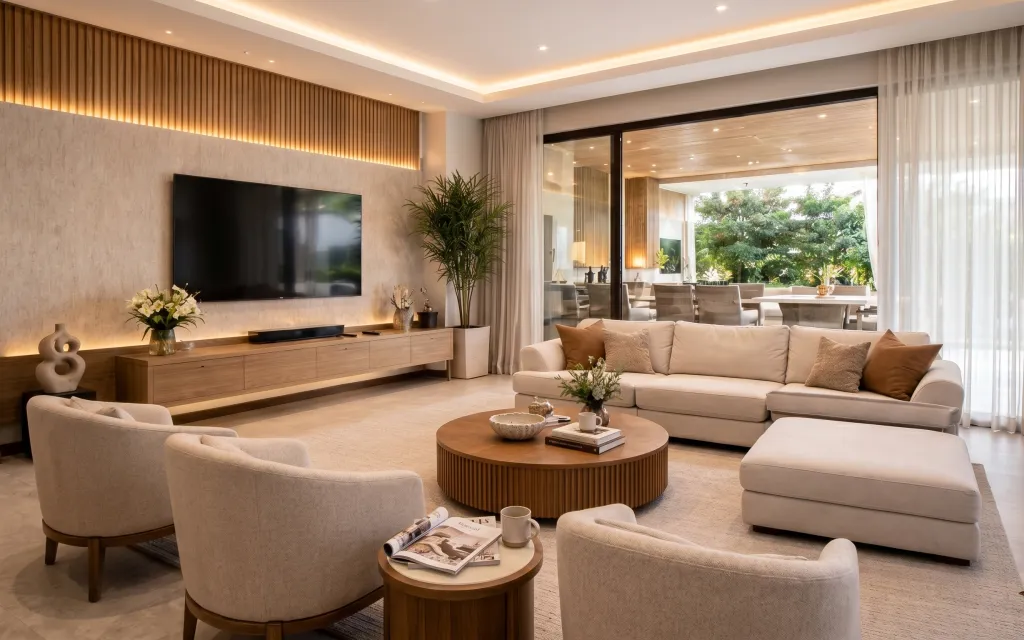
Start with the look you already have here: warm wood, a long media console, and soft drapery that makes the whole space feel grounded. In the photo, the texture mix is the real trick—beige upholstery, a flatweave-like rug, and the tall potted plant add height without visual clutter. I’m also thinking about magazine-forward restraint: modern neutrals with a single contrast (like the brown pillow) feels intentional instead of random. For renters, you can build that same calm by changing textiles and styling pieces, not the walls.
The first time I tried to copy this vibe, I added too many small decor items at once. It looked busy fast—especially on the console—so I pulled back to fewer, bigger shapes: one vase, one jar group, and a plant that reads from the sofa. This time, I focused on proportion first (rug size + curtain height), then color, and only then the “little stuff.” That order keeps the room from slipping into beige sameness.
Layer 1 — beige 8×10 area rug ($200) Grounded underfoot
{{LAYER_1_FIGURE}}
A large beige area rug sits under the sofa, anchoring the seating zone so the room reads like one composed area. The key is size: an 8×10 gives enough coverage that your coffee table, ottoman, and armchairs feel connected instead of floating on bare flooring. Choose a rug with subtle texture (looped or tightly woven) to hide everyday wear; this is especially helpful if you’re dealing with shoes, crumbs, or the occasional spill. The trade-off is that big rugs are a bit heavy to move, but they’re still totally renter-friendly—roll, tape, and pack when you go.
Pick a rug pad
A grippier pad keeps the rug from shifting under chairs and helps it feel less “thin” on hard flooring.
Layer 2 — dyed throw pillow covers (set of 4) ($48) Adds depth without changing the sofa
{{LAYER_2_FIGURE}}
These throw pillows are the fastest way to make a light sofa look styled instead of blank. A dyed look—slightly deeper tan or warm brown instead of pure beige—creates that subtle contrast you see across the couch cushions. The reason it works here is that the room already has warm wood and soft drapery, so a richer pillow color looks natural rather than jarring. If you buy the covers in a couple tones, you can rotate them seasonally while keeping the same sofa footprint. The trade-off: dyed covers need care at wash time, so follow the label instructions.
Keep the shapes consistent
Square throw pillows and a pair of slightly varied tones usually look more intentional than mixing lots of different sizes.
Layer 3 — round ribbed coffee table ($120) Softens the lines
{{LAYER_3_FIGURE}}
The round coffee table breaks up the straight lines of the wall paneling and makes the seating area feel calmer. In the photo, the ribbed wood texture adds dimension without needing bold color, and the tabletop size works for a tray, a vase, or a book stack. Choosing a round shape over a rectangular one is the decision that prevents “hard corners” from piling up when you also have a big rug and tall curtains. The trade-off is less surface width for parties, but for everyday lounging it’s perfect—and it’s also easy to relocate when you need to rearrange.
Style in a small group of 3
One vessel, one smaller ceramic or jar, and one book reads cohesive without overcrowding.
Layer 4 — tall beige drape pair with white sheer ($60) Creates height at the windows
{{LAYER_4_FIGURE}}
Window textiles do most of the visual work in this living area: sheer light filters in, and the taller beige drapes add structure. Buying a drape pair plus sheers lets you recreate the “layered softness” effect without altering anything permanent. Mounting is the renter-safe part—use tension rods for the sheer and a removable approach for the drapes, then let the panels fall past the windowsill. The trade-off is you may need to fuss with gathering until the pleats look even, but once it’s right, it stays right. The result is a room that feels taller and more expensive.
Don’t short-sheet your curtains
Cut-off hems make the room look lower; aim for panels that reach close to the floor or just skim it.
Layer 5 — long wood media console ($120) Gives your TV zone a place to breathe
{{LAYER_5_FIGURE}}
This long console under the TV is where the warm-neutral look becomes “styled,” not just “furnished.” Look for warm wood tones (oak, ash, or beech) and simple cabinet lines so it doesn’t compete with the slat wall texture. The trade-off with a streamlined console is you have to style it intentionally—too many knickknacks will look like clutter. In the photo, the console stays mostly open, with a vase and a small cluster of glass pieces. That negative space is what keeps the TV wall from feeling heavy.
Match the wood undertone
If your flooring is honey-toned, pick a console with a similar warm undertone so everything reads cohesive.
Layer 6 — tall potted plant ($60) Adds vertical softness
{{LAYER_6_FIGURE}}
A tall potted plant in the corner creates the height you’d normally get from built-ins, but without any renovation. Here it sits near the curtains, so it also helps the transition from window light to seating area feel natural. Choosing a plant with airy, upright leaves matters: too bushy can swallow the console wall, while too sparse doesn’t read at a glance. The trade-off is maintenance—plants need light and occasional rotation to avoid leaning. Still, it’s one of the most removable upgrades you can make, and it makes a “neutral” room feel alive.
Rotate monthly
A quick turn keeps leaf growth even so the plant stays symmetrical-looking from the sofa.
Layer 7 — white-flower vase on console ($25) One fresh accent
{{LAYER_7_FIGURE}}
A small vase with white flowers on the console is the contrast point that keeps the palette from going flat. It’s a simple choice, but it works because white sits cleanly against warm wood and beige upholstery. If you don’t want the upkeep of fresh stems, consider switching to dried flowers or store-bought faux for events—style will stay consistent while the “fresh” look is still there visually. The trade-off is realism: real flowers look best for a short window, but even then, you can keep the vase year-round and just swap stems. Either way, it’s an easy, renter-safe way to add life.
Keep the vase footprint small
One vase is enough—when the console gets crowded, it stops looking calm.
The cost, layer by layer
| Layer | Item | Cost |
|---|---|---|
| 1 | Beige 8×10 area rug | $200 |
| 2 | Throw pillow covers (set of 4) | $48 |
| 3 | Round ribbed coffee table | $120 |
| 4 | Tall beige drape pair with white sheer | $60 |
| 5 | Long wood media console | $120 |
| 6 | Tall potted plant | $60 |
| 7 | White-flower vase on console | $25 |
| Total | $633 | |
If you want a cheaper version, choose a smaller rug footprint (like 5×7) and swap the console for a thrifted media stand. Keep the curtains simple with one drape pair and skip matching sheers; the plant and vase still supply the vertical and fresh contrast.
What worked, what didn't (across the whole room)
The warm-neutral look holds together because the styling keeps to a few repeat materials—beige textiles, warm wood, and white accents. The tall window framing and big rug size make the room feel intentional instead of “picked at random.” The only place you can overdo it is on the console: too many small objects break the calm.
What worked
- The 8×10 rug anchors the sofa and makes the seating area feel like one zone.
- Round coffee-table shape softens the straight lines from the wood slat feature wall.
- Tall drapes plus sheers add height and keep the room feeling bright without glare.
- The console styling stays airy, with space around the vase and small glass pieces.
- The tall potted plant gives vertical balance so the room doesn’t feel flat.
- One deeper pillow tone adds contrast while the overall palette stays warm-neutral.
What didn't
- When the pillows match beige exactly, the sofa looks unfinished and slightly washed out.
- Too-short curtains visually lower the ceiling and make the window area feel cramped.
- Over-styling the console with multiple small items turns “intentional” into “busy.”
- A low, dark coffee table can fight the light rug and makes the center feel heavier.
- If the plant is too wide instead of tall, it blocks sightlines to the window.
What we'd skip if we did it again
Skip buying a matching furniture set. This look works because pieces share a warm wood undertone, not because everything comes from the same line.
Skip a tiny rug. In a living area like this, the rug is the foundation—sizing down makes the sofa and chairs feel like they’re not meant to sit together.
Skip crowded console styling. One vase and one small cluster of glass objects read more expensive than a shelf full of “little wins.”
Frequently asked
How long does this kind of living area refresh take?
Plan for a weekend. Rug placement and sofa/pillow styling usually take 1 to 2 hours, while curtains are the main time sink because you’re aiming for full-length panels and even gathers. If you’re sourcing secondhand pieces like a console or coffee table, add a few hours for pickup and staging in the apartment.
Will this work in a rental where I can’t drill or anchor anything?
Yes—everything here is renter-safe. Rugs and freestanding furniture don’t require hardware, and the curtain approach can be done with tension rods or other removable supports. The key is choosing sizes you can use immediately: rug footprint, curtain length, and the plant scale so you don’t feel stuck rearranging around permanent features.
What if my room is smaller than this photo?
Downsize the rug first, but don’t skip the “anchor” effect. A 5×7 can work if the coffee table still sits fully on the rug. For curtains, prioritize height: even in a smaller room, longer panels make the window area look taller. Keep pillows to two tones max so the sofa doesn’t feel visually busy.
Where should I shop for the big-ticket pieces without blowing the budget?
Look for the rug and curtains from big-box home retailers for predictable sizing, then hunt for the console and coffee table secondhand or at discount furniture stores. The plant is often easiest through local nurseries or online sellers with clear height measurements. Buying one warm wood piece you can style around is usually cheaper than trying to match everything.
What’s the biggest mistake people make when copying this warm-neutral look?
Using only one shade of beige. The room needs at least one deeper contrast (like a brown pillow tone) and one clean white element (like a vase) to prevent “all-over beige” blur. The second most common mistake is short curtains—height is what makes it feel polished.
Can I keep the look while swapping items seasonally?
Absolutely. Keep the rug size, curtain length, and console shape as your constant structure. Then swap pillow covers by season and refresh the vase stems to match the mood—white flowers for calm, warmer tones for fall. The plant can stay in place for the year, and only the decorative accent changes.
More in Living Room
What $700 buys: a beige-and-wood living area refresh
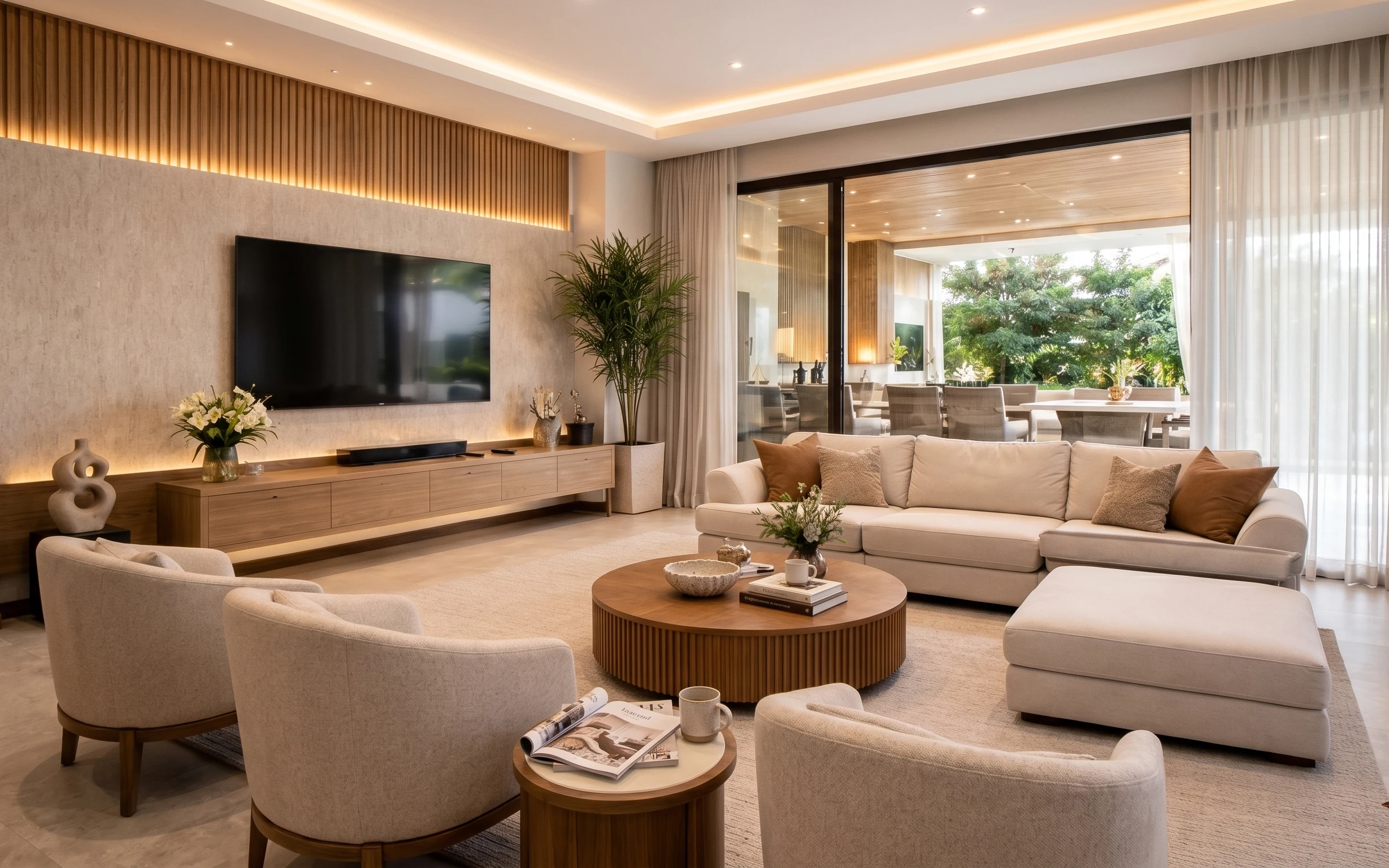
A beige-and-wood living area refresh for renters, built around a big rug, taller window textiles, and a few easy swaps. This $700 plan keep…
5 renter-friendly ways to refresh a living room corner for $400
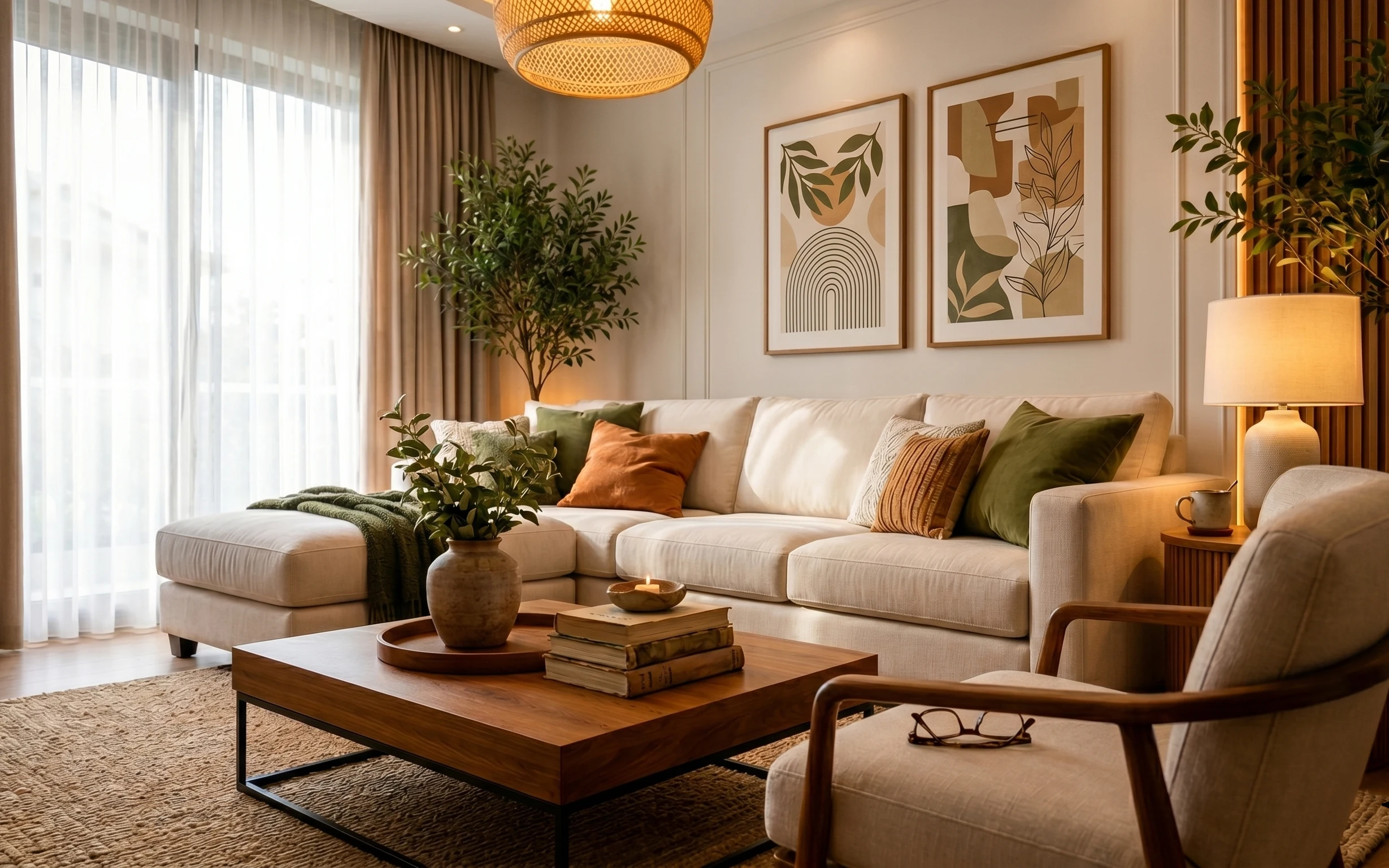
A warm modern living room corner with olive, cream, and botanical art—refreshed with move-friendly swaps for $400. Focus: add texture, keep…
6 no-drill ways to copy a calm living room seating area for $400
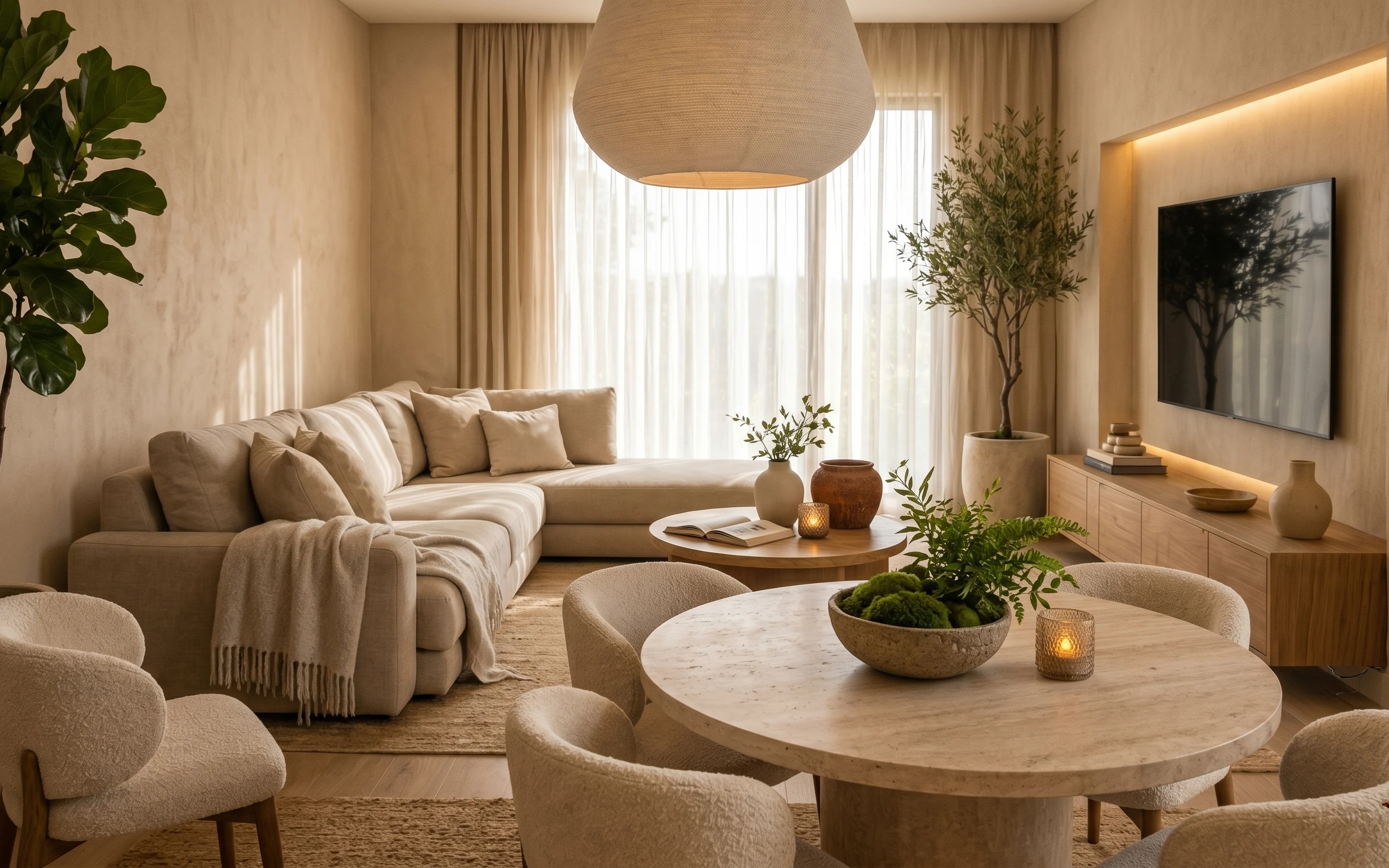
A calm living room seating area refresh for $400, built with 7 renter-friendly upgrades. Get the neutral rug-and-plant look using move-frie…