- Best for
- renter-friendly living rooms with warm wood + plants
- Cost
- $700 total refresh
- Difficulty
- easy swaps + one paint DIY
- Time
- about a weekend
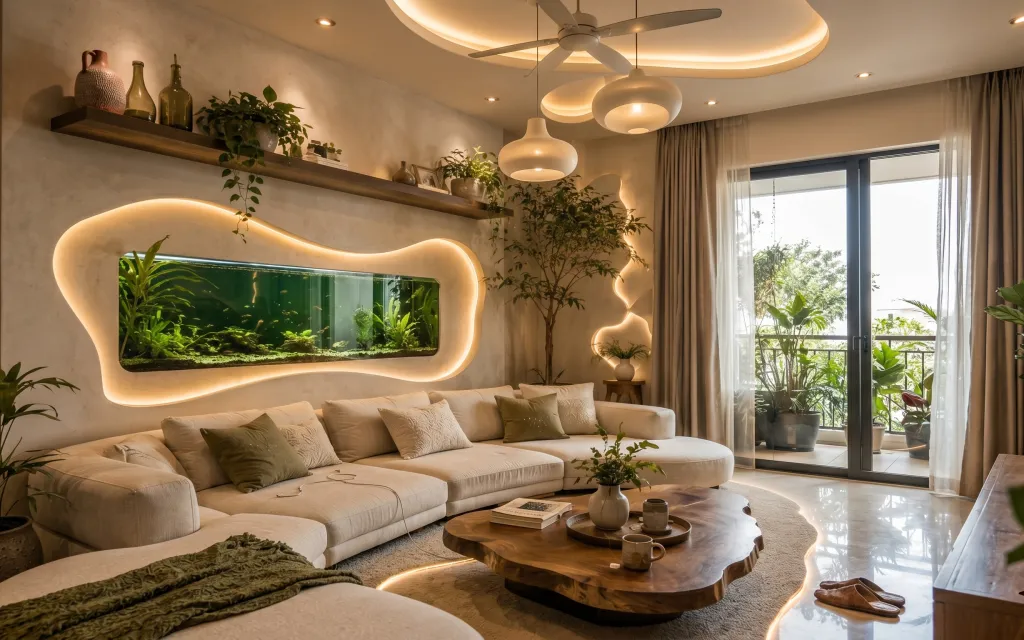
Why warm wood-and-olive aquarium glow is the living room of 2026
The whole vibe comes from contrast: a soft beige base, olive textiles, and warm wood accents, then that calm, indoor-garden feeling from the plants. In the photo you can see three textures doing the work—smooth polished stone underfoot, woven curtain fabric at the windows, and the tight knit/softness of the sofa pillows and throw. Even with the built-in aquarium and warm LED glow already there, the “designed” look is mostly styling and repeat materials. For renters, that means you can match the palette and density without touching the walls.
I used to think “neutral + plant” was enough, and I’d stop there. Then I noticed my spaces always looked flat in evening light—because I wasn’t giving the room enough texture at multiple heights. What changed my approach was styling the couch like a palette (olive and beige in specific spots) and adding a grounded rug under the coffee table. When you do that, the warmth from lighting and wood reads intentional instead of accidental.
Layer 1 — floor rug ($200) anchors the whole palette on stone
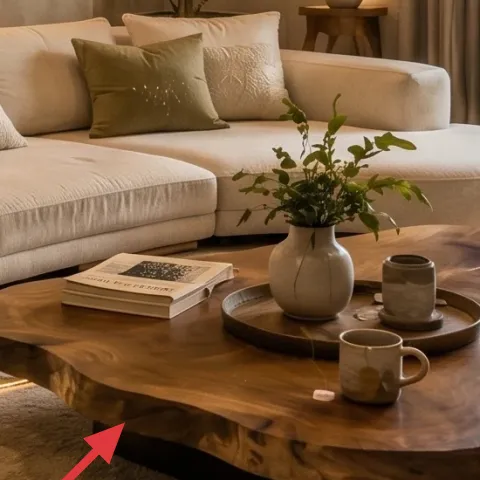
A good rug is what turns shiny, reflective flooring into a place that feels “set.” In this room, the rug sits under the coffee table and extends toward the sofa, so the olive and beige textiles land on something cohesive instead of floating above the floor. Choose a rug with a subtle texture and warm neutral tone (think jute-look, wool blend, or low-pile patterning) so it doesn’t fight the olive cushions. The trade-off is that you’ll need to vacuum and rotate more often than with bare flooring—but that’s what keeps it looking crisp.
Layer for coverage, not perfection
Let the front legs of the seating zone touch or hover just over the rug edge so the room looks intentional from every angle.
Layer 2 — round wooden coffee table ($180) adds a warm, curved surface for contrast
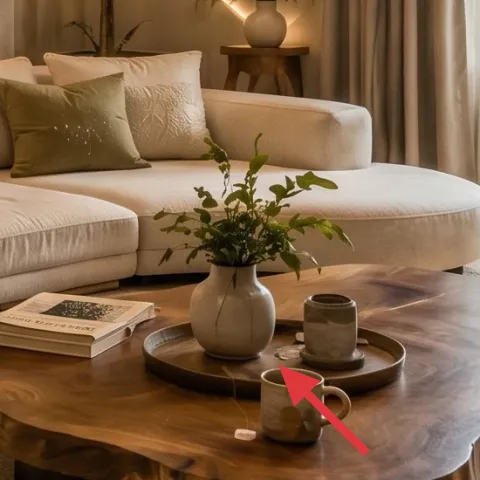
This coffee table is doing two jobs at once: it brings warm wood into the room and it echoes the soft curves already present in the wall alcove glow. A round top also makes a biophilic space feel less “boxy,” especially when paired with straight-line curtains. If you went with a square table here, the hard edges would compete with the aquarium feature and make the whole look feel louder than it needs to. The trade-off I accept with round tables is footprint—you lose a bit of storage under the center compared to some rectangular designs.
Curves make plants feel calmer
Round furniture visually softens the leaves, which is why the greenery reads lush instead of chaotic.
Layer 3 — tan floor-length curtains ($80) soften the window light line
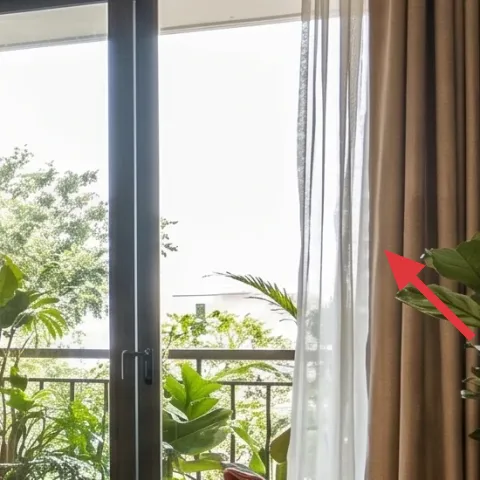
Those tan curtains are a “frame” for the outdoor view: they hide the harsh edge of daylight and create a continuous vertical line from floor to ceiling. To mimic that renter-friendly effect, hang a pair of floor-length panels so they puddle slightly rather than stopping at ankle height. The material should drape, not stand up stiff—otherwise the room loses that calm, spa-like rhythm. This choice also balances the visual weight of the aquarium feature; without curtains, the window would pull focus away from the seating area.
Skip sheer-only if you want the same mood
If the panels are too see-through, the room can look washed-out and the olive cushions won’t read as rich.
Layer 4 — olive throw pillows ($60) repeat the green for a collected look
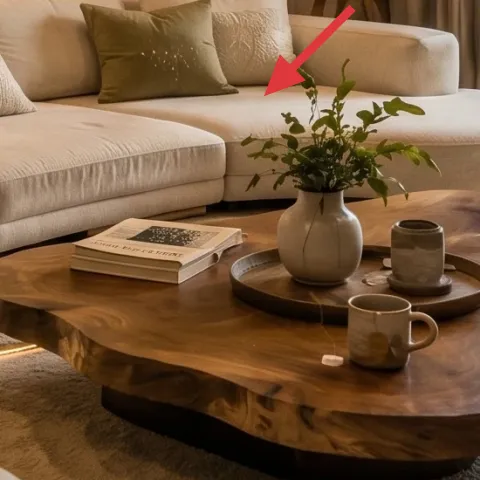
Olive pillows are the simplest way to bring the room’s plant-adjacent color into the textiles. In the photo, they’re spaced across the sofa so the green isn’t just one accent—it becomes a rhythm. If you only used one green pillow, it would look like a random add-on. Instead, aim for a small mix: mostly beige for softness, with olive pillows in a consistent tone family (slightly muted, not neon). The trade-off is that you may need to fluff and re-set them after vacuuming, since sofa fibers shift.
Match the undertone, not the exact color
Bring in pillows with a warm olive undertone so they harmonize with warm wood and LED glow.
Layer 5 — olive green throw blanket ($35) adds a cozy fold without covering everything
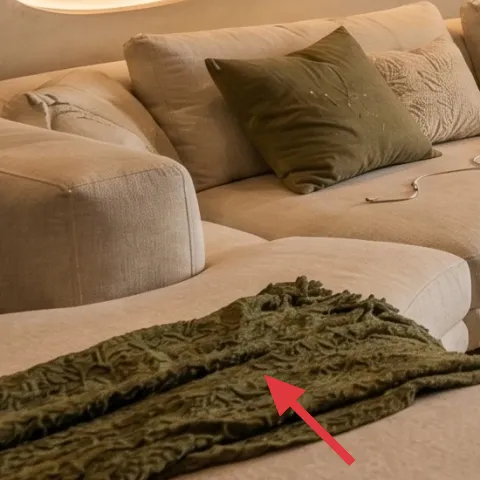
The olive throw blanket gives you a “foreground texture” that helps the room feel lived-in, not staged. Here it’s folded and draped so you get variation—flat knit against the sofa upholstery—without turning the entire couch into a blanket fort. If you went with a large blanket stretched flat, you’d lose the gentle depth that makes the sofa feel soft and inviting. The trade-off with throws is maintenance: they pull lint and pet hair quickly, so a lint roller or quick shake matters.
Use the fold to control visual weight
Keep the blanket concentrated in one zone so the room stays balanced with the rug and coffee table.
Layer 6 — decorative tray on the coffee table ($35) organizes the small stuff
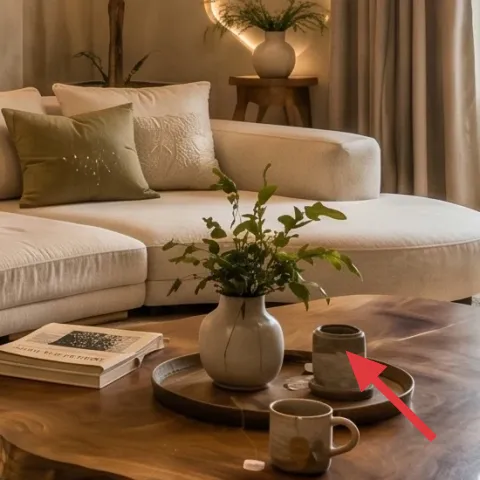
A tray is what makes those coffee-table objects look intentional instead of “randomly placed.” In the photo, small vessels and everyday items sit on a round surface, and the tray keeps them grouped to one focal area. Pick a tray that echoes the warm palette—wood, warm ceramic, or a lightly textured neutral—so it blends with the wood tabletop instead of looking like a separate color block. The trade-off is that trays take a minute to reset—especially if you move mugs or candles around—but that reset is what keeps the room photogenic.
Cluster by height
Keep one taller piece (vase or plant) and two smaller items so the arrangement reads at a glance.
Layer 7 — painted terracotta planter pot set ($50) brings the biophilic color to the floor
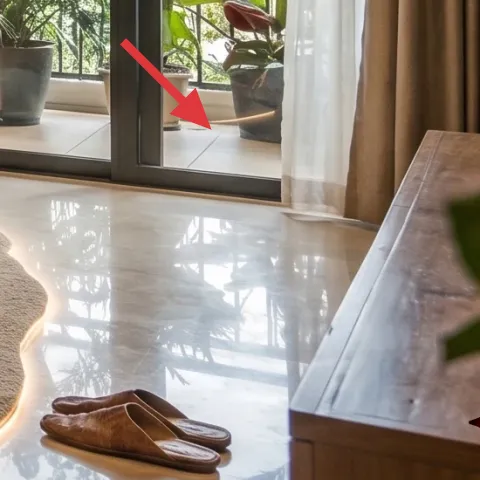
Planter pots are small, but they’re where color repetition happens. The hero has multiple potted plants, and the warm tones of the pots help the greenery feel like part of the design—not just decor you added later. For this layer, pick (or repaint) terracotta-style pots in a cohesive set, then place them where the room naturally “collects” attention: near the sofa corners and along the window side. The trade-off is that painted pots require gentle handling, since the finish can scuff if you’re careless moving them.
Make it instead of buying it
DIY painted terracotta planter set by refreshing a matched set of terracotta pots so the planters feel intentional with the olive textiles.
Materials
- Terracotta pots (set of 3, ~6–8 in) — 3 — craft store — $15
- All-purpose acrylic primer — 1 small can — craft store — $8
- Acrylic paint (warm neutral or terracotta-leaning tone) — 1 small bottle — craft store — $12
- Matte acrylic sealer — 1 small bottle — craft store — $10
Steps
- Wash the pots with warm water and let them dry fully.
- Lightly scuff the surface with dry sandpaper so paint grips.
- Wipe away dust with a damp cloth; let dry.
- Apply acrylic primer evenly and let it dry.
- Paint with 2 thin coats, letting each coat dry between layers.
- Touch up edges and any missed spots with a small brush.
- Let the final paint coat dry completely.
- Seal with a matte acrylic sealer for scuff resistance and let cure overnight.
- Set pots on a tray and avoid immediate heavy water exposure until fully cured.
Total DIY cost: $45 — saves about $5 over buying.
The cost, layer by layer
| Layer | Item | Cost |
|---|---|---|
| 1 | Floor rug (warm neutral, textured look) | $200 |
| 2 | Round wooden coffee table | $180 |
| 3 | Tan floor-length curtain panels (pair) | $80 |
| 4 | Olive throw pillows (set of 2–4 covers) | $60 |
| 5 | Olive green throw blanket | $35 |
| 6 | Decorative tray for coffee table styling | $35 |
| 7 | Painted terracotta planter pot set (DIY retail-equivalent) | $50 |
| Total | $640 | |
If you want a cheaper version, keep the rug and curtains, but scale the table styling down to one decorative tray plus one plant pot. Swap the throw blanket for a smaller knit or a second set of pillow covers, and choose a simpler terracotta pot shape instead of repainting multiple finishes.
What worked, what didn't (across the whole room)
This setup reads cohesive because warm wood, olive textiles, and plant styling repeat in a few deliberate places, not everywhere at once. The biggest wins are the grounded rug and the height variety on the sofa and coffee table. The only part that can go off-track quickly is window softness—if curtains aren’t full-length and drapey, the whole mood turns sharper.
What worked
- The warm neutral rug makes the sofa and coffee table feel like one seating zone on stone floors.
- Round wood furniture echoes the curved glow lines, so the space feels softer instead of boxy.
- Olive pillows repeat the plant palette and add contrast without needing bold wall color changes.
- Full-length tan curtains frame the bright window and keep the light edge from looking harsh.
- The tray organizes small objects so the coffee table looks styled, not cluttered.
- Terracotta-toned planters keep the greenery warm-toned and intentional alongside warm lighting.
What didn't
- A blanket spread too widely over the sofa would flatten texture and compete with the pillows.
- If curtains are too short or stiff, the vertical softness disappears and the room feels less calm.
- Using only one olive pillow reads like an accessory, not like a repeatable palette.
- Skipping a tray on the coffee table turns small items into visual noise near the lamp glow.
- Overbuying matching planters without repainting cohesion can make plants look separate.
What we'd skip if we did it again
Skip matching “suite” furniture sets. In this photo the warmth comes from texture and palette repetition, not from buying everything from the same collection.
Skip curtains that are only decorative sheers. For the same effect as the hero, choose full-length panels that drape and soften the light line behind the seating area.
Skip overstyling the coffee table with too many items. A single tray cluster plus one plant or vase keeps the round surface calm and lets the aquarium glow and greenery be the focus.
Frequently asked
Is this look really renter-safe if my place has existing hardwired lighting or features?
Yes—the photo’s biggest design cues (warm lighting glow and the aquarium feature) are already built in, but the refresh comes from movable layers: rug, curtains, pillow covers, a throw, a tray, and plant styling. Those are all easy to pack away or reset when the lease ends. You’re also repeating the palette (beige, olive, warm wood) so it reads cohesive even with fixed elements.
How long does it take to pull this together?
Plan for a weekend. Rug and curtain swaps can take a couple of hours including measuring, then the rest is styling: pillow placement, blanket drape, and building one coffee-table cluster on a tray. The DIY painted terracotta pots (drying + sealing) is the only part that needs a bit of pacing, but you can still set everything up around it while paint and sealer cure.
What if my living room is smaller than the photo?
Keep the rug but scale the coffee table styling down. Instead of multiple objects, use a single tray with one vase plus one small plant or candle. With pillows, use fewer olive cushions but keep the beige base generous so the couch doesn’t look crowded. For curtains, use full-length panels that touch the floor or puddle slightly—this creates height even in a compact layout.
Where can I shop for these items without matching everything perfectly?
Start with the big anchors you can’t easily fake: a textured warm neutral rug and drapey floor-length curtains. Then fill in with olive pillow covers (mix beige + olive rather than buying only one color family). For styling, look for a warm-toned tray and terracotta pots at home goods or craft stores—small mismatches are what make it look collected, not forced.
What’s the most common mistake renters make with a plant-and-neutral living room?
Overrepeating one thing and forgetting height and texture. A lot of rooms have “plants on the floor” and “pillows on the couch,” but no visual bridge between. The fix is simple: add a rug to ground the zone, use curtains to soften the window line, and style the coffee table with a tray cluster so small objects look grouped at one height.
Can I copy the palette without buying terracotta pots?
Absolutely. If you don’t want to repaint, choose pots in a similar warm tone—terracotta, warm taupe, or matte beige—and keep the shapes consistent across two or three planters. The goal is color harmony and repetition. Even without a DIY, the olive textile repeat and the warm wood tray/coffee table combination will carry most of the look.
More in Living Room
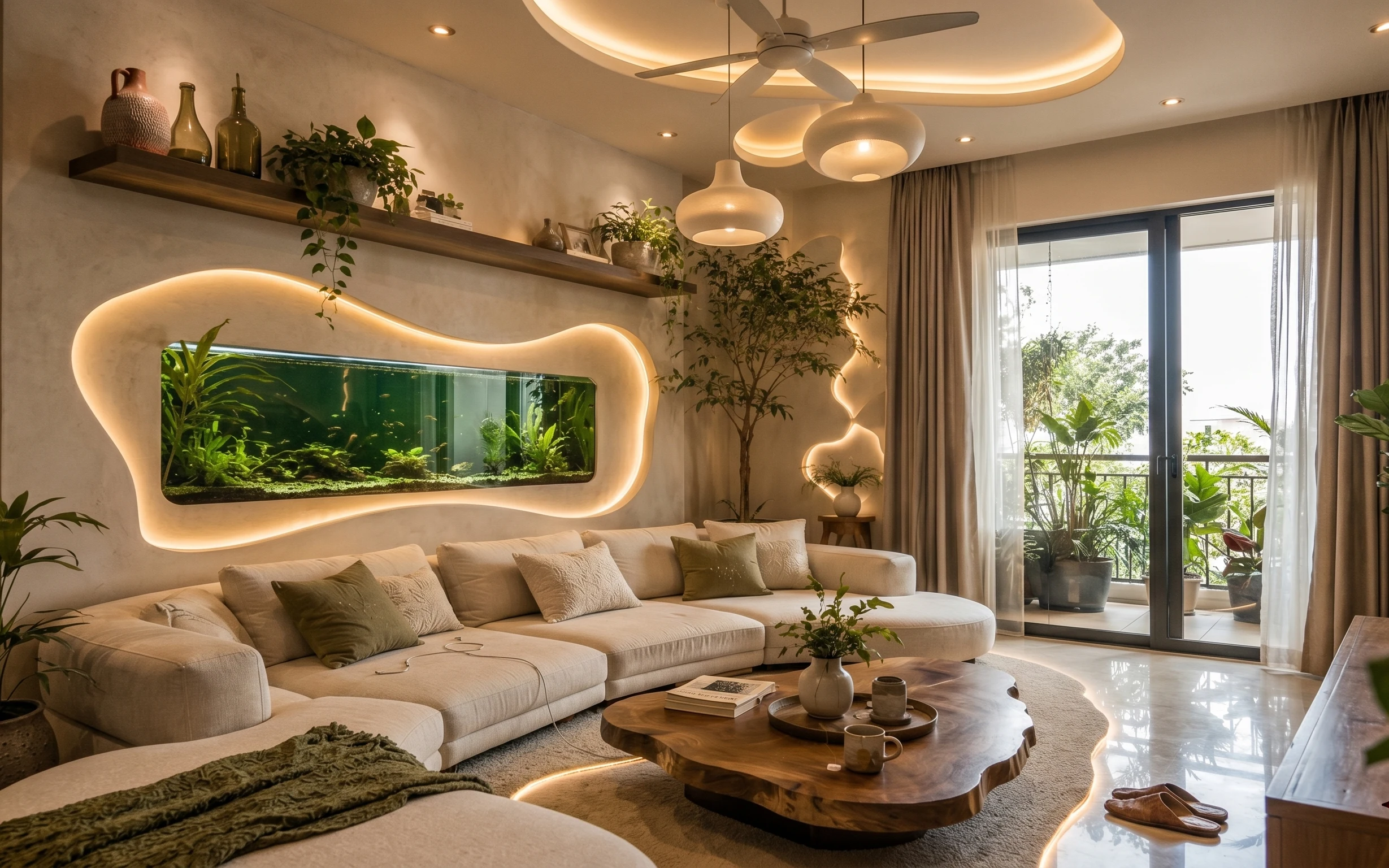
How to build a renter-friendly living room for under $700
A warm wood-and-olive living room refresh that reads like a design studio—without landlord changes. This $700 renter-friendly plan uses sev…
6 no-drill ways to build a renter-friendly sofa corner for $400
A move-friendly sofa corner refresh for $400 using renter-safe swaps: layered textiles, plug-in lighting, a framed abstract print you can r…
7 renter-friendly living-room swaps for a warm $600 update
A warm, earthy living room refresh on a $600 budget: a neutral 5×7 rug, a wood coffee table, framed botanical art, warm hanging bulb string…