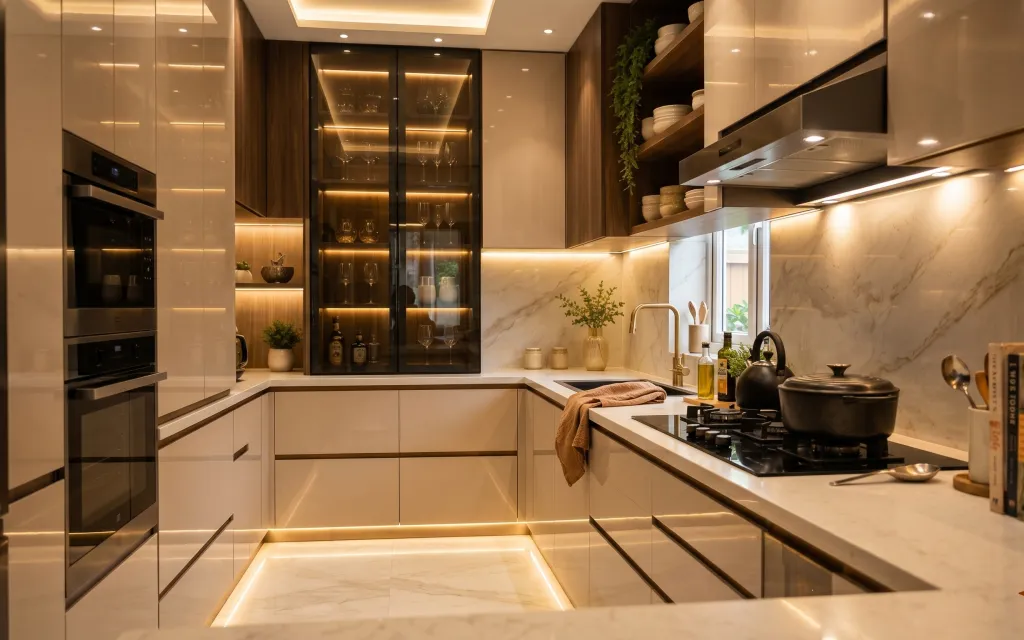
- Best for
- warm countertop styling
- Time
- about 2–3 hours
- Difficulty
- easy
- Cost
- $300 total
Why warm marble-and-brass accents are the kitchen galley of 2026
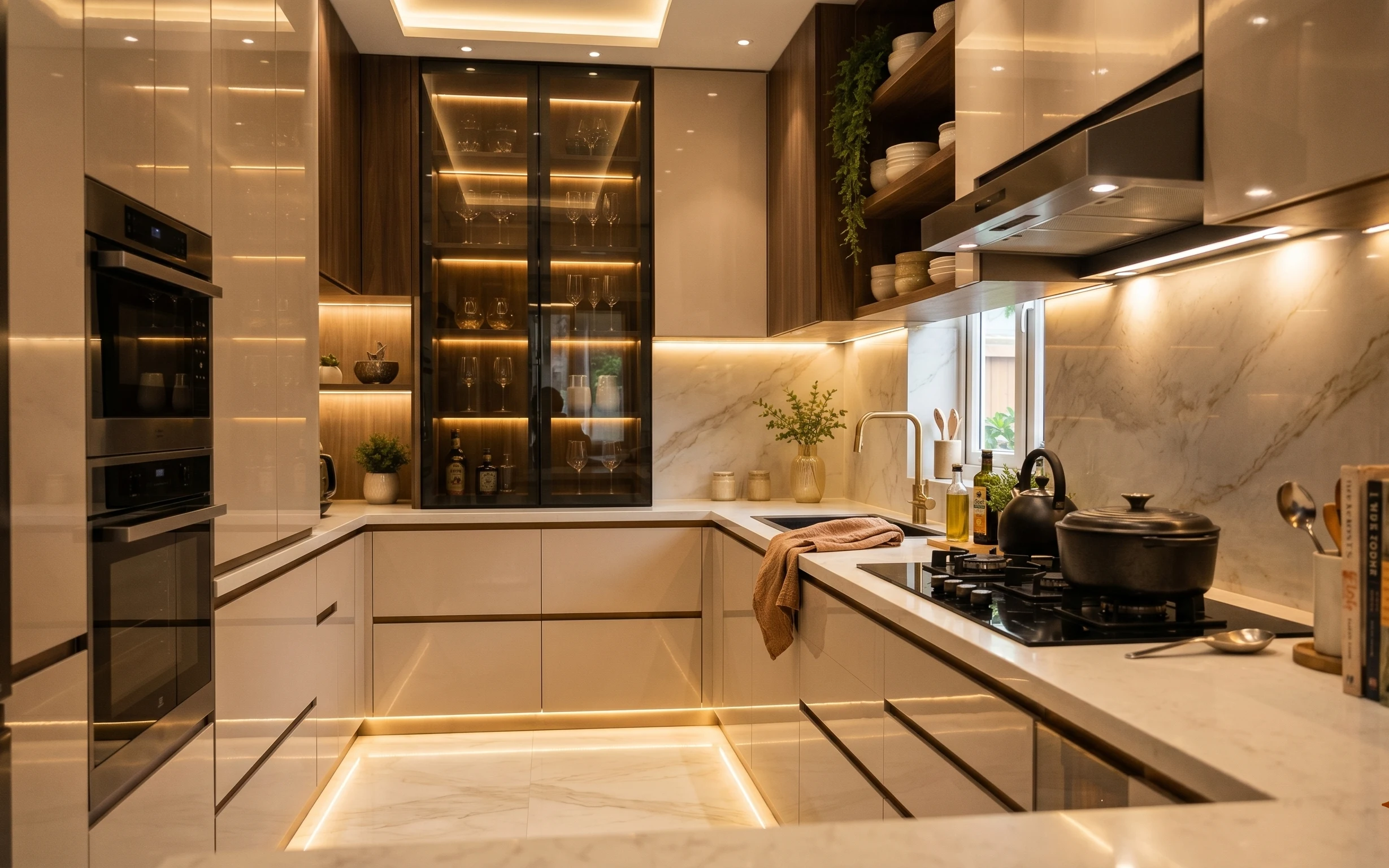
What makes this kitchen read expensive isn’t a new appliance—it’s the way small objects echo the marble and the warm lighting. The folded brown kitchen towel adds a grounded, matte texture against glossy stone. A small potted plant brings green height without cluttering the work zone, and the glassware in the cabinet adds sparkle at eye level. I’ve done this exact “scene-setting” in shared kitchens: the trick is choosing removable pieces that look intentional from across the room, then keeping the countertop styling tight.
I used to overthink kitchen styling and end up with too many small items competing for attention. Here, the palette is limited: warm neutrals, brass-toned light, and dark brown as the grounding note. Once I reduced it to fewer objects—plant, towel, one jar moment, and one grouping—I liked how the marble still felt like the main character while the details felt curated.
Layer 1 — folded brown kitchen towel ($25) matte warmth for a high-gloss counter
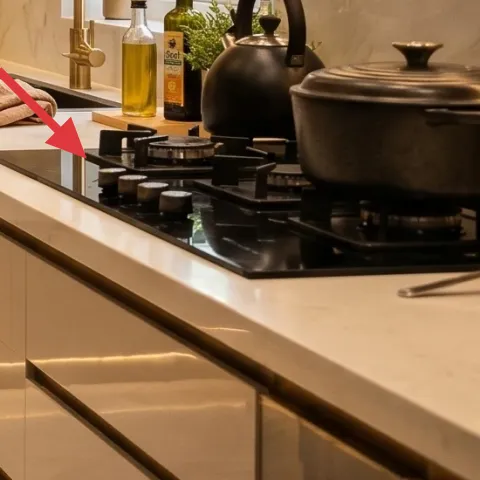
A folded brown kitchen towel is one of the fastest ways to soften a marble-heavy galley. In the photo it sits on the counter near the cooking zone, and that “daily use” placement makes it feel natural instead of decorative. I’d pick a thick cotton or cotton-linen blend in a warm taupe-to-chocolate range so it doesn’t look gray next to the golden glow. The trade-off: towels can look messy if they’re too small—go for a size that folds into a clean rectangle and stays crisp when it’s grabbed mid-meal.
Match the towel to the room’s darkest tone
Brown reads grounded next to warm white marble, while lighter beiges can disappear in the under-cabinet glow.
Layer 2 — small potted plant on countertop ($30) green height that stays moveable
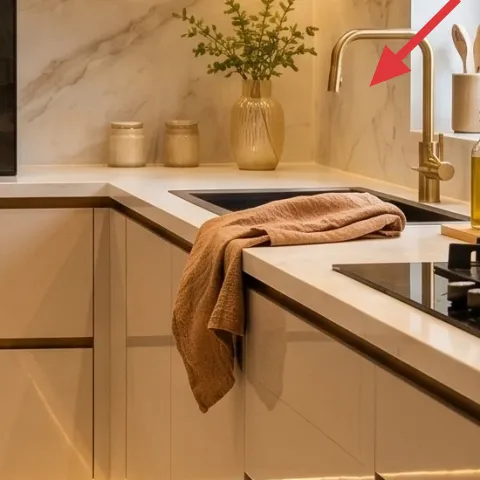
This small potted plant on the countertop adds life without taking over the work surface. Because it’s a self-contained pot, it packs easily in a box and survives moves better than cut stems. The plant also gives your eye a break between shiny backsplash and straight cabinet lines—an underrated benefit in narrow kitchens. Choose a plant with upright leaves so it doesn’t sprawl across spice jars and utensils. The trade-off is maintenance: if you forget to water, it’ll look sad fast, so pick something forgiving for your schedule.
Use the pot as part of the color story
When the pot is neutral, the plant reads as “intentional styling,” not random clutter.
Layer 3 — green plant leaves on open shelf ($22) vertical texture above the countertop
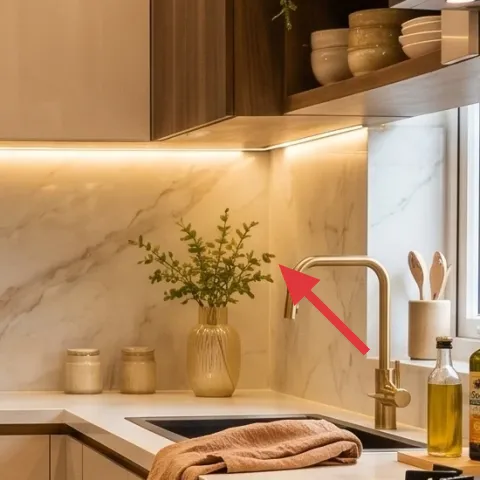
The green plant leaves on the open shelf add that “designer height” you can’t get from tabletop objects alone. In this setup, the leaves sit above the marble line, which is why the kitchen feels layered instead of flat. A smaller, tighter plant works best in shared housing because it’s easier to keep and less likely to knock over when roommates bump the counter. I’d go for a faux set only if you’re honest about dusting—real plants are worth it when the light is warm and consistent.
Keep open-shelf styling to one leaf source
One plant cluster prevents the shelf from competing with glassware behind it.
Layer 4 — stack of countertop books ($15) a tidy, casual styling block
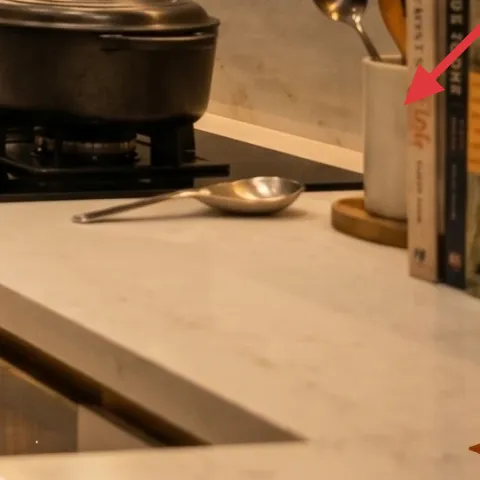
A stack of countertop books is the quiet way to make counter styling look collected instead of random. In the photo, the spines add vertical rhythm at the far right, balancing the open space near the stove. Because books are already in most shared homes, this layer can be cheaper than “decor” by default. The trade-off is that stacks look best when they’re kept even—use a paper band or small wrap to keep the edges aligned, and swap titles seasonally so it never looks worn out.
Pick books with a consistent spine color family
Warm neutrals and muted tones sit naturally against gold-lit marble.
Layer 5 — black lidded countertop pot ($40) functional weight, decorative shape
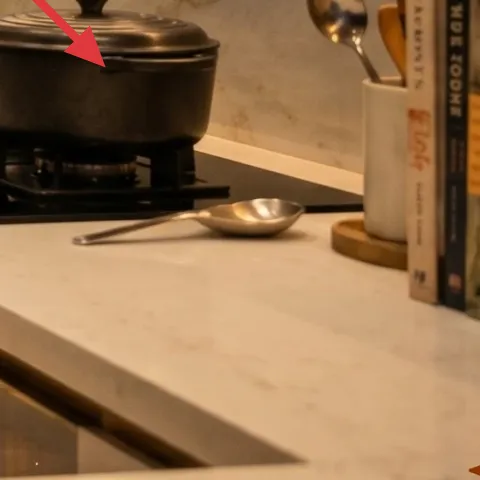
This black lidded countertop pot works because it brings weight and shape right where your eye lands during cooking. The dark tone echoes the deeper browns in the palette, making the countertop styling feel intentional instead of scattered. If you’re missing this kind of anchor piece, go for a ceramic or stoneware form with a lid—those read “finished” from multiple angles. The trade-off is that heavy-looking decor can clutter if you place it too close to cooking: keep it to the edge zone, not in the active wipe-and-cook path.
Don’t choose a pot that can’t be moved safely
If it’s too heavy or too slick, it becomes one more thing that gets bumped around.
Layer 6 — small candle jar on countertop ($35) scent + glow for nighttime cooking
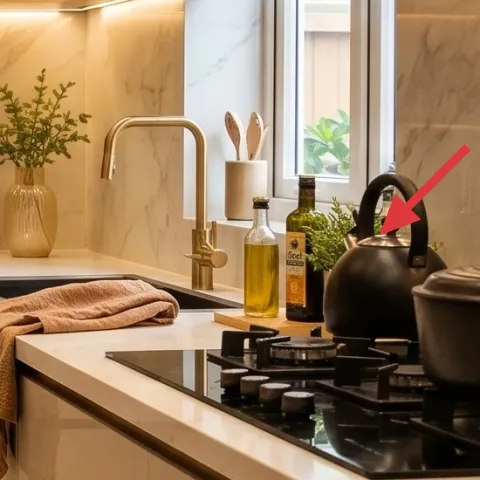
A small candle jar on the countertop adds a warm second light source that matches the kitchen’s golden under-cabinet glow. Even when it’s not lit, the jar shape acts like a “mini centerpiece,” and when it is lit it makes the marble look less stark. For shared housing, choose a jar with a stable base and a removable lid so it packs down in an afternoon. The trade-off: candles are perishable, so the best approach is buying one you’ll use up, not a novelty jar you’ll feel guilty moving every lease.
Keep the jar near the styling cluster, not the stove edge
In a galley, that placement reduces heat and makes the glow feel intentional.
Layer 7 — wine glasses in glass cabinet ($133) sparkle at eye level without extra décor
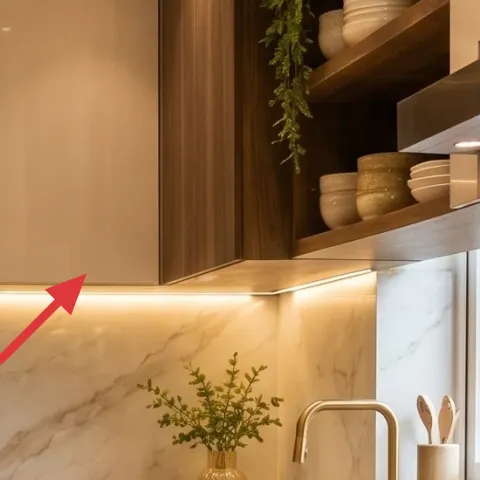
Wine glasses in the glass cabinet give you sparkle without adding more objects to the counter. Because the cabinet is already backlit and glass-fronted, the glasses reflect light and make the whole kitchen feel “styled” even on days you’re just grabbing ingredients. This is also a move-friendly layer: glasses pack into boxes with padding, and you can swap the set size to match your lease. The trade-off is fragility—use thick wrapping and keep them upright in transit so you’re not replacing them after every move.
Choose stemware that matches the room’s warmth
Clear glass keeps the brass glow looking clean and not yellowed.
The cost, layer by layer
| Layer | Item | Cost |
|---|---|---|
| 1 | folded brown kitchen towel | $25 |
| 2 | small potted plant on countertop | $30 |
| 3 | green plant leaves on open shelf | $22 |
| 4 | stack of countertop books | $15 |
| 5 | black lidded countertop pot | $40 |
| 6 | small candle jar on countertop | $35 |
| 7 | wine glasses in glass cabinet | $133 |
| Total | $300 | |
If you want to go cheaper, skip the glassware set and build the look with the towel, plant, and one candle jar first. Glass cabinets can be pricey; the rest of the layers keep the warm marble vibe without fragile packing.
What worked, what didn't (across the whole room)
This refresh works because every layer supports the same visual job: soften marble, add warm texture, and create sparkle at different heights. The biggest drawback is that some pieces (like stemware) are fragile, so packing has to be taken seriously for shared housing moves.
What worked
- The folded brown towel adds matte contrast so the marble doesn’t feel too slick.
- Plant placement gives vertical relief along the straight lines of a narrow galley.
- The candle jar provides a second warm light source that matches under-cabinet glow.
- Countertop books add rhythm without needing any drilling or hardware.
- The black lidded pot acts like an anchor shape near the cooking zone.
- Wine glasses in the cabinet create sparkle without adding clutter to the counters.
What didn't
- Open-shelf plants can look sparse if the leaves are too small for the shelf height.
- Stemware styling can fall flat if it’s packed too tightly and arrives misaligned.
- Candle jars can feel overdone if they’re placed too close to active cooking areas.
- Towel styling looks sloppy when the fold is inconsistent across the week.
What we'd skip if we did it again
Skip adding lots of small countertop “kits” all at once—salt, oil, herbs, and mini jars will overcrowd a galley fast. Keep to one styling cluster (plant + jar + one anchor object) and use everything else as storage.
Skip buying a giant new rug or runner for a kitchen galley like this. There’s already a reflective floor and lots of hard surfaces; a textile that’s hard to clean often becomes more work than style.
Skip stemware sets that don’t pack well. If you’re in shared housing, prioritize fewer, safer-to-transport glasses so you’re still happy after the next move.
Frequently asked
How long does this kind of kitchen refresh take in a shared apartment?
Plan for about 2–3 hours if you’re keeping it to removable textiles and countertop styling. The time sink is usually clearing space and grouping objects so they don’t look random. If you’re packing and unpacking glassware, add an extra 30–45 minutes for padding and labeling boxes.
What if I’m not allowed to change anything permanently—can I still get this look?
Yes, because this version leans on what you can carry: textiles, plants in pots, a candle jar, books, and glassware. It also works with existing features like warm under-cabinet lighting and a marble backsplash. The secret is keeping the palette narrow: one towel tone, one green source, and one anchor object.
Where should I place the plant and towel in a smaller or busier galley?
In a smaller galley, choose one countertop zone only—either near the sink or near the cooktop—but not both. Keep the towel folded and out of the wet splash line, then put the plant in the same “landing area” as the jar or books so the counter reads like a single vignette instead of multiple piles.
What’s the biggest mistake to avoid with countertop styling?
The most common mistake is adding too many small items that share the same visual weight. If every object is dark, shiny, and tall, the marble background can’t breathe and the scene looks busy. Build from one anchor (like the black lidded pot), then add only one light-glow element (the candle) and one vertical lift (the plant).
Where can I shop for these move-friendly pieces on a student budget?
Start with basics you already own: books and a towel you can repurpose. For plants and pots, look for small pots at home goods stores or garden centers. For candle jars and glassware, thrift can help, but inspect for chips—especially if you’re transporting them to your next lease.
Can I adjust this plan if my lease has different lighting?
If your kitchen light runs cooler, switch the towel from brown-taupe to a warmer chocolate or add a jar with a warmer glass tint so it still harmonizes with the stone. If your lighting is dim, keep the “sparkle layer” (wine glasses) closer to the brightest area so they catch light instead of blending in.
More in Kitchen & Dining
Under $300: small-kitchen swaps for a warm marble look
A warm marble-and-brass kitchen galley look you can recreate without changing fixed features. For about $300 total, these 7 move-friendly s…
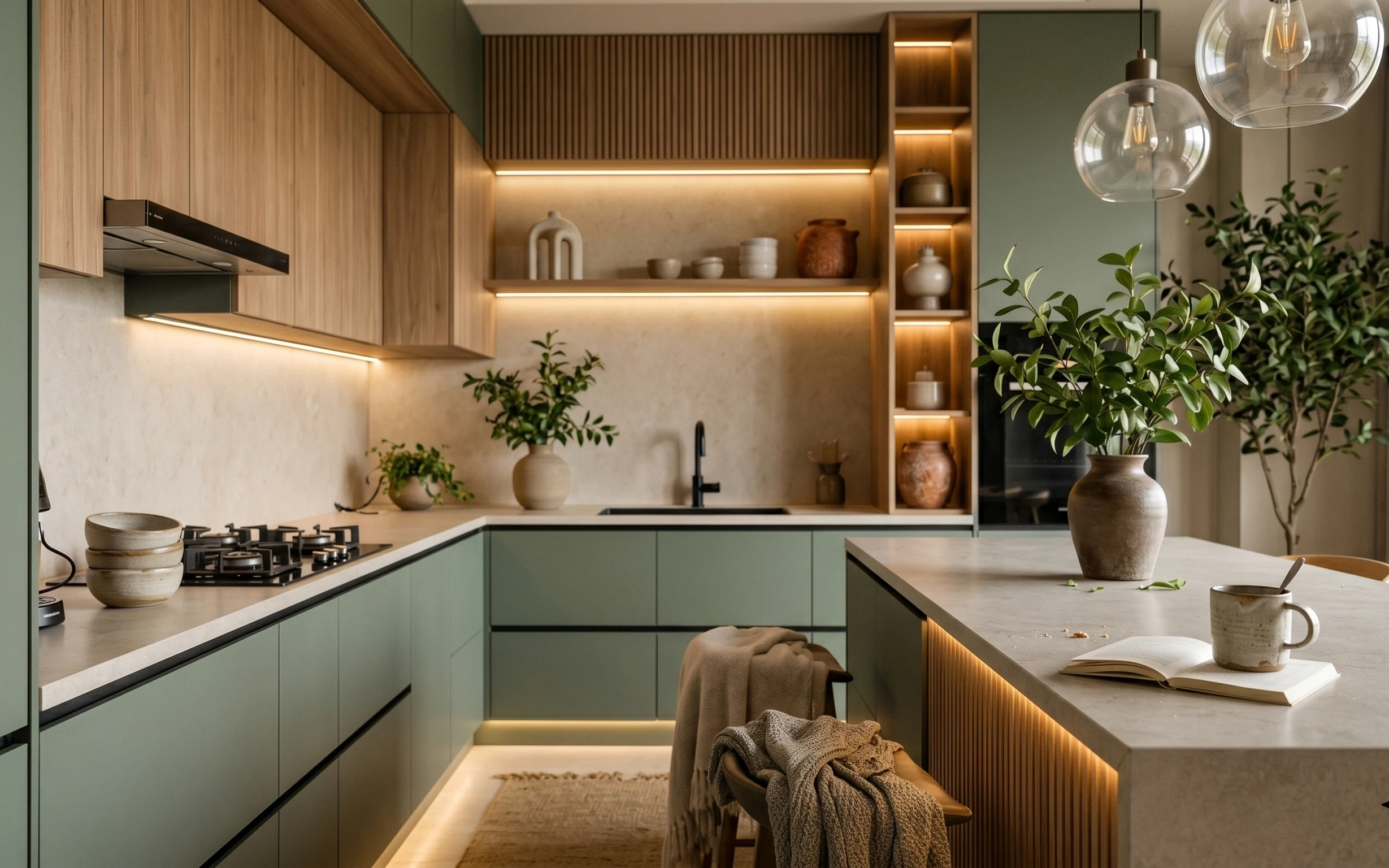
Under $350: kitchen island lounge swaps that pack up
A move-friendly kitchen island lounge refresh for shared housing with 7 renter-safe swaps, all doable for under $350. The biggest payoff: s…
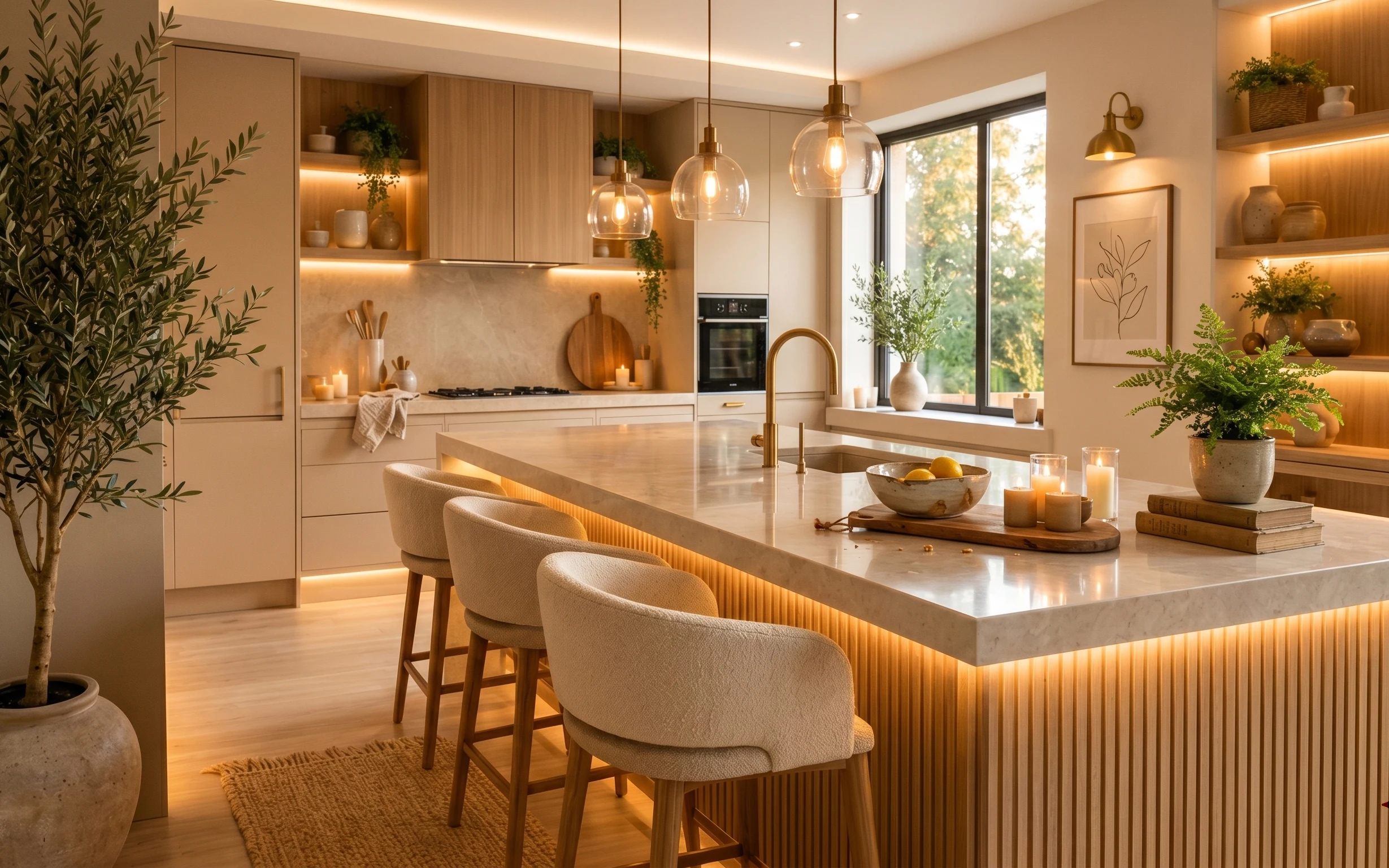
How to nail japandi kitchen island seating for $350
A warm japandi kitchen island seating look on a renter-friendly budget ($350). Use one grounded rug, a DIY candle pour, and small counterto…