- Best for
- sofa corner glow + easy pack-up
- Time
- 2–4 hours total
- Total cost
- $378
- Renter-safe
- no-drill styling
Why warm walnut-and-olive accents is the sofa corner of 2026
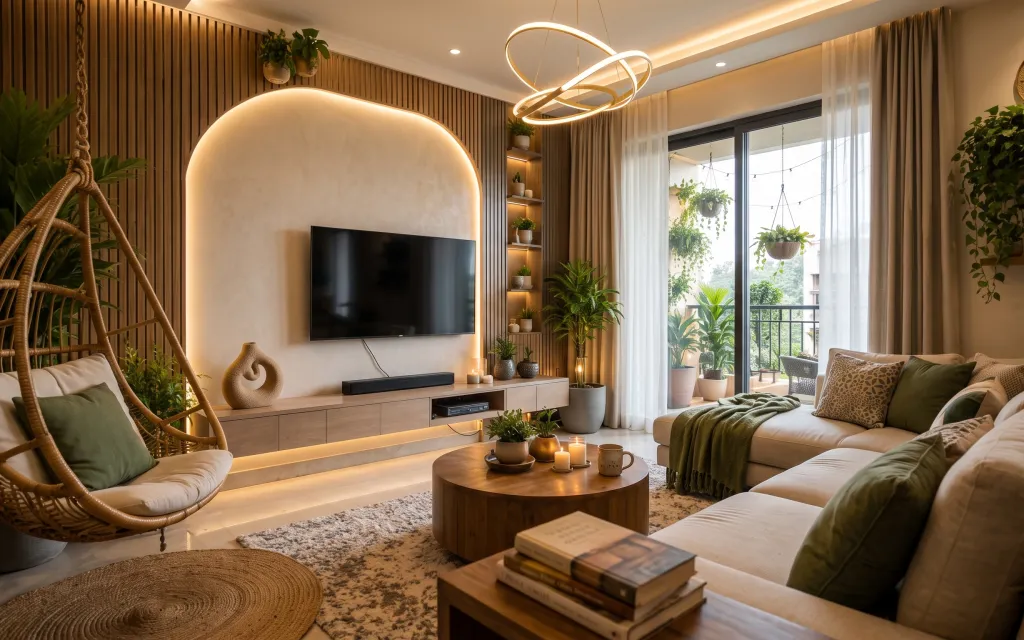
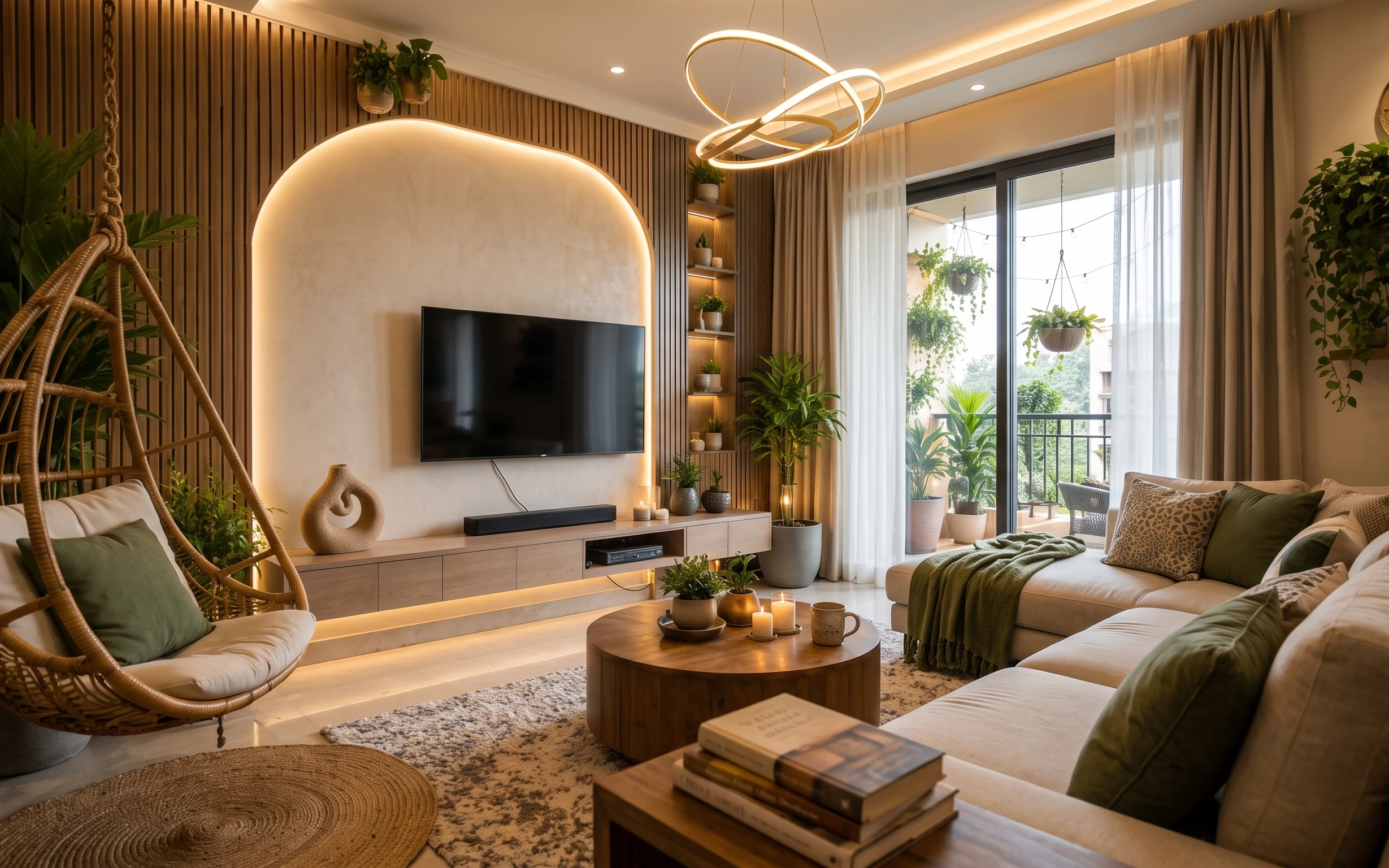
The quickest way to get this look in a shared living room is to treat the seating area like a portable set: a patterned rug to anchor, then soft color through an olive throw and a green pillow. Notice how the warm wood coffee table and the TV console shelf keep the palette cohesive, while the candles add a low, flickering glow against the cream walls. This is very doable for college and grad roommates because the heavy “fixed” items don’t matter—you’re styling the surfaces you can pack and move. The overall feeling also echoes that Jungalow-meets-japandi warmth: natural textures, plants, and gentle layered lighting.
I used to chase “perfect match” vibes—same exact shade, same exact rattan, same exact lamp—and it always looked too coordinated for real life. In one move I ended up with mismatched greens, and honestly? That’s when the room started feeling like mine. The change: I stopped trying to match everything and picked one repeating cue instead: olive against warm walnut and cream. Once I leaned on that, the whole sofa corner looked intentional even with imperfect thrift finds.
Layer 1 — patterned area rug ($150) grounds the seating zone
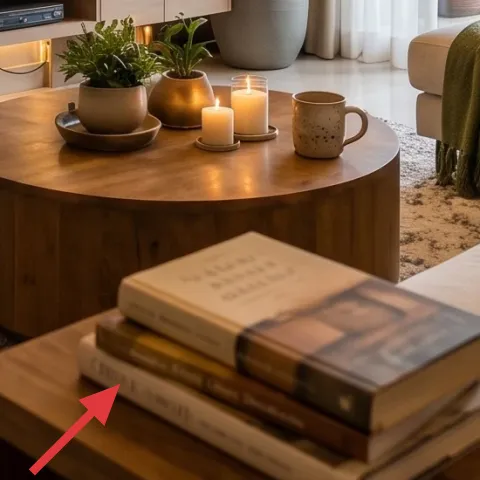
A patterned area rug is doing the heavy lifting here: it visually stops the light wood floor from feeling too empty, and it gives your coffee-table vignette an actual “home base.” Choose a rug with scattered speckles or a low-contrast pattern so it reads warm and textured instead of busy. I’d rather buy one move-friendly rug than try to make the rest of the room carry the design, because rugs survive changing TV angles, different couches, and different roommate timelines. The trade-off is cost upfront, but it packs flat (roll it, tape the roll). Also, a pattern is more forgiving for dust and quick coffee spills.
Pattern choice matters
When the walls and curtains are neutral, a rug pattern keeps your color story from disappearing.
Layer 2 — round wood coffee table ($100) creates a warm focal surface
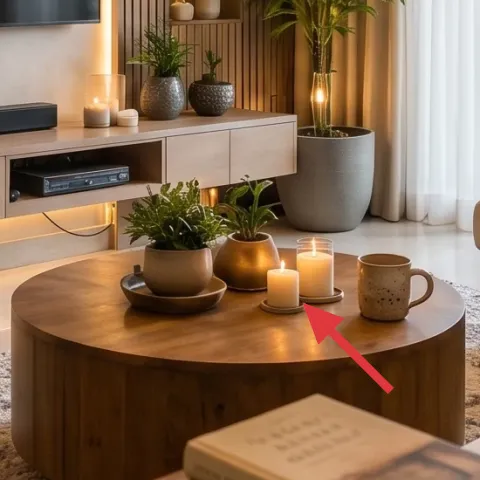
This round wood coffee table works because it keeps the sofa corner from feeling boxy—curves make plants and candle groupings look more relaxed. Opt for a simple, light-to-medium wood tone so it harmonizes with the walnut-like built-in shelving and the warm ceiling glow. The best alternative (and the one to avoid) is a glass-top table: it can feel slippery and makes small styling objects look “floating.” With wood, everything looks grounded, even when the set is temporary. The trade-off is that wood surfaces show scratches, so use a small tray for candles and mugs—then everything cleans up fast and packs together.
Use a tray for easy moving
Group fragile candles and ceramics on a removable tray so the table styling survives the next lease swap.
Layer 3 — olive throw blanket ($30) adds texture without bulk
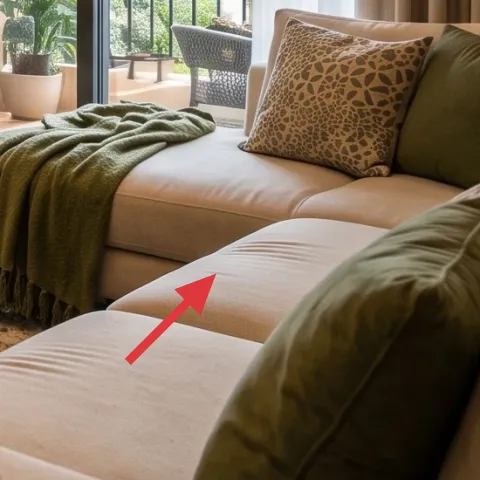
An olive throw blanket is the fastest way to pull color from the room’s green accents without adding another rigid object. In the photo it’s draped on the sofa, where the weight reads cozy but still stays light enough to fold flat. Pick a medium-weight knit or woven texture so you get visual depth even when the blanket isn’t pulled over anyone. The “obvious” alternative is another pillow, but blankets are easier to live with day-to-day and they photograph better from a distance. Trade-off: skip ultra-loose fringes if you’re packing often—they tangle. If that’s your situation, go for smooth edges you can fold neatly.
Fold it like luggage
Fold by thirds, then roll—throws keep their shape and fit into the same box every time.
Layer 4 — green throw pillow ($18) repeats the olive note in a smaller hit
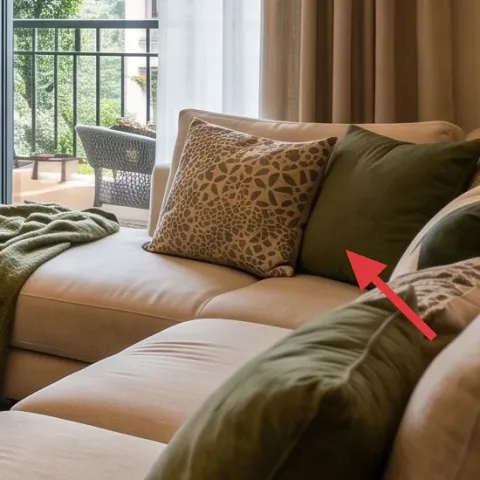
The green throw pillow is the color “repeat” that makes the corner feel styled, not accidental. Look for a pillow cover that’s close to the olive in the throw blanket—same family, not necessarily the exact same shade. A cover is also the move-friendly option: you can swap it for a different season or different roommate aesthetic without touching the sofa. The trade-off is that cheaper covers can flatten after a few months; that’s why a decent insert (or a cover that fits your existing insert snugly) matters. If the living room layout changes, this small element still lands in the same spot on the sofa and keeps the palette consistent.
Skip thin, flimsy covers
Very lightweight fabric looks wrinkled in daylight and won’t hold shape on move days.
Layer 5 — candles on coffee table ($30) brings that warm, low light
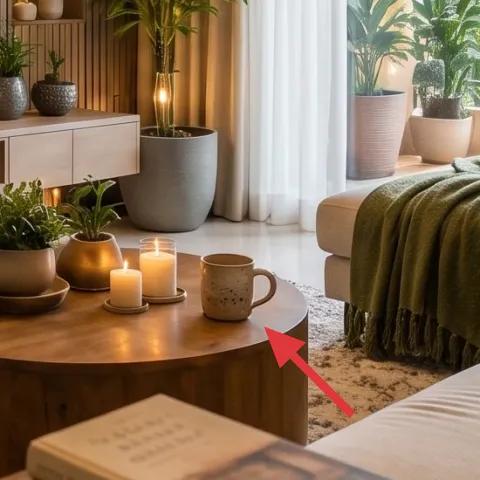
In this corner, candles do two jobs: they soften the bright ring ceiling light and they make the coffee table feel like a destination, not just a surface. For the move-friendly version, group them low and in a cluster so you get impact without needing a lot of different objects. The easiest alternative—tea lights—can look too uniform and flat, while pillar-style candles (or candle cups) give more depth. Trade-off: open flame requires basic safety, so keep them on a stable tray and away from curtains and any hanging plant areas. This is one of the few “lighting” touches you can keep consistent even when the room layout changes.
Make it instead of buying it
This DIY candle pour recreates a simple cluster effect on your coffee table—warm glow, minimal gear, and easy pack-up.
Materials
- Soy wax flakes — 1 lb — craft store — $12
- Cotton wicks — 2 small wicks — craft store — $3
- Wick tabs/stickers — 1 pack — craft store — $2
- Scent (optional) — 1 small bottle — craft store — $3
- Disposable pour cups (reuse from kitchen or thrift) — 2 — on hand — $0
Steps
- Measure your jars/cups and choose wicks that reach the bottom with a little extra length.
- Place wick tabs at the bottom center of each container (or use wick stickers).
- Set wicks in place and center them with a chopstick or wick centering tool.
- Weigh wax flakes into a disposable pour cup and melt gently.
- Once fully melted, add scent (if using) and stir carefully for even distribution.
- Pour wax into the containers slowly to avoid bubbles.
- Let the candles set at room temperature (first firm hold).
- Let them cool completely, then trim wicks to about 1/4 inch.
- Wait an additional day before your first full burn so the wax cures evenly.
Total DIY cost: $20 — saves about $10 over buying.
Layer 6 — string lights along window ($15) gives the room a soft edge after dark
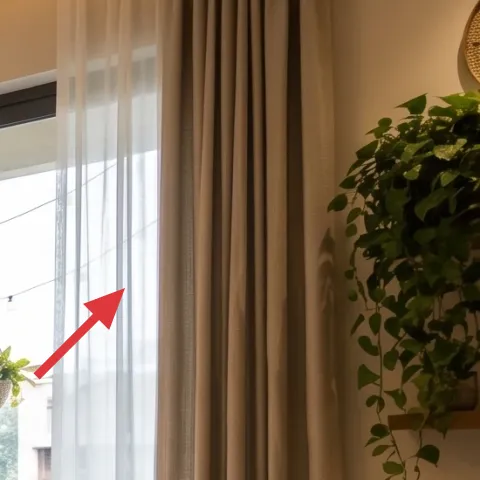
String lights along the window create that gentle “glow line” effect, which is why the sofa corner reads warm even when the ring-shaped ceiling light is on. Choose warm white bulbs (not cool daylight) so the color temperature stays flattering next to cream curtains and walnut-toned wood. The trade-off is that string lights take a little time to style—too loose looks accidental, too tight looks like a net. Keep the strands slightly layered so you get highlights around the plant area without blocking the window view. The move-friendly part: clip or hook the string to existing furniture edges or use removable hooks, then pack the light strand in a small box.
Test the spacing first
Lay the strand on the floor in the same shape you want on the window before hanging anything.
Layer 7 — hanging plant in a macramé planter ($35) adds life without eating floor space
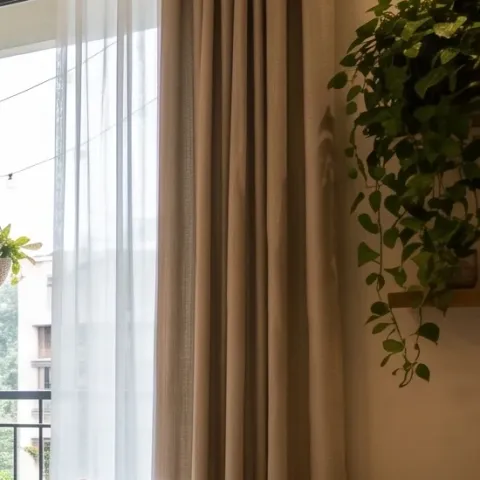
This hanging plant and macramé planter bring vertical texture, which matters in a sofa corner where the walls are mostly neutral and the furniture is already warm wood and cream. A hanging placement also keeps the room from feeling crowded when you’re sharing and need floor space for bags, boxes, and guests. Go for a planter that’s sturdy enough to move with you and a plant type that handles indoor light reasonably well. The alternative is adding another floor plant, but that can make the corner feel heavy and harder to vacuum. Trade-off: hanging items can swing during moves, so wrap the macramé and secure the plant loosely in a box to avoid leaf breakage.
Pick a plant with forgiving leaves
Thinner-leaf plants look great but struggle if your next place has different light.
The cost, layer by layer
| Layer | Item | Cost |
|---|---|---|
| 1 | patterned area rug | $150 |
| 2 | round wood coffee table | $100 |
| 3 | olive throw blanket | $30 |
| 4 | green throw pillow | $18 |
| 5 | candles on coffee table (DIY candle pour) | $30 |
| 6 | string lights along window | $15 |
| 7 | hanging plant in a macramé planter | $35 |
| Total | $378 | |
If you want it cheaper, prioritize the rug and textiles, then swap the string lights for battery-style candle cups. You can also hunt for a simple round wood coffee table at a thrift store, where imperfections look more “intentional.”
What worked, what didn't (across the whole room)
The overall win is layering warm tones: rug first, then olive textiles, then candlelight and plants. The only spot that can feel fussy is when the window lights are spaced unevenly, because the shine highlights clutter.
What worked
- The patterned area rug keeps the light floor from looking temporary or unfinished.
- The round wood coffee table makes candle clusters look intentional instead of scattered.
- Olive throw texture adds depth without changing your furniture footprint.
- The green throw pillow repeats the olive note and steadies the palette.
- Warm string lights soften the bright ceiling and flatter cream curtains.
- The hanging macramé planter adds vertical interest without sacrificing floor space.
What didn't
- If candle heights are too similar, the cluster reads flat instead of layered.
- String lights that are too tight can look like a holiday garland rather than ambient glow.
- Going for a very high-contrast rug pattern can overpower the plants and warm wood.
- A pillow cover that doesn’t hold shape makes the sofa look rumpled in daylight.
What we'd skip if we did it again
Skip a matching set approach (same retailer, same shade across every item). It looks tidy at first, then feels dated fast when your tastes or roommates change. Instead, repeat one cue—olive—and let textures do the rest.
Skip cool-white lighting and icy-toned decor pieces. Against warm wood and cream curtains, cool accents fight the palette and make the room look unfinished even when it’s decorated.
Skip adding too many small objects to the coffee table at once. A single tray with candles and two ceramic pieces looks calmer and packs faster than a dozen individually placed items.
Frequently asked
How long does this sofa-corner refresh take for roommates?
Plan for about 2–4 hours total, depending on whether you DIY the candle pour. Rug + textile swaps are the fastest, and string lights are usually the last step after you’ve placed the coffee table and pillows. Packing is easy because everything here is soft-goods based and stackable—roll the rug, fold blankets, and box candles.
Is this actually renter-friendly if the living room layout changes after moving?
That’s the point of the plan: it’s built around portable anchors. A patterned area rug, a throw blanket, and a small lighting cluster still make sense in a new layout because you can reposition the coffee table and move the styling vignette with it. You’re not relying on any fixed installs.
What if my room is smaller than this photo?
Go smaller on table styling, not on color repeat. Use the same rug concept (low-contrast pattern), then keep the coffee table cluster to one tray with two candle pieces and one small ceramic. For the string lights, use fewer strands so the glow is focused, not overhead-bright, and avoid adding extra floor plants.
What if my room is bigger—how do I keep the same look?
In a larger living room, you can scale up texture rather than piling on items. Keep the same olive throw + green pillow combo, but consider a slightly larger rug or more negative space around the coffee table. For hanging plant impact, place the macramé planter where it can catch light from the window instead of hiding behind furniture.
Where should I shop differently if I want to keep costs under $400?
Rugs and textiles are worth shopping carefully, but you can save in lighting and small décor. Look for string lights as a set in warm white, then use a simple planter hanger that’s easy to dismantle. For candles, a DIY pour is the biggest lever because the materials are cheap compared to pre-made candle clusters.
Biggest mistake for a sofa corner like this?
Overthinking shade-matching. The room reads cohesive because the palette repeats, but the textures do the work. If everything is the exact same green or the exact same wood tone, it starts looking like a showroom display. Choose one repeated color note (olive) and let the pattern, knit texture, and warm lighting blend the rest.
More in Living Room
7 move-ready swaps for a $400 living room sofa corner
A warm walnut-and-olive sofa corner refresh built from 7 no-drill swaps, totaling $378 (under $400). This plan focuses on rug grounding, la…
A plant-forward living room for $600
A plant-forward living room refresh built for $600, focused on a soft cream rug, layered sofa textiles, removable wall art, and move-friend…
What $700 buys: a garden-facing living room update with warm texture
A garden-facing living room refresh built for renters using no-drill upgrades and renter-safe decor. With a $700 budget ceiling, this setup…